Dallas Real Estate: Unpacking the Boom in Apartment Rentals and Investment Opportunities
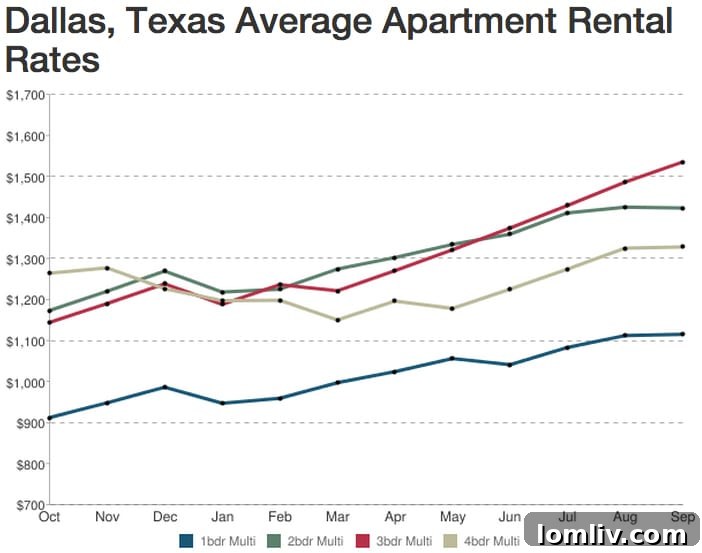
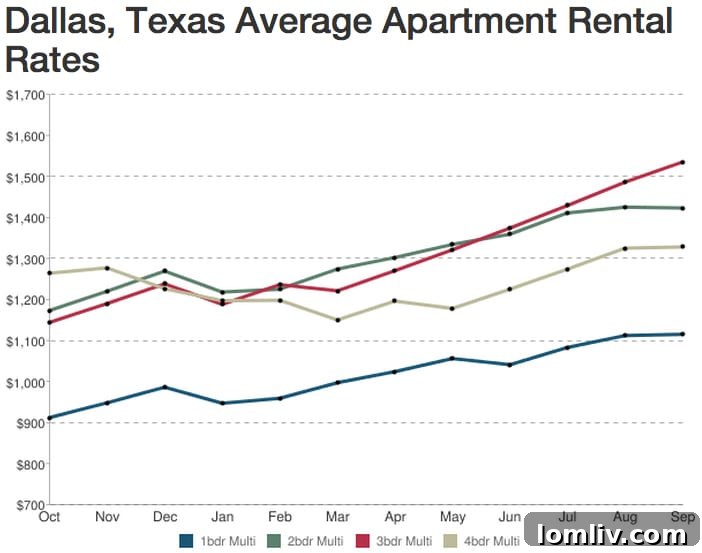
Dallas, Texas, has consistently captured the attention of real estate investors and market observers, not just within the state but across the nation. The vibrant economy, continuous population growth, and a dynamic job market have transformed the city into a magnet for those seeking robust returns on their property investments. A key indicator of this thriving environment is the booming rental market, particularly for apartments, which has seen rates steadily climb upwards, creating an incredibly attractive landscape for both seasoned and new landlords.
The question that frequently arises is: what exactly fuels this intense investor interest in Dallas apartments? And why are a growing number of homeowners opting to lease out their properties rather than selling them when relocating? The answer lies in a powerful confluence of factors, primarily the surging demand for rental units and the significant appreciation in rental rates.
Soaring Rental Rates: A Closer Look at Dallas’s Dynamic Market
Dallas/Fort Worth has solidified its position as a powerhouse in the national real estate arena. According to comprehensive data from RentRange, a leading provider of rental market analytics, the Dallas/Fort Worth metropolitan area proudly ranks among the top cities for year-over-year rental rate increases for single-family residences. This strong performance in the broader housing market is mirrored, and in some cases even amplified, within the apartment sector, where Dallas is posting truly substantial gains in rental rates.
Demand Outstrips Supply: Why Rents Keep Climbing
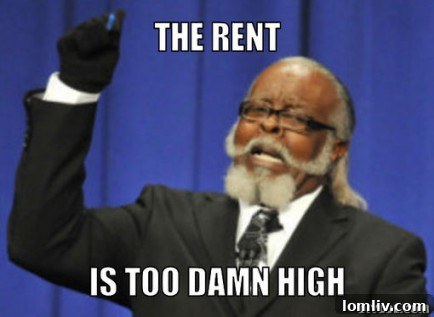
The relentless upward trajectory of rental prices often elicits a common sentiment among residents: “The rent is too damn high!” This reaction, while understandable from a tenant’s perspective, perfectly encapsulates the underlying market dynamics that excite investors. The simple economic principle of supply and demand is playing out dramatically in Dallas. A continuous influx of new residents, drawn by the city’s robust job growth across diverse sectors like technology, finance, and healthcare, creates an insatiable appetite for housing. This population surge, combined with a relatively constrained supply of affordable housing options, inevitably pushes rental costs higher.
For individuals and families moving to Dallas, the decision to rent often precedes a purchase, or becomes a long-term strategy in a market where homeownership can be increasingly challenging. This consistent demand ensures high occupancy rates and allows landlords to command premium rental prices, translating directly into healthier revenue streams for property owners.
The Rise of Luxury Developments and Gentrification
If you’re holding out hope for a wave of new affordable apartment complexes to emerge in Dallas, you might be in for a prolonged wait. The prevailing trend in new construction leans heavily towards luxury developments, fundamentally reshaping Dallas’s urban fabric. Areas like West Dallas, North Oak Cliff, and North Dallas are witnessing a proliferation of upscale residential projects. Major developers and real estate firms, including industry titans such as Transwestern and Trammell Crow Co., are actively acquiring former industrial sites and repurposing them into high-end rental communities.
Shaping the Urban Landscape: New Projects and Their Impact
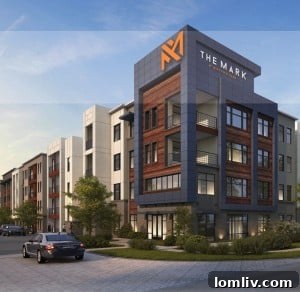
These developments are characterized by their modern amenities, premium finishes, and strategic locations, often in areas that are undergoing a gradual but significant gentrification. This transformation is frequently fueled by the introduction of cultural amenities, trendy dining options, and improved infrastructure, which in turn attract a more affluent demographic. A prime example of this ongoing development boom is “The Mark at Midtown Park,” an apartment community strategically located along North Central Expressway and Meadow Road. As Steve Brown highlighted in his piece for The Dallas Morning News, this project, developed by Dallas businessman Carl Wescott, designed by BGO Architects, and built by Balfour Beatty Construction, exemplifies the type of upscale living rapidly becoming the norm in key Dallas neighborhoods.
The visual aesthetics of these new complexes, as Eric Nicholson shrewdly observed in the Dallas Observer, often share a common architectural language. While critiques about design uniformity might be valid, the undeniable fact remains: rents are skyrocketing, and yet developers appear unable to construct enough units to fully sate the market’s appetite. This imbalance, where demand consistently outpaces even ambitious construction efforts, creates an ideal scenario for real estate investors.
Dallas: A Premier Destination for Real Estate Investors
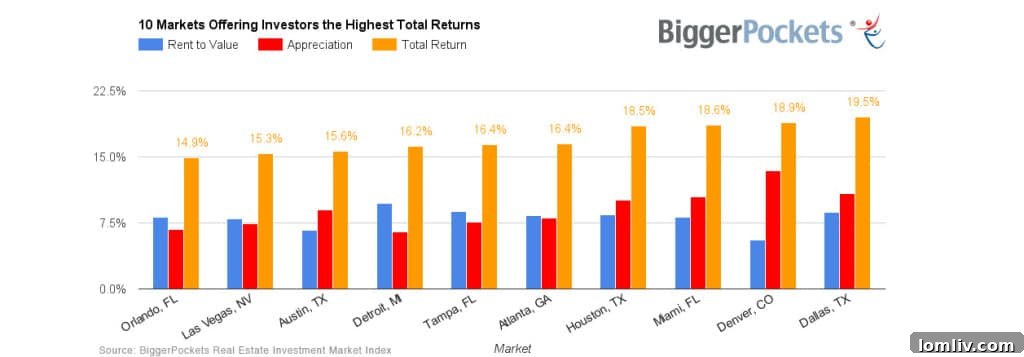
The allure of North Texas for real estate investors is far from a new phenomenon for those closely following market trends. As we’ve previously discussed, the region has consistently emerged as a top contender for investment capital. This sentiment was strongly echoed in a significant survey released by BiggerPockets, leveraging data from the first half of 2014. This comprehensive analysis positioned Dallas as the undisputed No. 1 metropolitan area for real estate investing in the period studied.
Unleveraged Returns and Market Performance
The BiggerPockets report highlighted Dallas’s exceptional performance, noting its strong price appreciation while simultaneously maintaining a market where investors enjoyed robust rents relative to property values. Critically, the survey indicated that investors in Dallas stood to earn an impressive almost 20% unleveraged return for residential real estate investments before factoring in expenses. An “unleveraged return” essentially refers to the return on an investment made without borrowing money, providing a clear picture of the property’s innate profitability. This figure alone serves as a powerful testament to the financial advantages of investing in the Dallas market.
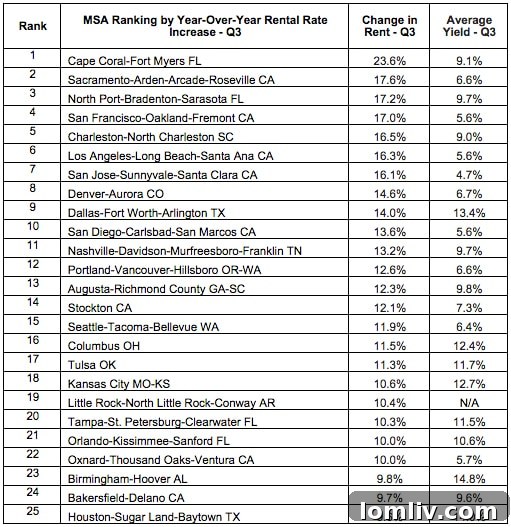
Such substantial returns are not just theoretical; they are reflected in tangible market shifts. For tenants in Dallas/Fort Worth who have not yet transitioned to homeownership, the impact of these market dynamics is particularly acute. Between the third quarter of 2014 and the same period in 2015, rents across the Dallas/Fort Worth area surged by a remarkable 14 percent. This aggressive growth underscores the increasing cost of living for renters but, conversely, spotlights the incredible income potential for property owners.
Regional Investment Trends: Beyond the Glitz of Coastal Markets
While the spotlight often falls on high-profile coastal markets, the data reveals a more nuanced picture of investment opportunities across the U.S. RentRange data illustrates that cities in the South and West generally experienced the most significant increases in home rental rates, with California and Florida being particularly strong contenders, accounting for seven of the top 10 markets on the list. These regions often attract attention due to their vibrant economies and desirable climates.
However, when evaluating investments through the lens of “yield”—the annual return on investment from rental income relative to property value—a different narrative emerges. Markets situated in the Central U.S. and the Midwest frequently generated higher yields than many of their counterparts in California and Florida. This distinction is crucial for investors prioritizing steady income and long-term profitability over speculative price appreciation alone. Dallas, situated within the dynamic Southern belt, manages to strike a desirable balance, offering both strong appreciation and competitive yields.
Understanding the Investment Landscape: What Drives Success in Dallas?
The sustained strength of the Dallas real estate market isn’t a fluke; it’s the result of strategic economic development, continuous corporate relocation, and a growing talent pool. For investors, understanding these foundational elements is key to making informed decisions.
The Role of Data: Insights from RentRange and BiggerPockets
Walter Charnoff, CEO of RentRange, accurately encapsulated the evolving investment landscape: “We continue to see substantial opportunity in real estate investing, but strengthening real estate markets in many regions require investors to be more informed before buying an investment property and rehabilitating it in order to achieve their desired return.” His statement emphasizes the critical need for comprehensive market research and due diligence. While the general trend in Dallas is positive, granular data on specific neighborhoods, property types, and rental comparables is indispensable for optimizing returns.
Beyond Rental Rate Increases: Focusing on Yield
Charnoff further elaborated on a crucial insight: “While, not surprisingly, California and Florida are experiencing the largest rental rate increases, further analysis reveals that markets in Alabama, Texas, Kansas and Ohio actually produce a much higher average yield.” This distinction highlights that a rapid increase in rental rates doesn’t always equate to the best long-term investment yield, especially if property acquisition costs are disproportionately high. Dallas, as part of the broader Texas market, benefits from a favorable balance, offering both robust rental growth and healthy yields, making it an attractive proposition for those focused on sustainable cash flow and capital appreciation.
Investors in Dallas can leverage the city’s economic resilience, diverse employment base, and consistent population influx to their advantage. The ongoing development, though largely luxury-oriented, signals confidence in the market and contributes to the overall desirability of the region, indirectly boosting values even for more modest properties in well-located areas. However, this also means investors must be increasingly strategic, identifying areas with future growth potential and understanding the specific micro-market dynamics.
What’s Next for Dallas’s Rental Market?
The future of the Dallas rental market appears poised for continued growth, albeit with potential challenges. While luxury developments will likely continue to dominate new construction, the persistent demand for housing across all income brackets suggests that even existing, more affordable units will maintain strong rental income potential. The city’s commitment to urban revitalization and infrastructure improvements will further enhance its appeal. However, the question of housing affordability will remain a critical social and economic issue, potentially prompting policy discussions about diversified housing strategies.
For investors, the key will be adapting to evolving market conditions. This includes keeping a close eye on interest rates, understanding local zoning changes, and continuously monitoring demographic shifts. The resilience and dynamism of the Dallas economy suggest that even amidst broader economic fluctuations, its real estate market will likely remain a strong performer.
Conclusion: Capitalizing on Dallas’s Enduring Appeal
The data paints a clear picture: Dallas is an undeniable hotspot for real estate investment. With impressive year-over-year rental rate increases, a relentless wave of luxury developments, and market fundamentals that consistently favor landlords, the city offers a compelling narrative for investors. The fact that Dallas ranked as the No. 1 metro for real estate investing underscores its potential for significant unleveraged returns and attractive yields.
Whether you’re a seasoned investor looking to expand your portfolio or a new entrant seeking high-growth opportunities, Dallas provides a robust and dynamic environment. The market demands informed decisions and strategic planning, but for those who understand its unique pulse, the rewards can be substantial. So, what are you observing in your local Dallas area? Are the rents truly getting “too damn high,” and how are you positioning yourself to capitalize on this extraordinary market?