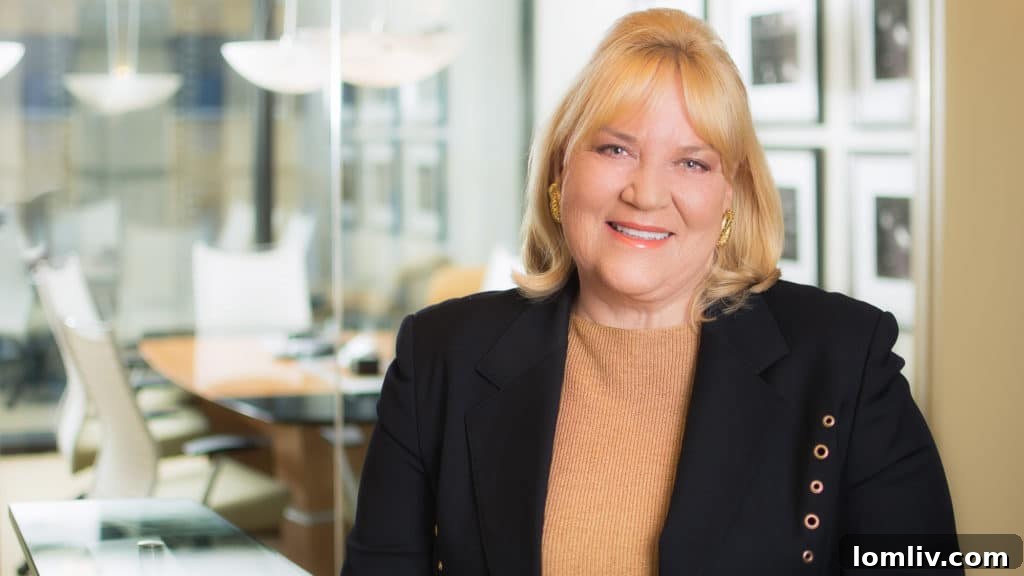
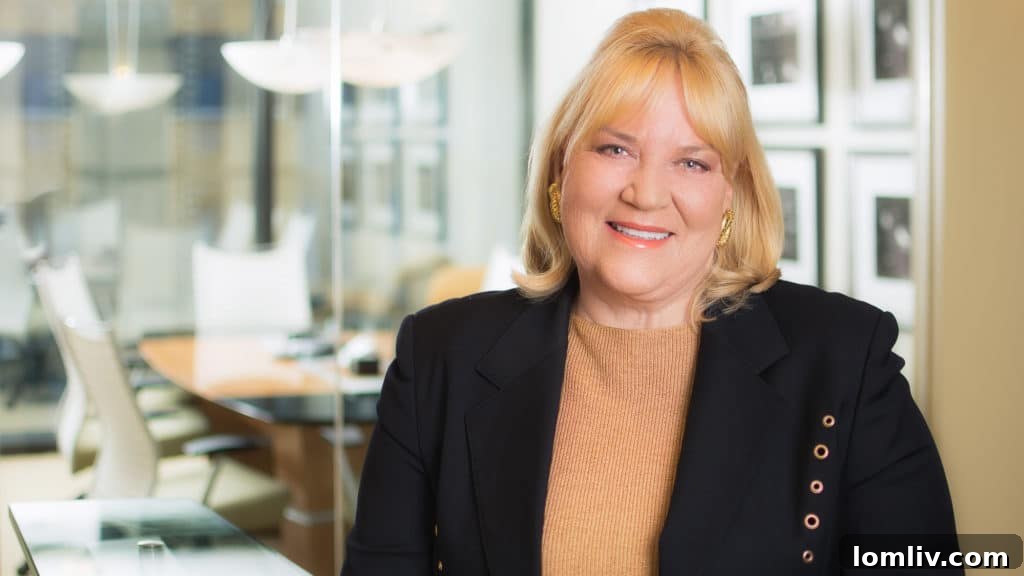
Dallas has lost one of its most formidable forces and a true city builder. Carol Reed, often celebrated as the city’s premier campaign strategist and affectionately known as “the mayor-maker,” passed away on a Thursday morning, surrounded by the love of her daughters, Laura and Angela. Her legacy is not merely etched in the annals of Dallas politics but profoundly woven into the very fabric of its landscape, economy, and community spirit.
Carol Reed was a woman who navigated life with extraordinary skill, taking every challenge and transforming it into triumph. Her presence was larger than life, marked by unparalleled political acumen, an unyielding loyalty to her friends, and an deep, abiding love for Dallas. This sentiment was echoed by her dear friend, Chris Heinbaugh, the vice president of external affairs at the AT&T Performing Arts Center, and a former chief of staff for Dallas Mayor Tom Leppert, who reflected on Carol’s profound impact.
In her passing, however, Carol would undoubtedly eschew any somber farewells. As Chris Heinbaugh humorously yet poignantly imagined, “Now, before you get too teary eyed, you have to know, Carol would have none of that. In fact, right now she is likely looking down on us all, wearing a leopard print, a pashmina tossed around her neck and that incredible smile saying, ‘What a ride!'” This vivid image perfectly captures the essence of Carol Reed – a woman of gusto, style, and an unshakeable belief in living life to the fullest. One can almost hear her vibrant laughter, perhaps already contemplating where to find the best Jaguar dealer in the afterlife, ready for her next grand adventure.
While Carol Reed may not have been directly employed in the Dallas real estate sector, her tireless work, unwavering vision, dedication, and boundless energy indelibly enhanced the value of every parcel of land in the city. Her strategic influence on critical urban development projects and civic initiatives laid the groundwork for Dallas’s dynamic growth, making her an indirect, yet pivotal, architect of the city’s modern real estate boom.
The Legendary Salon 3C: A Hub for Ideas and Influence
I had the distinct privilege of getting to know Carol about seven years ago when I received an invitation to one of her renowned “Salon 3C” dinners. These private soirées, held in her elegant Turtle Creek condo, were legendary for their exquisite cuisine, exceptional wine, and, most importantly, the profound conversations that unfolded. Hosted by Carol, Chris Heinbaugh, and Craig Holcomb (a former Dallas City Council member and retired president of Friends of Fair Park), these evenings gathered three to five rotating guests – an eclectic mix of political and civic leaders, journalists, artists, philanthropists, and deep thinkers. Each guest was invited only once, ensuring a constantly fresh and deeply unique intellectual exchange.
These dinners were more than just social gatherings; they were crucibles of ideas, where diverse opinions converged and new perspectives emerged. I vividly recall one particular conversation where, despite my personal leanings, Carol, with her astute political foresight, confidently predicted Donald Trump would secure the Republican nomination – a testament to her keen understanding of the political landscape. Her ability to bring together individuals from divergent backgrounds and encourage open dialogue was a hallmark of her approach to life and leadership.
My initial encounter at Salon 3C eventually led to subsequent invitations, including the annual holiday parties she meticulously organized every December alongside Chris and Craig. These celebrations, like her dinners, were filled with warmth, camaraderie, and Carol’s captivating storytelling.
Chris Heinbaugh beautifully articulated Carol’s gift: “Carol was a great storyteller who could laugh at herself. For almost eleven years we’ve had our dinners and holiday parties, Carol shared her colorful stories that left everyone knowing so much more about Dallas. Craig and I had no illusions. Carol was always the star of the show. And she deeply believed in the power of bringing people together. She would say, ‘If you break bread with people – even those you disagree with – you can find common ground.'” This philosophy was not merely rhetoric; it was the foundation of her influence, enabling her to forge alliances and build consensus in often contentious environments.
Indeed, Carol Reed was a catalyst for progress. As Chris aptly put it, “Carol moved the needle. All of us, and our city, are better because of it.” I wholeheartedly concur, particularly when considering the tangible improvements to our real estate landscape. The Dallas we know today, with its vibrant downtown and thriving communities, owes a significant debt of gratitude to Carol Reed’s strategic genius and unwavering dedication.
From Volunteer to “Mayor-Maker”: A Political Powerhouse
Carol Reed’s journey to becoming Dallas’s most influential political strategist is a testament to her tenacity and sharp intellect. According to a heartfelt tribute written by Cheryl Hall inThe Dallas Morning News, Carol, originally from Thousand Oaks, California, moved to Texas and became a wife and mother, raising two daughters born within nine months and one week of each other. Her political career began modestly, volunteering for Republican causes, which quickly evolved into a full-time passion and profession.
Her early career saw her rise through the ranks of Republican politics, serving as a political director for the formidable Sen. John Tower. She played a crucial role in the Reagan-Bush presidential campaign, a pivotal moment in American politics, and later served as the North Texas political director for then-U.S. Sen. Phil Gramm. These experiences honed her skills in campaign management, strategy, and understanding the intricate dynamics of voter behavior, preparing her for the significant impact she would have on Dallas.
After four decades of refining her craft, Carol Reed’s influence reached its zenith in Dallas. She masterminded Ron Kirk’s historic 1995 mayoral campaign, which led to his election as Dallas’s first African American mayor. This victory was not just a political win; it was a transformative moment for the city, signaling a new era of inclusivity and progress. Beyond Kirk, Reed successfully managed the mayoral campaigns for other prominent Dallas figures, including Jack Evans, Starke Taylor, and Tom Leppert, solidifying her reputation as the city’s preeminent “mayor-maker.” Her unique ability to transcend party lines was evident when, as a lifelong Republican, she strategically ran the Democratic candidate’s campaign during Ron Kirk’s bid for the U.S. Senate, demonstrating her commitment to the individual and the city’s best interests above partisan politics.
Shaping the Dallas Skyline: Carol Reed’s Indelible Mark on Development
Carol Reed’s influence extended far beyond electoral victories; she was a master at swaying public opinion on critical local issues that directly shaped Dallas’s physical and economic landscape. As Cheryl Hall highlighted, “Reed helped sway voters in crucial local issues, including bond elections and referendums for two Trinity River projects, American Airlines Center, AT&T Stadium, the Dallas Convention Center hotel, Parkland Hospital and numerous educational campaigns.” These were not mere checkboxes on a political agenda; they were foundational projects that have defined modern Dallas.
Her advocacy for the Trinity River projects, for instance, paved the way for vital infrastructure improvements and recreational spaces that have enhanced the city’s quality of life and attractiveness for residents and businesses alike. The successful referendums for the American Airlines Center (AAC) were revolutionary. Without Carol Reed’s strategic guidance and ability to rally public support for the AAC, the vibrant Victory Park development as we know it today, complete with the upscale W Hotel and its iconic residential towers, would likely not exist. This single project spurred a cascade of urban redevelopment, transforming a once underutilized area into a bustling entertainment and residential district.
Similarly, her involvement in securing public approval for the AT&T Stadium in Arlington had a profound ripple effect on regional real estate. This state-of-the-art facility didn’t just become home to the Dallas Cowboys; it catalyzed an immense real estate boom in Arlington. Developments like Arlington Commons and the master-planned community of Viridian are direct beneficiaries of the economic impetus generated by the stadium, illustrating how her strategic influence could transcend city boundaries and foster regional prosperity.
Beyond these high-profile projects, Reed’s work on the Dallas Convention Center hotel bolstered the city’s ability to host major conventions and events, driving tourism and economic activity. Her support for Parkland Hospital ensured the city’s critical healthcare infrastructure remained robust and accessible, while her involvement in numerous educational campaigns underscored her commitment to investing in the future generation of Dallasites. Each of these endeavors, meticulously guided by Reed, played a crucial role in enhancing Dallas’s appeal, livability, and, inevitably, its real estate value.
A Heart for the Community: Philanthropy and Civic Engagement
Carol Reed’s impact wasn’t confined to politics and major developments; her heart beat strongly for the Dallas community. She was renowned for her extensive community work and tireless fundraising efforts, benefiting institutions and initiatives that are integral to daily life in Dallas. Her philanthropic footprint is visible across a diverse array of organizations, including the beloved Klyde Warren Park, a transformative urban green space; the Perot Museum of Nature and Science, a beacon of education and discovery; and the African American Museum, a vital cultural institution.
Her dedication extended to organizations directly influencing the city’s economy and safety, such as The Real Estate Council and Friends of Dallas Police. She championed cultural pillars like the Dallas Symphony Association, and lent her support to vital community centers like St. Philip’s School and Community Center. Her efforts also contributed to cherished public spaces like Pioneer Plaza and the Dallas Police Memorial, ensuring these landmarks received the recognition and resources they deserved.
Even her commitment to enhancing community celebrations, such as the annual Fair Park Fourth and the Fair Park Dog Bowl, demonstrated her holistic approach to city building. As a Presbyterian elder, Carol’s compassion shone through her direct service, including serving lunches at the Stewpot, a testament to her belief in hands-on community engagement and support for those in need. Her involvement with such a wide range of civic and philanthropic endeavors underscores her profound understanding that a thriving city is built not just on grand projects, but also on strong communities, cultural richness, and compassionate outreach.
A Lasting Dallas Legacy
Carol Reed was, without a doubt, a colossal personality in Dallas, but even greater than her public persona was the sheer size of her heart and her unwavering dedication to the city she loved. What she managed to accomplish in her 72 years was truly extraordinary, easily twenty-fold what many achieve in a lifetime. Her strategic mind, her ability to unite disparate groups, and her relentless pursuit of progress have left an indelible mark on Dallas.
Carol will be deeply missed by all who had the privilege of knowing her, working with her, or simply witnessing her profound impact. The vibrant, dynamic Dallas we see today, with its iconic skyline, thriving cultural institutions, and robust economy, owes Carol Reed a tremendous debt of gratitude. Her vision, her passion, and her relentless work have shaped not only the city’s political landscape but also its very physical form, making Dallas a better place for generations to come. Her legacy will continue to inspire, reminding us that true leadership can transform a city in ways both seen and unseen.