Airbnb and the Evolving Landscape of Short-Term Rentals: Opportunities and Challenges
Last week, I had the distinct pleasure of attending the truly magnificent Tutu Chic Fashion Show and Luncheon for the Texas Ballet Theater. Amidst delightful conversation, a friend at my table raised an intriguing question about a home in her University Park neighborhood. She mentioned it was being leased out for short durations, sometimes just a week or two at a time, and she was curious about the nature of such an arrangement. “Oh,” I responded, “are you perhaps referring to a service like Airbnb?” To my surprise, she had no idea what Airbnb was. This interaction underscored how, despite its global ubiquity, the concept of peer-to-peer home-sharing can still be unfamiliar to some. Whether that specific homeowner was operating through Airbnb or another one of the many burgeoning online community marketplaces, the property’s consistent stream of short-term renters highlighted a growing trend in residential areas.
Understanding the Airbnb Phenomenon: A Global Shift in Accommodation
At its essence, Airbnb acts as a pioneering digital platform that connects individuals eager to rent out their spare spaces with travelers actively seeking unique accommodations. This innovative model has cultivated a vibrant, worldwide community encompassing millions of hosts and countless travelers. Hosts have the flexibility to list a wide array of properties, ranging from a cozy spare room within their own home, a charming standalone guest house, to an entire luxurious residence. Travelers, in turn, gain unprecedented access to diverse lodging options across more than 192 countries, often providing a more authentic and localized experience compared to conventional hotels or traditional bed-and-breakfast establishments.
This concept of hospitality, where a private home offers an alternative to commercial lodging, actually harks back to Airbnb’s very origins – a time when serving breakfast was part of the initial offering. The demand for such flexible and private accommodations frequently escalates during significant events. A prominent local illustration dates back to Super Bowl XLV, when Dallas experienced an immense surge in the demand for temporary housing. Notably, the M Mansion in The North Dallas Forty, for instance, reportedly commanded an extraordinary $280,000 for a mere five-day rental period. This vividly demonstrated the substantial earning potential for homeowners willing to open their doors, long before Airbnb revolutionized the short-term rental market.
From Air Mattresses to a $10 Billion Empire: The Genesis of Airbnb
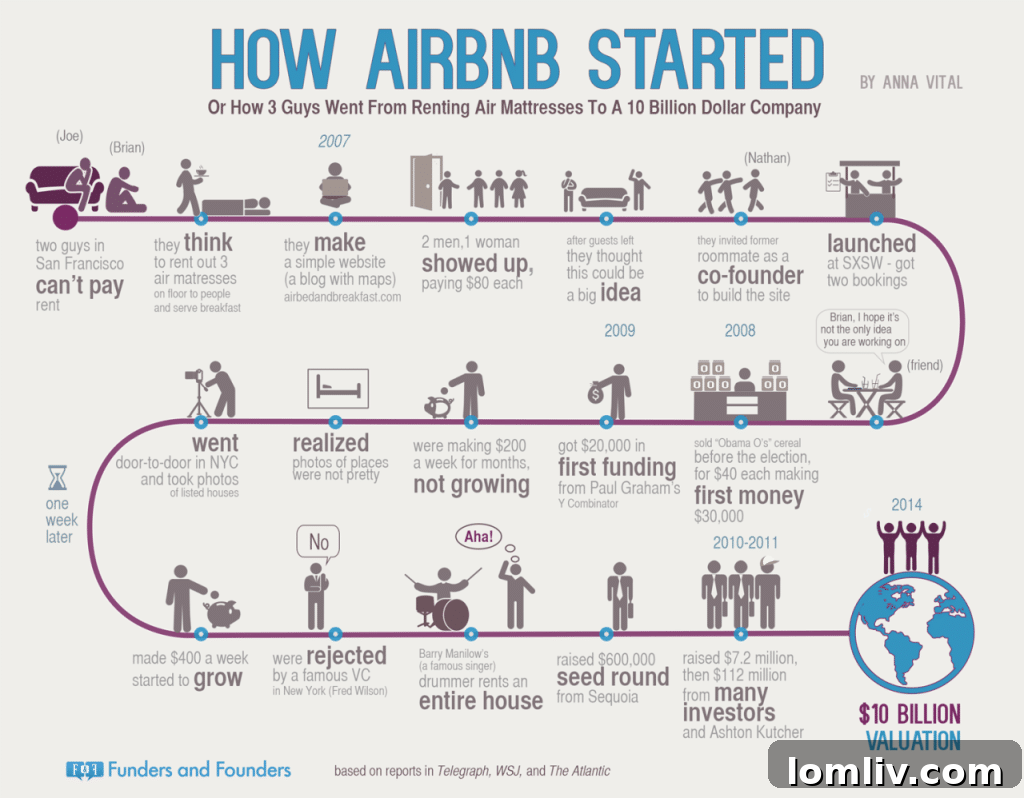
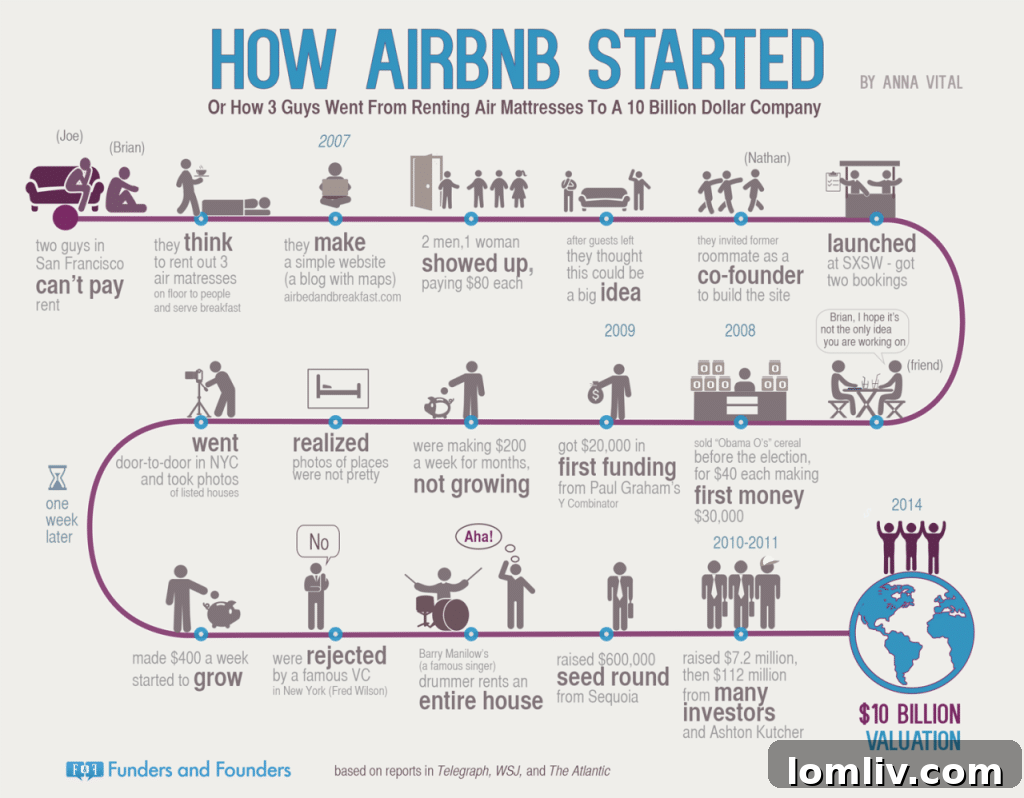
The remarkable story of Airbnb’s birth is a classic tale of entrepreneurial ingenuity fueled by necessity. It all began in San Francisco, a city famously known for its cutthroat real estate market and dauntingly high living expenses. Confronted with the challenge of affording their monthly rent, two visionary co-founders hatched a remarkably simple yet profoundly impactful idea: to offer weary travelers a place to sleep on air mattresses in their own apartment. This straightforward solution not only allowed them to cover their immediate expenses but also unexpectedly laid the foundational bricks for what would rapidly transform into a global corporate powerhouse.
From these humble beginnings, based on a few air mattresses and a website, they successfully scaled their innovative concept. In an impressively short timeframe, they propelled their startup into a company valued at an astonishing $10 billion. This meteoric rise fundamentally reshaped not only how people travel and discover new places but also challenged established norms in the hospitality industry, proving the immense power of the sharing economy.
Unlocking Financial Opportunities: A Glimpse into the Host Experience
The promise of generating supplementary income stands as a compelling motivation for countless individuals who embrace the role of an Airbnb host. To illustrate this tangible benefit, consider a captivating example right here in our local community: a beautiful home nestled in the charming Lakewood neighborhood. This particular property regularly rents out its guest room to Airbnb clientele, commanding a rate of $84 per night or $525 per week. Such figures demonstrate the significant extra revenue that can be accrued by homeowners.
For many, this additional income stream can be incredibly handy, whether it’s used to help offset mortgage payments, cover rising property maintenance costs, fund home improvements, or simply provide discretionary spending for other personal endeavors. The beauty and appeal of such a residence undoubtedly contribute to its desirability among guests, making it a lucrative venture for the homeowner and a clear example of the financial allure driving the expansion of the Airbnb ecosystem.

The Flip Side: Navigating Neighborhood Concerns and Host Safety Risks
While the financial incentives for hosts are undeniable, the rapid proliferation of short-term rentals has introduced a complex array of challenges and significant controversies. Neighbors, much like my friend in University Park, frequently voice legitimate concerns. The constant influx and egress of unfamiliar guests into residential areas can disrupt the established tranquility, often leading to issues such as increased noise levels, intensified parking congestion, and a subtle but perceptible erosion of the community’s traditional character and sense of belonging. Beyond these immediate neighborhood-level impacts, a more fundamental and personal question arises for prospective and current hosts alike: Is it genuinely safe to open one’s private home to complete strangers, even for a brief overnight stay or an extended week-long visit?
The safety and security of both hosts and guests are naturally paramount considerations for any platform facilitating home-sharing. Airbnb attempts to address these concerns by offering a “Host Guarantee,” designed to provide a layer of reassurance for property owners:
The Airbnb Host Guarantee provides protection for up to $1,000,000 to a host for damages to covered property in the rare event of guest damages above the security deposit—or if no security deposit is in place.
The Host Guarantee Program does not cover cash and securities, collectibles, rare artwork, jewelry, pets or personal liability. We recommend that hosts secure or remove valuables when renting their place. The program also does not cover loss or damage to property due to wear and tear. For these types of incidents, hosts can add a security deposit in their pricing settings.
The Host Guarantee Program is not insurance and does not replace your homeowners or renters insurance. Make sure you review and understand the terms of your insurance policy and what it covers and does not cover. Not all insurance will cover damage or loss to property caused by a guest renting your space. Also, filing a host guarantee request does not preclude a guest from financial responsibility for the damages claimed should Airbnb determine a guest was at fault.
The Perilous Nuances of Liability: Lessons from Airbnb, Uber, and Homeowner’s Insurance
Despite the ostensibly reassuring language of the Host Guarantee, a critical analysis reveals significant limitations and potential pitfalls for homeowners. As highlighted in a starkly cautionary article published in Sunday’s New York Times, the insightful piece “Airbnb May Be the Next Uber” draws a compelling parallel. Both Airbnb and Uber, while revolutionary disruptors in the burgeoning “sharing economy,” have faced intense scrutiny regarding their approach to managing liability – one of the most expensive and complex components of our daily lives. The core concern revolves around the platforms’ tendency to push the burden of potential damages or injuries onto individual homeowners’ private insurance policies. This creates a precarious situation, as many standard homeowner or renter insurance policies explicitly contain clauses that exclude coverage for commercial activities.
Without specialized commercial insurance or comprehensive umbrella coverage, hosts could find themselves alarmingly underinsured in the event of a major incident on their property. The New York Times article further elucidates this critical comparison:
Uber grew by heaping it on many drivers, asking them to push damage claims through their personal insurance companies while knowing that those companies did not cover commercial activity.
And now comes Airbnb with its free $1 million liability coverage that will cover the hosts for its tens of thousands of United States listings. How can it afford to provide this for nothing, to everybody? Well, it is “secondary” coverage, which means that it, too, wants hosts to push any claims for guests’ injuries and deaths through hosts’ own insurance companies first.
The designation of Airbnb’s coverage as “secondary” is a crucial detail that cannot be overstated. It implies that Airbnb’s guarantee only comes into effect after a host’s primary, personal insurance policy has been thoroughly pursued and either exhausted or, more frequently, denied coverage entirely, particularly when an insurer identifies commercial usage of the property. This structural arrangement creates a substantial financial vulnerability for hosts, potentially exposing them to immense costs associated with extensive property damage, legitimate personal injury claims by guests, or even the profoundly tragic outcomes of guest fatalities occurring within their rental space. Understanding these insurance caveats is paramount for any aspiring or current host.
Beyond Damage: Extreme Incidents and Broader Security Concerns
While liability is a primary concern, the potential for extreme guest behavior and subsequent property damage remains a sobering reality for hosts. There have been widely documented and disturbing accounts of hosts returning to find their properties in disarray, or worse. One particularly unsettling incident involved an Airbnb “landlord” who discovered his home had sustained extensive damage and was littered with drug paraphernalia, including meth pipes. Such extreme cases starkly illustrate the inherent risks of extending one’s personal living space to unknown individuals, underscoring potential threats far beyond mere accidental breakage or typical wear and tear.
These incidents, coupled with broader discussions about personal security, lead to an even more unsettling hypothetical scenario. What if — and while one always hopes for the best in human nature, realism demands consideration of the worst — some individuals book Airbnb homes not for genuine travel and accommodation, but with far more nefarious intentions? A cynical, yet plausible, perspective suggests that certain “guests” could use their stay to meticulously “peruse and canvass” neighboring properties, gathering critical intelligence for future burglaries, home invasions, or other illicit activities. The very real threat of such dangers is tragically underscored by local events, such as the spate of home invasions that occurred in Allen just last weekend, serving as a stark reminder that no community is entirely immune to such calculated risks.
The Taxing Question: Municipal Revenue and Fair Competition
Beyond the complexities of insurance and security, another significant point of contention for numerous municipalities across the globe revolves around taxation. Unlike established hotels, which are consistently subject to specific lodging taxes meticulously designed to bolster city revenues, many Airbnb guests have historically bypassed the payment of equivalent city hotel taxes. This oversight effectively “robs the municipal coffers of crucial revenue,” funds that are frequently earmarked for essential local infrastructure projects, vibrant tourism promotion initiatives, and the sustained operation of vital public services. Travel taxes – encompassing those levied on hotel stays and rental cars – are often favored by politicians as a seemingly less painful method of generating revenue, primarily because the financial burden is predominantly borne by visitors rather than local residents.
However, when a substantial segment of the lodging market operates outside this established tax framework, it inevitably creates an uneven playing field for traditional businesses and deprives cities of indispensable income. To provide a vivid example, the auto rental tax imposed in Chicago and Cook County is, in my considered opinion, nothing short of obscene, powerfully illustrating how aggressively urban centers can tax these specific services. The absence of equitable taxation for short-term rentals not only impacts public finances but also sparks debates about fair competition within the hospitality industry.
Disruption or Deregulation? The Sharing Economy’s Double-Edged Sword
The emergence and widespread adoption of platforms like Airbnb present a compelling paradox in modern commerce. On one hand, they offer undeniably innovative solutions, democratize access to economic opportunities for individuals, and foster novel social connections. On the other hand, these platforms often appear to provide a convenient pathway to circumvent established regulations and taxation structures that are routinely applied to traditional businesses. This dynamic frequently leaves individual homeowners grappling with intricate liability issues, often without adequate protection.
This situation bears a striking resemblance to the regulatory challenges previously encountered by ride-sharing giants like Uber, which famously denied liability for a tragic incident that resulted in the death of a six-year-old girl as she was crossing the street. Such incidents provoke profound questions about accountability, responsibility, and the ethical frameworks governing the rapidly evolving sharing economy. Is this transformative phenomenon merely the natural and inevitable evolution of a “new sharing economy”—a powerful “disruptor” expertly leveraging advanced technology and human ingenuity to challenge outdated systems? Or is it, viewed through a more skeptical lens, a clever strategy designed to sidestep regulations that, it must be acknowledged, have arguably become excessively burdensome in many established sectors? This ongoing, nuanced debate highlights the fundamental tension between rapid innovation and essential regulatory oversight.
Local Governance Responds: The Dallas Case Study and Future Outlook
Local governments across the nation are intensely engaged in the complex task of determining how to effectively integrate these innovative business models into existing regulatory frameworks. Recently, in a notable local development, the Dallas City Council cast a significant vote to overhaul the city’s ordinance governing traditional taxicabs, luxury limousines, and modern app-based ride-hailing services. This legislative action introduced a new set of rules for companies like Uber and Lyft, which some observers argue are notably more lenient compared to the stringent regulations historically imposed upon established taxi services such as Yellow Cab.
And while some council members said they still had reservations about various parts of the ordinance, there was broad agreement that the new law provides a solid starting point to address the evolving industry.
“We have transportation-for-hire operators, at this moment, who are not regulated,” Vonciel Jones Hill said before the vote. “If we do not pass this ordinance today, they will continue to be not regulated. Nothing could be more unfair to the citizens.”
This pivotal decision in Dallas reflects a broader national trend among municipalities striving to adapt to the accelerating pace of change ushered in by the sharing economy. While the immediate aim was to bring a degree of order to a previously unregulated sector, it simultaneously ignited important discussions about fairness, equitable treatment across diverse business models, and the long-term implications for urban planning and public services. The precedent established by regulating ride-sharing services could profoundly influence how cities subsequently approach the regulation of short-term rental platforms like Airbnb in the foreseeable future, potentially encompassing crucial aspects such as mandatory licensing, robust safety standards, and the consistent collection of occupancy taxes.
Your Thoughts on the Home-Sharing Revolution
The remarkable ascent of Airbnb and the broader home-sharing movement presents a multifaceted phenomenon, weaving together threads of immense economic opportunity, profound community impact, and intricate regulatory challenges. It compellingly forces us to critically re-evaluate traditional notions of hospitality, the sanctity of private property, and the dynamic utilization of shared urban spaces. We invite you, our valued readers, to deeply ponder these questions: What are your personal perspectives on Airbnb, or on the broader concept of welcoming complete strangers into your home for a single night, an entire week, or even longer periods? Furthermore, how would you genuinely feel if your immediate neighbors chose to fully embrace this home-sharing model, thereby introducing a continually rotating cast of unfamiliar faces into your otherwise familiar and cherished community?