
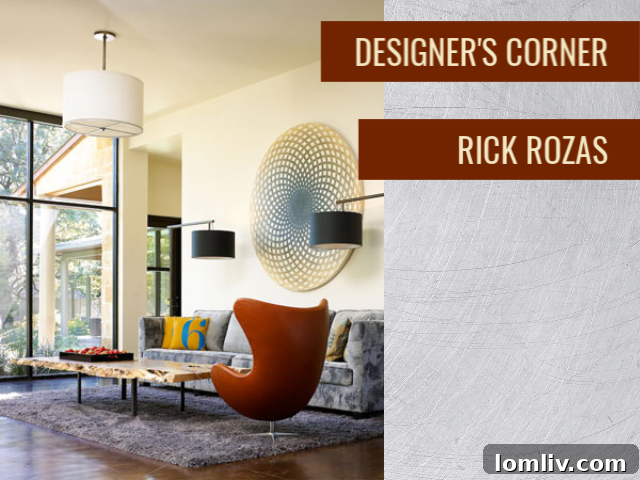

In the vibrant world of interior design, where unique visions and personal touches sculpt living spaces, certain talents shine brighter than others. This edition of Designer’s Corner proudly features Rick Rozas, an interior designer whose profound philosophy and distinctive approach have earned him an esteemed reputation. While our series typically highlights women artists and designers, Rick’s compelling insights and refreshing perspective demanded a return visit, proving him to be far more than a supporting figure in the dynamic realm of home aesthetics. His dedication to crafting truly personalized environments, combined with a deeply engaging personality, makes him a captivating subject worthy of deeper exploration.
When asked about the morning ritual that propels him into his busy day, Rick Rozas offers a charmingly candid response: “My dogs.” This seemingly simple answer immediately reveals layers of his character—a blend of playful wit and genuine affection for his beloved pets. It becomes clear that engaging with Rick is an experience in itself, offering a delightful mix of professionalism seasoned with a refreshingly down-to-earth demeanor. This accessible and warm personality sets him apart in an industry often perceived as exclusive or aloof, forging immediate connections with clients and collaborators alike.
Rick Rozas: Mastering the Art of the “Backward Compliment” in Interior Design
In an industry often characterized by designers striving for an inscrutable or detached aura, Rick Rozas stands out as remarkably warm and approachable. He is an open book, and his clients frequently praise his calming presence, kindness, and delightful manner throughout the design process. For Rick, however, the ultimate testament to his skill and success often comes in the form of what he affectionately calls a “backward compliment”—a subtle yet profound indication that he has achieved his most cherished design objective.
“My favorite thing is when I’m interviewing with someone and they say, ‘I was at so-and-so’s house and they said you did it for them. But it doesn’t look like anything you would do!’” Rozas chuckles, a clear sign of his satisfaction. “I have to laugh. Of course not! That’s the whole idea! A project having a reflection on me is not design.” This statement encapsulates the core of his client-centric philosophy: true design excellence isn’t about imposing a signature style, but about creating spaces that are deeply authentic to their inhabitants. For Rick, a successful interior doesn’t scream “Rick Rozas designed this”; instead, it whispers the story of the people who live there, making it uniquely theirs.
The best possible outcome for any interior design project, Rozas firmly believes, is a space that feels like an organic extension of his clients’ personalities, lifestyles, and aspirations. Achieving this level of personalization requires not only a keen eye for aesthetics but also an extraordinary capacity for empathy and active listening. He dedicates himself to understanding the nuances of each client’s daily routines, their passions, their family dynamics, and even their unspoken desires for their home. This meticulous approach ensures that every element, from the layout to the smallest accessory, resonates with the client’s individual identity.
“I’ve always tried to be humble with my approach to my clients,” he emphasizes. “Because it’s an education to me on each project. Each person lives really, really differently and individually, even in the same space.” This humility is a cornerstone of his success. Rather than dictating, Rick engages in a collaborative journey, viewing each project as a mutual learning experience. He recognizes that every client offers a unique perspective on living, and by truly absorbing these insights, he can craft environments that are not only beautiful but also profoundly functional and emotionally resonant. This collaborative, educational model empowers clients to discover their own aesthetic preferences, ensuring that the final design is a true reflection of their spirit.
“I Will Wear You Out”: The Crucial Role of Scale in Interior Design
Rick Rozas is not just a designer; he’s also an educator, taking great care to enlighten his clients on the foundational principles that bring a design together seamlessly. Among these, the concept of “scale” plays an absolutely pivotal role in his design philosophy and execution. Understanding scale, he argues, is like unlocking a secret language that transforms a mere collection of furniture into a harmoniously designed space. It’s about the relationship between objects, the space they occupy, and the people who use them, ensuring visual balance and optimal functionality.
“To me doing a home is like getting dressed. If you understand how to dress yourself, you can do your home well. The only thing is the scale of the items. Once you grasp that, it transforms everything. You can play with the scale of things to create the illusion of space and distance.” This analogy beautifully simplifies a complex design principle. Just as an ill-fitting garment can diminish one’s appearance, incorrectly scaled furniture or decor can make a room feel cramped, cavernous, or simply “off.” Rick educates clients on how varying the size and proportion of elements can dramatically alter the perception of a room, making a small space feel expansive or a large room feel intimate and cozy. This mastery of scale allows him to craft interiors that are not only aesthetically pleasing but also perfectly tailored to the architectural dimensions of the home.
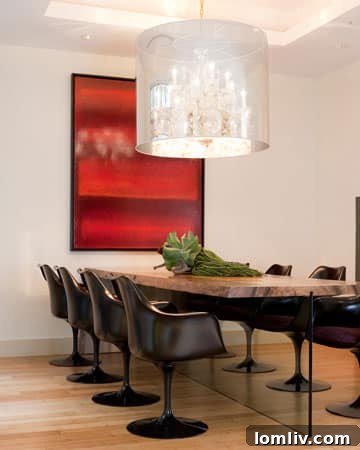
The principle of scale permeates every facet of Rick’s design process. It dictates the height of dining chairs relative to the table, the expansive length of a sectional sofa that anchors a living room, the appropriate size of a chandelier that complements the ceiling height, and even the strategic placement of smaller accessories. In art selection, scale is equally crucial; a tiny painting on a vast wall can look lost, while an oversized piece in a confined space can overwhelm. However, with art, Rick treads a delicate line, respecting the deeply personal nature of aesthetic preference.
“Art is super personal,” he affirms. “You either like it or you don’t and you don’t have to give a reason why.” This acknowledgment reflects his respect for individual taste. Yet, Rick’s commitment to ensuring the best possible outcome for his clients’ homes is unwavering. He laughs deeply before adding, “If I think you’re making the wrong decision, though, I will wear you out until you see it the way I do.” This playful yet firm declaration underscores his passion for design integrity. It’s not about imposing his will, but about guiding clients toward choices that will ultimately enhance their living experience and align with the overall vision of a beautifully scaled and balanced space. His persuasive nature, born from years of experience and a deep understanding of design principles, ensures that clients ultimately make decisions that contribute to a truly harmonious and enduring interior.
No Time and Date Stamp: The Philosophy of Timeless Interior Design by Rick Rozas
Beyond his signature clean lines and an astute eye for art, Rick Rozas adheres to a core philosophy that defines his approach to every project: the pursuit of timelessness. He believes that truly exceptional design transcends fleeting trends, creating spaces that feel perpetually fresh, relevant, and enduring. For Rick, a home should not be a snapshot of a particular moment in time, but a sanctuary that evolves gracefully with its inhabitants, without ever demanding a complete overhaul.
“I like plush materials. I like a big, giant sofa. But mostly, I like things that don’t show age and time. I don’t want them to be trendy,” he asserts. This preference for quality, comfort, and enduring aesthetics is central to his vision. He meticulously selects materials, finishes, and furniture pieces not just for their immediate appeal, but for their ability to withstand the test of time, both physically and aesthetically. Luxurious textures and generous proportions contribute to a sense of comfort and permanence, forming the foundation of a sophisticated and inviting home that resists the ebb and flow of transient styles.
“My approach to design is that it never has to be redone. I don’t like design to have a time date stamp. That is one of my first approaches to how I conceptualize a project, and goes down to every chair and pillow. It’s important to me that it never feel any particular period so it never has to be refreshed. That’s the most precise philosophy to how I approach a project no matter what the style.” This profound commitment to enduring design is what sets Rick Rozas apart. He consciously steers clear of elements that are overtly fashionable, knowing that today’s trend is tomorrow’s outdated look. Instead, he focuses on classic forms, balanced proportions, and a harmonious color palette that provides a versatile backdrop for personalized touches. From the architectural details to the upholstery fabric on a custom sofa, every decision is made with longevity in mind, ensuring that the space remains elegant and functional for decades. This not only offers significant cost savings for his clients in the long run but also provides them with a home that consistently feels current, sophisticated, and deeply personal without the need for constant updates. His versatility in applying this philosophy across diverse styles—from traditional to contemporary—is a testament to his skill in creating truly individual yet timeless luxury interiors.
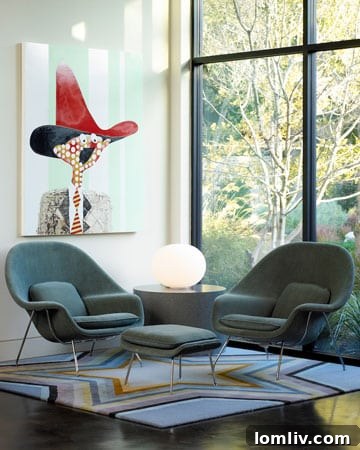
Inspiration Finds a Way: The Designer’s Journey and Creative Process
Rick Rozas is refreshingly frank about the creative process, candidly sharing his vulnerabilities and the occasional moments of self-doubt that even seasoned designers experience. He speaks openly about feeling scattered or uninspired at times, a universal aspect of any creative endeavor that lends him further relatability and authenticity. This honesty demystifies the design process, reminding us that even experts navigate periods of uncertainty.
“At this age, I still think I’ll never have another really good project,” he confesses, a sentiment many creatives can echo. Yet, with age comes wisdom, and he’s learned that these feelings are transient. Inspiration, he knows, always finds a way to resurface, often when least expected. This resilience and trust in his own creative wellspring are crucial to his ongoing success in crafting exceptional living spaces. He understands that creativity isn’t a constant, but a cycle of immersion, reflection, and renewed vision.
“When you’re bored with design or you’ve just seen the same thing a million times, it’s nice to see something done in a unique and beautiful way,” he reflects. This drive for uniqueness fuels his commitment to avoiding trendy designs and focusing on personalized, timeless interiors. He emphasizes that inspiration cannot be forced; it must be allowed to emerge organically. “I learned you can’t force it upon yourself. I just sit back and start drawing in my head.” This quiet introspection is a critical part of his creative flow, allowing ideas to germinate and take shape internally before manifesting on paper or in a physical space. It’s a testament to the deep internal wellspring from which his design concepts flow.
Indeed, he’s in his head quite a lot. “Half the time I look like I’m staring into the abyss,” he says, laughing. “But I’m drawing a floor plan in my head. I’m always thinking about a project. I think that’s what keeps me going.” This constant mental engagement, the perpetual envisioning of layouts, furniture arrangements, and aesthetic details, underscores his profound dedication to his craft. For Rick Rozas, interior design is not merely a profession; it’s an intrinsic part of who he is. His ability to mentally construct and refine complex spaces, combined with his unwavering commitment to client individuality and timeless elegance, solidifies his reputation as a truly visionary and respected figure in the world of luxury interior design. His enduring passion for creating beautiful, functional, and deeply personal homes ensures that his work will continue to inspire and delight for years to come.