

Embarking on the journey of homeownership is a significant milestone for many, often representing a cornerstone of the American Dream. For first-time homebuyers, navigating the complexities of the real estate market can be both exciting and daunting. The decision involves much more than just finding a house; it’s about identifying a community that offers the right balance of affordability, opportunity, and lifestyle. This is precisely why comprehensive analyses, such as SmartAsset’s annual study on the best cities for first-time homebuyers, are invaluable resources for those looking to make their initial foray into the housing market.
Having personally experienced the progression from rental apartments in vibrant communities like Garland and Arlington to finally owning a home in the Dallas-Fort Worth (DFW) metroplex, we understand the unique landscape of Texas real estate. Our journey, which began in a quaint garage apartment in rural Wylie, reflects a common path many take: exploring different neighborhoods, understanding market dynamics, and ultimately finding the perfect place to put down roots. This firsthand experience makes the findings of SmartAsset’s 2020 study particularly resonant, offering a data-driven perspective on what makes certain cities exceptional choices for new homeowners.
The Dallas-Fort Worth metropolitan area, a dynamic economic hub and cultural melting pot, consistently garners national attention for its growth and opportunities. It’s no surprise, then, that DFW is prominently featured in SmartAsset’s extensive report. The study, which meticulously analyzed 185 of the largest U.S. cities, identified 40 top contenders, and an impressive six of these are right here in the DFW metroplex. This strong representation underscores the region’s appeal and varied offerings for those looking to purchase their first home. SmartAsset’s methodology weighed several critical factors, categorizing them into four key areas: home-market favorability, affordability, livability, and employment, providing a holistic view of each city’s suitability for first-time buyers.
Breaking down these metrics reveals why DFW cities perform so well. Home-market favorability assesses the health and balance of the local real estate market, including factors like inventory levels, median home price changes, and the percentage of homes with declining values. A favorable market implies stability and growth potential, crucial for a long-term investment like a home. Affordability is perhaps the most direct concern for first-time buyers, measuring the ratio of median home values to median household incomes, as well as property tax rates and closing costs. Cities that strike a better balance here make homeownership more accessible. Livability encompasses quality-of-life aspects such as amenities, safety, school ratings, and commute times, which are essential for settling into a new community. Finally, employment metrics, including unemployment rates and job growth, indicate a city’s economic vitality and the financial stability it offers its residents.
Among the DFW cities lauded in the SmartAsset study, Garland shines brightest, securing the eighth spot nationally and ranking as the best in Texas for first-time homebuyers. While our personal journey took us elsewhere, our initial time in Garland revealed a community with genuine appeal. SmartAsset’s data validates this sentiment, showing a remarkable 56 percent surge in Garland’s median home value between 2013 and 2018. Crucially, this appreciation was supported by a nearly 32 percent growth in median household income during the same period. This synchronized growth is a powerful indicator, as rising incomes empower residents to save more for down payments and manage mortgage obligations more comfortably. Furthermore, Garland distinguished itself with a third-place ranking in employment, boasting an unemployment rate of just 8.1 percent in July 2020, and a respectable 13th position in home-market favorability. These “ingredients,” as SmartAsset aptly puts it, create an environment where aspiring homeowners can thrive, fostering a sense of financial security and future potential.
Beyond Garland, other DFW cities also made significant impressions on the national list. Frisco, known for its rapid development, excellent schools, and family-friendly amenities, secured an impressive 11th place. Its appeal often lies in its modern infrastructure and vibrant community life, though it typically comes with a higher price tag. Irving, a centrally located city with a diverse economy and proximity to major business hubs, was ranked 12th, offering a blend of urban convenience and residential comfort. Arlington, our eventual homeownership destination, placed 18th, recognized for its affordability relative to other major DFW cities and its rich array of entertainment options. Meanwhile, Plano, frequently praised for its high quality of life, top-tier schools, and thriving corporate presence, landed at 24th. Rounding out DFW’s strong showing was McKinney at 27th, a city celebrated for its historic downtown, community charm, and steady growth. While these cities offer varied experiences and price points, their collective presence on SmartAsset’s list solidifies DFW’s reputation as a prime location for those taking their first step onto the property ladder. It’s also worth noting that the top spot in the national ranking went to Grand Rapids, Michigan, underscoring the diverse geographical opportunities for first-time buyers across the U.S.
Decoding the DFW Housing Market: Beyond the Rankings
While reports like SmartAsset’s provide a valuable framework, a comprehensive understanding of the Dallas-Fort Worth housing market requires looking at broader trends and current data from various reputable sources. These insights offer a more nuanced picture of market health, price movements, and inventory challenges that directly impact first-time homebuyers.
- CoreLogic: Shifting Home Price Dynamics
According to the latest data from research firm CoreLogic, the Texas housing market exhibited varied performance across its major metropolitan areas. The Austin-area, for instance, saw an impressive nearly 8.7 percent increase in home prices from September 2019 levels, marking the largest gain among the state’s significant metros. In comparison, both the Dallas and Fort Worth areas experienced a more moderate yet still substantial 5.3 percent rise in home prices during the same period. These figures highlight a robust market, driven by strong demand and limited supply. However, CoreLogic’s projections introduce a note of caution: the Dallas area is anticipated to see a 1.2 percent price decline by September 2021. For first-time homebuyers, this projection could be a double-edged sword. A slight dip in prices might present an opportunity for more affordable entry into the market, but it also necessitates careful consideration of long-term investment stability and market timing. Understanding these regional disparities and future outlooks is crucial for strategic decision-making.
- Zillow’s Weekly Market Report: The Supply and Demand Equation
Zillow’s Weekly Market Report offers a granular look at the market’s supply-side challenges and their impact on prices. In the Dallas-Fort Worth area, the total number of for-sale listings was down a significant 36.7 percent year over year. While this figure is slightly better than the national percentage decline of 37.4, it still points to a severely constrained inventory. Even more striking, new year-over-year listings in D-FW plummeted by 21.7 percent, nearly three times the national percentage of 7.4. This severe shortage of homes for sale creates a highly competitive environment, often leading to bidding wars and homes selling above asking price. Despite the scarcity, D-FW median sales prices year over year were up an impressive 11.8 percent, a robust increase, though slightly trailing the national total of 12.5 percent. For first-time buyers, low inventory means fewer choices and the need to act quickly, often requiring pre-approval and a clear understanding of their financial limits. Access the full Zillow report for deeper insights here.
- Dallas Metro Report by Zumper: The Rental Market’s Influence
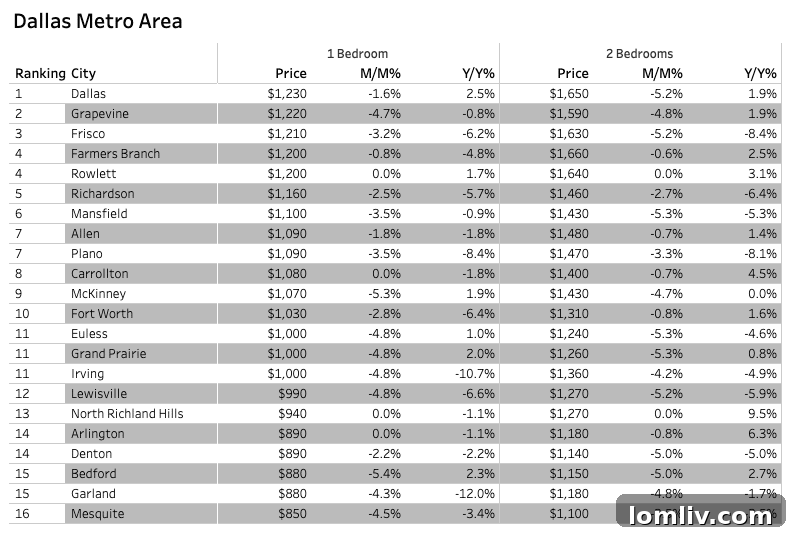
The dynamics of the rental market often provide indirect but valuable insights into homeownership prospects. Zumper’s Dallas Metro Report, focusing on one-bedroom apartment rents, highlights the varying costs of living across DFW. Dallas itself emerged as the most expensive city in the metro area for one-bedroom units, with an average monthly rent of $1,230, closely followed by Grapevine at $1,220. Frisco, despite its reputation for higher home prices, saw its 1BR rent fall to $1,210, placing it third. On the more affordable end, Mesquite stood out as the least expensive at $850 for a 1BR. Interestingly, while Garland was hailed as one of the best D-FW cities for first-time homebuyers, its rental market exhibited a unique trend: year-over-year rent fell by a significant 12 percent, marking the largest decline in D-FW. This decline in rental costs in Garland could be a boon for aspiring homeowners, potentially allowing them to save more aggressively for a down payment while enjoying more affordable living expenses. For those struggling to save while renting, understanding these variations can influence their choice of temporary residence as they plan for homeownership. Explore Zumper’s detailed Dallas rent report here.
For prospective first-time homebuyers in the DFW area, these reports collectively paint a comprehensive picture of a vibrant, albeit challenging, market. While cities like Garland, Frisco, and Irving offer compelling reasons for entry, a successful homeownership journey hinges on a multi-faceted approach. Financial preparedness is paramount; this includes having a strong credit score, a manageable debt-to-income ratio, and securing pre-approval for a mortgage. Exploring down payment assistance programs, available at state and local levels, can also significantly ease the financial burden. Given the fast-paced nature of the DFW market, partnering with an experienced local real estate agent who understands the nuances of individual neighborhoods and current inventory trends is indispensable. Moreover, patience, thorough due diligence, including professional home inspections, and a clear understanding of all closing costs are crucial for making an informed and confident purchase.
The journey to homeownership in Dallas-Fort Worth is unique, filled with both opportunities and complexities. By leveraging robust data from studies like SmartAsset’s and staying updated on market reports from CoreLogic, Zillow, and Zumper, first-time homebuyers can equip themselves with the knowledge needed to navigate this dynamic landscape successfully. Whether you’re drawn to Garland’s affordability and growth, Frisco’s modern amenities, or Arlington’s vibrant community, DFW offers a diverse array of options for those ready to achieve their dream of owning a home.