The Green Acres Paradox: Why Urbanites Aren’t Fleeing Dallas for the Countryside
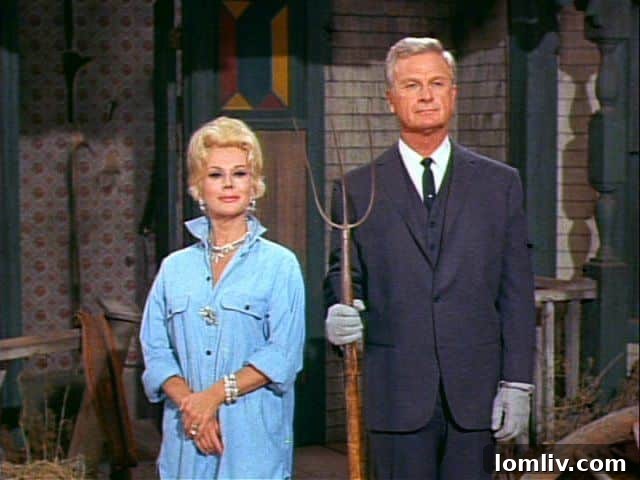
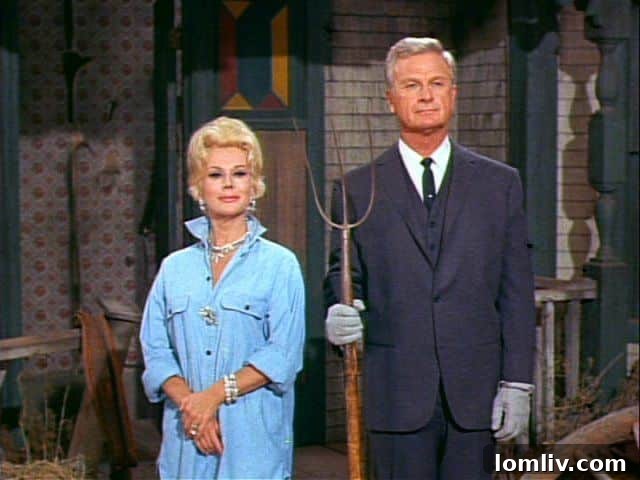
The iconic 1960s sitcom, Green Acres, captivated audiences with its whimsical portrayal of Manhattan lawyer Oliver Wendell Douglas and his socialite wife, Lisa, abandoning their opulent city life for the rustic charm of a dilapidated farm in Hooterville. This riches-to-rags narrative, driven by Oliver’s romanticized vision of agrarian living, became a cultural touchstone. Fast forward to the early 2020s, amidst a global pandemic that reshaped work, life, and personal priorities, many pundits and armchair economists predicted a modern-day reenactment of this very premise. The expectation was clear: urbanites, weary of dense populations and craving expansive outdoor spaces, would embark on a mass exodus from bustling metropolises to serene, smaller towns and rural communities, seeking “land spreadin’ out so far and wide.”
However, reality, as often is the case, tells a different story. Despite widespread speculation and anecdotal evidence suggesting a surge in interest for country living, recent comprehensive studies reveal that the anticipated urban exodus from major cities like Dallas has largely failed to materialize. The allure of quiet pastures and simpler living, while appealing in theory, has not translated into significant migration patterns for the vast majority of urban homeowners. This presents a fascinating paradox, challenging our assumptions about pandemic-driven lifestyle changes and highlighting the enduring appeal of city life.
Pandemic Predictions Versus Reality: A Look at Housing Migration Trends
The initial months of the COVID-19 pandemic undoubtedly sparked conversations about lifestyle shifts. With remote work becoming a necessity for many, the geographical constraints of living near an office suddenly diminished. This newfound flexibility, coupled with a desire for more space, fresh air, and a perceived lower risk of contagion away from crowded urban centers, fueled the narrative of a mass urban flight. Real estate markets in some smaller towns did indeed see temporary spikes in interest, leading many to believe that the transformation of the American housing landscape was well underway.
Yet, a new study by LendingTree Inc. offers a sobering counterpoint to this widespread expectation. The report meticulously analyzed housing migration patterns, specifically focusing on homeowners moving from the nation’s 50 largest metropolitan areas to smaller towns. The findings indicate that while there was a slight uptick in such moves during the initial year of the pandemic, the overall numbers remained remarkably low. This suggests that while the pandemic introduced new considerations for homebuyers, it did not fundamentally alter the deeply ingrained preferences and practicalities that tie people to urban environments.
LendingTree Data Reveals Dallas’s Steady Urban Core
When zeroing in on the Dallas-Fort Worth metroplex, one of the nation’s most dynamic and fastest-growing urban centers, the LendingTree study paints an even clearer picture of stability rather than dispersion. The data reveals that a mere 1.56 percent of Dallas-area homeowners chose to leave the vibrant city life to purchase homes in smaller towns. This figure is not only significantly lower than what many might have predicted but also aligns closely with the broader national trend.
To provide context, the study highlights that in 2019, before the full onset of the pandemic, an average of 1.91 percent of homeowners residing in one of the 50 largest U.S. cities moved to a smaller town. In 2020, as the pandemic took hold and remote work became prevalent, this share indeed saw a modest increase to 2.18 percent. While this represents a growth in the percentage of urban dwellers seeking new homes in less populous areas, the overall proportion remains minuscule. These numbers underscore that the vast majority of city homeowners, even those with newfound remote work flexibility, opted to maintain their urban residency, reaffirming the enduring appeal and practical advantages of big-city living.
A Closer Look at Texas Trends: More Than Just Dallas
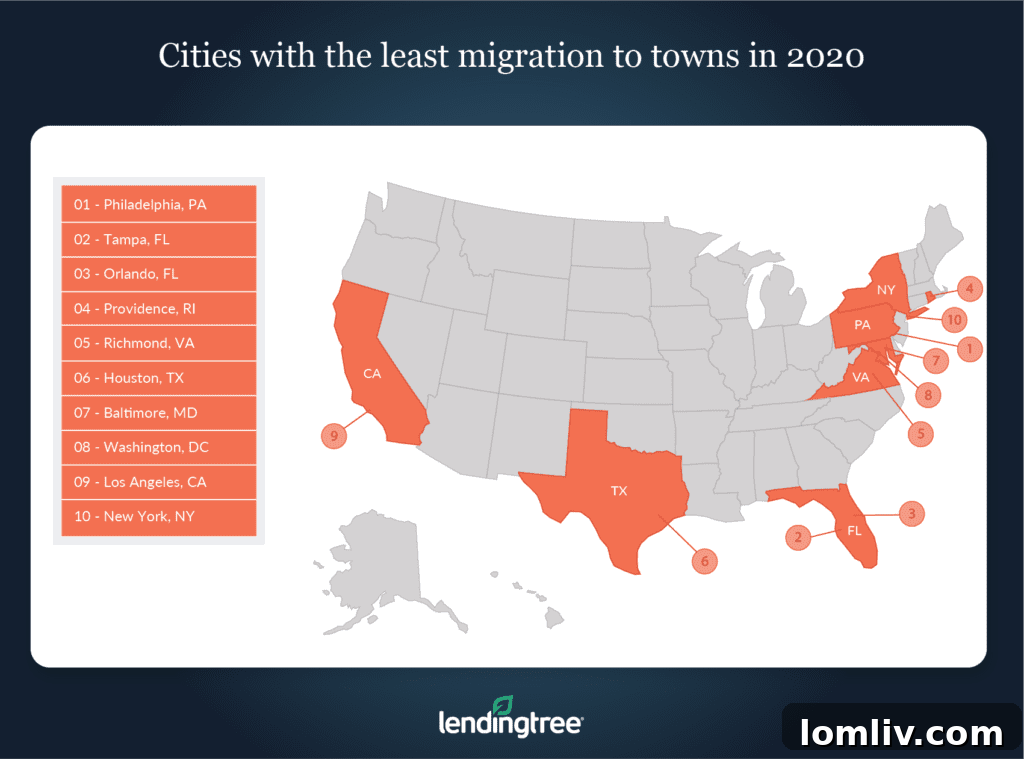
The trend observed in Dallas is not an isolated phenomenon but rather reflects a broader pattern across other major Texas markets. Austin, renowned for its booming tech industry and vibrant culture, saw only 1.52 percent of its homeowners move to smaller towns. San Antonio, with its rich history and growing economy, recorded an even lower 1.41 percent. Houston, the state’s largest city and a global energy hub, exhibited the smallest outward migration to smaller towns, with a mere 1.05 percent of its homeowners making such a move. These consistent figures across Texas’s major urban centers reinforce the narrative that while the idea of rural escape might be appealing, the practicalities and benefits of city life continue to hold sway for most residents.
Interestingly, for the small percentage of Dallas residents who did choose to relocate, their preferred destinations were far from the idealized, isolated Hooterville. The most popular choice for those moving out of Dallas was Corsicana, a town approximately an hour’s drive south of the Dallas-Fort Worth metroplex. Nearly 12 percent (11.95%) of migrating Dallasites chose Corsicana, a town perhaps best known for its Collin Street Bakery fruitcakes. This choice suggests a desire for proximity rather than complete severance from urban conveniences, indicating that even those seeking a change still value accessibility to a larger urban hub for work, family, or specialized services.
The Enduring Appeal of City Amenities Over Rural Solitude
The LendingTree study further illuminated that the overwhelming majority of homeowners—an average of 84 percent—who moved during this period opted to stay within the same city. This contrasts sharply with the nearly 16 percent who moved to an entirely different city, whether larger or smaller. This data strongly suggests that the primary drivers for moving are often related to changing housing needs (e.g., more space, different neighborhood, better schools) within the existing urban framework, rather than a desire to abandon city life altogether.
The enduring appeal of cities like Dallas lies in their unparalleled concentration of amenities and opportunities. Urban centers offer diverse job markets, even for those working remotely, as many companies maintain a physical presence. Access to world-class healthcare, higher education institutions, a vibrant cultural scene including museums, theaters, and music venues, and a diverse culinary landscape are significant draws. Furthermore, cities provide robust infrastructure, including efficient transportation networks and high-speed internet, which are crucial for modern life and work. The social fabric of a city, with its myriad communities, social clubs, and networking opportunities, also plays a pivotal role in retaining residents. For many, the convenience, variety, and stimulation of urban environments far outweigh the perceived tranquility of rural solitude, especially when that solitude comes with trade-offs like limited services and longer commutes.
The Nuance of ‘More Space’: What Homebuyers Truly Seek
Reinforcing LendingTree’s findings, recent national data from the U.S. Census Bureau regarding pandemic-related moves provides additional insights. The Census Bureau’s analysis indicated a decline in growth for rural non-metro areas. This particular finding is critical because it suggests that while a desire for “more space” was a common theme among movers during the pandemic, this aspiration often did not equate to a yearning for isolated rural living. Instead, it points to a nuanced demand: people wanted more space, but they also wanted to retain access to common in-town amenities.
This “space with amenities” preference translates into a continued draw towards suburban areas surrounding major cities, or smaller towns that are still well-connected and offer a reasonable level of services. The ideal scenario for many pandemic-era movers was not to be entirely disconnected, but to find a comfortable balance – a bigger backyard, a dedicated home office, or a quieter neighborhood – without sacrificing the conveniences of city life. The notion that a “Drucker’s General Store” (referencing the lone store in Hooterville) would suffice for all modern needs simply isn’t enough for today’s urban-accustomed homeowners. They seek larger homes, perhaps, but not necessarily a complete detachment from the sophisticated infrastructure and varied offerings that only a metropolitan area or its immediate satellites can provide.
Implications for the Future of Urban and Suburban Real Estate in Dallas
The findings from both LendingTree and the U.S. Census Bureau have significant implications for the future of urban and suburban real estate, particularly in a thriving market like Dallas. They suggest that the long-term viability and growth of major cities are likely to remain robust. Urban planners and developers in Dallas can confidently continue to invest in developing diverse housing options, enhancing public spaces, and expanding urban infrastructure, understanding that the demand for city living is resilient.
For the Dallas real estate market specifically, this means continued pressure on housing inventory within the city and its immediate suburbs. The market will likely continue to favor properties that offer a blend of space and accessibility, appealing to homeowners who want the benefits of urban proximity without feeling confined. It also implies that while smaller towns might see some incremental growth from urban migrants, a dramatic shift in population distribution is improbable. Instead, these smaller towns, particularly those within commuting distance of Dallas like Corsicana, may evolve into attractive options for those seeking a slightly slower pace of life while maintaining strong ties to the economic and social opportunities of the larger metroplex.
Conclusion: Redefining the American Dream in the 21st Century
In conclusion, the post-pandemic housing trends have defied the romanticized narrative of a mass urban exodus reminiscent of Green Acres. While the pandemic undoubtedly prompted many individuals and families to reconsider their living situations, the data unequivocally demonstrates that the vast majority of homeowners in major cities like Dallas have chosen to remain in or near their urban centers. The enduring appeal of diverse job markets, comprehensive amenities, robust infrastructure, and vibrant cultural scenes continues to anchor populations to metropolitan areas.
The “American Dream” in the 21st century appears to be less about escaping to an isolated farm and more about finding the ideal balance between personal space, community engagement, and access to modern conveniences. For cities like Dallas, this means a continued focus on sustainable urban development, fostering lively neighborhoods, and adapting to the evolving needs of its residents who value both connection and comfort. The urban core, far from being abandoned, continues to thrive, adapting to new realities while holding firm as the preferred home for millions.