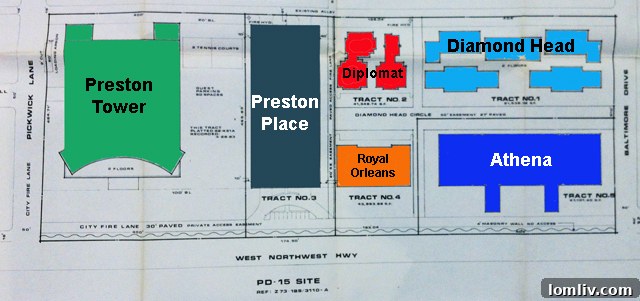
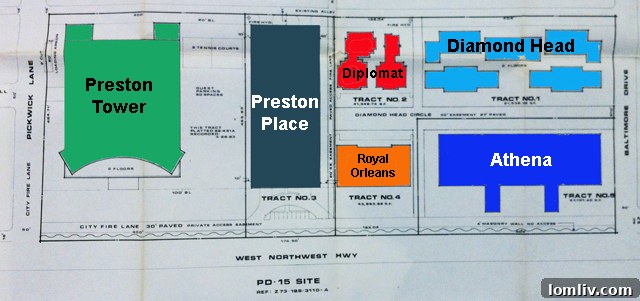
The Dallas City Council recently convened for a pivotal hearing, once again bringing to the forefront the long-standing and often impassioned debate surrounding the proposed development within Planned Development District 15 (PD-15), situated directly behind the iconic Pink Wall. Despite the fervor and familiar arguments echoing through the chamber, the outcome remained largely unchanged, leaving many stakeholders frustrated and the path forward still shrouded in uncertainty.
This ongoing saga highlights a fascinating, if not perplexing, dynamic in urban development: the clash between progress and preservation, economic viability and community sentiment. The opposition to the PD-15 development frequently manifests in what some observers describe as illogical and even self-defeating arguments. A notable instance occurred when Athena’s Barbara Dewberry vociferously reiterated concerns that introducing green space into the proposed development would paradoxically be detrimental, as it might attract “outsiders” to the neighborhood. This sentiment, met with applause from a segment of the audience, underscores a deep-seated apprehension about change and the perceived erosion of neighborhood character. Yet, it stood in stark contrast to the quiet murmurs from others in attendance, who expressed a clear desire for more green amenities within what they termed PD-15’s “concrete jungle,” highlighting a division within the community itself regarding desired outcomes.
Further illustrating the complexity of the debate, Council Member Jennifer Gates presented a critical point: if no viable plan emerges from the Authorized Hearing, then effectively nothing would be built, primarily because current alternative proposals lack the necessary economic viability. This statement, too, garnered significant applause, revealing a segment of the audience that, perhaps inadvertently, celebrated the prospect of stagnation over compromise. This stance, however, risks leaving a valuable piece of Dallas real estate in a state of indefinite limbo, potentially missing opportunities for thoughtful, beneficial development.
The council meeting began with a dense, half-hour overview of the Plan Commission’s approved documents and the city staff’s subsequent revisions. For anyone not intimately familiar with the intricate details of zoning and development regulations, this presentation likely felt akin to a foreign film without subtitles. Even for those deeply invested in the issue, navigating the labyrinthine language of urban planning documents can be a formidable challenge, further complicating efforts to reach common ground and mutual understanding among all parties.
Navigating the Labyrinth of Planned Development Districts (PDs)
A significant hurdle in the PD-15 discussion is the apparent lack of a fundamental understanding regarding the scope and limitations of a Planned Development District (PD) and the specific elements that fall under direct neighborhood negotiation. It’s a common misconception that every aspect of a development, from construction logistics to worker conduct, can be dictated by the PD documents. In reality, a PD primarily governs zoning, density, height, and general land use parameters.
Critical aspects such as the synchronization of construction activities, protocols for loading and unloading, management of construction traffic, private roadway repairs, and detailed worker regulations are typically not embedded within a PD. These operational details are, instead, integral components of a “Good Neighbor” document. This type of agreement is a separate, vital accord negotiated directly between a neighborhood association and developers, designed to mitigate the immediate impacts of construction and ensure harmonious coexistence during the development phase and beyond. Unfortunately, the Preston Hollow South Neighborhood Association (PHSNA) appears to have largely sidestepped these crucial negotiations. Their reluctance stems from a persistent hope that the development will either not proceed at all or be scaled back to a minimal degree, effectively delaying practical engagement until a “no-development” outcome is no longer plausible.
This approach brings to mind a poignant saying: “Pray to God, but row away from the rocks.” In the context of PD-15, the neighborhood, in its steadfast opposition, has yet to grasp the oar and actively engage in shaping the inevitable. By delaying negotiations on a Good Neighbor document, they risk finding themselves in a position where they are merely “sweeping up after the elephants at the end of a long parade,” forced to accept conditions that could have been more favorably influenced had proactive engagement occurred earlier.
The Tulane Blvd. Controversy: Traffic, Access, and Inter-Agency Dynamics
Tulane Blvd. and Northwest Highway: A Point of Contention for Dallas Traffic
One of the most persistently contentious issues revolves around the potential opening of Tulane Boulevard to Northwest Highway. Proponents argue that this access point is crucial for alleviating traffic congestion and improving connectivity within the area. However, the city’s response to this proposal during the hearing was particularly enlightening. City officials clarified that they would not, rather than could not, incorporate language into the PD documents mandating Tulane’s connection to Northwest Highway. The rationale behind this decision is pragmatic: requiring TXDoT (Texas Department of Transportation) approval for such an arterial connection within the PD framework could halt the entire development process if TXDoT were to deny the request.
Following the meeting, a city staffer elaborated, explaining that TXDoT typically operates independently and would not feel pressured by specific mandates written into a local PD. While this clarifies the city’s position, it sparks a counter-argument: if opening Tulane were the singular condition for the development to proceed, perhaps developers, armed with a clear incentive, would be more successful in lobbying TXDoT. This strategic alignment could potentially unlock a solution that benefits both the development and the surrounding community’s traffic flow.
Yet, the core dilemma remains. For the neighborhood to truly champion the opening of Tulane at Northwest Highway, they would need to actively collaborate with developers. Such collaboration, however, would inherently acknowledge the inevitability of development, a bitter pill that many in the opposition are still unwilling to swallow. The continued resistance, as evidenced by recent meetings, suggests a collective reluctance to move beyond outright rejection towards strategic compromise.
Scrutinizing the PD-15 Traffic Study: Fact vs. Perception
The traffic study commissioned for PD-15 also faced intense scrutiny, primarily with the aim of discrediting its findings. Conspiracy theories abounded, fueled by the fact that Preston Place, one of the primary developers, funded the study and selected the consulting firm. Critics questioned the impartiality, conveniently overlooking the practical reality that developers typically bear the financial burden for such comprehensive analyses. Council Member Gates eloquently addressed these concerns, stating that it is standard practice for the applicant, not the city, to finance traffic studies, and consequently, to choose the firm. Crucially, she emphasized that while the applicant pays and chooses, the city dictates the specific metrics and scope of what needs to be measured, ensuring a level of oversight. For an audience where “lies are facts you don’t agree with,” this explanation, unfortunately, did little to quell the murmuring dissent.
The Point System: Incentivizing Quality Development
The introduction of a “point system” into the June Plan Commission meeting also generated significant murmuring, particularly when it was revealed that a developer had initially suggested the concept. While this admission fueled suspicions of developer influence, Council Member Gates highlighted that point systems are a well-established and effective tool in many Planned Development Districts across urban centers. These systems function as inducement mechanisms, essentially a sophisticated barter system where developers can earn points by voluntarily undertaking costly additions or enhancements that benefit the public good or improve project quality.
These points can then be “traded in” for relief on other, less critical requirements, ultimately aiming to make the overall project better and more responsive to community needs. A prime example is underground parking, a feature that one attendee passionately demanded be made mandatory. While undoubtedly desirable, underground parking significantly increases construction costs. If the community desires such a costly amenity, there must be a reciprocal understanding that developers require other flexibilities or incentives to absorb these additional expenses without rendering the project economically unviable. Just as a homeowner might splurge on high-end appliances like Gaggenau refrigerators during a renovation, understanding that such luxury comes with a higher price tag, so too must communities acknowledge the cost implications of demanding premium development features.
CARD: A Reiteration of Past Stances Under a New Banner
Council Member Gates also drew attention to the activities of the “new” CARD group, an acronym for Citizens Advocating Responsible Development. However, upon closer inspection, CARD appears to be comprised of many of the same individuals who previously advocated for the largely unworkable 10-6-4 plan. Their current website echoes a similar hyperbole, making claims such as: “The two buildings fronting on Northwest Highway could be as high as 310 feet or 29 stories (the same height as the Preston Tower). The two towers on the north side of PD-15, (south of the alley between PD-15 and Bandera Ave.) could be eight stories tall.”
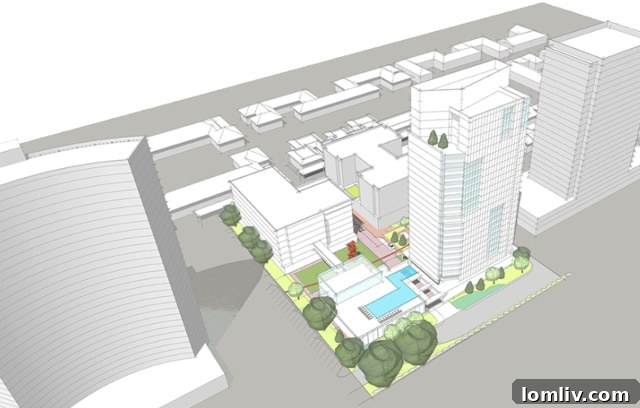
For crucial clarification, a 310-foot high-rise, given the stringent setback requirements, would realistically only be feasible for a single building within the PD-15 area. The one-acre Royal Orleans parcel, for instance, lacks sufficient land on its own to accommodate such a structure. While a previous Provident plan depicted a tower on that specific lot, it was contingent upon being integrated with the larger two-acre Preston Place lot. Preston Place, conversely, possesses the land capacity to support such a development independently. However, even with the full spectrum of points and incentives, the notion of two separate 310-foot high-rises along Northwest Highway is simply not architecturally or logistically viable.
A secondary, albeit minor, point to consider is the characterization of an eight-story building as a “tower.” Such a descriptor is arguably an exaggeration, perhaps only fitting the perspective of a child gazing skyward. Furthermore, the CARD group’s proposed eight-story “towers” are inaccurately located. Their descriptions place them between the alley and Diamond Head Circle, not Bandera Avenue, which lies entirely outside the PD-15 boundaries. This geographical misrepresentation is particularly surprising, especially considering their website features a map of the area that appears to have been derived from publicly available resources, yet they misinterpret key locations within it. Their current development goals, advocating for merely eight stories along Northwest Highway and four stories in the rear, represent an even more restrictive vision than their previous 10-6-4 plan, effectively indicating a continued resistance to pragmatic development rather than an earnest pursuit of compromise.
Council Member Gates’ Perspective: The Residential Proximity Slope
One aspect on which Council Member Gates expressed considerable clarity was her unwavering support for the Residential Proximity Slope (RPS). This stance unequivocally signals her opposition to the 310-foot plan that was previously approved by the Plan Commission. While the RPS aims to protect the light and air of adjacent residential properties by limiting building height at lot lines, this perspective potentially overlooks a broader urban planning benefit. Many argue that the difference in height, especially when viewed from a distance, would be negligible to the average resident. However, the tangible benefits of increased free space, enhanced pedestrian experiences, and thoughtfully designed public areas at ground level are things residents would appreciate daily, even if their interactions are limited to driving past.
An Impasse in Dallas Development: The Road Ahead for PD-15
Ultimately, the recent Dallas City Council hearing did little to resolve the protracted dispute over PD-15. The needle of progress remained unmoved, and attendees left with opinions seemingly unaltered from when they arrived. In many respects, the session mirrored the countless other PD-15 meetings that have taken place over the past two years, characterized by fervent arguments, deeply entrenched positions, and an apparent lack of significant forward momentum. All eyes now turn to the Dallas City Council’s September 11th meeting, a date that, coincidentally, carries its own unique historical weight. There is a collective hope that this upcoming session will, mercifully, bring a definitive resolution to this complex and often contentious chapter in Dallas urban development.

About the Author: With a keen focus on high-rises, homeowners’ associations, and property renovation, the author uniquely blends expertise in modern and historical architecture with a nuanced understanding of the YIMBY (Yes In My Backyard) movement. This analytical approach has earned widespread recognition, including three Bronze awards (in 2016, 2017, and 2018) and two Silver awards (in 2016 and 2017) from the National Association of Real Estate Editors. For those with compelling stories or even unique proposals, feel free to reach out via email at [email protected]. While the author may be elusive on platforms like Facebook and Twitter, your efforts to connect are always welcome.