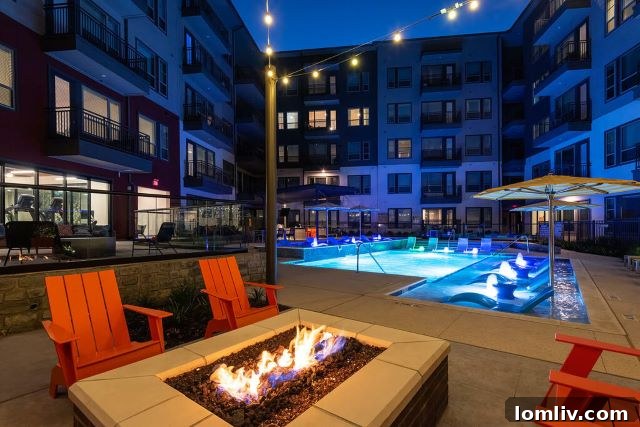
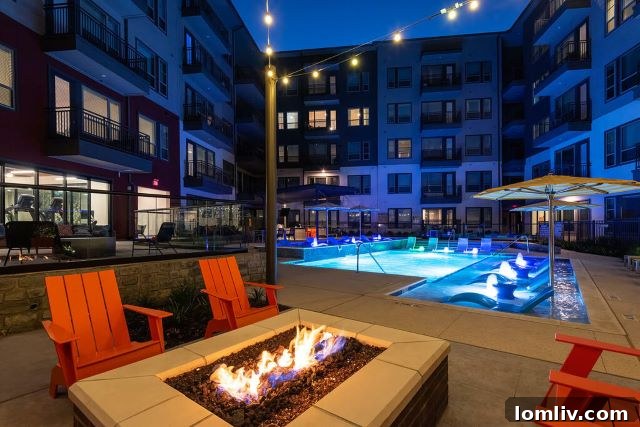
For those seeking an elevated living experience, the Dallas-Fort Worth (DFW) metropolitan area has firmly established itself as a premier destination for luxury rentals. This vibrant North Texas region continues to attract an influx of residents and businesses, creating a robust demand for amenity-rich, high-end apartment living. The allure of DFW lies not only in its booming economy and diverse job market but also in the sophisticated lifestyle opportunities it presents, making it a hotspot for luxury apartment developers and discerning renters alike.
Recent analysis by StorageCafe highlights the DFW area’s remarkable dominance in the luxury rental sector. Among the top 10 U.S. cities that have primarily focused on building luxury rentals over the past decade, three DFW cities stand out: Plano, Irving, and Dallas. Plano impressively secures the third national spot, while Irving and Dallas follow closely at sixth and seventh, respectively. This strong showing is a testament to the region’s dynamic growth and its capacity to cater to a demographic increasingly valuing comfort, convenience, and a premium living environment—a trend significantly fueled by the continuous wave of corporate relocations to North Texas.
Understanding what constitutes a “luxury apartment” is crucial. Yardi Matrix, a leading authority in real estate intelligence, employs a comprehensive property-rating categorization system, ranging from A+ to D. This system, akin to academic report cards, provides a clear benchmark for property quality. An A+ rating signifies the pinnacle of luxury, offering residents unparalleled amenities, superior finishes, and exceptional service. Conversely, a D-rated property would represent the lowest tier, lacking the sophisticated features and comforts associated with high-end living. In the DFW market, the prevalence of A and A+ rated properties underscores the region’s commitment to delivering top-tier residential experiences.
Luxury apartments in DFW go far beyond mere living spaces; they offer comprehensive lifestyle packages. These properties are typically characterized by generous, thoughtfully designed floor plans that maximize space and natural light. However, it’s the extensive array of community amenities that truly sets them apart. Imagine state-of-the-art culinary lounges equipped with full gourmet kitchens and even pizza ovens, perfect for entertaining guests or hosting private cooking events. Residents can unwind in resort-style swimming pools, complete with cabanas and sun decks, or socialize in sophisticated sky-deck clubrooms offering panoramic city views. For the growing population of remote and hybrid workers, integrated co-working spaces with high-speed internet and private meeting rooms have become indispensable, transforming residential complexes into versatile hubs for both leisure and productivity.
Plano: A National Leader in Upscale Living
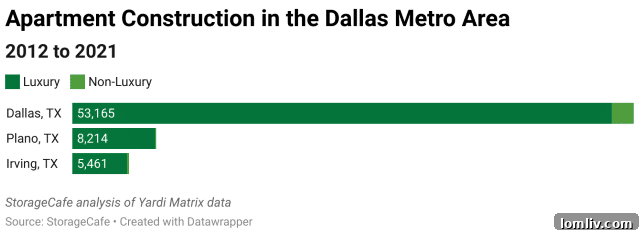
Leading the charge within Texas, Plano has emerged as a national frontrunner in luxury apartment development. Over the past decade, an astounding 98.5 percent of the city’s 8,336 newly constructed apartment units fall under the luxury category. This remarkable statistic highlights Plano’s strategic focus on attracting and retaining high-income professionals and families. The average luxury apartment in Plano boasts a spacious 945 square feet, providing ample room for comfortable living. Beyond square footage, these residences are replete with premium amenities designed to cater to every aspect of modern life. Residents frequently enjoy access to pristine swimming pools, well-maintained tennis courts, and increasingly, electric-vehicle charging stations—a nod to sustainable living and the growing popularity of EVs. Furthermore, the inclusion of dedicated co-working spaces reflects a deep understanding of today’s professional landscape, offering residents the convenience of working from home without sacrificing a professional environment. Plano’s appeal is further amplified by its highly-rated school districts, vibrant cultural scene, and an abundance of upscale shopping and dining options, cementing its status as a desirable luxury destination.
Irving and Dallas: Expanding the Luxury Footprint
Not far behind Plano, Irving has also made significant strides in the luxury rental market, securing the sixth position nationally. Since 2012, 97 percent of its 5,629 new apartment units have been designed with top-tier amenities and finishes, solidifying its reputation as a hub for premier apartment living. Irving’s strategic location, with its proximity to DFW International Airport and major corporate headquarters in Las Colinas, makes it an attractive choice for professionals seeking convenience without compromising on quality. The city’s luxury developments often feature sophisticated common areas, fitness centers, and beautifully landscaped outdoor spaces, contributing to a holistic living experience. Irving’s continued growth in this sector is a clear indicator of the strong demand for upscale housing options in the broader DFW metroplex.
To delve deeper into the burgeoning rental markets of Irving and Lewisville, a related analysis by StorageCafe offers further insights:
Irving and Lewisville are Hot Spots for Renters, StorageCafe Analysts Find
Dallas, as the heart of the DFW metroplex, naturally represents the largest volume of luxury apartment construction. Since 2012, the city has added an impressive 55,297 apartment units, with 96 percent of these fitting the luxury description. This massive scale of development underscores Dallas’s role as a major economic powerhouse and a magnet for diverse populations. From the sleek high-rises of Uptown and Downtown to the sprawling, amenity-rich complexes in its northern corridors, Dallas offers a vast spectrum of luxury living. The sheer number of units speaks to a sustained and robust demand across its many vibrant neighborhoods, each offering unique cultural, dining, and entertainment experiences to its residents.
A National Perspective: The Arizona Connection
While Texas cities are prominent, the national landscape for luxury rentals also sees strong contenders from Arizona. Gilbert and Chandler, both dynamic cities in Arizona, clinched the first and second spots nationally, respectively, with Scottsdale ranking fourth. This suggests a broader trend across the Sun Belt states, where rapid population growth, economic expansion, and an influx of tech talent are fueling a boom in high-end housing. As Doug Ressler, Business Intelligence Manager at Yardi Matrix, aptly observed, “As preferred relocation destinations massively attracting young professionals – tech talent in particular – both Texas and Arizona have amped up their construction games in the major urban hubs and their feeder cities.” This statement perfectly encapsulates the underlying drivers of luxury apartment development: a robust economy attracting skilled professionals, who in turn demand premium living environments.

Addressing Supply and Demand: Expert Insights on Texas Construction
Despite the significant construction activity, not all experts believe Texas is keeping pace with demand. Harold Hunt, a distinguished research economist at the Texas Real Estate Research Center, expresses concern that Texas might be “behind the curve” in new apartment construction. His assessment is rooted in alarming market indicators, specifically a year-over-year increase in average apartment rents across Texas that is just under 20 percent. This substantial surge in rental costs points to a clear imbalance: demand is far outstripping the available supply. Hunt notes that “permits and deliveries here in Texas have been fairly flat over the past several years,” even as the state continues to be a top destination for out-of-state migrants. This persistent influx of new residents, combined with stagnant construction rates, creates an intensely competitive rental market, driving prices ever higher.
When considering the evolution of amenities, Hunt suggests that the range of features offered in Texas luxury apartments hasn’t undergone radical changes since the pandemic. While the focus on elements like co-working spaces and robust internet connectivity has certainly intensified, the core set of luxury amenities largely remains consistent. However, Hunt highlights a more profound, long-term trend impacting the housing landscape: “there has been a long-term trend toward more Class A construction and less Class B units.” This shift indicates that developers are increasingly prioritizing the construction of high-end, luxury (Class A) properties, potentially at the expense of more moderately priced (Class B and C) options. While this trend caters to the demand for luxury, it could also exacerbate affordability challenges for a broader segment of the population, leading to a widening gap in housing options.
The implications of this supply-demand imbalance are far-reaching. For renters, it means facing higher prices, limited availability, and increased competition for desirable units. For developers, it presents both opportunities and challenges—the chance to capitalize on strong demand, but also the pressure to navigate rising construction costs and obtain necessary permits efficiently. The ongoing corporate migrations, particularly from the tech sector, continue to pour new residents into DFW, further intensifying the need for housing across all price points, but especially for the premium segment that matches the expectations of these high-earning professionals. The future of the DFW luxury rental market will hinge on how effectively developers and city planners can address this disparity, ensuring a sustainable and balanced growth trajectory.
What is StorageCafe? StorageCafe is a nationwide storage space marketplace powered by Yardi, offering valuable insights and data on the real estate and rental markets.
Report review: StorageCafe consistently provides comprehensive analyses, and this deep dive into the DFW luxury rental market is no exception. It offers a wealth of data and expert commentary, making it an invaluable resource for anyone looking to understand current trends and future directions in North Texas real estate. The report serves as an excellent starting point for exploring the nuances of this dynamic market.