By Jay Firsching
Senior Historic Preservation Specialist, Architexas
On a sun-drenched August Friday, a profound sense of accomplishment settled over Barbara McCutcheon as she surveyed the bustling square in downtown Bonham. The scene before her was a vibrant testament to decades of unwavering dedication – the Fannin County Courthouse, her personal passion project, was nearing the culmination of its monumental restoration. This wasn’t merely a construction site; it was a living monument reborn, a powerful symbol of community resilience and a victory for historical preservation. The journey had been long, fraught with challenges, but the vision she had championed for so long was now taking tangible form.
Years earlier, back in 2010, when the esteemed director of Bonham’s public library was asked about an alternative career path, her answer resonated with a deep-seated aspiration. “I know what it would be. Architecture. Restoration. Everybody knows I am trying to get that courthouse restored,” McCutcheon declared, her voice filled with conviction. “I would be an architect.” Little did she know then that her unwavering advocacy would, in essence, allow her to embody that role, shaping the destiny of a cherished landmark and inspiring a community.
The Enduring Legacy of Texas Courthouses
For those unacquainted with the rich architectural tapestry of the Lone Star State, Texas boasts an extraordinarily impressive collection of historic courthouses. Many of these majestic structures were erected during what historians affectionately refer to as “the golden age of Texas courthouses,” a prolific period spanning the latter half of the 19th century and extending into the early 20th century. This era saw a dramatic influx of settlement and the rapid formation of new counties, each eager to establish its identity and infrastructure.
The establishment of a county seat was a pivotal moment for any burgeoning community, and landowners understood its profound economic implications. By strategically donating ample land for a public square, they could entice county officials to designate their property as the administrative center. This act alone could exponentially skyrocket the value of their surrounding land overnight, transforming sleepy plots into prime real estate. Similarly, already established communities vied fiercely to be named the seat of government, recognizing that county business brought a steady stream of people to town, and with that, an explosion of commerce, services, and entrepreneurial opportunities. The courthouse square became the pulsating heart of economic activity, a vibrant hub where legal matters, land transactions, and social gatherings intertwined.
The decision to construct an elaborate and architecturally significant courthouse served multiple critical functions. Primarily, it solidified a town’s position as a permanent county seat. After such a substantial public investment, few counties would contemplate the costly and disruptive process of relocating their administrative center. These grand structures also fulfilled an immensely important symbolic role, acting as powerful sources of civic pride and community identity. For residents, particularly those new to the often-rugged Texas frontier, these imposing buildings represented far more than just government offices; they were tangible embodiments of stability, law, and order in a rapidly developing landscape. They projected an image of sophistication and progress, inspiring confidence and attracting further settlement and investment.
Architecturally, the design of these courthouses often reflected a thoughtful consideration for egalitarian commerce. To ensure that all businesses lining the square received an equal share of economic benefits, courthouses were frequently designed with four prominent entrances. This architectural feature ensured that no side of the building, and by extension, no adjacent business, was perceived as being at the “back” or less important, fostering a balanced and thriving commercial environment around the central square.
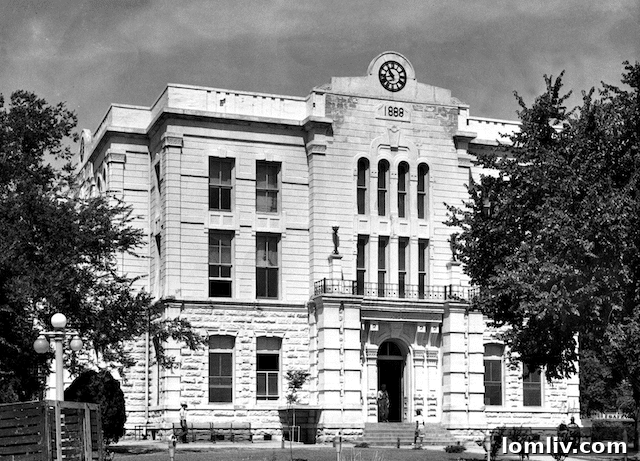
A Century of Transformation: The Fannin County Courthouse Through the Years
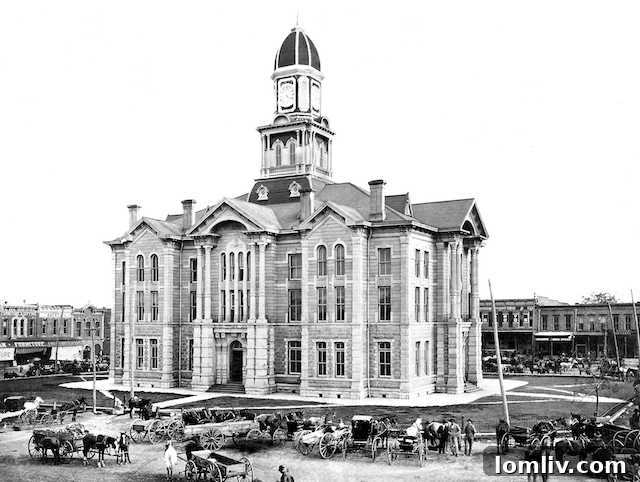
Fannin County, nestled in North Texas, was a proud participant in this statewide courthouse construction boom. In 1888, the county joined its contemporaries by proudly erecting a magnificent French Second Empire style building. This architectural masterpiece, designed by Wesley Clark Dodson—one of Texas’s most prolific and renowned architects of the era—in partnership with William Dudley, was a true marvel. It featured elaborate stonework, intricate detailing, and was crowned by a soaring clock tower that dominated the Bonham skyline, symbolizing the county’s progress and stability. Dodson’s work, found in numerous Texas counties, often blended European influences with American practicality, creating structures that were both grand and functional.
However, the courthouse’s original splendor was tragically cut short. After just 40 years of service, a devastating fire erupted in 1929. The inferno caused the majestic tower and its bell to come crashing down through the floors below, leaving a gaping void and severely damaging the structure. This catastrophic event marked the first of many unfortunate transformations that would gradually erase the building’s original character. The fire was more than just a physical blow; it was a loss of civic identity, a stark reminder of vulnerability.
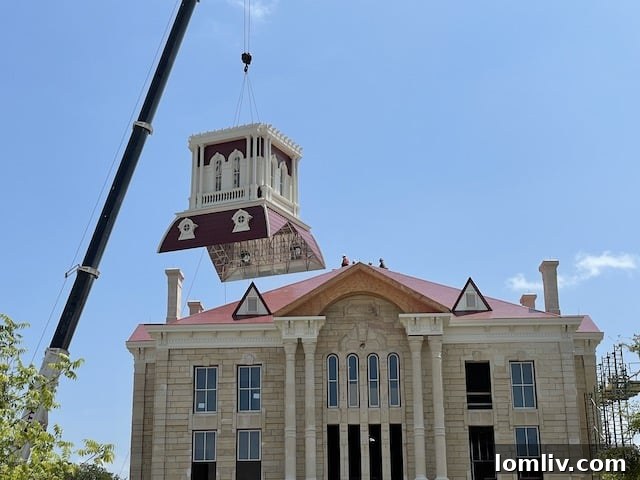
In the immediate aftermath, a partial reconstruction commenced in 1930. While the robust exterior stone walls were thankfully retained, the elegant mansard roof, a hallmark of the French Second Empire style, was replaced with a flattened, utilitarian roof. Much of the original ornamental stone embellishment, considered outdated or damaged beyond repair at the time, was removed. The interior, completely gutted by the fire, was extensively reworked to suit the prevailing architectural tastes and functional needs of the early 20th century, stripping away the intricate detailing of its predecessor.
Further radical changes occurred as part of a 1966 modernization effort. In a move that dramatically altered its facade, the entire building was encased in a new skin of plain limestone. This stylistic choice, characteristic of mid-20th-century functionalism, effectively concealed the remaining hints of the 1888 original exterior. Inside, any lingering vestiges of the original 1888 interiors were either removed or entirely covered. Even the impressive two-story courtroom, once a grand space, was unceremoniously divided into two separate floors to accommodate more office space. By the 1990s, the once-proud Fannin County Courthouse, now overcrowded, functionally inefficient, and architecturally compromised, was nearing the very end of its useful life, a shadow of its former self, its historical significance all but forgotten beneath layers of “progress.”
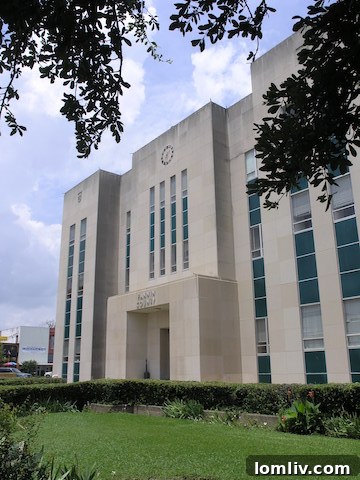
A New Dawn: The Texas Courthouse Renaissance
The tide began to turn for Texas’s neglected courthouses in 2000, ushering in what has been widely celebrated as a statewide courthouse renaissance. This transformative movement was spearheaded by the launch of a state-funded grant program, meticulously administered by the Texas Historical Commission (THC). The program’s ambitious goal was multifaceted: to assist counties across the state in the monumental task of restoring their historic buildings to their former glory, while simultaneously ensuring they were functionally modern, inherently safe, and fully accessible to all citizens. Much like in the 19th century, the intertwining forces of economics and community identity remained powerful driving factors behind this renewed commitment to preservation.
The benefits of these restoration projects extend far beyond mere aesthetics. Restored courthouses consistently demonstrate dramatically lower maintenance costs in the long run, thanks to the comprehensive structural and material overhauls. Furthermore, with the integration of modern, energy-efficient infrastructure and updated systems, they provide significantly lower operational costs compared to maintaining aging, inefficient structures. The economic ripple effect across Texas has been nothing short of astounding. In the 75 counties that have successfully completed courthouse restorations through the THC program, communities are witnessing remarkable revitalization. Property values around the historic squares have seen as much as a 250 percent increase, signaling renewed confidence and investment in these revitalized downtown cores. Business occupancy rates have soared, often doubling, as entrepreneurs are drawn to the vibrant, historically rich environments. On a statewide level, the courthouse grant program has generated an astonishing estimated $690 million increase in generated income and contributed an impressive $850 million in additional gross state product, underscoring that historic preservation is not just about nostalgia, but a powerful engine for economic development and urban renewal.
A Champion’s Unwavering Fight for Fannin County
It was this very grant program, with its promise of vital financial support and a clear path to restoration, that provided Barbara McCutcheon with the crucial “ammunition” she needed to escalate her decades-long fight for the Fannin County Courthouse into a full-fledged campaign. For years, Barbara had tirelessly worked as an advocate, organizer, and educator within her traditionally conservative community. She understood that success would require more than just passion; it demanded strategic grassroots mobilization and political acumen.
Her efforts were relentless. She systematically built momentum, tirelessly informing citizens about the historical significance and economic benefits of restoration. This included actively supporting pro-restoration candidates for county office, recognizing that political will was paramount to securing the necessary local funding and approvals. The path was far from easy; Barbara faced numerous disappointments and setbacks, losing far more battles than she won in the initial stages. Skepticism about the cost and feasibility of such an ambitious undertaking was widespread. Yet, Barbara, alongside a strong and dedicated base of courthouse advocates, persisted with an unwavering resolve. Slowly but surely, through countless meetings, presentations, and tireless lobbying, the tide began to turn in their favor. Finally, after years of dedicated effort, the breakthrough came in 2016. The county was officially offered a restoration grant from the Texas Historical Commission, and in a resounding affirmation of their shared heritage, the citizens of Fannin County voted to accept it, igniting the real work of bringing their courthouse back to life.
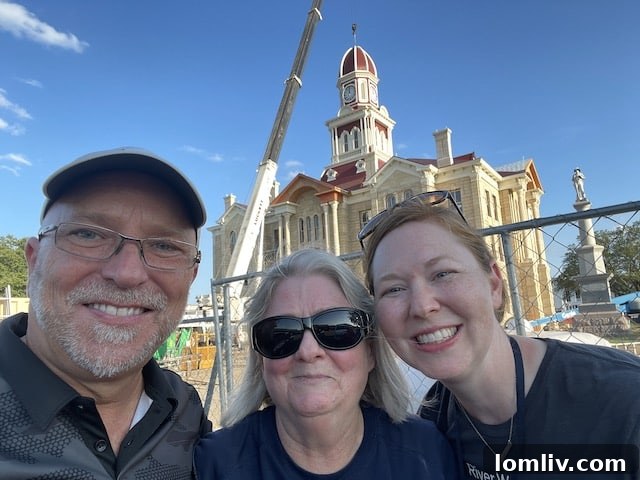

Architexas — an acclaimed, award-winning architectural firm renowned for its expertise in historic preservation—was entrusted with overseeing the meticulous restoration of the Fannin County Courthouse. The project became a monumental undertaking, requiring a unique blend of historical detective work, architectural prowess, and skilled craftsmanship. A dedicated team of contractors collaborated closely with the architects, carefully peeling back decades of alterations and insensitive modifications to reveal what remained of the original 1888 construction. This painstaking process involved the systematic removal of the 1966 limestone casing, the 1930 flattened roof, and countless interior partitions, slowly bringing the forgotten past to light.
With the true bones of the building revealed, Architexas embarked on the crucial phase of design. Leveraging a treasure trove of historic photographs, original blueprints, and their unparalleled expertise garnered from the successful restoration of dozens of other Texas courthouses, they meticulously developed the final architectural drawings. These plans aimed to precisely replicate the French Second Empire grandeur of the original 1888 structure, from its mansard roof to its intricate cornices and detailed window surrounds.
One of the most significant and complex challenges faced during the restoration was the extensive repair and replacement of the damaged stonework. Every single stone on the building’s exterior was rigorously surveyed for integrity and assessed for necessary repairs. In an incredible testament to authenticity, the very same local quarry that supplied the original stone for the 1888 construction was re-opened. This allowed for the fabrication of missing or irreparable pieces using materials identical in composition and appearance to the original, ensuring seamless integration and historical accuracy. Piece by painstaking piece, the Fannin County Courthouse slowly reemerged, shedding its utilitarian modern skin to reveal the architectural gem beneath. Turner Construction, the lead contractor, announced that the ambitious project was on track to reach completion by the end of 2021, a timeline eagerly anticipated by the community.
Even with substantial state assistance from the Texas Historical Commission, courthouse restoration projects demand an extraordinary commitment—both financial and political—from the local county. In Fannin County, despite the visible progress, a segment of citizens harbored doubts, questioning whether the promised economic and community benefits would truly materialize. Skepticism, a persistent companion throughout the long journey, remained evident even as the structure reclaimed its former glory.
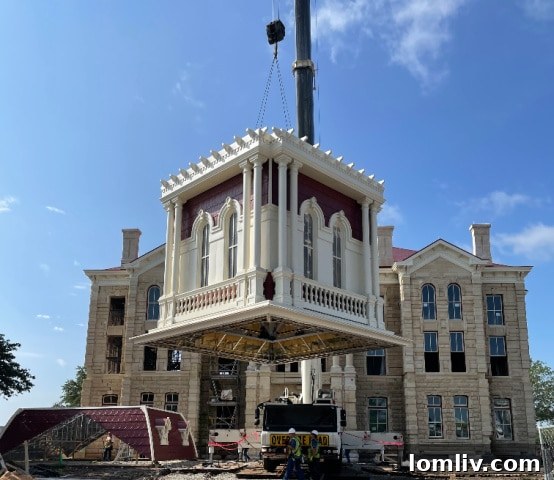
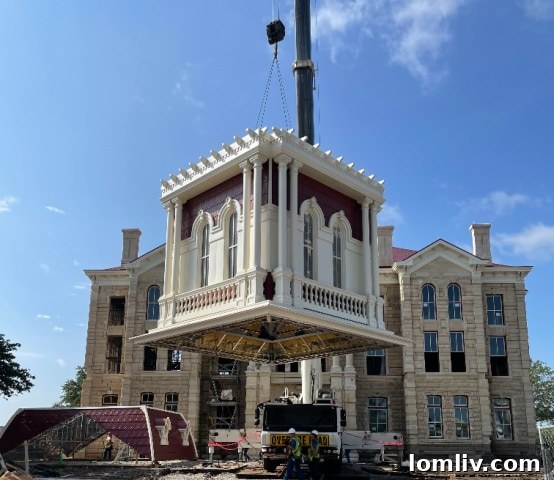
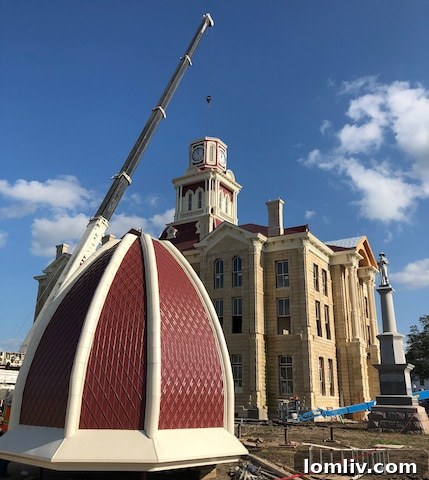
However, on August 20th, a remarkable convergence took place on the Bonham courthouse square. The faithful and the skeptics alike gathered, their gazes fixed skyward, to witness a profound moment: the physical and symbolic manifestation of years of collective effort. The Fannin County Courthouse clock tower, meticulously prefabricated by Campbellsville Industries of Kentucky and transported to Bonham on a dozen specialized trucks, was slowly, majestically lifted into place. With precision and grace, it settled atop the newly reconstructed mansard roof, instantly bringing the original glory and commanding presence of the building back into full view. It was a moment of triumph, a visible reclamation of history and identity.
After the awe-inspiring spectacle, Barbara McCutcheon, ever modest despite her monumental achievement, kept a low profile, politely sidestepping local reporters eager for her comments. Her reason was simple and heartfelt. “I need my sunglasses,” she admitted, her voice soft with emotion. “I don’t want anyone to see I was crying.” It was a quiet moment of personal victory, a testament to the deep emotional investment in a project that had defined so much of her life’s work, and an inspiration for the enduring power of historic preservation.

Jay Firsching is the Senior Historic Preservation Specialist at Architexas — a distinguished firm specializing in planning, architecture, and historic preservation. Jay has been a dedicated member of Preservation Dallas for many years and served with distinction as Vice Chair of the Dallas Central Business District, West End, and Individual Sites Task Force for eighteen years, contributing significantly to the city’s urban heritage. In his spare time, Jay is an avid enthusiast of DIY conservation projects, often found camping in his vintage VW Westfalia with his beloved wife, Amelia, and their two daughters, Sydney and Isabella, embracing both history and adventure.