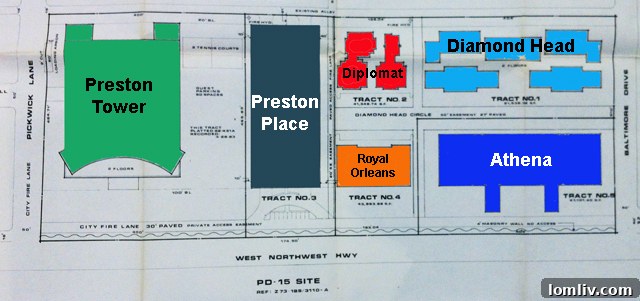
In 1963, the RCA Victor Company launched an advertising campaign with the catchy slogan, “The Gift That Keeps On Giving.” This timeless phrase resonates deeply with residents of PD-15, the vibrant neighborhood adjacent to Preston Center in Dallas. An area where one might still unearth a vintage RCA Victor television, PD-15 consistently offers new developments, challenges, and debates, much like that enduring gift. This highly sought-after locale, nestled behind the iconic “Pink Wall” at Northwest Highway and Preston Road, has become a focal point for intense discussions surrounding urban development, community preservation, and the future of Dallas real estate.
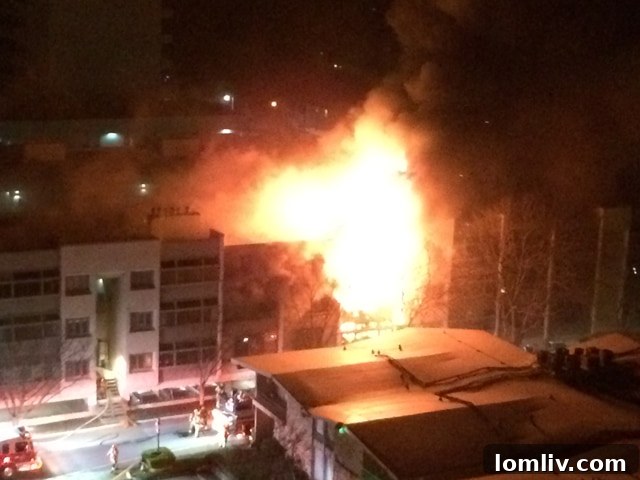
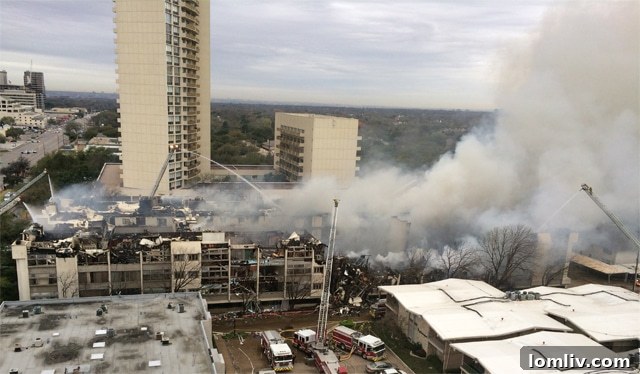
The neighborhood’s recent history is significantly marked by a devastating condo fire at Preston Place nearly three years ago. This tragic event not only claimed one resident’s life and displaced hundreds but also left behind a haunting, charred concrete hulk above a basement parking garage. The Preston Place fire vividly underscored the critical issues of aging infrastructure and the complexities of redevelopment in a densely populated, desirable urban setting. It ignited a fierce debate, turning PD-15 into an emblem of the broader struggle between unchecked expansion and the desire for thoughtful, responsible development.
The Rise of CARD: A Community Rises to Advocate for Responsible Development
The fervor around PD-15’s future has galvanized local residents, leading to the formation of CARD (Citizens Advocating Responsible Development). This non-profit association emerged as a grassroots force, expressing profound dissatisfaction with proposed zoning changes for PD-15, which many perceive as favoring developers over community interests. CARD’s mission is clear: to stop development changes they deem excessive and to ensure Dallas City Hall genuinely listens to its constituents. They believe the current trajectory of urban planning in their area is out of control and threatens the very fabric of their community.
In a significant move to amplify their voice and strategic outreach, CARD recently announced the hiring of Brett Shipp as their spokesperson. Shipp, a former WFAA investigative reporter and congressional candidate, brings a wealth of experience in media and public relations to the forefront of this community battle. As Shipp himself articulated, his role is “to fight out of control, irresponsible development” in the Preston Place area and beyond. This collaboration signals a new, more organized phase in the residents’ efforts to influence the outcome of zoning decisions and protect their neighborhood’s character.
Full disclosure: As the author of this piece, I wish to openly state my personal stake in this issue. I own a unit within this area, underscoring my direct interest in the ongoing developments and discussions. This perspective informs my commitment to thorough and balanced coverage. It’s also why our esteemed columnist, Jon Anderson, who recently sold a unit at The Athena, has been meticulously chronicling this complex case. Anderson’s reporting spans from the initial acquisition of Townhouse Row and an apartment complex at Preston and Northwest Highway by Transwestern, to every subsequent development meeting, offering invaluable continuity and depth to our understanding.
Brett Shipp confirmed his commitment to the cause, indicating plans for an imminent press conference, a crucial step in bringing wider public and media attention to CARD’s concerns. This event promises to be a pivotal moment, aiming to solidify public opinion and pressure city officials to reconsider the proposed development plans for PD-15 and the broader Preston Center area.
A Public Call to Action: The Press Conference Details Emerge
Anticipation for the press conference is already building, with details circulating widely, notably through social media platforms. Sharon Stone, a prominent CARD member, former Laura Miller supporter, and long-time PD-15 resident, was among those who shared the official announcement. The message outlined the critical specifics of the upcoming event:
NEWS FLASH!!! “CARD” (Citizens Advocating Reasonable Development) & Media Consultant BRETT SHIPP will hold a PRESS CONFERENCE
– WEDNESDAY, SEPT. 4!!! @ 10:30 a.m.
– Behind the Pink Wall
– Directly behind Preston Towers (in the Alley between “Gaslight Manor” lowrise on Bandera & Preston Tower, on the East Side of Pickwick Ln, just south of Bandera)All major local network affiliates and members of the print media will be in attendance! Everyone who opposes the City’s Plans for AGGRESSIVE UPZONING in PD-15 & Preston Center as well as throughout Dallas is welcomed and encouraged to attend! Today PD-15, tomorrow it could be YOUR neighborhood!
MARK YOUR CALENDAR & COME SHOW YOUR SUPPORT FOR OVER 80% OF THE HOMEOWNERS IN PD15 WHO ARE ASKING THE CITY FOR REASONABLE DEVELOPMENT !!!
“CARD” – Citizens Advocating Reasonable Development
www.pd15card.com
This widespread dissemination of information underscores CARD’s strategy to not only mobilize local support but also to draw attention from a broader audience across Dallas. The appeal, “Today PD-15, tomorrow it could be YOUR neighborhood!”, is a powerful rallying cry, seeking to unite residents city-wide who share concerns about increasing urban density and its potential impact on established communities. The goal is to transform what might seem like a local dispute into a city-wide conversation about balanced growth and responsible urban planning.
Beyond public rallies and media campaigns, the opposition to the proposed PD-15 zoning changes is also leveraging modern crowdfunding initiatives. A GoFundMe campaign was initiated by William Kritzer, a resident of Preston Tower, one of the two existing high-rise structures in PD-15. These residents, fearing the impact of a potential third tower being constructed between their buildings, are actively seeking financial support to bolster their advocacy efforts. Launched on July 31st, the campaign has successfully garnered $1,600 towards its $5,000 goal, thanks to 25 donations, many of which remain anonymous. This financial backing is crucial for sustaining the long-term efforts of CARD, covering potential legal fees, public awareness campaigns, and the hiring of expert consultants to challenge the city’s development proposals.
Separating Fact from Fiction: Addressing Common Misconceptions
In the whirlwind of public discourse surrounding PD-15, it’s easy for misinformation to take root. As a publication that has been diligently covering this saga since well before 2017, through the first blaze, the second blaze, and every subsequent PD-15 meeting, and was the first to report the fire, we aim to present the facts clearly. Here, we address some prevalent claims and provide verified information:
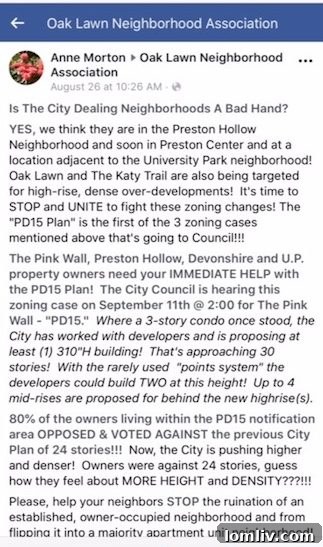
Claim: “The City has worked with developers proposing at least one 310-foot building!”
Fact: While developers frequently propose various plans, the approval process involves multiple layers of review and negotiation. City Councilperson Gates, for example, has been notably clear on her support for Residential Proximity Slope (RPS), a critical zoning tool designed to protect residential neighborhoods from excessive height and bulk of adjacent new developments. This stance directly translates to her opposition to the 310-foot plan that was passed by the Plan Commission. The Dallas City Council and the Plan Commission maintain an open-door policy, actively listening to the plans and concerns presented by both developers and residents. It is a standard practice for developers and applicants seeking zoning changes to present their proposals to relevant city departments and representatives. This pre-vote engagement allows for a vital exchange of ideas, feedback, and necessary adjustments before any final decisions are made. The iterative nature of this process ensures that various stakeholders’ perspectives are considered, even if not all proposals ultimately gain approval.
Claim: “80% (sometimes it’s 60 to 79%) of the owners living within the PD-15 notification area are OPPOSED and VOTED AGAINST the previous City plan of 240-foot heights – some 70-feet below the existing 50-year-old towers.”
Fact: This claim presents a simplified view of resident sentiment, which is far more nuanced. In the context of condo buildings, each individual condominium building typically receives a single collective vote, cast by a designated condominium representative or HOA board. While condo HOAs possess the authority to facilitate individual voting for residents to obtain a more accurate and democratic count of opinions, many have chosen not to implement such a system. This lack of individual resident polling means that the “80% opposed” figure might not accurately reflect the diverse opinions within the community. It is crucial to acknowledge that a significant segment of homeowners within PD-15 are, in fact, in favor of new development. Their reasons often include the potential for increased property values, the introduction of modern amenities, and the much-needed replacement of aging infrastructure. Many of the structures behind the Pink Wall, some dating back 60 to 80 years, are showing signs of age. Numerous units operate as rentals and face significant structural obsolescence and deferred maintenance issues, much like the unfortunate Preston Place condos that succumbed to fire. The economic realities of maintaining older buildings in a prime urban location often make redevelopment an attractive, and sometimes necessary, option for property owners and investors alike.
Claim: “A Traffic Study has not been done.”
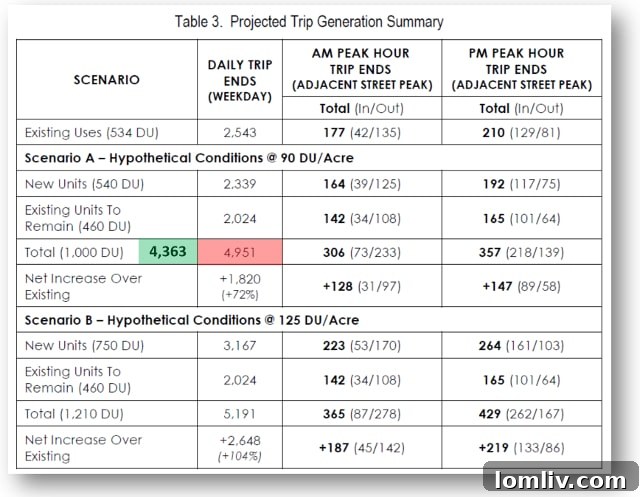
Fact: Traffic studies are a standard and mandatory component of any significant zoning change or development proposal in an urban environment like Dallas. Contrary to the claim, a comprehensive Traffic Study has indeed been conducted for the PD-15 area in relation to the proposed development. This study rigorously analyzes current traffic volumes, patterns, existing infrastructure capacity, and projects the potential impact of increased density on local roadways. The findings of this specific study indicated no significant adverse impact on the local traffic flow as a result of the proposed development. While residents often express concerns about increased congestion, traffic studies utilize complex modeling and data analysis to provide an objective assessment. Factors such as existing road capacity, potential improvements to public transit, and the nature of new developments (e.g., residential vs. commercial) are all weighed to determine overall impact, often revealing less significant changes than anecdotal observations might suggest.
The Broader Implications: Dallas’s Development Crossroads
The ongoing debate in PD-15 is more than just a local zoning dispute; it reflects a broader city-wide challenge facing Dallas. As a rapidly growing metropolitan area, Dallas grapples with the imperative to accommodate new residents and businesses while simultaneously preserving the unique character and livability of its existing neighborhoods. The tension between supporting economic growth through new development and protecting community aesthetics, infrastructure, and green spaces is a delicate balancing act for urban planners and city officials.
The “Gift That Keeps On Giving” slogan, in this context, takes on a dual meaning. For developers, PD-15 represents a continuous opportunity for lucrative investment in a prime location. For residents, it symbolizes an ongoing battle to define what “progress” truly means for their homes and their community. The outcome of the PD-15 zoning discussions will not only shape this particular neighborhood but could also set precedents for future urban planning and community engagement across Dallas.
Our commitment to transparent and in-depth reporting continues. Jon Anderson, our dedicated columnist who has been at the forefront of covering the PD-15 discussion since its inception, will provide a comprehensive report following the press conference scheduled for Wednesday. His analysis will undoubtedly offer further insights into this complex and evolving narrative, providing crucial updates as the “gift” of development in PD-15 continues to unfold.