

As the calendar turned to 2023, many of us set ambitious resolutions for personal growth and well-being. But what about the spaces that define our daily lives – our homes? For countless American homeowners, the new year brings a renewed focus on transforming their residences into sanctuaries that truly reflect their evolving needs and aspirations. This widespread desire for home improvement stems from recent global events that profoundly reshaped our relationship with our living environments.
The experience of spending unprecedented amounts of time indoors during the global COVID-19 pandemic served as a profound catalyst for change. Our homes became more than just shelters; they morphed into makeshift offices, classrooms, gyms, and entertainment hubs. This intensive use brought to light every minor imperfection, every cramped corner, and every outdated design choice. While many seized the opportunity to tackle quick fixes with paintbrushes and power tools, a significant portion of American homeowners remain unsatisfied, keenly aware of the disparities between their current accommodations and their ideal living spaces.
After months, or even years, of staring at that scuffed flooring, the perpetually cluttered cabinets, and perhaps even feeling the confines of a makeshift home office, it’s only natural to yearn for a significant overhaul. If this sentiment resonates with you, rest assured, you are far from alone. A recent comprehensive survey conducted by HomeAdvisor, which polled over 1,000 American homeowners, revealed compelling insights into the collective consciousness regarding home satisfaction. The findings indicated that nearly a third of respondents perceive their homes as too small, more than half gravitate towards their living rooms as their primary dwelling space, and a substantial majority consider relocating from a beloved neighborhood an absolute dealbreaker. These statistics underscore a potent desire not just for change, but for a home that perfectly aligns with modern living requirements.

Unpacking Homeowner Sentiments: What Americans Cherish and What They Seek to Change
Understanding the intricate dynamics of homeowner satisfaction is crucial for anyone involved in the real estate or home improvement sectors. The comprehensive survey results from HomeAdvisor paint a vivid picture of the American homeowner’s evolving priorities. The most significant pain point for respondents centered on inadequate home size, cited by 23 percent. This was closely followed by concerns about the overall layout and the distance from cherished friends and family, each accounting for 11 percent of the complaints. These figures highlight a shift from merely desiring more space to prioritizing spaces that are both functional and facilitate connection.
Delving deeper into specific areas, homeowners expressed particular dissatisfaction with highly functional and storage-dependent spaces. Bathrooms emerged as the top contender for discontent, with 23 percent of respondents expressing their dislike. Laundry rooms followed closely at 21 percent, with basements (14 percent) and garages (10 percent) also featuring prominently on the list of least-liked areas. The primary reason for this widespread dissatisfaction? Nearly half of homeowners surveyed attributed their dislike to these spaces being too small, while a significant 27 percent pointed to poor layout and inefficient design as the core issue. This suggests a critical need for smarter, more adaptable designs in these utilitarian yet essential parts of the home.
Conversely, when asked about aspects they love most, homeowners overwhelmingly praised their home’s location, with a resounding 59 percent expressing affection for their neighborhoods. This underscores the enduring truth that a home’s external environment, its community, and its accessibility are paramount. However, opinions on location weren’t monolithic: 45 percent considered their location “perfect,” while 51 percent deemed it “just OK,” indicating a subtle but present desire for improvement even in beloved areas. Only 3 percent expressed outright dissatisfaction with their location, reaffirming the neighborhood’s role as a cornerstone of home satisfaction.
Beyond location, other highly valued attributes included a home’s affordability, a factor appreciated by 53 percent of respondents, and its size, which 44 percent considered a positive quality. While a substantial 64 percent felt their home’s size was “just right,” a considerable 29 percent still felt their homes were “too small,” indicating that the quest for optimal space remains a critical concern for a significant segment of the population. Interestingly, 5 percent even found their homes to be “too big,” highlighting that ideal size is a deeply personal and varied metric, often tied to lifestyle, family dynamics, and maintenance considerations.
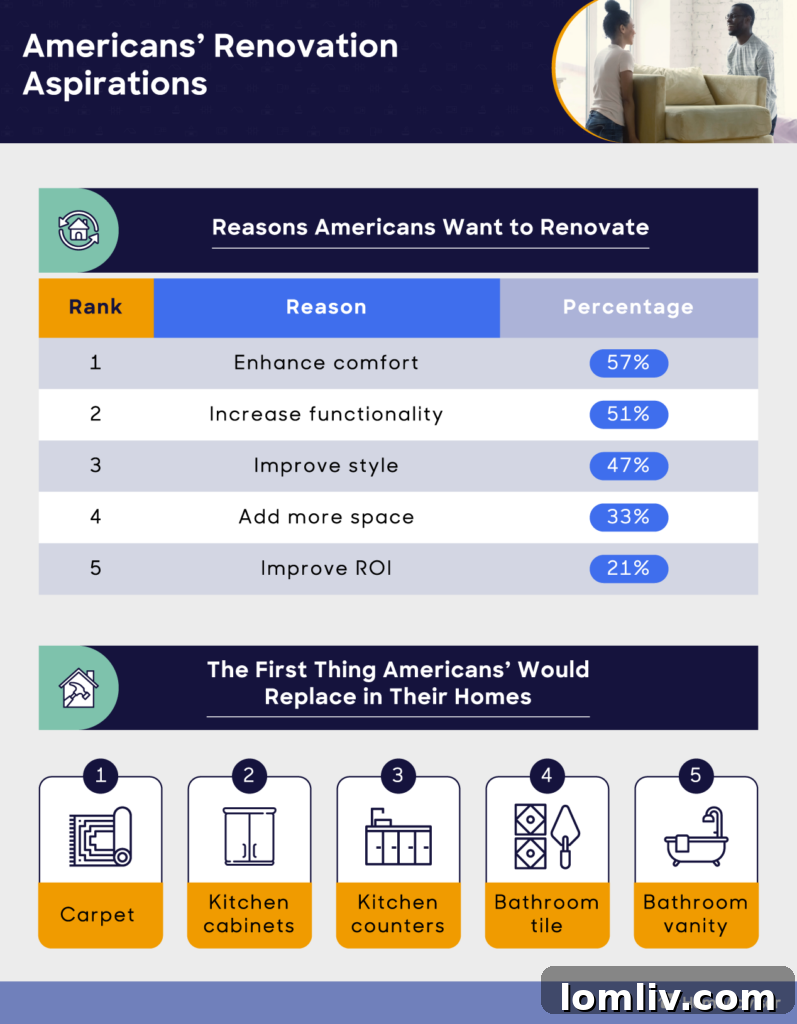
Empowering Change: Top Renovation Priorities for American Homeowners in 2023
The prevailing sentiment among American homeowners is a clear readiness for change, backed by a strong inclination towards active participation in their home’s evolution. The HomeAdvisor survey revealed that a remarkable 76 percent of homeowners are not intimidated by the prospect of tackling a DIY renovation project, indicating a robust confidence and desire for personal involvement in enhancing their living spaces. This trend signifies more than just cost savings; it speaks to a deeper yearning for personalization, a sense of accomplishment, and the creation of a home that genuinely reflects individual style and functional needs.
When it comes to pinpointing specific areas for improvement, certain rooms consistently rise to the top of the renovation wish list. Renovating the bathroom is the undisputed top priority for homeowners eager to update their residences, chosen by 21 percent of respondents. This makes perfect sense, given that bathrooms are intensely personal spaces where functionality, aesthetics, and comfort are paramount. Outdated fixtures, inefficient layouts, and a lack of storage can significantly detract from daily routines, making a bathroom remodel a highly impactful investment in both comfort and property value.
Following closely, 16 percent of respondents expressed a keen interest in renovating their basements. Often underutilized and sometimes neglected, basements offer immense potential for expanding a home’s functional living area. Transforming a dark, damp basement into a vibrant family room, a dedicated home office, a guest suite, or a state-of-the-art home theater can dramatically increase a home’s usable square footage and overall appeal. Meanwhile, 14 percent of homeowners earmarked the laundry room and garage for renovation, highlighting a collective drive to improve the efficiency, organization, and aesthetic appeal of these essential utility spaces. A well-designed laundry room can simplify chores, while an organized garage can serve as a workshop, additional storage, or even an extension of recreational space.
The trend towards renovating these specific areas points to a broader desire for enhanced functionality and comfort. Homeowners are no longer content with merely having these spaces; they want them to work harder, look better, and contribute positively to their overall quality of life. For instance, a bathroom renovation in 2023 often involves creating a spa-like retreat with walk-in showers, smart technology, and luxurious finishes. Laundry room remodels frequently focus on smart storage solutions, ergonomic design, and perhaps even soundproofing to minimize noise. Garages are being re-imagined as highly organized zones for hobbies, fitness, or even climate-controlled storage.
This widespread enthusiasm for home improvement underscores the dynamic role HomeAdvisor plays in connecting homeowners with qualified tradesmen. As a leading platform, HomeAdvisor facilitates the realization of these renovation dreams, empowering individuals to find the right professionals for projects that might exceed their DIY capabilities. Whether it’s a minor refresh or a major overhaul, the platform provides a crucial link in bridging the gap between homeowner aspirations and skilled execution, ensuring that the vision for a better home can indeed become a reality.
Beyond the Basics: Emerging Trends Shaping Home Improvement in 2023
While fundamental renovations like bathrooms and basements remain top priorities, 2023 is also witnessing the rise of several broader home improvement trends that reflect changing lifestyles and environmental consciousness. Homeowners are increasingly looking for ways to make their homes not only more functional and beautiful but also more sustainable, technologically advanced, and conducive to overall well-being.
Sustainability and Energy Efficiency: A growing number of homeowners are investing in eco-friendly upgrades. This includes installing smart thermostats, upgrading to energy-efficient windows and insulation, integrating solar panels, and choosing sustainable building materials. The motivation often spans from reducing utility bills to minimizing environmental impact, signaling a long-term commitment to responsible living.
Outdoor Living Spaces: The pandemic highlighted the invaluable role of outdoor areas for relaxation, entertainment, and a connection with nature. Consequently, there’s a strong trend towards creating elaborate outdoor living spaces. This involves designing comfortable patios and decks, installing outdoor kitchens, adding fire pits, and cultivating lush gardens. These extensions of indoor living serve as crucial zones for unwinding and social gatherings, effectively expanding the home’s functional footprint.
Smart Home Technology Integration: From intelligent lighting systems and automated climate control to advanced security cameras and voice-activated assistants, smart home technology continues to evolve. Homeowners are integrating these solutions for enhanced convenience, increased security, and greater energy efficiency. The goal is to create a seamless, intuitive living experience that simplifies daily routines.
Multi-functional Rooms: Given the enduring concern about home size, clever design solutions for multi-functional rooms are gaining popularity. Spaces are being designed with adaptability in mind, allowing a guest bedroom to double as a home office, or a dining area to transform into a creative workspace. This trend emphasizes flexible furniture, innovative storage solutions, and thoughtful layouts that maximize every square foot.
Health and Wellness Focus: The home is increasingly seen as a sanctuary for health and wellness. This translates into choices such as improved air purification systems, maximizing natural light exposure, incorporating biophilic design elements (bringing nature indoors), and creating dedicated spaces for exercise or meditation. Homeowners are prioritizing environments that support both physical and mental well-being.
These emerging trends, combined with the foundational desire for functional improvements, paint a comprehensive picture of the modern American homeowner’s aspirations. It’s a testament to the idea that a home is a living entity, constantly evolving to meet the demands and desires of those who inhabit it.
Navigating the Path to Home Transformation: DIY vs. Professional Assistance
With such widespread enthusiasm for home renovation, homeowners often face the crucial decision: to tackle projects themselves or to enlist the help of professionals. While the HomeAdvisor survey highlighted a significant inclination towards DIY, recognizing the scope and complexity of a project is key to a successful outcome.
The Appeal of DIY: Many homeowners embrace DIY for several reasons. Cost savings are often a primary motivator, as labor costs can be a substantial portion of any renovation budget. Beyond finances, there’s the immense satisfaction of personal accomplishment, the opportunity to learn new skills, and the ability to customize every detail according to one’s vision. For smaller projects like painting, minor repairs, or simple landscaping, DIY can be an incredibly rewarding path.
When to Call the Professionals: However, larger, more complex projects involving plumbing, electrical work, structural changes, or extensive tiling often warrant professional expertise. Not only do skilled tradesmen possess the necessary experience and tools, but they also ensure projects meet safety standards and local building codes. Attempting intricate renovations without proper knowledge can lead to costly mistakes, safety hazards, and even devalue a home. Platforms like HomeAdvisor become indispensable here, offering a trusted resource to connect homeowners with vetted and qualified professionals, simplifying the process of finding reliable help.
Regardless of whether a project is DIY or professionally managed, thorough planning and budgeting are paramount. Researching materials, understanding timelines, and setting realistic expectations are crucial steps toward achieving a dream home transformation without undue stress or financial strain.
The Future of Home: A Sanctuary for Evolving Lifestyles
As we navigate through 2023 and beyond, the insights from the HomeAdvisor survey unequivocally demonstrate that American homeowners are not merely observers of their living spaces; they are active participants in their transformation. Driven by the recent past’s profound lessons and an optimistic vision for the future, there’s a collective surge to redefine what ‘home’ truly means. It’s a shift from accepting existing imperfections to proactively creating environments that foster well-being, efficiency, and joy.
The desire for adequate space, intelligent layouts, and beloved neighborhoods remains foundational, but it’s now intertwined with a deeper appreciation for personalized comfort, sustainable living, and technological integration. From the strategic overhaul of functional areas like bathrooms and laundry rooms to the imaginative re-purposing of basements and garages, every renovation project is a step towards a more perfect union between homeowner and habitat.
Ultimately, a home is far more than just a structure; it is a dynamic sanctuary that evolves in tandem with its occupants. The ongoing commitment to home improvement reflects a fundamental human need to shape our surroundings, making them better suited to our lives, our dreams, and our ever-changing world. With enthusiasm for DIY projects and invaluable resources like HomeAdvisor, American homeowners are well-equipped to embark on their journeys of transformation, ensuring their homes not only keep pace with the times but also become true reflections of their aspirations for years to come.