

By Mimi Perez
Special Contributor
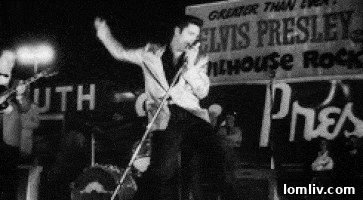
The stage lights, the iconic sequined cape, the powerful smoky voice, those unforgettable black leather jumpsuits, and the legendary, hip-gyrating moves—Elvis Presley was an undisputed megastar. His electrifying presence and unshakeable commitment to his persona captivated millions, creating a phenomenon of “hunka, hunka burnin’ love” that swept the globe. Elvis didn’t just perform; he embodied an identity, fully committing to being The King.
This deep dive into Elvis’s unparalleled dedication might seem an unusual prelude for a real estate discussion. However, the essence of his commitment provides a perfect lens through which to examine a fascinating niche in architecture: themed homes. Much like Elvis’s unwavering devotion to his craft, truly exceptional themed residences demand a similar level of commitment from their creators and owners. Today, we explore two very different properties, both carrying the intriguing description of a “guitar house,” to uncover what it truly means to live out a theme through architecture.
The Allure of Themed Architecture: More Than Just a House
In a world of often standardized residential design, themed homes stand out as bold expressions of individuality and passion. These unique properties are more than just structures; they are reflections of dreams, hobbies, and even lifelong obsessions. Whether shaped like a giant boot, a flying saucer, or, in our case, a musical instrument, these unusual homes captivate the imagination and offer a living experience unlike any other. They represent a builder’s or owner’s profound connection to a particular concept, transforming their dwelling into a personalized sanctuary or a monumental piece of art.
However, the success of a themed home hinges entirely on the depth of its integration. Is the theme merely a superficial embellishment, or does it permeate the very design and spirit of the property? This question of authenticity and commitment is crucial in distinguishing a truly iconic themed residence from a mere novelty. It’s a challenge that many aspiring themed home builders face: how to translate a passion into a cohesive and livable architectural statement. Our journey into the world of “guitar houses” offers a compelling illustration of this architectural dilemma, showcasing examples where commitment ranges from subtle to absolute.
A Grand Estate with a Half-Hearted Melody: The Birmingham “Guitar House”
Our first stop takes us to the opulent landscape of Birmingham, Alabama, to an estate that initially promises a grand musical theme. Designed by renowned architect Bill Sheppard, this majestic 66,000-square-foot mansion, located at 7 Montagel Way, is a marvel of scale and luxury. Sprawled across a sprawling 27-acre property, the residence boasts an astounding 15 bedrooms and 16 bathrooms, epitomizing extravagant living. With its towering facade and sprawling interiors, it offers an undeniable sense of grandeur and exclusivity, catering to those who desire spaciousness and luxury in abundance.
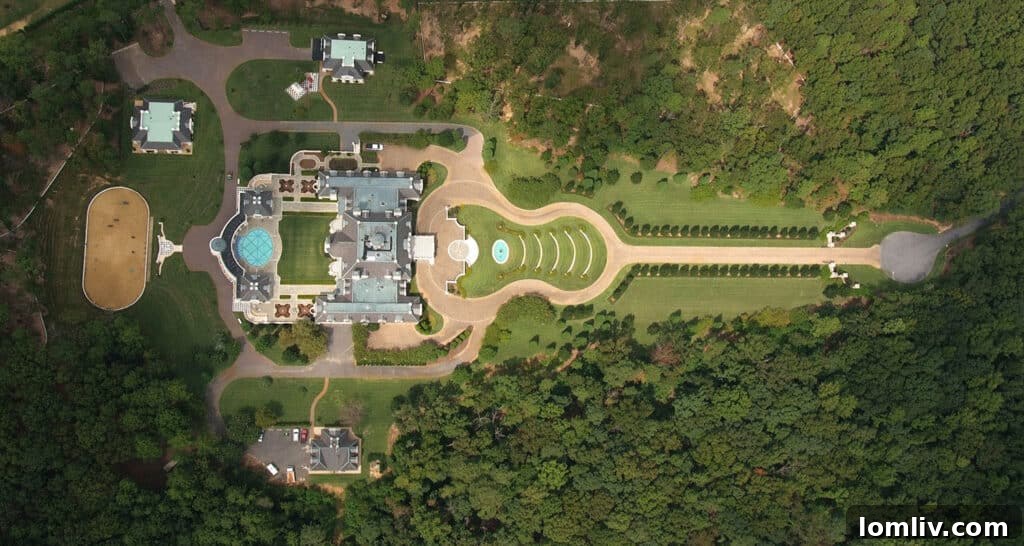
Despite its impressive specifications and visual appeal, this estate is merely *described* as a “guitar house,” a classification that invites closer scrutiny. The reason for this intriguing moniker lies not in the architectural form of the mansion itself, but in its elaborate landscaping. As visitors enter the sprawling grounds, they are greeted by an expansive, meticulously manicured landscape shaped distinctly like a guitar. While undoubtedly beautiful and an artistic feat in its own right, this external embellishment raises a fundamental question about the depth of its thematic commitment.
While the guitar-shaped driveway and gardens are aesthetically pleasing and undeniably unique, they represent a theme applied externally, rather than integrated into the core design of the luxury mansion. The house itself remains a classic, albeit massive, chateau-style residence. This approach offers a stark contrast to a home where the theme dictates the very structure and living spaces. It’s akin to wearing a guitar-themed t-shirt versus actually being a musician – one is a statement, the other is a way of life. For purists of themed architecture, this distinction is critical. Is it truly a “guitar house” if the actual dwelling doesn’t embody the instrument? The visual spectacle is lovely, but the architectural commitment, in this case, feels only halfway realized, making it an interesting study in partial thematic expression.
The Symphony of Dedication: Elvis Carden’s True Guitar House
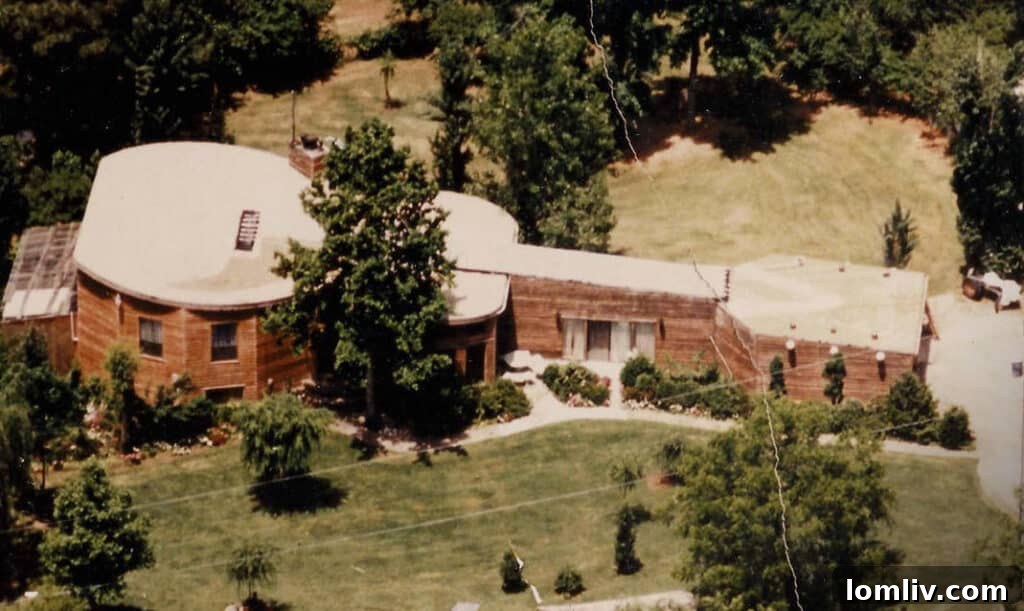
Shifting our focus, we discover the epitome of architectural commitment in Fayetteville, Georgia, home to the true “guitar house” of our story. This is not a home with guitar-shaped landscaping or subtle musical motifs; this is a house built entirely to resemble a colossal guitar. Imagine the classic children’s rhyme about the old lady who lived in a shoe—these residents truly lived *inside* a guitar. This audacious design choice is a testament to unwavering dedication, a direct and unequivocal declaration of passion manifested in residential form.
The visionary behind this extraordinary Fayetteville Georgia unique home was country singer Elvis Carden. Yes, his name is indeed Elvis, a serendipitous connection that only amplifies the narrative of passion and musical inspiration. Mr. Carden dedicated an astonishing 16 years of his life to construct this remarkable dwelling at 115 Wilkins Road. Sixteen years is a lifetime for many projects, underscoring the profound personal investment and artistic drive required to bring such a unique vision to fruition. This wasn’t merely a construction project; it was a labor of love, a slow-burning ode to the instrument that defined his life.
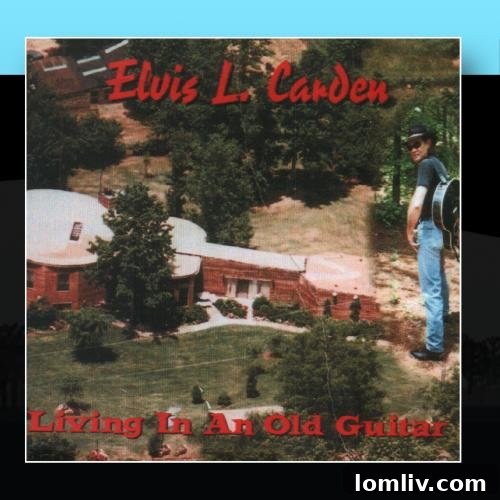
Elvis Carden’s commitment extended far beyond the construction of his home. His record label proudly bore the name Guitar House Records, and his backup band was appropriately dubbed the Guitar House Band. One of his albums, a poignant reflection of his deep connection, was titled Living in an Old Guitar. This isn’t just a house; it’s a profound extension of Mr. Carden’s artistic identity, a tangible symbol of his lifelong muse. It served not only as his private residence but also as a constant source of inspiration, blurring the lines between home, studio, and personal expression. This fusion of life and art, where the home actively participates in the creative process, makes Carden’s guitar house a truly unparalleled piece of creative architecture.
In the realm of real estate, properties that work as hard as this one are exceedingly rare. This house wasn’t just shelter; it was a character, a partner in a musician’s journey, actively taking care of business by embodying the very essence of his craft. It’s a testament to how architecture can transcend its functional purpose and become a living, breathing part of an individual’s legacy. The structural integrity, the aesthetic details, and the sheer audacity of its design all speak to a commitment that few architects or homeowners ever achieve.
The Enduring Melody of Commitment in Unique Homes
The story of the Fayetteville guitar house, much like many tales of unique personal expression, doesn’t boast a universally happy ending in conventional real estate terms. When it eventually sold in 2012, the sale price was a modest $55,000, indicating that while it was rich in character and history, it also needed significant attention and perhaps a new vision. This outcome highlights the inherent challenges of highly specialized personalized residences. Their very uniqueness, which makes them extraordinary, can also limit their market appeal and necessitate owners with a specific appreciation for their idiosyncratic charm.
Indeed, the guitar house was in desperate need of a “tune-up,” a structural and aesthetic renovation to restore its former glory and adapt it for new occupants. One can only hope that the subsequent owners understood the profound artistic and personal history embedded within its walls and chose to shower it with the “tender loving care” it deserved. While Elvis Carden was no Elvis Presley in global fame, and his guitar house is certainly no Graceland in terms of opulence or pilgrimage status, the underlying principle remains the same: the profound impact of genuine commitment.
These two “guitar houses” offer a compelling architectural parable. The Birmingham mansion, with its guitar-shaped landscaping, showcases a grand statement, but one that largely stays on the surface. In contrast, Elvis Carden’s home in Fayetteville exemplifies absolute dedication, where the theme is literally carved into the structure and soul of the dwelling. It teaches us that true architectural commitment transforms a house from a mere building into a living narrative, a tangible piece of its owner’s passion. This authenticity, whether celebrated on a grand stage or a quiet country road, is what truly resonates and endures.

And with that, ladies and gentlemen, having explored the profound commitment required to truly live a theme, Elvis has left the building!
For more fascinating photos and insights into the unique guitar house, visit Roadside America here.