Navigating the Dallas Building Permit Maze: Challenges, Impacts, and the Path Forward
For countless developers, contractors, and residents, securing a building permit in the vibrant City of Dallas has become an increasingly daunting and prolonged ordeal. This pressing issue, a well-documented source of frustration even before the pandemic, has since escalated, rendering the permitting process almost impossible for many. Despite a chorus of complaints and fervent calls for reform from builders, contractors, and even city inspectors, a definitive and effective solution has yet to be fully implemented, leaving the Dallas development community in a state of prolonged uncertainty.
The severity of these delays and their profound economic implications for the city have been consistently highlighted by various platforms, including Daltxrealestate.com, which has extensively covered the ongoing difficulties. From detailed analyses of the permit application process to examinations of the financial toll exacted on our city, the narrative remains consistent: the system is broken. Despite the extensive coverage and widespread stakeholder outcry, the City of Dallas continues to solicit additional feedback, underscoring the elusive nature of a lasting resolution.
The Core of the Problem: An Outdated System in a Modern City
At the heart of Dallas’s building permit crisis lies a fundamental failure to modernize. The city’s infrastructure and administrative processes have simply not kept pace with its rapid growth and contemporary demands. This antiquated approach manifests in several critical areas, creating bottlenecks and inefficiencies that ripple across the entire development sector.
Archaic Infrastructure and Management Hurdles
The physical environment in which Dallas processes its crucial permits itself serves as a stark symbol of the problem. As Phil Crone, a prominent voice in the Dallas building community, candidly observed in a social media comment, “Part of it is management and working environment. The building where Dallas processes permits is a ’60s-era bomb shelter (seriously).” This imagery of an anachronistic facility paints a clear picture: a building designed for a different era, ill-equipped to handle the volume and complexity of a 21st-century metropolis. Such an environment can hinder operational efficiency, impact employee morale, and complicate the adoption of modern technological solutions necessary for a streamlined permitting process.
Dallas’s Byzantine Zoning Regulations
Further complicating matters is the labyrinthine nature of Dallas’s zoning regulations. Crone elaborated, “Also, zoning is a mess in Dallas with hundreds of PDs and other special districts that require many projects to have a meticulous review of often subjective items. That’s what is making it hard to farm out plan reviews to third parties — they can’t understand Dallas’s messed-up zoning.” The sheer volume of Planned Development (PD) districts and other specialized zoning overlays creates an intricate web of rules that demands highly specialized knowledge for accurate interpretation. This complexity not only prolongs internal review times but also presents a formidable barrier to leveraging external expertise. Third-party reviewers, who could potentially alleviate some of the backlog, often struggle to navigate Dallas’s unique and often subjective zoning requirements, thereby undermining a potentially vital solution.
Voices from the Front Lines: Builders’ Frustrations and Financial Strain
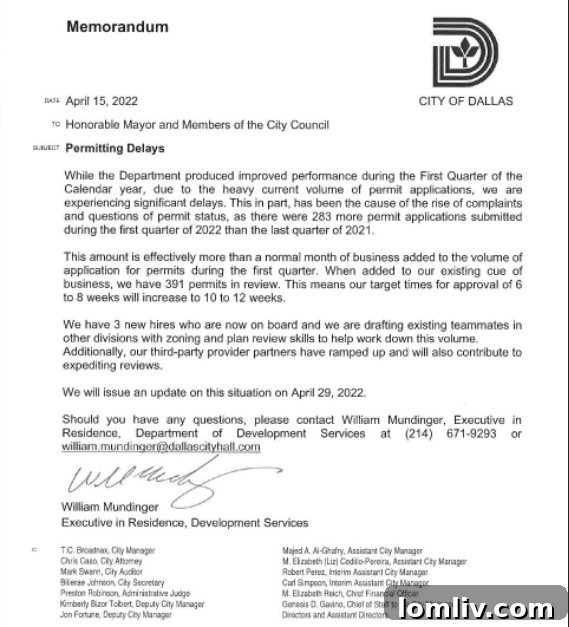
The cumulative effect of these systemic issues has created an exceptionally rocky road for those attempting to push development forward in Dallas. The memorandum from Development Services’ Executive in Residence, Will Mundinger, to the Dallas City Council, candidly detailed the pervasive delays encountered by his staff, indicating the deep-seated nature of the problem even within city departments.
The Human and Economic Cost of Delays
While the Dallas Builders Association has achieved “decent success getting individual Dallas Builders Association member projects on track,” as Phil Crone noted, this often requires direct advocacy and intervention. Crone also advised, “Part of the advocacy for your project also means copying the councilmember where your project is located if/when you’re delayed.” This highlights a critical flaw in the system: permits shouldn’t require direct political intervention to move forward. The delays translate directly into substantial financial burdens, not only for individual projects but also for the city itself, costing “thousands… every day” in lost economic activity, increased project overheads, and stalled investments. These costs ultimately affect housing affordability and the overall economic vitality of Dallas.
The slow pace of change has created palpable frustration among builders. Jeff Dworkin of JLD Custom Homes, a past president of the Dallas Builders Association, expressed his exasperation: “We’re only going on eight days and counting for a fence permit! That I’m having to pull because our fence company gave up trying!” This anecdote underscores the absurdity of the situation: even minor permits are subject to debilitating delays, pushing contractors to the brink of giving up. Dworkin further emphasized the urgency: “Hopefully the meeting on May 18 will have some answers because Mundinger told the sub-committee at the meeting we spoke at months back they would have plans in place by May! As already said, this has gone on long enough!” Such delays not only add costs to projects but also erode confidence in the city’s ability to support its development community.
A Glimmer of Hope? City Efforts and Stakeholder Engagement
Recognizing the critical nature of the permitting crisis, the city manager’s office is making efforts to gather more specific input ahead of key discussions. For the upcoming May 18 Dallas City Council briefing on this crucial subject, the city is actively soliciting feedback from builders who have recently navigated or attempted to navigate the permit acquisition process. This outreach signifies an acknowledgment of the problem at a higher administrative level, suggesting a renewed commitment to finding viable solutions.
Seeking Solutions: Feedback and Future Briefings
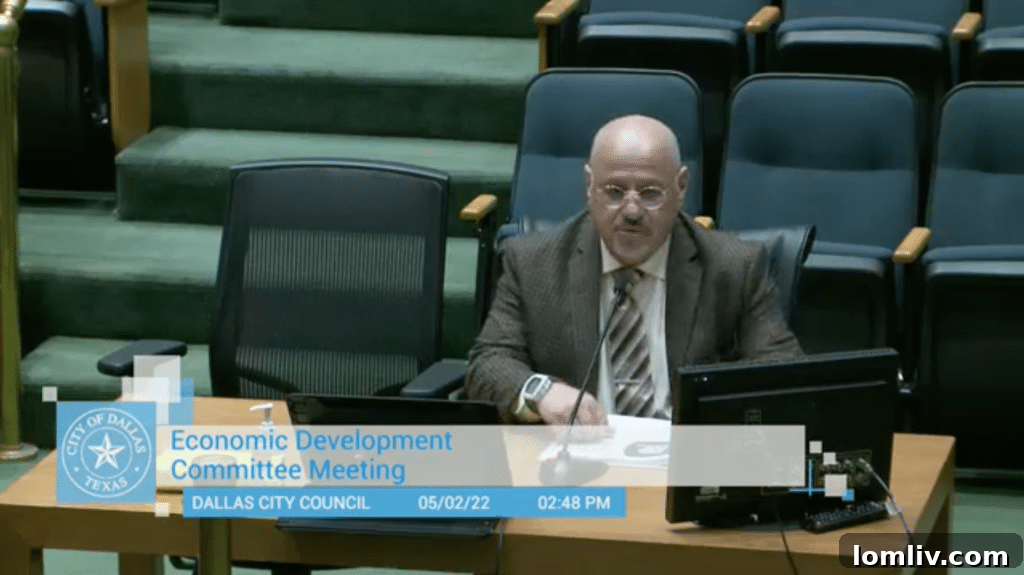
For those stakeholders eager to make their voices heard (yet again), the City of Dallas has established a dedicated online form, accessible here. This platform provides a structured channel for individuals to submit their experiences and recommendations directly to city officials. Phil Crone, Executive Officer of the Dallas Builders Association, strongly urged members to participate: “The bottom line is, affected builders should take a few minutes and provide feedback through the survey. This will help us make sure that the industry’s feedback is properly accounted for in their May 18 update.” The timely submission of this feedback is crucial, as comments must be provided by Wednesday, May 11, to ensure they are considered for the upcoming council briefing. Crone also recommended that those providing feedback review the city council briefing from May 2, 2022, particularly the Development Services briefing which commences at the 1:47 mark, accessible here, to inform their submissions.
The Path Forward: Recommendations and Long-Term Vision for Dallas Permitting
Addressing Dallas’s building permit crisis requires more than just reactive measures; it demands a comprehensive, strategic overhaul that embraces modernization, collaboration, and accountability. The path forward must integrate both immediate improvements and a long-term vision to ensure Dallas can foster sustainable growth and remain competitive as a leading urban center.
Modernizing the Process for Efficiency
A fundamental step is the widespread adoption of digital transformation. This includes implementing robust online submission portals that are intuitive and user-friendly, alongside automated tracking systems that provide real-time updates on permit status. Migrating to cloud-based systems can significantly enhance accessibility and data management. Furthermore, streamlining review processes through clearer, standardized guidelines and leveraging technology for initial compliance checks can reduce subjective interpretations and accelerate approvals. Investing in modernizing the physical office space, or transitioning towards more remote and hybrid work models supported by digital tools, can also improve operational efficiency and staff morale. Adequate staffing and continuous training for personnel on new systems and evolving regulations are equally vital to prevent future backlogs.
Fostering Collaborative Solutions
Sustained, open dialogue between the city, the building community, and residents is paramount. This collaboration can lead to innovative solutions, such as exploring pre-application meetings for complex projects, which allow developers to address potential issues early in the process. Re-evaluating the current zoning complexities with a view towards simplification, or at least clearer documentation and training for external reviewers, could unlock the potential for effective third-party plan reviews. Benchmarking Dallas’s permitting process against other rapidly growing cities known for their efficiency, such as Austin, Houston, San Antonio, or even Phoenix and Denver, could provide valuable insights and best practices.
Enhancing Accountability and Transparency
To rebuild trust and ensure consistent progress, the city must commit to greater accountability and transparency. This includes providing regular, public updates on permit processing times and key performance indicators. The development of a public dashboard showcasing average review times, permit volumes, and backlog status could offer vital transparency to stakeholders. Moreover, establishing clear metrics and, where appropriate, consequences for chronic departmental delays could incentivize continuous improvement and ensure that promises of reform translate into tangible results.
Conclusion: Building a Better Dallas, One Permit at a Time
The persistent challenges in obtaining building permits in Dallas are more than just bureaucratic hurdles; they are impediments to progress, economic growth, and the city’s ability to meet the needs of its growing population. The “ordeal” that has long plagued developers and contractors cannot be allowed to continue indefinitely. While the City of Dallas’s renewed call for feedback is a welcome sign, it must be followed by decisive action and a commitment to fundamental systemic changes.
The collective voices of the building community, articulated through forums like the upcoming May 18 council briefing and the online feedback survey, are critical. These inputs must serve as catalysts for a long-term strategic plan focused on modernizing processes, simplifying regulations, investing in infrastructure, and fostering genuine collaboration. By transforming its permitting system into an efficient, predictable, and transparent process, Dallas can unlock its full potential, attract new investments, and build a more vibrant and prosperous future for all its residents. The time for piecemeal solutions is over; it’s time for a comprehensive commitment to building a better Dallas, one streamlined permit at a time.