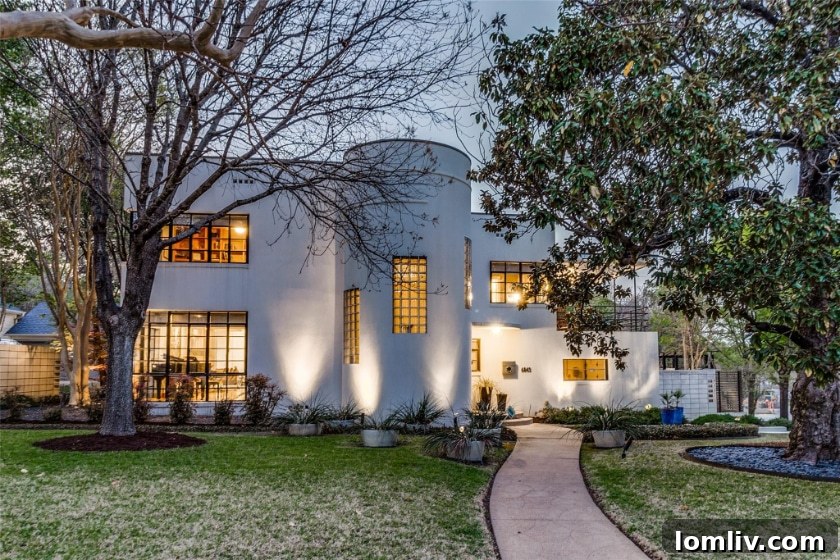
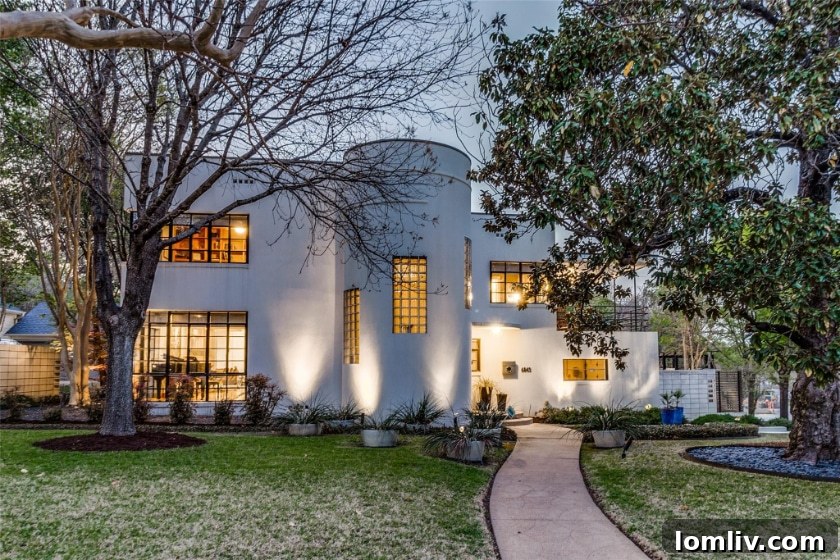
Recently, a captivating image of a Streamline Moderne home circulated on social media, sparking a lively debate about its unique architectural identity. This online discussion highlighted a common misunderstanding surrounding this distinctive style, which is often mistakenly grouped with Art Deco, Art Moderne, or even the International Style. To clarify these delineations and celebrate a truly remarkable period in design history, we’ve consulted with leading architectural experts to provide a definitive guide to Streamline Moderne.
While some professionals fiercely defend the precise classifications of architectural periods, Streamline Moderne undeniably holds its own significant place. It represents a fascinating evolution from its more ornate predecessor, Art Deco, embracing a sleek, functional aesthetic that defined the optimistic spirit of a new era.
Unveiling Streamline Moderne: An Architectural Icon of the 1930s
Streamline Moderne emerged in the 1930s, a direct descendant of Art Deco but with a decidedly forward-looking and minimalist approach. Its roots can be traced back to the burgeoning fields of industrial design and transportation. The luxurious ocean liner S.S. Normandie, launched in 1932, famously encapsulated this new aesthetic, its aerodynamic curves and sleek lines inspiring designers across various industries. From buses and trains to household appliances like telephones and radios, the influence of streamlined design was pervasive. It was a style born from the desire for efficiency, speed, and modernity, perfectly reflecting the societal shifts of the Great Depression era, which favored practicality over excessive ornamentation.
Architects soon found inspiration in these industrial forms, translating the principles of aerodynamics and fluid movement into residential and commercial buildings. Think of it as Art Deco stripped down to its essential, most dynamic elements—a focus on smooth surfaces, curved forms, and horizontal emphasis, often evoking the feeling of motion even in static structures.
To truly understand the nuances of Streamline Moderne, we turned to Larry Good, a respected architect and board member of Preservation Park Cities. Good, known for his profound contributions to architecture, including his role as a founding principal of Good Fulton and Farrell and author of A House for Texas (about the historic Elbert Williams House by David R. Williams), offers unparalleled insight into this unique style.
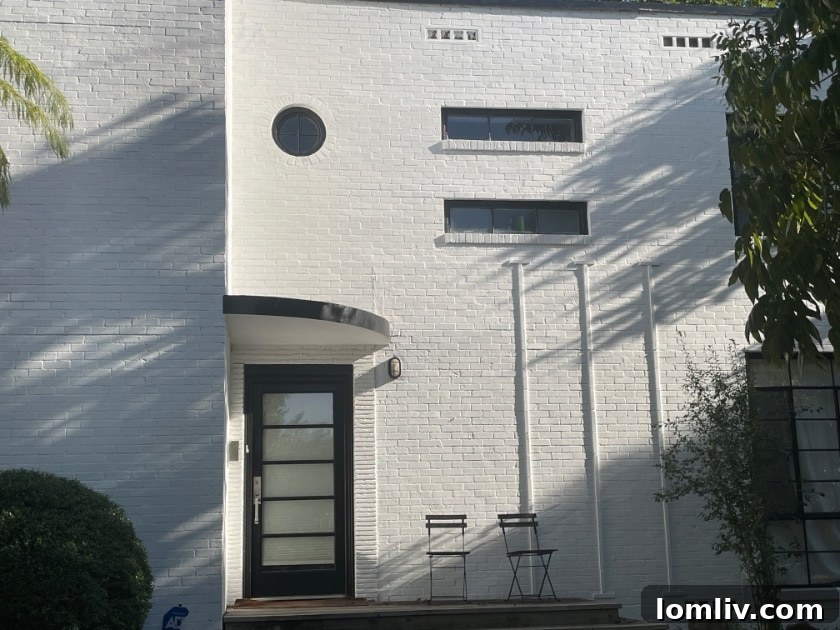
Larry Good articulates the key characteristics that define a true Streamline Moderne residence: “A true Streamline Moderne is characterized by curved elements, often seen in walls and corners, distinctive corner steel casement windows that wrap around the building, flat roofs that create clean horizontal lines, functional yet stylish porthole windows, the innovative use of glass brick for light and privacy, and a clear nautical overtone, exemplified by design details like the pipe railings frequently found on second-floor balconies.” These elements collectively create a sense of effortless modernity and forward momentum, distinguishing it from other contemporary styles.
Streamline Moderne’s Grand Entrance to Texas
The Lone Star State was introduced to this captivating architectural style during a pivotal moment in its history: the 1936 Texas Centennial Exposition in Dallas. This grand event celebrated a century of Texas independence and showcased the latest in technology, art, and architecture. Among the four demonstration homes built for the Exposition, The Contemporary House, designed by architects Dewitt and Washburn, stood as a beacon of Streamline Moderne innovation. Its sleek lines and modern features captivated visitors, offering a glimpse into the future of residential design. Unfortunately, this significant structure was demolished in 1947 and was never relocated from the exposition grounds.
Of the other Exposition homes, the Southern Pine House, a more traditional design, was moved to 3003 Kinmore Street. The only remaining structure on its original site is The Portland Cement home, initially designed by Harold “Bub” Jesson and meticulously restored by architect Norman Alston, standing as a testament to the Exposition’s legacy.
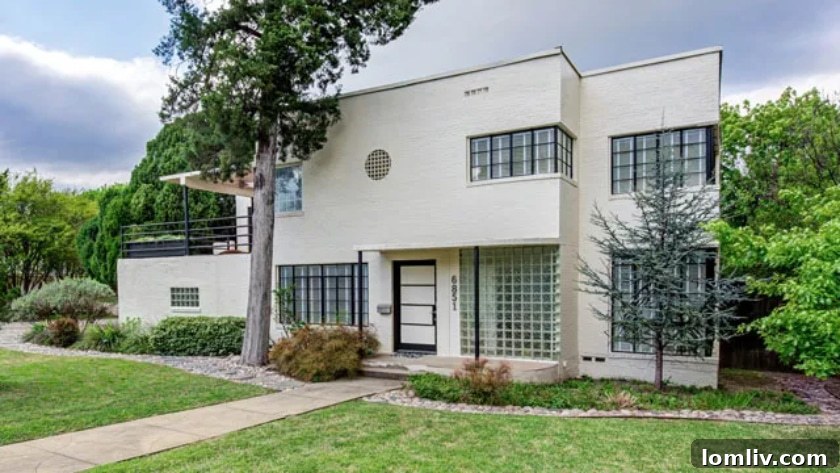
A persistent point of confusion often arises regarding another Exposition structure: the Masonite House, designed by San Antonio architect Ralph Cameron, who won a competition by the Masonite Corporation. While sources have sometimes incorrectly linked this house to Streamline Moderne and its relocation to 6901 Gaston, it is crucial to clarify: the Masonite House is NOT a Streamline Moderne example. The true Streamline Moderne landmark that many East Dallas residents regularly encounter is located just a block away at 6851 Gaston. This striking home was designed by Reynolds Fisher and is famously remembered for having been owned by renowned designer Todd Oldham for several years. The distinction is important, and as Larry Good has definitively confirmed, no Streamline Moderne structure was ever moved from the Fair Park grounds; only the Masonite house was relocated. This clarification helps dispel a long-standing myth and highlights the unique significance of the Fisher-designed home.
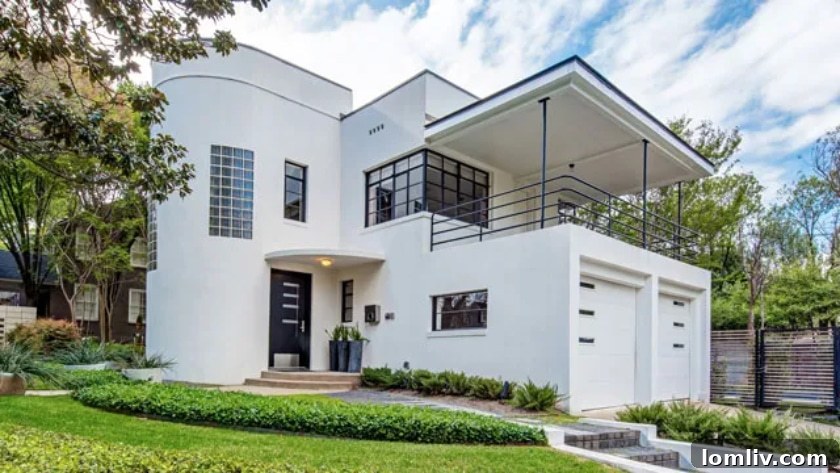
Continuing our exploration of Dallas’s Streamline Moderne gems, just a short distance from the Gaston house, at 6843 Lorna Lane, stands a gorgeous 1936 residence designed by Luther Sadler. Preservation Architect Nancy McCoy, in a column for the Dallas AIA Springboard publication, noted that this particular house was commissioned by the Mayflower Investment Company. It is one of approximately 14 modern-style houses constructed in the area during that period, but notably, it remains the sole authentic Streamline Moderne among them, distinguished by its unique painted brick exterior and characteristic curves. This home perfectly embodies the style’s blend of sophistication and innovative design.
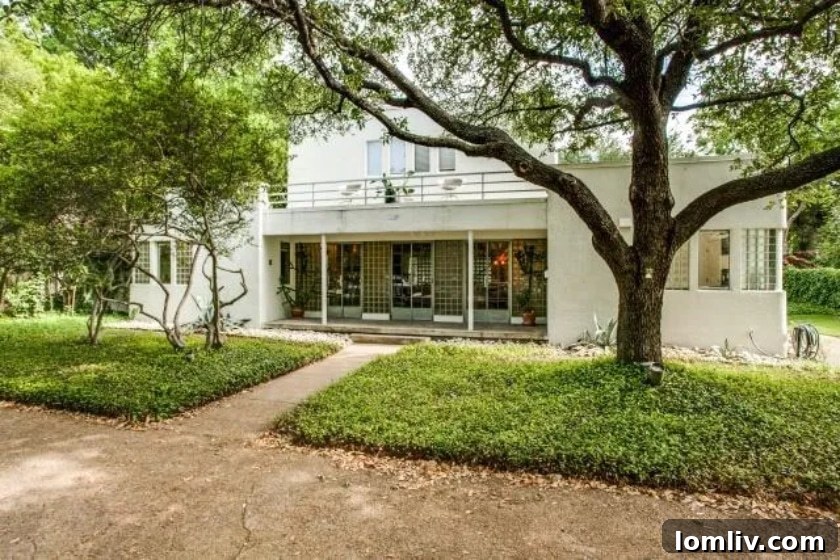
Moving across the city to 4637 Mockingbird Lane, we discover another impressive Streamline Moderne home designed by the esteemed John Astin Perkins for Columbus Marion Joiner. Affectionately known by his nickname, ‘Dad,’ Joiner holds a significant place in Texas history as the individual who drilled the discovery well of the prolific East Texas Oil Field—a venture that famously became the source of H.L. Hunt’s vast fortune. While Joiner’s fascinating story is rich with historical significance, it is Perkins’ architectural masterpiece that draws our attention here, showcasing how the Streamline Moderne aesthetic found its way into the homes of prominent figures.
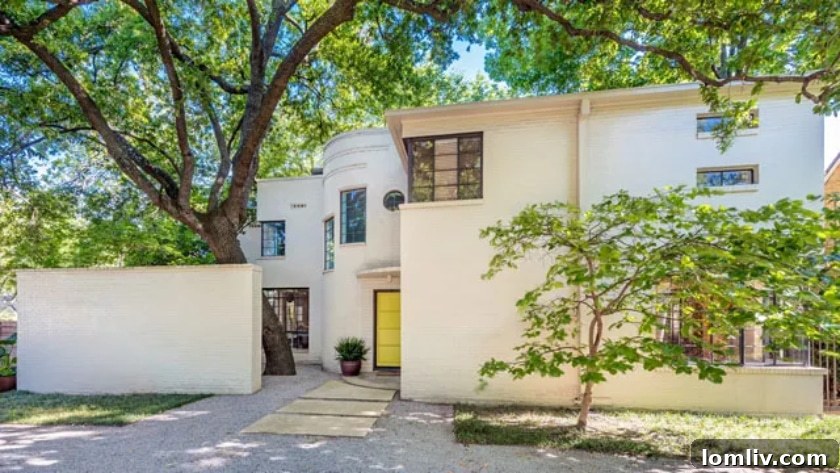
One of the most beautifully preserved and celebrated Streamline Moderne residences, designed by Fisher and Reynolds, graces Beverly Drive. This architectural gem recently underwent an incredible update, so masterfully executed that it garnered a feature in the prestigious Architectural Digest. What makes this home’s story particularly charming is that the renovation was passionately undertaken by the owner’s daughter, Avery Cox, with architect William Curtis of Curtis & Windham Architects in Houston overseeing the project. This project serves as a perfect illustration of how a historically significant home can be meticulously preserved and respectfully adapted to seamlessly integrate with contemporary lifestyles, proving that classic design can indeed thrive in the modern age.
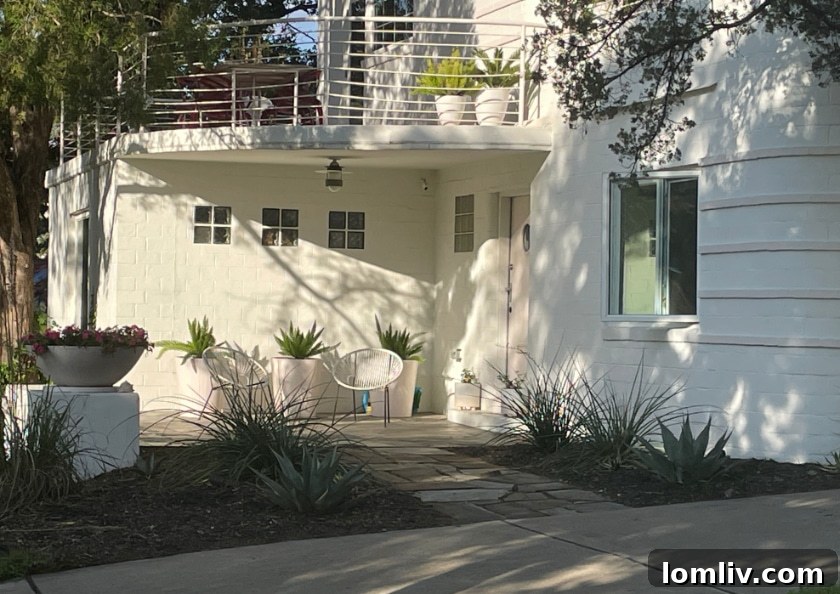
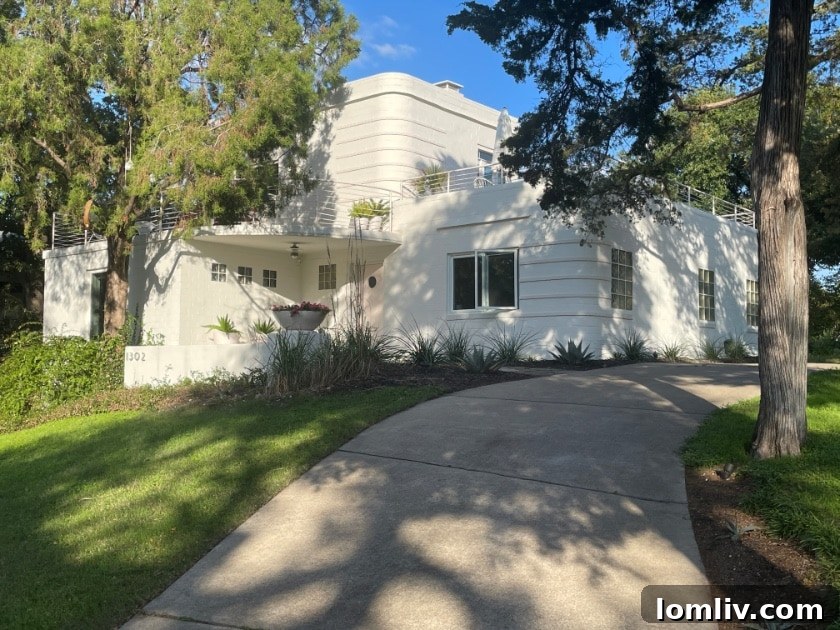
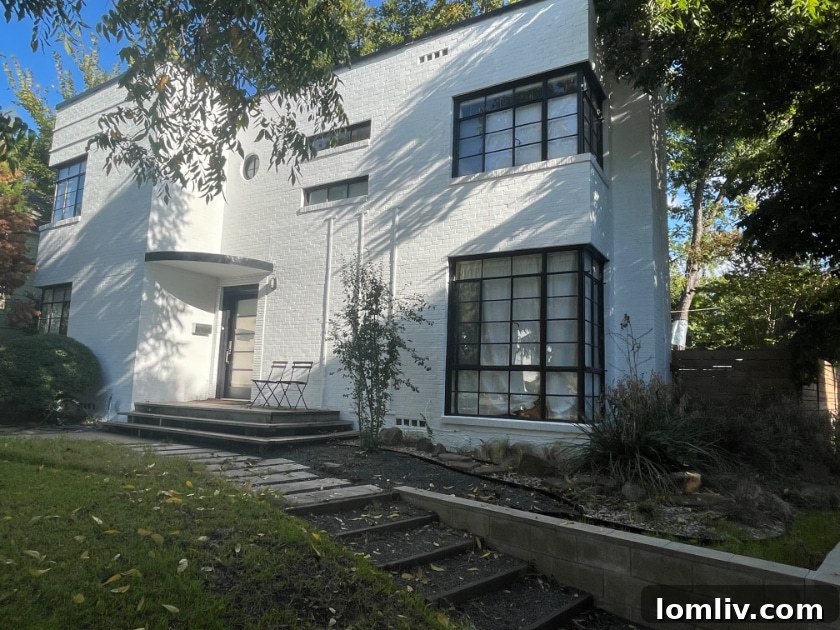
Our journey through Dallas’s Streamline Moderne landscape concludes with two additional remarkable examples. One is nestled in Cochran Heights at 5102 Pershing Street, and the other is proudly situated in East Kessler at 1302 Cedar Hill Avenue. The Cedar Hill residence, in particular, has seen a fortunate transformation. After several years of being painted a rather drab beige with turquoise accents, it has thankfully been restored to its original, crisp white. This change is not merely aesthetic; for Streamline Moderne homes, the pure, unadorned white or light color palette is integral to conveying the style’s clean lines, smooth surfaces, and emphasis on form over color, helping to highlight its architectural purity and forward-thinking design.
The Scarcity and Value of Streamline Moderne: A Call for Preservation
Given the striking beauty and historical significance of these homes, one might wonder why so few Streamline Moderne residences remain in our city. The recent loss of one at 4593 Belfort serves as a poignant reminder of their vulnerability. With only a handful of these unique structures left, their preservation becomes even more critical.
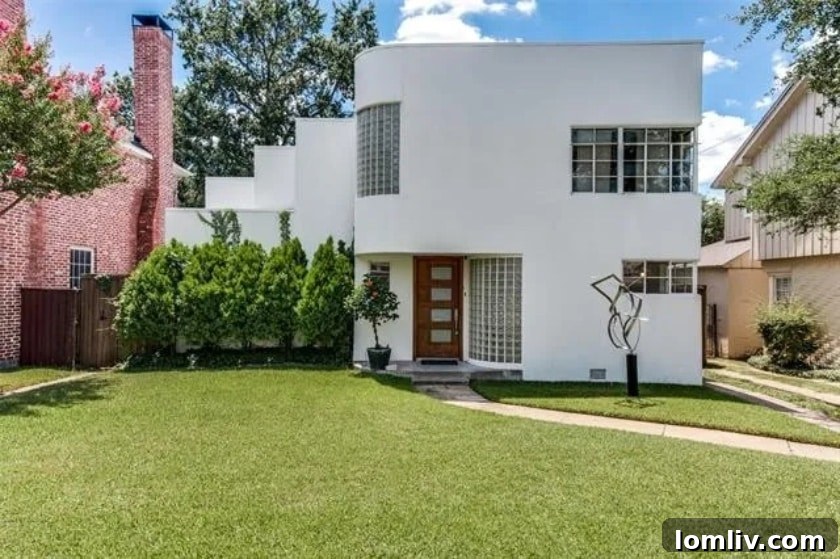
Larry Good offers a compelling explanation for their scarcity: “I think the reason most did not survive is, frankly, they were a quirky style and not to everybody’s taste. It was not that they could not be renovated. In fact, they were probably easier to renovate; Dallas was just very traditional.” This insight underscores the cultural preferences that sometimes lead to the loss of innovative architectural forms. In a city deeply rooted in more traditional styles, the sleek, unadorned aesthetic of Streamline Moderne perhaps felt too radical for many, leading to fewer commissions and a lower survival rate compared to other regions.
Indeed, while Dallas may have fewer examples, Streamline Moderne architecture thrives in other areas, notably California, where a more progressive architectural climate allowed the style to flourish. These homes are not merely relics of the past; they are significant cultural artifacts, representing a pivotal moment in American design and innovation. Their clean lines, functional elegance, and timeless appeal continue to captivate enthusiasts and buyers alike.
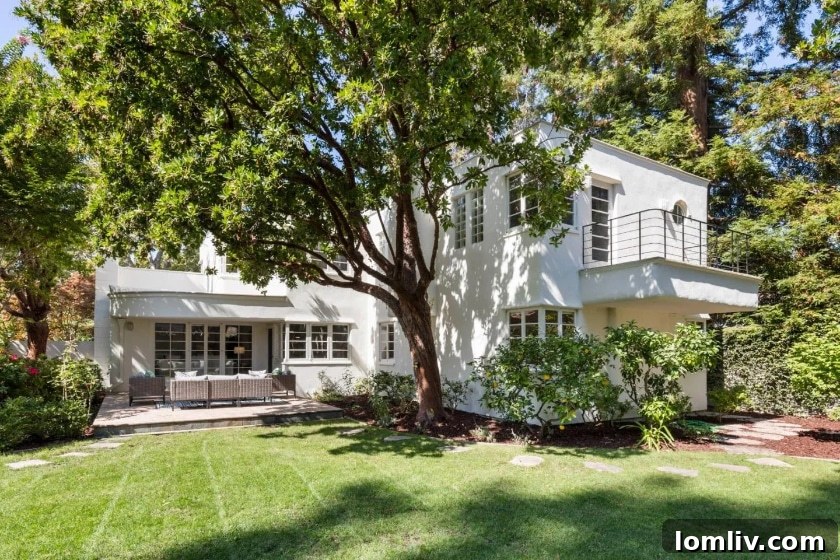
The increasing appreciation for mid-century and modern design has elevated the value of these unique properties. For instance, if you happen to be in Palo Alto, California, you could acquire a vintage Streamline Moderne at 450 N. California Avenue for a cool $6.38 million. This striking example beautifully illustrates that investing in and preserving a historic home can indeed offer substantial returns, both in terms of cultural heritage and financial value. As we celebrate these remaining Dallas treasures, it’s a powerful reminder of the enduring allure and intrinsic worth of Streamline Moderne architecture, urging us to protect these irreplaceable links to our architectural past for future generations.