

Navigating Property Tax Appeals: When Home Condition Impacts Your Valuation
Receiving your annual property tax valuation can be a moment of dread for many homeowners. That sinking feeling often comes with the realization that your home’s assessed value seems disproportionately high compared to its actual condition. Perhaps you’ve just received the notice, and as you scrutinize the numbers, a significant crack in your ceiling catches your eye. Instantly, a thought sparks: “Surely, photographic evidence of this damage will help me contest this valuation and prove the appraisal district’s assessment is inaccurate!” While your instinct to document property issues is commendable, the rules governing property tax appeals are far more nuanced than simply showing recent damage. Understanding these rules is crucial for a successful protest.
Many homeowners believe any visible wear and tear or damage can be used to argue against an inflated property valuation. However, a critical legal stipulation often complicates this approach: the condition of your home must be evaluated as it stood on January 1st of the valuation year. This means that a crack appearing in April, or damage from a recent storm, typically cannot be used as evidence to lower a property’s value for the current tax year, even if it significantly impacts the home’s market appeal. This strict adherence to the January 1st deadline is a cornerstone of property appraisal law and often catches property owners off guard.
The Critical “January 1st” Rule: Understanding the Valuation Date
The foundation of property tax assessment lies in a very specific date: January 1st. By law, the value assigned to your property is an estimate of what it would have sold for on January 1st of that year. This is not merely an arbitrary date; it serves as a standardized baseline to ensure fairness and consistency across all properties within an appraisal district. Glenn Goodrich, Director of Technology & Property Tax at Goodrich Realty Consulting, a firm that developed PropertyTax.io to empower homeowners in their tax protests, emphasizes this point. “The value assigned to your property, by law, is the value the appraisal district estimates your property would sell for on January 1st of that year,” Goodrich explains. This means any condition issue you wish to present as evidence must have been present and identifiable on that specific day.
The rationale behind this stringent deadline is to prevent fluctuating market conditions or post-assessment damages from distorting the annual valuation process. Without a fixed date, property values would be in constant flux, making fair and consistent appraisal impossible. Therefore, when preparing your appeal, your focus should always be on gathering evidence that clearly demonstrates your property’s condition as of January 1st.
Navigating the Grey Areas: Discovering Damage After the Deadline
While the January 1st rule is generally non-negotiable, there are subtle grey areas worth exploring. What if you only discovered significant damage, such as hidden wood rot under your house or a slow roof leak, well after January 1st, perhaps during a spring rain or a routine inspection? If you can confidently assert that these issues, although discovered later, would have been present and discoverable during a thorough inspection of your home on January 1st, then it’s advisable to include them in your protest. This often requires expert opinion or detailed reports from contractors or inspectors who can attest to the long-standing nature of the problem. For instance, an inspector might conclude that a foundation crack or extensive mold growth shows signs of development over many months, thereby indicating its presence on the valuation date.
However, this flexibility does not extend to new damage. For example, a severe hail storm in March that tears off shingles or cracks windows cannot be used as evidence to reduce your property’s value for the current year. Such events occurred after the critical January 1st date and would not have impacted the property’s market value on that specific day. It’s crucial to differentiate between newly acquired damage and pre-existing conditions that simply went unnoticed until a later date.
Repairs Before January 1st: A Nuanced Perspective
Another common scenario involves homeowners who address property issues before the valuation date. If an issue occurred and was fully repaired before January 1st, can you still use it as evidence? Goodrich clarifies, “In this case, the condition issue did not exist on January 1st, therefore cannot be used as evidence to lower the value. If an issue was fixed prior to January 1st, it is no longer a factor in the value of your property on January 1st.” The appraisal district assesses the property as it stands, and a fixed issue is, by definition, no longer an issue impacting value.
Yet, there’s a compelling exception to this rule, particularly for issues that carry long-term implications or require disclosure during a property sale. Goodrich elaborates: “You could, however, make the argument that getting rid of mold (as an example) would negatively impact the value of the home because it would have to be listed on a seller disclosure document.” Even if remediated, the history of significant issues like mold, structural damage, or major plumbing problems often requires disclosure to potential buyers. Such disclosures can deter buyers or lead to lower offers, thus impacting the home’s market value, even if the physical issue is resolved. Documenting these past repairs, especially with professional reports, can still strengthen your case by highlighting a history of issues that would affect a buyer’s perception of value.
Unpacking Home Condition: Cosmetic vs. Repair Issues in Property Tax Appeals
When presenting evidence of your home’s condition, it’s beneficial to understand how appraisal districts might categorize different types of damage. GRC’s new condition tool, designed to assist homeowners in these appeals, categorizes issues into two primary groups: cosmetic and repair damages. While no appraisal district officially publishes this distinction as policy, GRC’s extensive experience suggests that these categories are unofficially weighed differently in the appeal process.
Understanding Cosmetic Issues
Cosmetic issues typically refer to minor imperfections or outdated elements that affect a home’s aesthetic appeal but not its structural integrity or immediate functionality. Glenn Goodrich defines these as “items that a potential buyer would identify when viewing your house as something they would prefer to have fixed prior to moving in or would use against you to bring the price of the home down.” These issues, while impacting a home’s attractiveness and perceived value, are generally less severe and less costly to rectify than structural problems. Examples of cosmetic conditions include:
- Minor cracks in interior walls, ceilings, or flooring.
- Outdated kitchens or bathrooms (e.g., old fixtures, worn countertops, ancient appliances).
- Worn carpets or peeling paint.
- Old, dilapidated fencing.
- Landscaping in poor condition.
While cosmetic issues can influence buyer offers, they often carry less weight in a property tax appeal than significant structural or system failures. However, an accumulation of numerous cosmetic issues can collectively paint a picture of a poorly maintained or outdated property, justifying a lower valuation.
Prioritizing Structural & Repair Damages
Repair issues, in contrast, are more serious problems that typically affect the safety, functionality, or structural integrity of the home. These are the kinds of defects that would likely appear on a professional home inspection report and could lead to significant repair costs. Repair issues often present immediate concerns for potential buyers and directly impact the home’s market value due to the substantial investment required to fix them. Examples include:
- Foundation problems (cracks, shifting, settling).
- Significant roof damage (leaks, missing shingles, structural compromise).
- Active mold growth (beyond superficial mildew).
- Major plumbing issues (leaks, burst pipes, outdated systems).
- Electrical system deficiencies or hazards.
- HVAC system failures.
- Water penetration issues leading to rot or structural damage.
When appealing based on repair issues, it is highly recommended to accompany your claims with official estimates from licensed contractors, engineers, or other qualified professionals. These estimates provide quantifiable evidence of the financial burden associated with the damage, which an appraisal district is more likely to consider seriously. The more concrete and professionally backed your evidence, the stronger your case will be.
Empowering Your Appeal: Leveraging Tools Like PropertyTax.io
Understanding the intricacies of property tax appeals can be daunting. Fortunately, tools like PropertyTax.io are designed to simplify this process for homeowners. If you’re confident that your property’s valuation is too high due to its condition or an unfair comparison to neighboring homes, taking action is straightforward.
The Condition + Equal & Uniform Tool: A DIY Approach
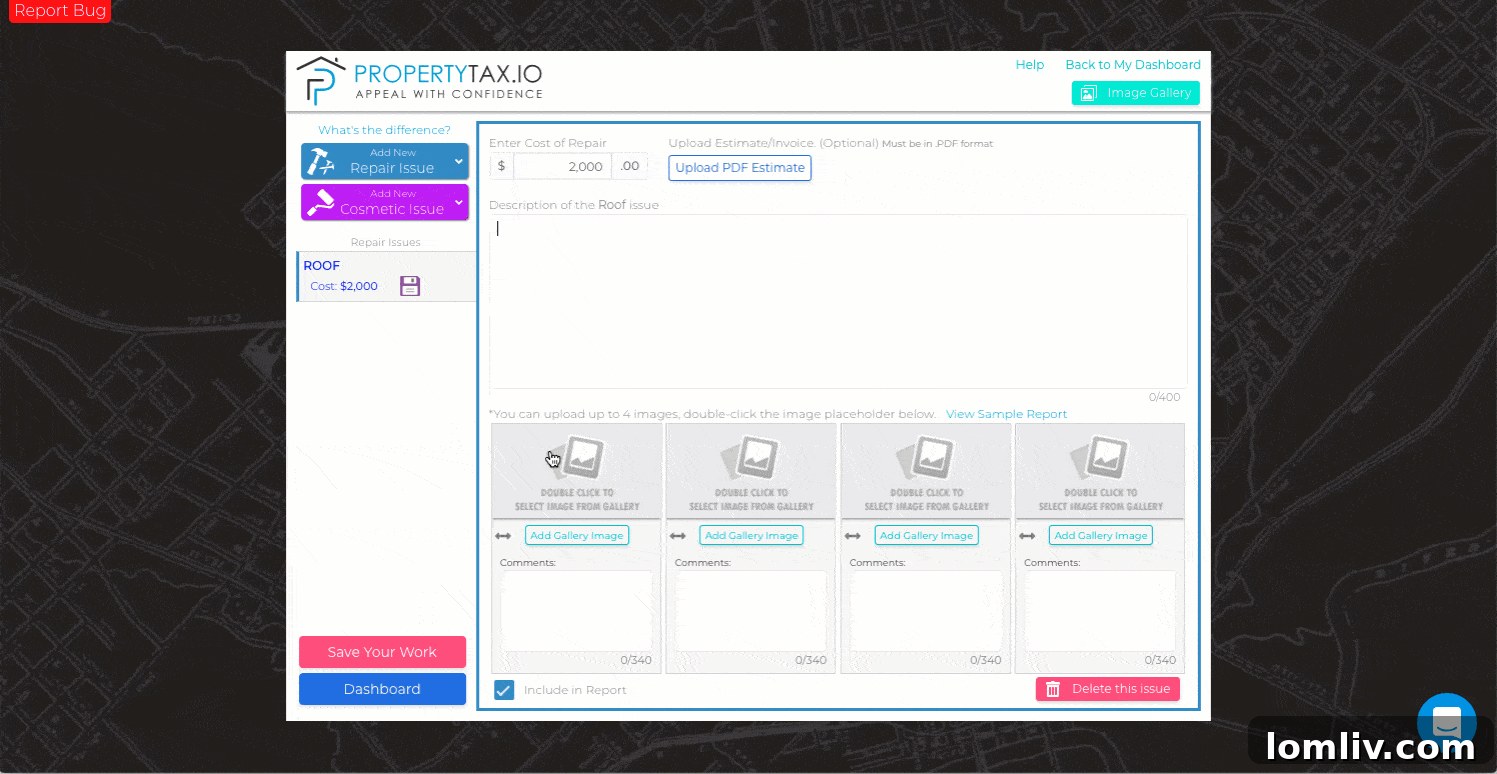
To appeal based on condition, you can utilize the specific features offered by PropertyTax.io. Simply visit their website, navigate to the Bronze package ($25), which includes both the Condition Tool and the Equal & Uniform Tool. This package is ideal for homeowners who want to manage their appeal themselves with professional guidance from the tool. Here’s how it works:
- Select Your Package: Choose the $25 Bronze package.
- Create Issue: Initiate a new cosmetic or repair issue.
- Verify Date: Crucially, confirm that the issue existed on January 1st of the current year. The tool will prompt you for this verification, reinforcing the legal requirement.
- Upload Evidence: Upload high-quality photos of the damage. The tool allows you to crop, zoom, and adjust images to highlight specific areas you want to emphasize.
- Describe & Quantify: Provide a clear, concise description of the issue. If it’s a repair issue, input the estimated cost of repair and upload any supporting estimates from contractors or professionals.
- Add Context: You can add descriptions under each photo, offering detailed context and explaining how each image supports your claim. You can add up to four photos per issue.
The system then compiles all this information into a professional, organized report ready for submission to your appraisal district. This structured presentation significantly enhances the credibility of your appeal, making it easier for the appraisal board to review and understand your arguments.
The Power of Equal & Uniform: Ensuring Fair Valuation
Beyond condition, property tax appeals often hinge on the concept of “equal and uniform” appraisal. This principle dictates that your property should be valued consistently with other similar properties in your neighborhood. PropertyTax.io’s Equal & Uniform tool is an invaluable asset for this type of appeal. With this feature, you can compare your property to up to nine other comparable properties in your immediate vicinity.
Glenn Goodrich highlights the tool’s effectiveness: “We will show you all the important information from the appraisal district’s perspective so you can see how those properties will look in their system.” This transparency allows you to identify discrepancies in valuation, ensuring you’re not paying more than your fair share compared to neighbors with similar homes. The tool aggregates crucial data points, presenting a compelling side-by-side comparison that strengthens your argument for an adjustment. The Bronze Package, in particular, is an excellent choice for properties that can leverage either condition issues or demonstrate an unfair valuation compared to similar homes in the neighborhood.
Choosing Your Path: PropertyTax.io Packages for Every Need
PropertyTax.io offers a tiered approach to property tax appeals, catering to different levels of homeowner involvement and complexity:
- Bronze Package ($25): This entry-level package includes the powerful Condition Tool and the Equal & Uniform Tool. It’s designed for the proactive homeowner who wishes to manage their own appeal, providing them with the necessary data and a professional report to present their case effectively. This is ideal for straightforward cases based on condition or clear valuation disparities.
- Silver Package ($75): For those seeking a more comprehensive approach, the Silver package provides a full valuation analysis, which includes all features of the Bronze package (Condition + Equal & Uniform Tool). This package typically delves deeper into market analysis, sales data, and other factors that influence your property’s valuation, offering a more robust appeal strategy.
- Gold Package ($99): This premium package offers full-service representation. With the Gold package, your appeal and all negotiations with the appraisal district are handled directly by the experts at Goodrich Realty Consulting. This is the ideal choice for homeowners who prefer a hands-off approach, want professional advocacy, or have particularly complex appeal cases.
Maximizing Your Property Tax Appeal: Expert Tips
Regardless of which package you choose, or even if you pursue an appeal independently, a few universal tips can significantly improve your chances of success:
- Act Promptly: Always adhere to appeal deadlines, which are usually strict. Missing a deadline can forfeit your right to protest for the year.
- Gather Comprehensive Evidence: Whether it’s photos, repair estimates, inspection reports, or comparable sales data, the more concrete evidence you have, the stronger your case.
- Be Specific: Clearly articulate why you believe your valuation is incorrect. Avoid vague complaints; instead, provide specific examples and supporting documentation.
- Understand Your Rights: Familiarize yourself with your local appraisal district’s rules and procedures. Knowing the process can help you navigate it more effectively.
- Be Prepared to Negotiate: Often, the appraisal review board is open to negotiation. Present your case clearly and be prepared to discuss potential adjustments.
Take Control of Your Property Valuation
Don’t let an unfair property tax valuation cost you hundreds or even thousands of dollars annually. Understanding the specific rules regarding home condition and leveraging effective tools like PropertyTax.io can empower you to confidently challenge your assessment. By meticulously documenting your home’s condition as of January 1st and comparing your property to fair market values in your neighborhood, you can build a compelling case for a reduction in your property taxes. Take the proactive step to ensure your home’s value is assessed accurately and fairly. Visit PropertyTax.io today and explore the options that can help you secure the tax relief you deserve.