Dallas Love Field Pioneers Sustainable Aviation with JetWind Power Partnership: A Deep Dive
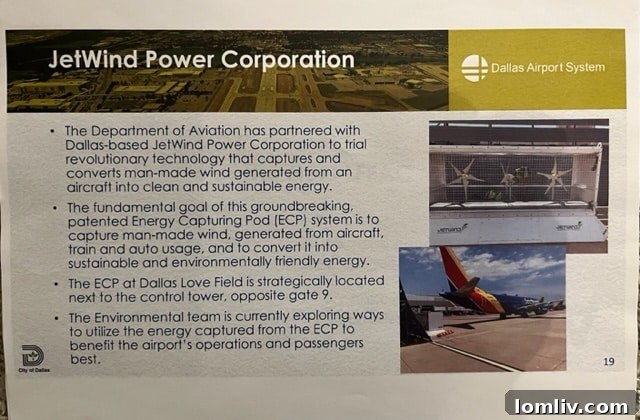
In an unexpected turn during a recent Dallas Love Field Environmental Advisory Committee meeting, the primary focus on aircraft noise was overshadowed by a groundbreaking announcement. Tucked away on the final slide of a detailed 22-page PowerPoint presentation was the revelation of an innovative partnership with JetWind Power Corp. This Dallas-based company is set to introduce a revolutionary technology that promises to transform the “manmade wind” generated by aircraft into clean, sustainable energy, marking a significant leap forward in airport sustainability and environmental responsibility.
For years, residents living in the vicinity of Love Field have been vocal about the persistent challenge of aircraft noise. Their concerns have often led to extensive community dialogue and efforts to mitigate the sonic impact of a bustling urban airport. However, the news of the JetWind partnership, which officials have assured will not contribute any additional noise, was met with palpable enthusiasm, suggesting a beacon of hope for a more harmonious coexistence between the airport and its neighbors.
Addressing the Persistent Challenge of Aircraft Noise at Dallas Love Field
The issue of aircraft noise is a long-standing concern for communities surrounding busy airports like Dallas Love Field. Residents frequently report disruptions to their daily lives, impacting everything from sleep quality to outdoor activities and overall peace of mind. These concerns have historically fueled community activism, prompting local authorities and airport management to seek viable solutions.
Traditional approaches to noise mitigation often involve adjusting flight paths, implementing quieter aircraft technologies, and establishing noise abatement procedures. While these measures offer some relief, they rarely provide a comprehensive solution to the complex problem of urban airport noise. The JetWind Power partnership, however, presents a novel approach: instead of simply reducing noise, it aims to harness an inherent byproduct of aviation – the powerful wind created by aircraft engines – and convert it into a valuable resource. This innovative strategy offers a unique opportunity to turn a perceived negative into a tangible positive, fostering a new era of community goodwill and environmental stewardship around Dallas Love Field.
Unveiling the Revolutionary Technology of JetWind Power Corporation
The genesis of JetWind Power Corporation’s pioneering idea is as intriguing as the technology itself. Isaac Ellison, Love Field’s Interim Environmental Manager, recounted how the airport’s aviation staff was approached over a year ago by a renowned sports medicine doctor, whose “aha!” moment occurred during a flight into Love Field. “He saw the aircraft kind of pushing back,” Ellison explained, envisioning a scenario where this dynamic energy could be captured and repurposed.
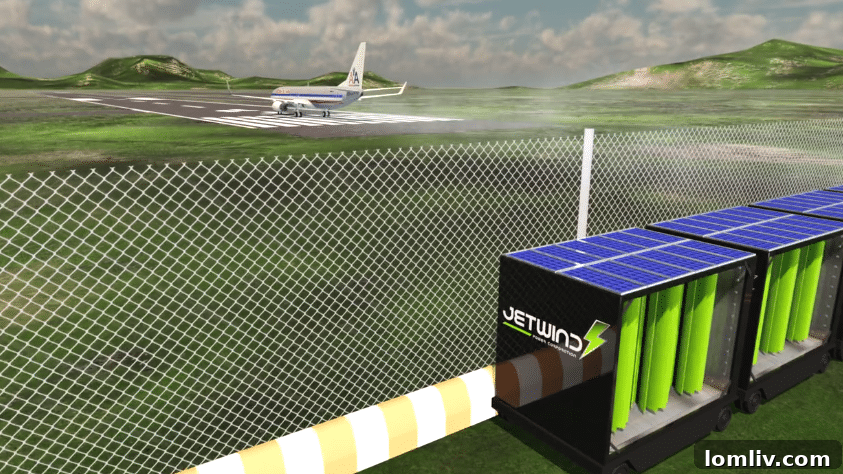
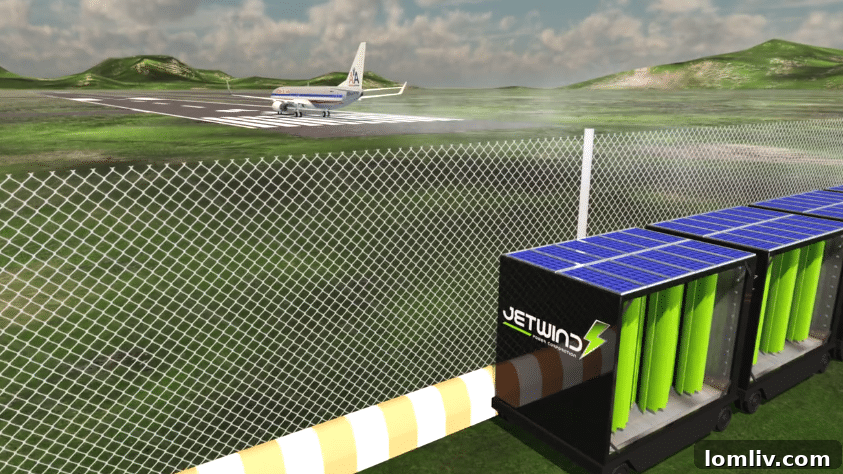
At its core, JetWind Power’s technology is designed to convert aircraft propulsion into sustainable energy. Ellison elaborated on the mechanism: “What’s generally happening is this energy-capturing pod uses the propellers as motors. The aircraft, when it pushes back and taxis out, that propulsion will turn into propellers. The propellers are directly linked to batteries.” This ingenious system effectively transforms the kinetic energy of an aircraft’s movement on the ground into electrical power. As aircraft maneuver, their powerful thrust generates a significant “manmade wind.” JetWind’s strategically placed pods are equipped with turbines (functioning like propellers) that are spun by this air current. These turbines, in turn, drive generators that charge a bank of batteries, effectively capturing energy that would otherwise dissipate unused.
The potential applications of this harnessed energy are diverse and impactful. Ellison highlighted that the captured power can be seamlessly integrated into the existing energy grid, contributing to a broader sustainable energy supply. Beyond grid integration, the vision extends to more direct, visible benefits for airport users and operations. “Somewhere in the terminal there would be like a kiosk and you could go charge your cell phone, then look out the window and see that’s where [the power is] coming from,” he envisioned, creating a tangible connection for passengers to the airport’s green initiatives. This innovative approach positions Dallas Love Field at the forefront of sustainable aviation, demonstrating a practical and scalable method for reducing the environmental footprint of airport operations.
The Visionary Behind the Innovation: Dr. T.O. Souryal and JetWind’s Origin
The mastermind behind JetWind Power Corp. is Dr. T.O. Souryal, a distinguished Highland Park physician with a remarkable background, including two decades as the Dallas Mavericks team doctor. Despite his thriving practice as an orthopedic surgeon, Dr. Souryal’s entrepreneurial spirit and commitment to sustainability led him to explore this groundbreaking idea. “I just had an idea,” Souryal modestly shared in a recent interview, emphasizing the organic inception of the concept.
Dallas Love Field has embraced this pioneering spirit, providing a crucial testing ground for JetWind’s technology. “We’re doing some testing at Love Field, and Love Field has been fantastic about allowing us to test. They’re excited that this Dallas-based start-up is at their airport,” Souryal confirmed. This collaboration underscores the airport’s dedication to fostering local innovation and sustainable solutions.
The testing phase at Gate 9 of Love Field has yielded promising results. Souryal explained that “Every time an aircraft departs out of Love Field’s Gate 9, the wind turbines spin and electricity is captured.” This captured energy is then immediately put to use. “Right now we’re using the electricity to charge up the EVs in the aircraft control tower,” he stated. This real-world application not only validates the technology but also provides a practical demonstration of its immediate benefits. While acknowledging it’s “still a work in progress,” Souryal expressed immense pride in the Dallas-based nature of the project and its “cool story… from a sustainability angle.”
Looking ahead, Dr. Souryal, while committed to his medical career, is open to scaling the impact of his invention. He expressed a willingness to sell or license the idea, passing the baton to others with the resources and vision to further develop and deploy JetWind’s technology on a larger scale. “I am certain that someone can do this better,” he humbly stated. “I am sure that someone with resources can take this and run with it. I have no intention of quitting my day job.” This reflects a selfless dedication to the broader goal of sustainable energy, prioritizing the widespread adoption of the innovation over personal gain.
Dallas Love Field: A Global Leader in Sustainable Aviation
The partnership with JetWind Power Corp. firmly positions Dallas Love Field as a global leader in the aviation sector’s push towards decarbonization. Patrick Carreno, interim director of aviation at Love Field, emphasized this significant milestone in a public statement. “It’s gratifying to see Dallas Love Field leading the aviation sector’s charge to decarbonize travel through our collaboration with JetWind Power Corporation,” Carreno remarked. “I am proud they chose our airport to assist with this innovation.”
This initiative goes beyond mere environmental compliance; it represents a proactive commitment to shaping a more sustainable future for air travel. By being the only airport in the world currently testing this groundbreaking technology, Love Field is not just participating in environmental efforts—it is actively pioneering them. This leadership role showcases a forward-thinking approach, demonstrating that innovation can effectively address complex environmental challenges while maintaining efficient airport operations. The successful implementation and scaling of JetWind’s technology at Dallas Love Field could serve as a blueprint for airports worldwide, inspiring a new generation of green aviation initiatives and significantly contributing to the industry’s overall decarbonization goals.
Expanding on Love Field’s Comprehensive Sustainability Programs
The integration of JetWind Power’s technology seamlessly aligns with Dallas Love Field’s robust and multifaceted sustainability framework. The airport has long been committed to a holistic approach that extends beyond immediate environmental concerns, encompassing economic vitality and community well-being. Love Field’s existing sustainability programs are meticulously designed to achieve several critical objectives:
- Reduce Negative Environmental Impacts: Love Field is dedicated to minimizing its ecological footprint. This involves a range of initiatives from efficient waste management and extensive recycling programs to water conservation efforts across its facilities. Energy efficiency in terminal buildings and operational areas, alongside exploring renewable energy sources, are central to this goal. The partnership with JetWind Power is a monumental step, directly targeting the reduction of the airport’s reliance on traditional energy sources and mitigating its carbon emissions, thereby setting a new standard for sustainable airport operations.
- Help Maintain High, Stable Levels of Economic Growth: Sustainability at Love Field is viewed as a catalyst for economic stability and growth. By operating more efficiently, reducing resource consumption, and investing in green technologies, the airport minimizes operational costs in the long run. These practices not only make the airport more resilient to fluctuating energy markets but also enhance its appeal to environmentally conscious airlines and travelers. Furthermore, fostering local innovation, such as the partnership with a Dallas-based startup like JetWind Power, stimulates local job creation and strengthens the regional economy, positioning Love Field as a responsible and forward-thinking economic engine.
- Improve Social Relations Through a Broad Set of Actions, Ensuring Organizational Goals are Achieved in a Way That is Consistent with the Needs and Values of the Local Community: This objective is perhaps where the JetWind Power partnership truly shines as a bridge between airport operations and community welfare. Addressing aircraft noise has been a paramount community concern, and while JetWind directly converts a noise-related byproduct into energy, it also demonstrates the airport’s commitment to listening and responding with innovative solutions. Beyond noise, Love Field actively engages with local communities through outreach programs, educational initiatives, and supporting local employment. By visibly investing in clean energy and sustainability, the airport reinforces its dedication to improving the quality of life for its neighbors, fostering trust, and building stronger, more positive relationships. This comprehensive approach ensures that the airport’s progress aligns with the well-being and values of the communities it serves.
Community Enthusiasm and Future Prospects
The local community’s reaction to the JetWind Power initiative has been overwhelmingly positive. Jonathan Maples, a resident of Elm Thicket/Northpark who attended the pivotal July 13 meeting of Love Field’s Environmental Advisory Committee, articulated the widespread excitement. “This is very interesting to me,” Maples stated, expressing a keen desire for more information. “I want to know more about how this is going to work and the benefits of it.”
Beyond the immediate environmental benefits, Maples also highlighted the broader societal implications of such an innovative project. “We have young people who need opportunities, and this is something that is right up their alley,” he added. This perspective underscores the potential for JetWind Power to inspire future generations in STEM fields, create green jobs, and establish Dallas Love Field as a hub for educational and career development in sustainable technologies. The project offers a tangible example of how local innovation can translate into real-world benefits, from cleaner energy to economic opportunities, thereby strengthening the bond between the airport and its surrounding community.
Looking ahead, the successful deployment and potential scaling of JetWind Power’s technology at Dallas Love Field could serve as a powerful model for airports worldwide. It offers a compelling vision for how existing infrastructure can be repurposed to generate clean energy, significantly reducing the aviation industry’s carbon footprint. Further testing, full-scale implementation, and eventual commercialization of this innovative solution promise a future where airports are not just travel hubs but also active contributors to a greener, more sustainable planet. The journey of JetWind Power Corp. and Dallas Love Field is a testament to the power of innovation, collaboration, and a shared commitment to environmental stewardship, paving the way for a brighter and cleaner future for aviation.