Preston Center’s Future: A Pivotal Choice for Dallas’s Premier Urban Space
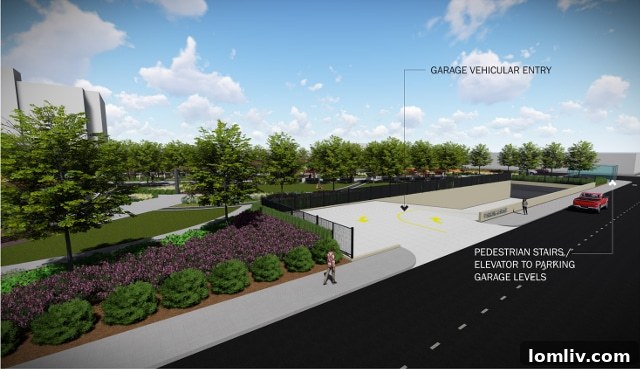
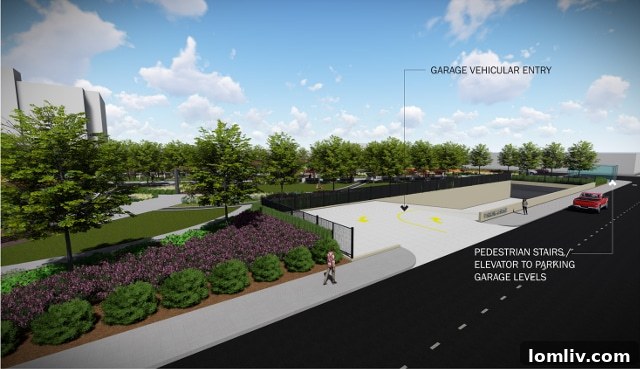
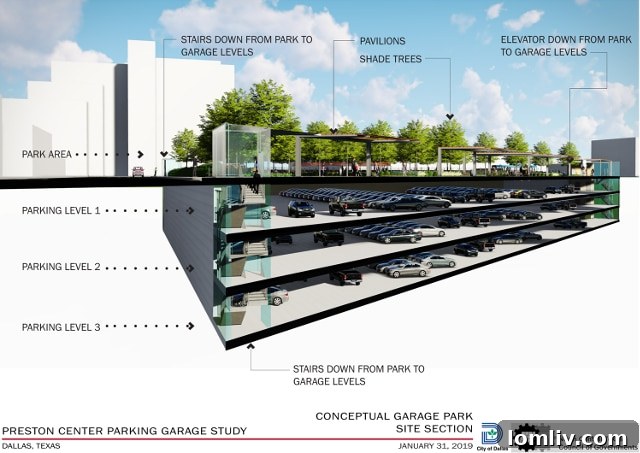
The fate of the dilapidated Preston Center parking garage in Dallas has become a focal point of urban development discussions, pitting visionary public space against conventional commercial interests. Recently, Council Member Jennifer Gates convened a second crucial public meeting to address the future of this significant site. Building on concepts from the Preston Road Area Plan, consultants from Houston-based Walker Consultants have presented compelling visions for a transformative redevelopment. The primary proposal centers on an innovative design: a state-of-the-art underground parking facility housing 1,600 spaces – double the current capacity – crowned by a vibrant public park at ground level. Imagine a dynamic urban oasis akin to Klyde Warren Park, but instead of spanning a highway, it would elegantly cap a multi-level subterranean garage. This ambitious plan, however, has faced unanimous resistance from surrounding landowners, setting the stage for a critical debate over Preston Center’s future.
At the heart of this discussion lies a 3.15-acre parcel, totaling 137,332 square feet, currently occupied by an 800-space, two-level above-ground parking structure. This expansive plot is an exceptionally rare commodity, positioned right in the middle of a prime area zoned for high-density development. To put its value in perspective, iconic projects like Klyde Warren Park required covering major infrastructure like a highway to create public space. Here, Dallas already possesses an underutilized, aging parking garage with immense potential for civic enhancement. This is not merely an opportunity; it’s a truly rare chance to redefine an urban core.
While developing a massive underground parking structure is undoubtedly a significant investment, it represents a long-term, responsible approach to urban planning. Such a project transcends immediate cost concerns, offering enduring value and amenity to the community. It’s a worthwhile endeavor, deserving of dedicated funding and collective commitment.
Funding the Transformation: The Costs and Economic Upside
Irrespective of the underground parking configuration, the park itself is estimated to cost between $7 and $8 million, a substantial investment that promises significant returns for Preston Center. The real financial weight, however, lies in the parking garage development. Walker Consultants presented three distinct scenarios, each tailored to different parking capacities.
The first scenario, addressing current needs and conservative growth, proposes 1,005 underground parking spaces spread across three levels. This number was derived from a thorough analysis of existing surrounding buildings’ occupancy and projected parking requirements. The estimated cost for this garage option ranges from $30.7 million to $36 million. Combined with the park, the total project cost for this scenario falls between $37.7 million and $44 million. Encouragingly, a significant portion of the funding, $20 million, has already been earmarked—$10 million from the last bond package and another $10 million from the North Central Texas Council of Governments (NCTCOG). This means approximately half of the project’s cost for this scenario is already secured, offering a glass-half-full perspective on funding.
The next option explores 1,200 spaces, also configured across three subterranean levels. This slightly expanded capacity provides crucial breathing room for future growth and significantly improves daily parking convenience for visitors and businesses alike. The cost for this garage design is estimated between $34.2 million and $40 million, an increase of $3.5 million to $4 million for the additional 195 spaces. Integrating the park, the total cost for this scenario would range from $41.2 million to $48 million. While this pushes slightly beyond the initial $20 million funding, it represents a strategic investment in long-term accessibility and urban vitality.
The most ambitious proposal, aligning with the original Preston Road Area Plan, aims for 1,600 spaces—effectively doubling the current garage capacity. This option anticipates future demands, even considering the long-term impact of autonomous vehicles, positioning the Preston Center as a truly forward-thinking urban hub. However, accommodating 1,600 spaces necessitates a fourth underground level, significantly escalating construction costs. The parking component alone for this scenario is projected to be between $49.6 million and $54.5 million, marking an increase of roughly $15 million over the 1,200-space option. With the park included, the grand total reaches between $56.6 million and $62.5 million. At this level, the existing $20 million in funding covers roughly one-third of the total cost, requiring a more substantial effort to secure additional capital. Despite the higher price tag, the vision of a truly comprehensive and future-proof solution warrants serious consideration.
Beyond the Numbers: What Dallas Gains from the Investment
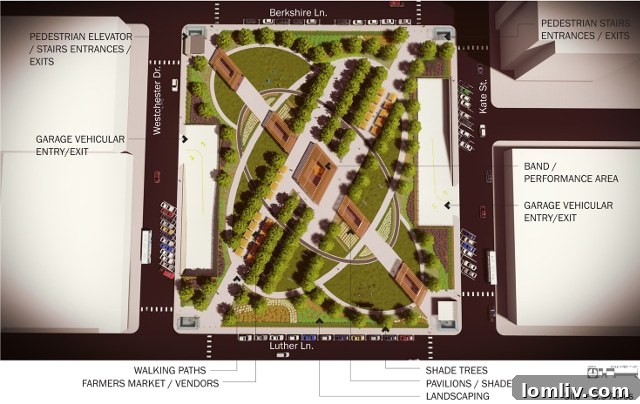
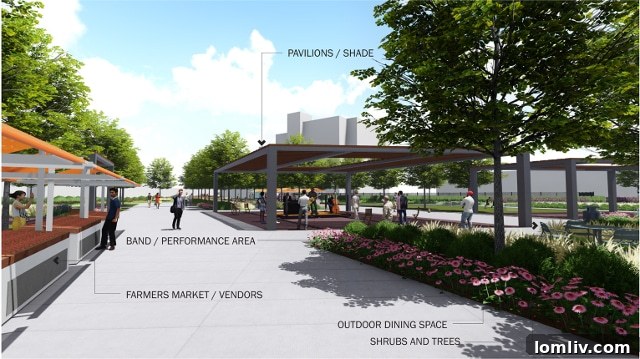
The benefits of the proposed public park and underground garage extend far beyond mere parking convenience. Firstly, it would permanently remove the existing, unsightly parking structure, transforming a visual blight into an aesthetic asset. In its place, Dallas would gain a dynamic public realm – a green space where residents and visitors can relax on the grass, enjoy takeout from nearby eateries, attend vibrant farmers’ markets, or explore local art fairs. Imagine splash pads for children during the summer, inviting playgrounds, or simply serene areas for quiet contemplation. This space promises to be a hub of community activity and interaction, significantly enhancing the quality of life in Preston Center.
The economic advantages are equally compelling. According to Walker Consultants’ extensive research, properties surrounding similar high-quality amenity parks experience an average appreciation of $80 per square foot. Consider a typical low-rise property on Luther Lane, just south of the garage, currently valued at approximately $251 per square foot by DCAD. An $80 per square foot increase translates to a remarkable 28 percent surge in property value. This substantial appreciation would not only boost city tax revenues, providing additional funds for public services, but also lead to increased rental income for property owners due to heightened desirability. Such a transformation would bring Preston Center’s property values and rents more in line with those commanded by premier developments like The Plaza at Preston Center, located just across Preston Road.
Addressing the Timeline: Construction Challenges and Solutions
While the long-term benefits are clear, the immediate challenge lies in the construction timeline. Walker Consultants estimate a 29-month period from the first shovel in the ground to the ribbon-cutting ceremony. This extended duration poses a significant disruption to the businesses operating within Preston Center, a concern that undoubtedly fuels the opposition from area landowners. The temporary dip in rents and customer traffic during construction is a legitimate worry for those whose livelihoods depend on the center’s immediate functionality.
This raises a critical question: would landowners be more amenable to the plan if the construction timeline could be drastically reduced? If work could proceed around the clock, for example, the 29-month projection might be halved to approximately 15 months. Expediting construction would undoubtedly add to the overall costs, but when viewed as an investment in the accelerated recovery and long-term prosperity of Preston Center, it could be a crucial compromise. For Dallas, and ultimately for the landowners themselves—even if they currently resist this foresight—a swift and impactful transformation represents the optimal path forward.
The Landowners’ Vision: A Commercial-First Approach
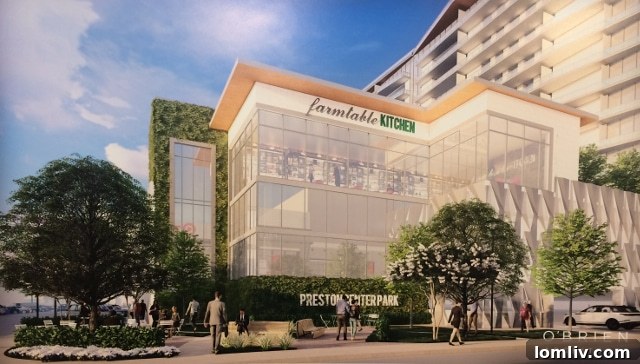
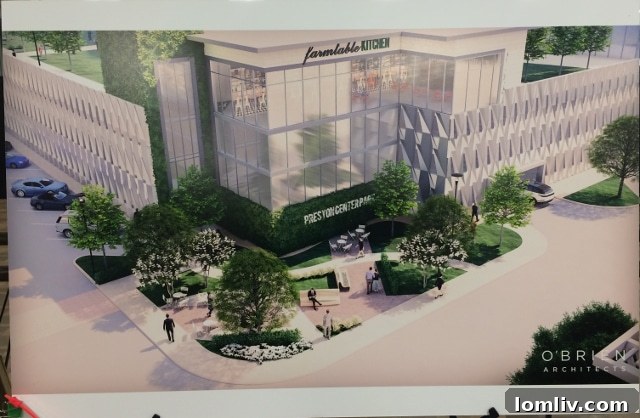
In stark contrast to the city’s vision, Preston Center landowners have put forth their own proposal, characterized by a more commercially driven approach. Their plan essentially calls for covering the entire 3.15-acre site with a combination of a new parking structure and a 300-unit apartment building. This strategy, from their perspective, would create a built-in customer base for their existing businesses—a literal “larder of new customers.”
However, the terms of this proposal are highly contentious. In exchange for developing parking primarily for their own enterprises, the landowners reportedly seek significant concessions from the city. This includes the outright transfer of the 3.15-acre site, the existing $20 million in earmarked public funds, and potentially more. Critics argue that this plan aims to “bleed the city dry” first, effectively securing a lucrative deal at public expense.
Adding another layer of complexity, this landowner-led initiative requires unanimous approval from all stakeholders. The chosen developer for this plan is Robert Dozier, a prominent figure who acquired Harlan Crow’s Preston Center holdings subsequent to the highly publicized skybridge debacle. Dozier is now one of the area’s largest landowners, making him a central figure in this debate and effectively positioning him as representing “one of their own.”
Dozier’s response to the city’s park plan was notably alarmist. He suggested that even after completion, a public park would deter customers, lead to business closures, and degrade the caliber of businesses in the area. These dire predictions were presented just moments after Walker Consultants detailed a projected 28 percent increase in property values due to such amenities. The inconsistency was stark and drew considerable skepticism. The surrounding area already hosts major retailers like Target, DSW Shoe Warehouse, Office Depot, and Tuesday Morning—establishments hardly at risk of being “poached” by luxury destinations like Highland Park Village. The more plausible outcome is an upward trajectory for the area.
Dozier also contended that their plan would serve as a catalyst, encouraging surrounding landowners to improve and redevelop their properties. However, this argument raises questions. If the landowners genuinely desired the increased rents and enhanced property values seen at more modern developments like The Plaza at Preston Center, they arguably would have pursued significant improvements decades ago. A more likely scenario, critics suggest, is that their plan would result in a development that, while functional, lacks the aspirational quality and public benefit of the city’s proposal.
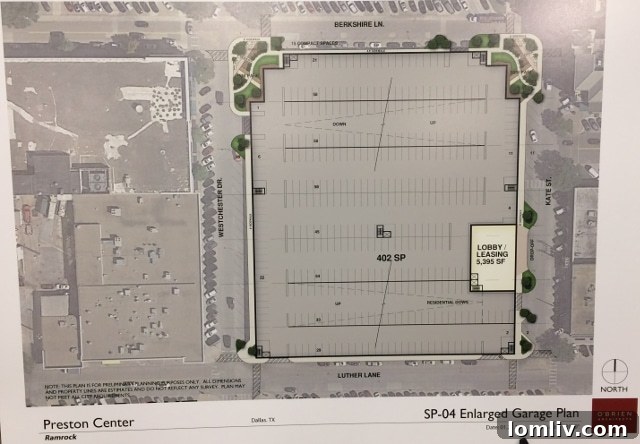
A key difference lies in the provision of green space. The city’s plan is centered on creating a vibrant, interactive public park at ground level. In contrast, the landowners’ plan features only modest “earmuff” parks in the upper corners, described as an eleventh-hour addition to original designs that offered minimal public green space. The bulk of their proposed green space would be situated on top of a three-story, above-ground parking garage, or adjacent to the 300-unit apartment tower. The practicality of a raised park, accessible only by elevator, for general public use is questionable; it would likely function primarily as an amenity deck for apartment residents. While a small rooftop restaurant is proposed to attract visitors, the “out of sight, out of mind” principle may prove challenging for its sustained success, raising concerns about its long-term viability and public accessibility.
Public Discourse and Expert Perspectives
During the public meeting, the floor was opened for questions, and a significant portion of the inquiries were directed at scrutinizing the landowners’ plan, with many attendees discerning its underlying commercial motivations. A particularly poignant moment came in response to the landowners’ dire forecasts about the park. An audience member astutely pointed out that The Plaza at Preston Center, with its own successful underground parking garage directly across the street, has not experienced any negative impact on its operations. The question lingered, highlighting the logical flaw in the landowners’ assertions. The silence that followed was palpable.
Former Dallas Mayor Laura Miller also posed several incisive questions regarding the landowners’ proposal. Her inquiries consistently underscored how their plan appeared to disregard both the letter and the spirit of the comprehensive Preston Road Area Plan. Mayor Miller rightly argued that the landowners seemed to have overlooked the area plan’s foundational principles in their haste to secure a self-serving commercial deal, potentially sacrificing Preston Center’s higher monetary and aesthetic potential for short-term gain.
Another peculiar concern raised by an audience member touched upon the city’s park plan, suggesting that a well-programmed, vibrant park might increase area traffic. This led to a counter-suggestion that an essentially static, un-programmed park with minimal activities would be preferable. This line of reasoning, which implies that mediocrity should be the goal for a significant civic investment, struck many as counterintuitive – akin to undergoing expensive plastic surgery only to aim for mediocre results.
A Pivotal Moment for Preston Center’s Legacy
The decision regarding the Preston Center parking garage is more than a simple development choice; it is a defining moment that will shape the character of Preston Center for the next century. Dallas stands at a crossroads, faced with the opportunity to either embrace a visionary plan that prioritizes public good, green space, and long-term economic vitality, or to concede to a proposal driven primarily by self-serving commercial interests. Do we want to be remembered for making the right, albeit more challenging and costly, investment in our urban fabric? Or will history record a moment when the city yielded to a plan that sacrifices community benefit for private gain?
The path toward a public park and expanded underground parking, while financially demanding, is unequivocally the right choice for Dallas. It represents an investment in a sustainable, vibrant future for Preston Center, a legacy that will enrich generations. Should the landowners’ self-interested proposal ultimately prevail, it would be a missed opportunity, a stark reminder of short-sighted decisions that failed to unlock the true potential of one of Dallas’s most important urban spaces.

Note from the Author: My focus areas include high-rises, HOAs, and renovation projects, alongside a deep appreciation for modern and historical architecture balanced with the principles of the YIMBY movement. My writing has been recognized by the National Association of Real Estate Editors with three Bronze awards in 2016, 2017, 2018, and two Silver awards in 2016 and 2017. If you have a story to share or a proposal to make, please reach out via email at [email protected]. You’re welcome to look for me on Facebook and Twitter, though you might not find me there.