In the dynamic world of real estate, certain properties can be notoriously difficult to sell. While an unattractive exterior or outdated interiors might deter some buyers, these are generally cosmetic issues that can be overcome with a price reduction or renovation. True “unsellable” properties, however, pose a far more profound challenge. These are homes burdened by fundamental legal or title defects that make a legitimate transfer of ownership – and often, the obtainment of title insurance – nearly impossible. Such issues transcend aesthetics, delving into the very legality and validity of the transaction itself. Understanding these critical impediments is essential for any homeowner looking to sell or any prospective buyer undertaking due diligence, as failing to address them can lead to prolonged legal battles, financial losses, and ultimately, a failed sale.
The core of a valid real estate transaction hinges on the seller possessing the undisputed legal right to convey the property. When an individual attempts to sell a property they do not legally own, or for which their ownership is incomplete, the entire transaction is fundamentally flawed. Imagine a scenario where someone attempts to sell you a landmark like the Brooklyn Bridge – without any legitimate claim to it. While they might sign a deed, it holds no legal weight. Similarly, if a property is co-owned, and one partner attempts to sell it without the full knowledge and consent of the other, the buyer could inherit a complex legal dispute, questioning the validity of their newly acquired interest. These scenarios underscore the critical importance of verifying legal ownership and ensuring all parties with an interest in the property are actively involved in the sale process.
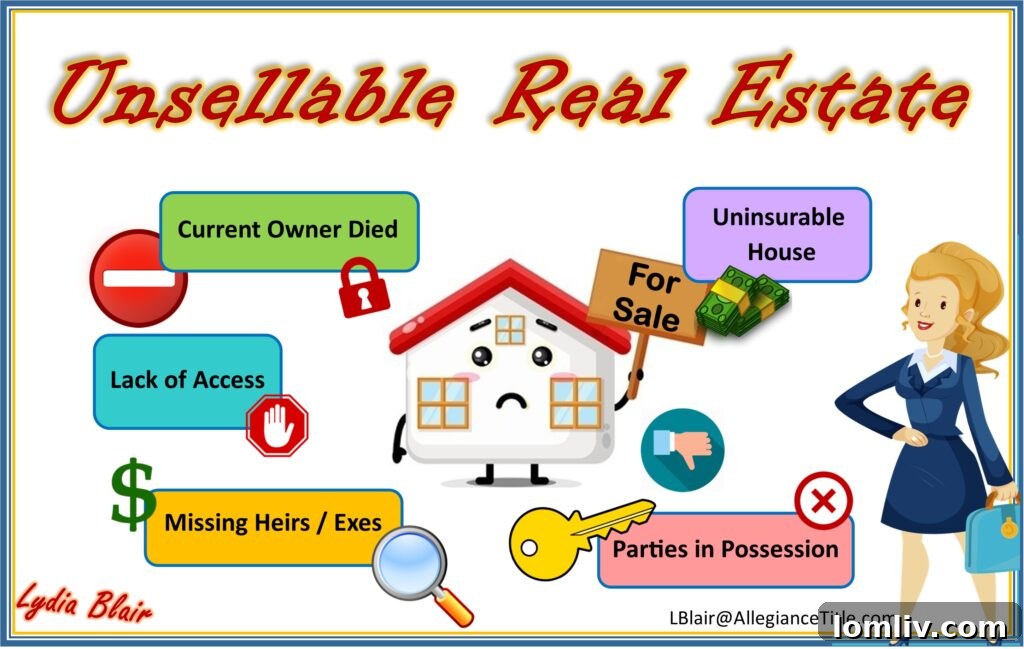
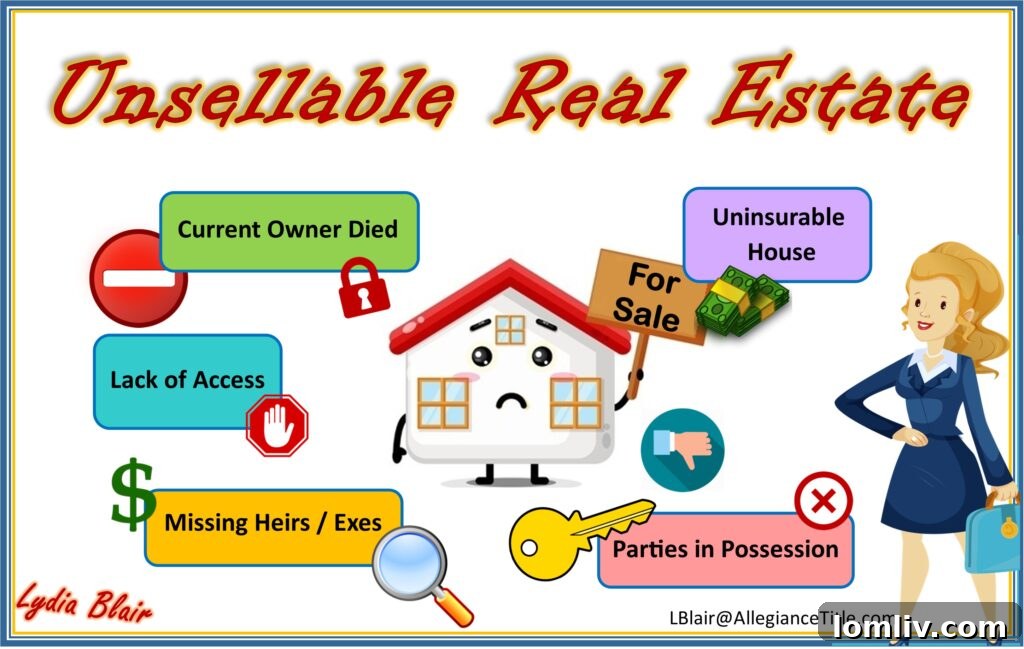
When the Current Owner Has Passed Away: Navigating Probate and Heirship
One of the most common and complex scenarios that render a property temporarily unsellable arises when the legal owner has died. A deceased individual, by definition, cannot execute a deed or participate in a property sale. When a homeowner passes away, their personal interest in the property ceases, and ownership automatically transfers to their “estate.” Before the property can be sold, it is absolutely crucial to legally determine who controls the estate and, consequently, who has the legal authority to sell the property. This process can be incredibly lengthy and challenging, particularly if there are multiple heirs, if the will is contested, or if the deceased died without a clear estate plan.
If the owner died with a valid will, the process typically involves probating the will through the county court. Probate is the legal process that validates the will, confirms the executor, and oversees the distribution of the deceased’s assets, including real estate. While a will expresses the deceased’s intent regarding property distribution, it does not automatically transfer ownership. The property must be legally transferred from the estate to the designated heir(s) or an entity before it can be listed for sale. This process can often take several months, or even years, depending on the complexity of the estate and court backlogs.
In situations where the deceased died without a will (intestate) or if the will was never probated, an Affidavit of Heirship might be used. This legal document is completed by individuals who have knowledge of the deceased’s family history and affirms the identities of the legal heirs according to state law. The affidavit must be meticulously detailed, accurately listing all potential heirs, and is subject to rigorous review and approval by the title company. Once the rightful heirs are established and their respective interests are clarified, the affidavit can be filed, the deed transferred from the estate, and the transaction recorded in the county records. Only then can the property be legally sold or transferred. The core challenge in these cases is resolving the question of who holds legitimate rights to the property and what percentage each heir owns. Until this ownership is definitively established and all relevant parties reach a unanimous agreement, the property remains in a legal limbo, effectively unsellable.
The Elusive Owners: Missing Heirs, Estranged Spouses, and Complex Claims
Another significant hurdle to selling a property arises when not all individuals with an ownership interest are willing or able to sign the necessary sale documents. It is a fundamental requirement that every person who holds a legal claim or stake in a property must consent to its sale and sign the deed. Surprisingly, tracking down these individuals can be incredibly difficult, bordering on impossible in some cases. Title companies are inherently risk-averse; they are hesitant to issue title insurance when there’s a possibility that a missing heir, an estranged former spouse, or another party with a legitimate ownership interest might emerge later to contest the sale. Such a challenge could lead to claims that the property was sold without their consent, potentially leading to expensive and protracted legal challenges for the new owner.
This issue becomes particularly intricate in intestacy cases (death without a will) where the legal distribution of assets needs to be determined by state law. For instance, consider a scenario where one spouse dies without a will. The surviving spouse might legally own half of the property, while the remaining half is divided among the deceased’s four adult children. To complicate matters further, if one of those children has also passed away, their share (which would be 1/4 of the deceased parent’s 1/2, or 1/8 of the total property) would then pass to *their* heirs, such as their own children. Navigating this intricate web of fractional ownership requires meticulous legal work to identify every single person with a claim, no matter how small, and secure their agreement to the sale. Any single missing signature can halt the process indefinitely.
Beyond inheritance complexities, divorces can also leave a property in an unsellable state, especially if the separation was acrimonious. Convincing a bitter ex-spouse to cooperate by signing documents can be an monumental task. Even if a divorce decree outlines property division, the actual execution of that division, especially securing signatures for a subsequent sale, can be fraught with emotional and legal resistance. Until all parties with a recorded interest provide their consent, the property remains encumbered, making a clean and insurable transfer of title virtually impossible.
Parties in Possession: Occupancy Rights and Buyer Hesitation
The concept of “parties in possession” refers to individuals who physically occupy a property and may have a legal or even de facto right to remain there, regardless of who holds the title. A buyer typically seeks vacant possession of a property, but this isn’t always straightforward. Various individuals could have a claim to physical occupancy, including tenants under a lease agreement, a spouse who may have homestead rights, or even squatters who, under certain laws, might establish a claim to continue occupying the property. The seller might not be legally able to compel these occupants to vacate, or might not even be aware of their rights.
One of the most common and challenging examples involves the surviving spouse’s right to continue occupying their homestead property. In many jurisdictions, laws are designed to protect a surviving spouse, granting them the right to live in the marital home for the remainder of their lives, even if they are not the sole legal owner, or if the property is willed to others. Under these circumstances, a buyer generally cannot remove the previous owner’s surviving spouse from their homestead. This presents a significant problem: few buyers are willing to purchase a property when another individual has a legal right to possess it indefinitely, often without any obligation to pay rent or contribute to the property’s upkeep. Such a scenario dramatically diminishes the property’s market value and makes it highly unattractive to most prospective purchasers, particularly those relying on financing.
The Uninsurable Home: A Barrier to Mortgage Funding
A critical, yet often overlooked, factor that can render a home unsellable is its eligibility for property insurance. An “uninsurable home” is one that major insurance carriers deem too risky to cover, often due to significant structural damage, environmental hazards, or a history of extensive claims. Without adequate property insurance coverage (also known as hazard insurance), it is virtually impossible to secure a mortgage loan from any reputable lender. Mortgage companies require assurance that their investment in the property is protected against unforeseen damages like fire, severe storms, or other catastrophes. If a home is uninsurable, lenders will not disburse funds for its purchase, effectively blocking the vast majority of potential buyers who rely on financing.
Reasons for a property being rejected for insurance coverage can vary widely. Common issues include severe roof damage that poses a leak risk, significant foundation problems compromising structural integrity, unaddressed damage from previous fires or natural disasters (such as hurricanes or floods), or even persistent environmental concerns like mold or lead contamination. While a cash buyer could theoretically purchase an uninsurable property without the need for lender-mandated insurance, this option severely limits the pool of potential purchasers. Furthermore, cash buyers would typically demand a substantial discount to account for the significant financial risk they assume by purchasing a property without the safety net of insurance. Repairing these extensive issues to make the property insurable can be a costly and time-consuming endeavor, often falling on the seller, and may still not guarantee insurability depending on the severity and nature of the problems.
Lack of Access: The Challenge of Landlocked Properties
Imagine purchasing a piece of land only to discover there’s no legal way to reach it. This is the challenge presented by a “landlocked” property – a parcel of land that has no direct public road frontage or legal right-of-way (easement) across neighboring properties. This issue frequently arises when larger tracts of land are subdivided into smaller pieces, and one or more of the resulting parcels are inadvertently left without proper access. For a property to be truly marketable and sellable, particularly to buyers seeking financing, it must have clear, legal, and recorded access to a public road. Lenders, like title companies, will scrutinize access rigorously.
Without documented legal easements that grant the right to traverse a neighboring property to reach the landlocked parcel, most potential buyers will find it impossible to obtain a mortgage loan. Lenders consider a property without guaranteed access an extreme risk, as its utility and value are severely diminished. While a cash buyer might consider purchasing such a property, they would likely factor in the significant challenges and potential costs of negotiating an easement with surrounding landowners, a process that can be contentious, expensive, and lengthy. Even if an easement is verbally agreed upon, it must be formally drafted, legally recorded, and approved by all relevant parties and the title company to ensure its permanence and enforceability. Without such clear, recorded access, a property is essentially isolated, significantly reducing its desirability and making it truly unsellable to the mainstream market.
In summary, title companies play a crucial gatekeeping role in real estate transactions, and they can, and often will, refuse to close on a sale or issue title insurance for any of the aforementioned reasons. Without title insurance, mortgage lenders will not approve a loan, thus halting the sale for the vast majority of buyers. Moreover, without title insurance, a buyer would lack essential assurances that the transaction is legitimate, that they hold clear title, and that they are protected against future claims or defects in the property’s ownership history. When confronted with any of these complex situations, it is paramount for both sellers and prospective buyers to seek immediate consultation with a qualified real estate attorney. Legal expertise is invaluable in navigating these intricate challenges, resolving title defects, and ensuring a legally sound and successful property transaction.
The opinions expressed are of the individual author for informational purposes only and not for legal advice. Readers should consult with a qualified legal professional for specific guidance regarding their individual circumstances.