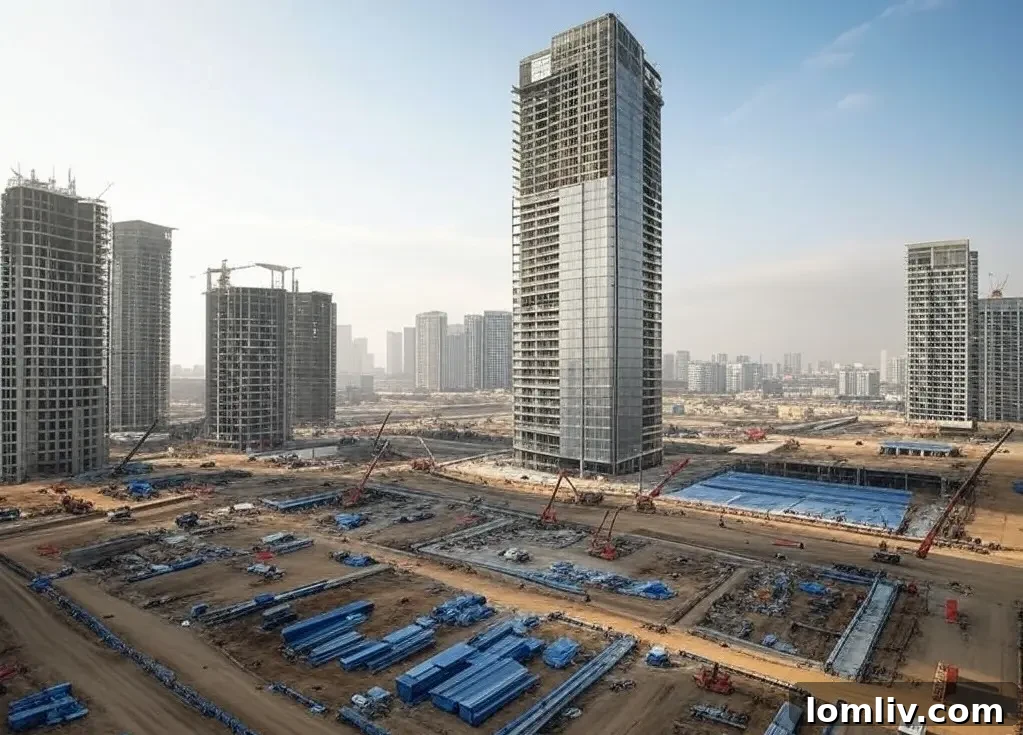
Strategic Budgeting: The Cornerstone of Dallas Real Estate Success
Dallas, a vibrant economic powerhouse in North Texas, continues to solidify its reputation as one of the fastest-growing metropolitan areas in the United States. Its irresistible pull attracts a steady stream of businesses, families, and investors, all eager to capitalize on the region’s robust job market, favorable tax climate, and relentless population influx. This sustained migration from other states has ignited an unprecedented demand across all sectors of real estate, setting the stage for yet another surge in development. However, amidst this high demand and ambitious growth, a critical factor has emerged that will undoubtedly define the success or failure of the next wave of projects: the mastery of strategic budgeting and rigorous financial discipline.
As Dallas charges into its next real estate boom, developers, builders, and astute investors are collectively recognizing that traditional approaches to financial planning are no longer sufficient, nor are they sustainable. The landscape of real estate development has undergone a significant transformation, marked by persistently rising construction costs, increasingly volatile interest rates, and an evolving framework of regulatory requirements. In this new era, the projects destined to thrive are those that not only manage costs with exceptional efficiency but also maintain a steadfast focus on long-term viability and resilience. This paradigm shift underscores the profound importance of foresight, precision, and innovation in financial planning, making strategic budgeting the indispensable bedrock for enduring success in the dynamic Dallas market.
The Evolving Landscape: A New Reality for Building in Dallas
For many years, Dallas enjoyed a distinct competitive advantage with relatively affordable land and construction prices compared to its counterparts in other major U.S. metropolitan areas. However, that advantage is rapidly diminishing. Recent market insights paint a clear picture: the cost of essential raw materials such as steel, lumber, concrete, and even gypsum has skyrocketed since the onset of the pandemic. Supply chain disruptions, global economic pressures, and surging domestic demand have collectively driven these material costs to unprecedented levels, eroding profit margins for even the most established developers.
Compounding this challenge is the intensifying struggle to secure skilled labor. Major developments sprawling across North Texas, from sprawling master-planned communities to towering commercial complexes, are fiercely competing for a finite pool of experienced tradespeople. This scarcity drives up labor costs and can lead to project delays, further straining budgets and timelines. This twin pressure – rising material costs and a competitive labor market – has placed immense strain on builders who are tasked with meeting stringent deadlines while strictly adhering to financial limits. The erstwhile method of merely adding a generous “buffer” to project budgets is no longer a viable strategy. Today, achieving success in Dallas real estate demands unparalleled precision; every dollar spent must be meticulously accounted for, every resource has to be optimized, and every potential inefficiency must be identified and eliminated proactively. This necessitates a more data-driven, comprehensive approach to cost management from conception to completion.
Why Strategic Budgeting Defines Market Momentum and Stability
Dallas is, at its core, a city built on an ethos of relentless growth and expansion. Each year, thousands of new residents flock to the region, creating an insatiable demand for diverse housing options, state-of-the-art office spaces, and vibrant retail developments. This continuous influx is the lifeblood of the local real estate market. However, if construction projects face significant budget overruns, developers may find themselves in the unenviable position of being forced to delay or even outright cancel them. Such decisions create debilitating ripple effects that reverberate across the entire market, impacting housing supply, investor confidence, and ultimately, the region’s economic trajectory.
Strategic budgeting serves as a crucial stabilizing force in this dynamic cycle. With meticulously clear cost planning and unwavering financial discipline, developers gain the confidence to commit firmly to ambitious building timelines. This predictability not only reassures existing investors but also actively attracts new capital, fueling further development. By mitigating financial risks and ensuring project viability, smart budgeting enables developers to deliver a consistent supply of housing and commercial spaces, effectively meeting the burgeoning demand. This commitment to financial prudence also encourages city planners and local officials to wholeheartedly support large-scale developments, secure in the knowledge that these projects are not only necessary but also financially sound and sustainable for the long term. Ultimately, well-budgeted projects foster a healthier, more predictable, and more resilient real estate ecosystem for the entirety of North Texas.
Leveraging Technology and Data for Precision Planning in Real Estate
One of the most profound shifts reshaping the real estate and construction industries in recent years is the widespread integration of advanced technology into every phase of project planning and execution. Developers are no longer content to rely solely on rough, back-of-the-envelope projections or outdated historical data. Instead, a new generation of digital tools, sophisticated data-driven models, and highly specialized services are empowering them to forecast costs with unprecedented levels of accuracy and detail. This technological evolution marks a significant departure from traditional methods, introducing a new era of evidence-based decision-making.
For instance, an increasing number of prominent builders and general contractors across North Texas are actively collaborating with specialized firms like Blaze Estimating. These companies provide meticulous, highly detailed material takeoffs, comprehensive labor cost breakdowns, and subcontractor bid analysis, all designed to illuminate potential financial risks and help contractors preemptively avoid costly surprises during the construction phase. By injecting such clarity and granular insight at the earliest possible stages of a project – from initial conceptualization to pre-construction planning – these specialized services dramatically reduce financial risks. This enhanced transparency and accuracy, in turn, instills greater confidence in project outcomes among investors, making financing more accessible and terms more favorable. Furthermore, technologies like Building Information Modeling (BIM) are being utilized to create virtual representations of projects, allowing for real-time cost integration and clash detection, further refining budget accuracy and minimizing on-site changes.
Investor Confidence: The Demand for Financial Transparency
The increasing prominence of institutional investors within the Dallas real estate market is another compelling reason why smart budgeting has ascended to critical importance. From formidable private equity funds and burgeoning real estate investment trusts (REITs) to pension funds and corporate developers, these sophisticated groups operate with a heightened level of scrutiny. Before committing substantial capital, they demand unwavering transparency, robust accountability, and a clear understanding of potential returns and associated risks. Their investment decisions are driven by data, not speculation.
Budget overruns, inaccurate financial forecasting, or a lack of clear documentation can serve as significant red flags for institutional investors, often leading them to withdraw their interest or apply more stringent conditions, thereby slowing the overall pace of development. Conversely, projects that demonstrate meticulous financial planning, backed by detailed pro formas, comprehensive risk assessments, and well-defined contingency plans, are far more likely to secure long-term funding. This financial prudence not only attracts capital but often commands more favorable investment terms, reflecting the lower perceived risk. This is precisely why many progressive developers also rely heavily on expert construction estimation companies. These firms provide builders with the kind of reliable, data-backed financial insights and transparent reporting that sophisticated investors have come to expect and demand, effectively bridging the gap between project vision and financial reality. By offering an independent and precise assessment of costs, these services become an invaluable asset in the competitive fundraising landscape.
Building for Sustained, Long-Term Success and Regional Resilience
While budgeting is often perceived as a short-term exercise focused on the immediate balancing of costs and revenues, its strategic impact extends far into the distant future. Well-planned projects, underpinned by rigorous financial discipline, inherently possess greater resilience during unpredictable market downturns and are significantly better positioned to capitalize on subsequent growth cycles. In a dynamic market like Dallas, where economic shifts can occur rapidly, this adaptability is not just an advantage; it’s a necessity for survival and prosperity. Projects that are financially robust can withstand unforeseen challenges, adapt to changing conditions, and emerge stronger on the other side.
In Dallas, where demographic trends and economic forecasts suggest that robust population growth is expected to remain strong for decades to come, developers who proactively adopt disciplined financial strategies today will be the ones who successfully deliver the essential housing, commercial spaces, and mixed-use projects of tomorrow. This forward-thinking approach to budgeting transcends the benefits for individual companies; it profoundly strengthens the entire North Texas region’s collective ability to meet the escalating demands of its burgeoning population and economy. By fostering a landscape of stable, well-executed developments, strategic budgeting helps to reinforce Dallas’s esteemed reputation as a premier hub for opportunity, innovation, and sustainable growth, attracting further investment and talent for generations to come. This commitment to fiscal responsibility ensures that the city’s growth is not just rapid, but also healthy and enduring.
Conclusion: The Foundation of Dallas’ Future is Financial Foresight
Dallas is unequivocally entering a groundbreaking new chapter in its extraordinary real estate journey. Yet, the city’s inherent growth and a continuous influx of investment, while crucial, will no longer be the sole guarantors of success. The defining characteristic of Dallas’s forthcoming boom will hinge not merely on market demand or available capital, but fundamentally on the collective ability of developers to plan smarter, budget with unparalleled precision, and execute projects with unwavering financial discipline and foresight. This represents a critical evolution in how real estate ventures are approached and managed.
Leading firms that prioritize transparency, meticulous accuracy, and proactive foresight in their cost planning methodologies are already playing a pivotal role in reshaping the competitive local market. These innovators are setting new benchmarks for financial management and operational efficiency. For builders seeking sustainable profitability, for investors demanding secure and predictable returns, and for city leaders striving for orderly and beneficial urban development, smart budgeting is far more than just a recommended best practice. It is, unequivocally, the foundational pillar upon which Dallas’s prosperous and resilient future will be constructed, ensuring that growth is not just rapid, but also robust, equitable, and sustainable for all its inhabitants.