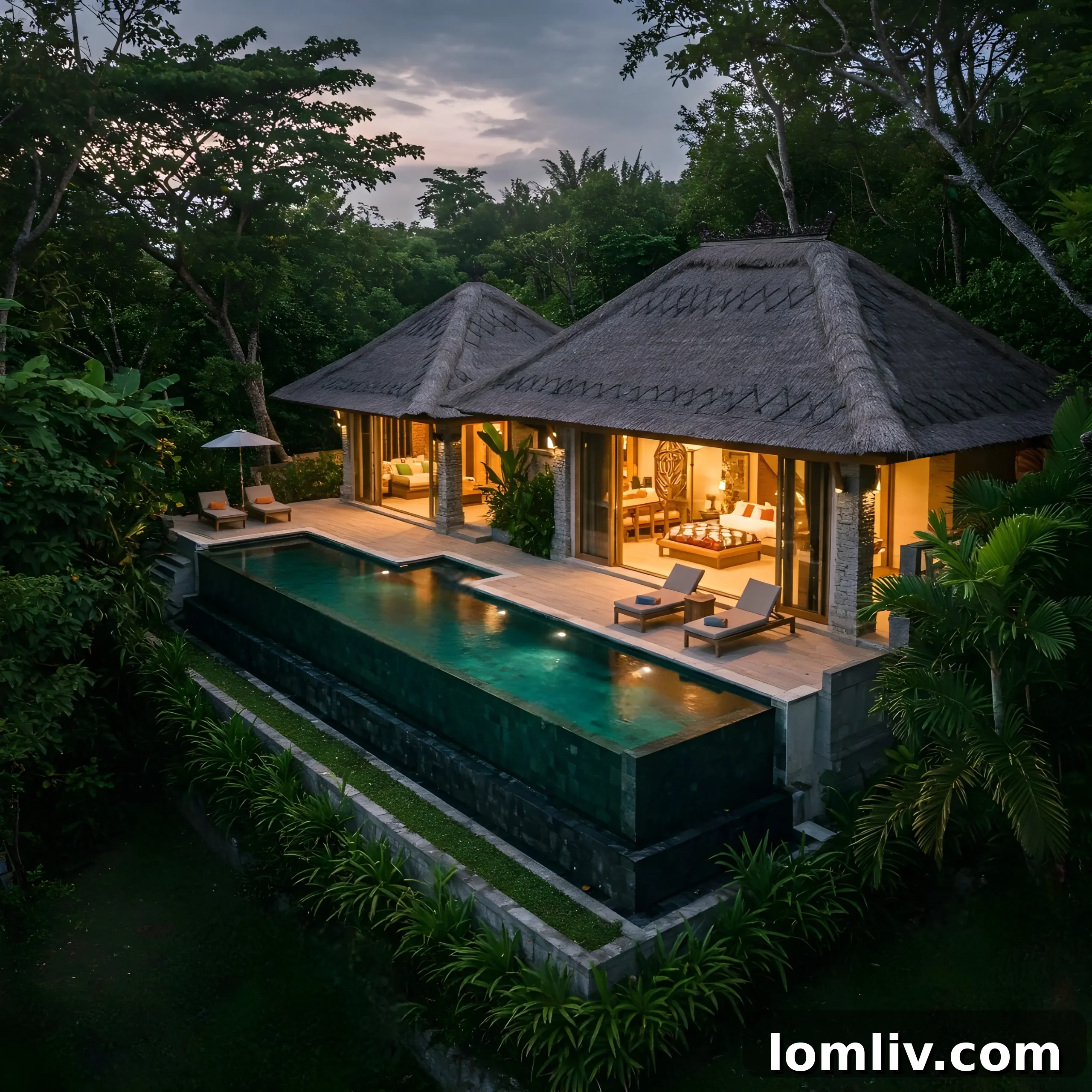
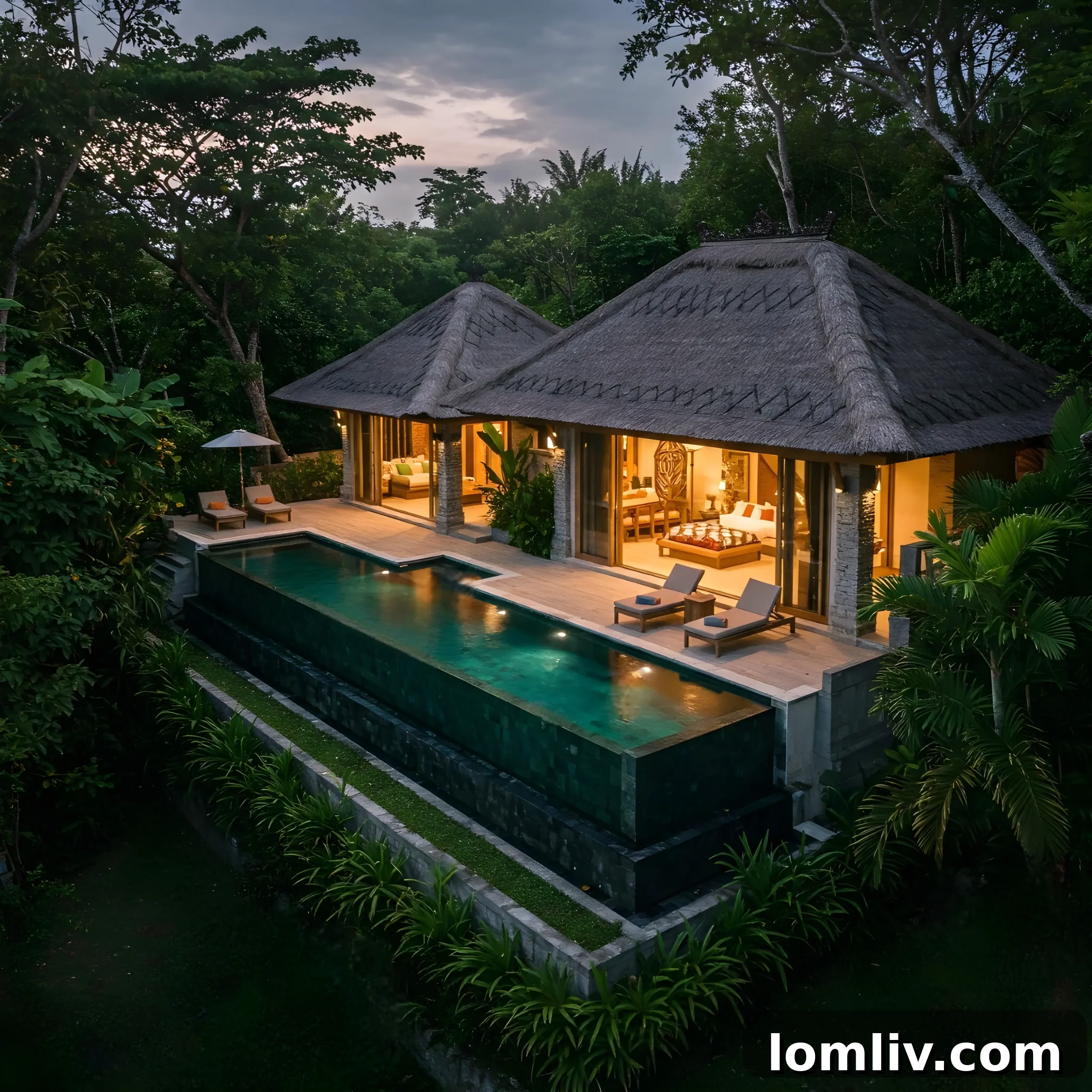
Bali. The name itself conjures images of emerald rice paddies, pristine beaches, and breathtaking sunsets. It’s more than just a destination; it’s a feeling, a profound escape from the mundane. Imagine waking to the gentle rhythm of the ocean, sipping fresh mango juice as the tropical breeze whispers through your villa, and ending your days with a serene swim under a canopy of stars. It’s a place that makes you question everything, particularly why you ever tolerated anything less.
In this idyllic setting, it’s almost inevitable that the thought will cross your mind: “I should really buy a villa here.” You’re not alone. The allure of Bali as a prime location for luxury villas for international investors has skyrocketed, transforming the island into a vibrant real estate hub. This surge in demand is easily understandable, given Bali’s consistent appeal as a tourist magnet and its growing status as a digital nomad paradise.
We understand the dream. However, before you dive headfirst into searching for an “affordable luxury villa in Bali,” it’s crucial to confront a fundamental truth: You are not an Indonesian citizen.
This distinction carries significant weight in Indonesia, as it means foreigners generally cannot directly own land. While this might sound like a roadblock, there’s no need to panic. The Indonesian legal landscape, while complex, offers legitimate pathways and clever workarounds for foreign investment. The key lies in understanding these frameworks and approaching the process strategically. To navigate this intricate environment successfully, you need to be informed and pragmatic – otherwise, you risk costly missteps.
This comprehensive guide aims to demystify the process, providing you with a no-BS breakdown of how to invest in Bali property legally, strategically, and without getting burned. We’ll cover everything from ownership structures to pricing expectations, ensuring you’re well-equipped to make an informed decision about your slice of paradise.
The Unvarnished Truth: Direct Land Ownership (Freehold) Is Off-Limits for Foreigners
Let’s get this out of the way upfront: Indonesia’s agrarian laws are clear. Foreigners are prohibited from outright owning land. The local term for this absolute freehold ownership is “Hak Milik”, and it is exclusively reserved for Indonesian citizens. There are no exceptions to this rule. This means that if your vision includes seeing your name directly on the deed of a freehold property, you’ll need to adjust your expectations. While direct ownership isn’t possible, several robust and legal alternatives allow foreigners to enjoy long-term control and benefits from Bali property investment.
Option 1: Hak Pakai (The “Right to Use” – Long-Term Personal Lease)
For individual foreign investors looking to acquire a property primarily for personal use, Hak Pakai, or the “Right to Use,” is arguably the closest you can get to legal ownership. This title grants you the right to use and occupy a piece of land, as well as any structures on it, for a significant period. It’s a highly secure and common method for foreigners to invest in Bali real estate.
- Initial Period: A substantial 30 years, providing long-term security.
- Extendable: The right is extendable for an additional 20 years, followed by another 30 years, totaling up to 80 years. This long-term tenure makes Hak Pakai an attractive option for generational wealth planning and extended stays.
- Purpose: Primarily for residential use, meaning you can live in the property, lease it out under specific terms (often requiring a business entity if for commercial rental), or use it as a seasonal retreat from your home country’s hustle and bustle.
To qualify for Hak Pakai, you typically need a valid KITAS (Temporary Stay Permit) or KITAP (Permanent Stay Permit) and the property must meet a minimum value threshold, currently set at IDR 1 billion (approximately $70,000+ depending on the fluctuating exchange rate). While this isn’t a trivial amount, it represents a tangible and secure pathway into the Bali property market for many individuals.
Option 2: HGB – Hak Guna Bangunan (Right to Build – for Commercial Ventures)
If your investment vision extends beyond personal residential use and leans towards commercial endeavors such as developing villas for rent, operating resorts, or engaging in larger-scale property development, Hak Guna Bangunan (HGB), or the “Right to Build,” is your primary avenue. This title grants a company the right to construct and possess buildings on state-owned land or land owned by another party (often an Indonesian citizen holding Hak Milik).
- Focus on Structure: Under HGB, you own the building or structure erected on the land, but not the land itself.
- Commercial Application: This right is most commonly held by an Indonesian legal entity, particularly a Foreign-Owned Company (PT PMA), which then uses the land for business activities.
- Duration: HGB is typically granted for an initial period of 30 years, extendable for another 20 years, and then renewable for an additional 30 years, totaling 80 years.
Consider it akin to having a long-term lease on land specifically for development and commercial operation. It offers substantial control over the constructed assets and the business activities conducted therein, making it ideal for investors with entrepreneurial ambitions in Bali’s thriving tourism sector.
Option 3: Set Up a PT PMA (Foreign-Owned Company – The Strategic Route)
For serious foreign investors seeking maximum control, flexibility, and the ability to operate a business in Indonesia, establishing a PT PMA (Perseroan Terbatas Penanaman Modal Asing), a foreign-owned limited liability company, is the most robust and recommended legal structure. Through a PT PMA, you can legally acquire and hold various property rights that are otherwise inaccessible to individual foreigners.
- Hold Property Rights: A PT PMA can hold both ‘HGB’ (Right to Build) and ‘Hak Pakai’ (Right to Use) titles. This allows the company to own buildings and develop land for commercial purposes, or even hold property for its foreign directors/shareholders’ residential use, all within the bounds of Indonesian law.
- Operate a Business: This is where a PT PMA truly shines. It provides the legal framework to operate various businesses, such as a rental villa business, hotel, restaurant, or other tourism-related ventures, generating legitimate income.
- Compliance and Security: Investing through a PT PMA ensures you are fully compliant with Indonesian investment laws, offering a higher degree of legal security and stability for your venture compared to less formal arrangements.
However, this route comes with its own set of considerations:
- Minimum Capital Requirements: Establishing a PT PMA involves significant minimum investment capital requirements, often starting at IDR 10 billion (approximately $650,000+), though not all of this needs to be paid upfront.
- Regular Reporting & Bureaucracy: PT PMAs are subject to ongoing administrative and tax reporting requirements. Navigating Indonesian bureaucracy can be time-consuming and complex.
- Professional Guidance is Essential: Due to the intricacies involved, engaging a highly reputable legal counsel and a public notary (PPAT) specializing in foreign investment and property law is non-negotiable. Attempting to cut corners here is a recipe for disaster.
Option 4: Long-Term Lease (Low Drama, High Simplicity)
For those seeking the simplest and often most affordable entry point into Bali property, a long-term lease is an excellent option. This involves leasing a property directly from an Indonesian landowner for an agreed-upon period, typically ranging from 25 to 30 years, with possibilities for extension. This method is straightforward and avoids the complexities of company formation or obtaining specific land titles.
- Clean and Simple: You enter into a lease agreement, pay the agreed-upon lease sum upfront or in installments, and gain the right to use the property for the lease term.
- No Company Formation Needed: It bypasses the need to establish a PT PMA, significantly reducing initial setup costs and ongoing administrative burdens.
- Cost-Effective Upfront: Generally, the upfront cost for a long-term lease is lower than acquiring property through Hak Pakai or HGB, making it accessible to a wider range of investors.
Important Considerations for Leases:
- No Ownership: You do not “own” the property in any traditional sense; you merely possess the right to use it for the duration of the lease.
- Lease Term Dependent: Your rights and usage are strictly bound by the terms and conditions outlined in the lease agreement. Negotiating favorable extension clauses is vital.
- Legal Scrutiny is Paramount: It is absolutely critical to have an independent, experienced lawyer review every single clause of the lease agreement. Verify the landowner’s title, ensure there are no encumbrances, and understand all renewal terms, payment schedules, and obligations.
Option 5 (Avoid at All Costs): Nominee Arrangements
While not a legal option, it’s crucial to mention and strongly warn against “Nominee Arrangements.” This involves a foreigner using an Indonesian citizen’s name (the “nominee”) to purchase freehold land (Hak Milik) on their behalf, often through a loan agreement or power of attorney. This practice is **ILLEGAL** under Indonesian law.
- Extreme Risk: The nominee is the legal owner, and they can claim the property at any time, sell it, or pass it to their heirs, leaving the foreign investor with no legal recourse and a complete loss of investment.
- Void Contracts: Any underlying agreement between the foreigner and the nominee is likely to be deemed void by Indonesian courts, offering no protection.
- Legal Consequences: Engaging in such arrangements can lead to severe legal penalties for both the foreigner and the Indonesian nominee.
Always prioritize legal, transparent pathways. The options outlined above are designed to provide secure investment opportunities for foreigners; there is no need to resort to risky, illegal arrangements.
Non-Negotiables: What You Absolutely Need for Bali Property Investment
Regardless of the path you choose, certain elements are indispensable for a successful and legally sound Bali property investment:
- KITAS (Temporary Stay Permit) or KITAP (Permanent Stay Permit): For individual foreign investors pursuing Hak Pakai, a valid residency permit is a prerequisite. This signifies your legal status as a resident in Indonesia and is fundamental to acquiring specific property rights.
- Minimum Property Value of IDR 1 Billion: As mentioned, individual foreign ownership through Hak Pakai usually requires the property’s value to meet or exceed this threshold (again, approximately ~$70K+, subject to currency fluctuations).
- Expert Legal Guidance: This is not a DIY project. You need a highly reputable and experienced public notary (PPAT – Pejabat Pembuat Akta Tanah) who specializes in land deeds and property transactions, alongside a real estate lawyer. They will conduct due diligence, verify land titles, draft or review all contracts, and ensure every step adheres strictly to Indonesian law. Investing in quality legal advice here will save you immense headaches and potential financial ruin down the line.
- Patience and Realistic Expectations: Indonesia operates at its own pace, often referred to as “island time.” Bureaucratic processes can be lengthy, requiring multiple visits and approvals. Factor this into your timeline and avoid rushing decisions.
- Understanding Local Market Dynamics: The Bali property market is dynamic. Research different areas, understand local zoning regulations, and get insights into future development plans. What’s hot today might be overdeveloped tomorrow.
- Local Bank Account & Tax ID (NPWP): For managing finances, paying taxes, and facilitating transactions, having a local bank account and an Indonesian tax identification number (NPWP) will be essential, especially for commercial ventures.
Of course, all this legal preparation and strategic planning means little if the price tag makes you choke on your organic coconut latte.
Bali Villa Costs: What to Expect When Investing
So, how much does a dream Bali villa truly cost? The pricing in Bali’s real estate market is as diverse and varied as its landscapes. Villa prices are heavily influenced by location, size, design aesthetics, amenities, age, and, crucially, the underlying land title. Think of it like shopping for cars; a compact city car is vastly different from a luxury SUV, even if both get you from A to B.
Here are some examples to give you a clearer picture of Bali villa prices for various types of properties and locations:
- Canggu (The Digital Nomad & Surf Hub): For a modern, stylish tropical villa, perhaps a two or three-bedroom property with a private pool, you might expect prices around IDR 2.6 billion ($170,000+). Canggu remains incredibly popular for its vibrant atmosphere, trendy cafes, and surf breaks, leading to robust rental yields, but also significant scooter traffic.
- Ubud (The Spiritual & Cultural Heart): A serene villa offering stunning rice field views, a private pool, and proximity to cultural sites might command around IDR 4.75 billion ($300,000+). Ubud offers a tranquil escape, focusing on wellness, arts, and nature, making it a hotspot for those seeking peace and cultural immersion.
- Sanur (Family-Friendly & Relaxed): For a spacious, family-style villa with four bedrooms, often closer to the beach and catering to a more settled expat community, expect to pay around IDR 4 billion ($260,000+). Sanur is known for its calm waters, bicycle paths, and a good balance of local charm and expat amenities.
- Tegallalang (Luxury Hillside Retreats): If you’re seeking ultimate seclusion, breathtaking panoramic views, and a truly premium, expansive retreat nestled in the hills, prices can easily climb to IDR 19.5 billion ($1.25 million+) or even much higher for bespoke estates. This area offers unparalleled luxury and privacy, often with architectural masterpieces integrated into the natural landscape.
The bottom line is that there’s a wide spectrum. From charming two-bedroom bungalows starting in the low billions to multi-million-dollar luxury compounds, your ideal property and its associated costs will depend entirely on your budget, investment goals, and desired lifestyle. Factors like proximity to popular spots, the quality of construction, size of the land, and the aesthetic appeal (how ‘Instagrammable’ your pool is) all play a significant role in the final price.
The Real “Investment” Isn’t Just Property – It’s Peace of Mind and Lifestyle

While the financial aspects of Bali real estate investment are compelling, it’s vital to recognize that the true value extends far beyond marble countertops and infinity pools. Investing in Bali is about curating a lifestyle, fostering a sense of well-being, and securing a sanctuary that allows you to truly unwind and reconnect. It’s about creating a space that serves as a constant reminder to slow down, embrace the present moment, and focus on what genuinely enriches your life – be it delicious food, cherished company, personal growth, or simply a life that feels less like an endless series of tasks and more like a vibrant, fulfilling journey.
When approached correctly—with thorough legal due diligence, strategic planning, and an understanding of the local culture—that Bali villa can evolve into something far greater than just a tropical escape. It can become a strategic asset, a source of passive income, and, most importantly, a profound investment in your personal peace and long-term happiness. With the right guidance and a smart approach, buying property in Bali might just be one of the most intelligent and rewarding decisions you ever make.