The Convenience Trap: Unmasking the True Cost of Our On-Demand Lifestyle
In our increasingly digital world, the allure of convenience has reshaped daily routines, from grocery shopping to meal delivery. But what if this ease comes at a significant, often overlooked, price? Consider a typical trip to the supermarket: I might pick up 10, 20, or even 50 items in a single journey. This consolidates my needs into one vehicle trip, reducing overall traffic and environmental impact. Now, contrast this with the online shopping experience. When those same 10, 20, or 50 items are ordered digitally, how many separate trips are generated to bring them from various warehouses or distribution centers directly to my doorstep? The answer is often far more than one, especially when expedited delivery options are chosen. Each individual package or grouping of items may embark on its own journey, contributing to a complex logistical web that multiplies vehicle movements and fuel consumption.
Beyond the sheer number of trips, the environmental footprint of online deliveries extends dramatically to packaging waste. While the notion that cardboard boxes “grow on trees” might offer a momentary reprieve, the sheer volume of superfluous packaging accompanying our online orders is a growing cause for concern. Cardboard, plastic tape, bubble wrap, air pillows, and various other packing materials accumulate rapidly, placing immense strain on our waste management systems and natural resources. This excessive waste not only contributes to landfill overflow but also depletes forests and consumes vast amounts of energy in its production and disposal, prompting a critical reevaluation of the true sustainability of our consumption habits.
The challenge of managing this waste is not new, nor is it easily resolved. Dallas, for instance, attempted to ban plastic bags in January 2015, only to reverse the decision a mere six months later due to significant opposition and lobbying efforts. Further complicating matters, the Texas Supreme Court unanimously struck down statewide plastic bag bans in 2018. Their controversial rationale cited the Texas Solid Waste Disposal Act, which was interpreted to bar municipalities from restricting packaging as a means to reduce overall waste – a perplexing legal interpretation that left many justices, and the public, scratching their heads about its true intent. Despite internal comments from several justices acknowledging the need for legislative action to enable local bans, Attorney General Ken Paxton publicly lauded the court’s decision. This legal landscape seemingly replaced environmental foresight with a philosophy akin to “waste baby, waste,” echoing an earlier era’s disregard for ecological consequences and hindering local efforts towards sustainable waste management.
Personal Mobility: The Unseen Costs of Ride-Sharing and Meal Delivery
Let’s return to the personal aspect of transportation and its evolving dynamics. When I drive my own car to the grocery store, I am one individual, in one vehicle, making one trip. This single journey efficiently serves my household’s needs, consolidating travel and minimizing my immediate impact. However, consider the pervasive dynamics of ride-sharing services. How many drivers are actively cruising designated zones, emitting pollutants, and potentially contributing to congestion as they await a passenger? It’s undeniably more than one at any given time, often several, each adding to the urban vehicle count without a direct passenger. This increased vehicle presence, often for idle waiting, significantly amplifies localized emissions, increases vehicle miles traveled (VMT), and exacerbates traffic density, particularly during peak hours.
Similarly, the burgeoning popularity of meal delivery services presents another layer of complexity to our urban infrastructure. When I prepare a meal at home or purchase ingredients from the grocery store, I often plan for multiple servings or future meals, optimizing my resources and reducing the frequency of my shopping trips. A delivered meal, however, is typically a single-use convenience (barring intentional leftovers). How many individual trips are generated by these meal delivery services for a comparable amount of food consumption versus a single, well-planned trip to the supermarket? The answer, unequivocally, is significantly greater than one. Each individual order often entails a dedicated delivery trip, multiplying vehicle movements exponentially across urban and suburban landscapes, leading to a profound increase in last-mile logistics and associated environmental burdens.
It’s an undeniable truth: we all vocalize frustrations about traffic congestion, yet our collective embrace of convenience is inadvertently clogging our streets and rapidly filling our landfills. The irony is particularly sharp when observing demographic trends: these on-demand services are disproportionately utilized by younger generations, many of whom are vociferously committed to environmental causes and combating climate change. Yet, this same generation readily purchases “$5 fast fashion” bathing suits, worn perhaps once or twice before being discarded into landfills, exemplifying a startling disconnect between stated values and actual consumption patterns. The generation most concerned about the planet also appears, in practice, to be among the most wasteful, highlighting a pervasive challenge in fostering truly sustainable lifestyles.
Re-evaluating Traffic: The Delivery Dilemma’s Escalating Impact
You might be tempted to argue that established parcel delivery services like FedEx, UPS, and Amazon don’t significantly worsen traffic, reasoning that their trucks were always present in our neighborhoods. However, this perspective overlooks a crucial transformation in modern logistics. In previous years, these trucks operated on longer, less frequent routes, serving a smaller volume of direct-to-consumer deliveries. The explosion of e-commerce, coupled with the expectation of rapid and even same-day delivery, has drastically altered this model. Instead of simply having trucks that were “never empty,” the current demand shrinks individual delivery routes, requiring a greater number of vehicles to cover the same geographical area in a shorter timeframe. This fundamental shift means more trucks, more frequently, on our roads, contributing to pervasive urban congestion. Furthermore, this relentless push for efficiency permeates every stage of the logistics process, often demanding unsustainable levels of productivity from warehouse and delivery workers, sometimes to the point of exhaustion or tragic death, highlighting the severe human cost embedded within our convenience culture.
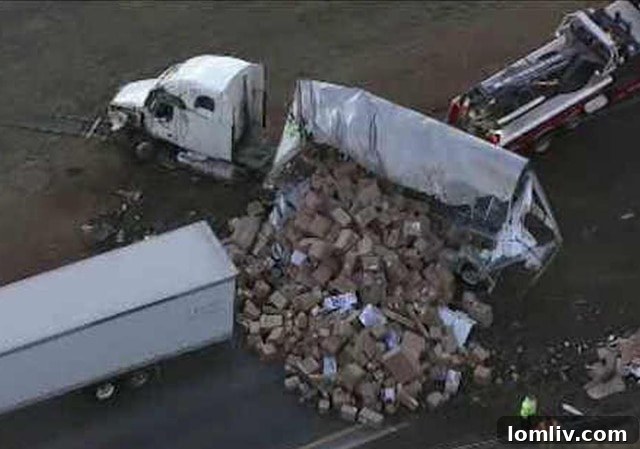
The scale of this issue is starkly illustrated by major urban centers. As reported by The New York Times, daily household deliveries in New York City tripled between 2009 and 2017, reaching an astounding 1.1 million shipments per day. Projections indicated this figure would climb to 1.5 million shortly thereafter, underscoring an accelerating trend. This surge in activity translates directly to a massive increase in vehicle presence: in 2018 alone, delivery trucks generated nearly half a million parking tickets, representing a staggering 34 percent growth in just five years. These citations weren’t for minor infractions; they were overwhelmingly issued for street blockages caused by ubiquitous double-parking – a direct symptom of the overwhelming volume of deliveries vying for limited street space. This scenario paints a clear picture of escalating traffic, severe congestion, and a palpable rise in air and noise pollution, all while numerous brick-and-mortar retail stores lie vacant, their former foot traffic diverted online, contributing to a complex urban planning challenge.
To grasp the bizarre transformation underway, one might imagine a traditional restaurant closing its physical doors, then opting to drive its entire kitchen and dining experience around the city, hawking individual meals. This is the antithesis of a food truck’s efficiency; it represents a fragmentation of service that multiplies vehicle movements unnecessarily. Or, consider the future of retail evolving into something akin to the mechanical clothes racks at a dry cleaner: consumers sit passively, watching the world whiz by on screens as they scroll and select items for delivery, completely disengaged from the physical act of shopping. Compare this to the once-common practice of weekly visits to a grocery store or efficient errand-runs that consolidate stops at several different stores into a single, purposeful outing. The shift is profound, replacing efficiency with dispersed, individual trips, leading to a less sustainable urban fabric.
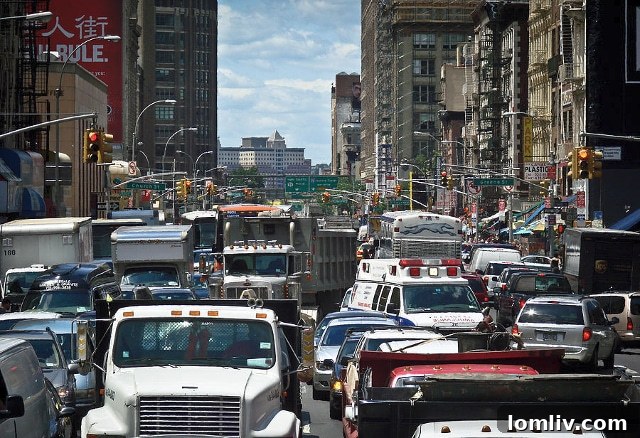
The cumulative effect of unchecked ride-sharing and delivery services has demonstrably degraded urban mobility. The New York Times further highlighted that, since 2010, traffic movement in the city slowed by a staggering 23 percent, reaching a point where it might literally be faster to jog than to drive to certain destinations. While Dallas might not yet experience the extreme congestion of New York City, these statistics serve as a potent cautionary tale for every urban and suburban area wrestling with the implications of an on-demand economy. The fundamental truth remains: it is inherently more efficient, both environmentally and logistically, for people to converge on centralized distribution points – physical stores – to procure multiple items than for every single product to be delivered separately to individual homes, a model that fragments and multiplies journeys.
Beyond City Limits: The Suburban Reality of Online Retail’s Footprint
And please, do not fall into the trap of believing this is exclusively an urban problem, or that the suburbs are somehow immune to the consequences of our delivery-driven economy. In fact, the suburbs play a critical, albeit often overlooked, role in this expansive logistical chain. They typically house the enormous fulfillment centers and sprawling warehouses – massive complexes where semi-trailer trucks deliver vast quantities of goods from manufacturers and ports, and from which fleets of smaller delivery vans depart daily to reach homes and businesses across wide geographical areas. These same massive semi-trucks, integral to the entire supply chain, are significant contributors to highway congestion, infrastructure wear-and-tear, and air pollution, impacting commutes and environmental quality far beyond city limits. The entire ecosystem of online retail has a profound, interconnected impact on both urban and suburban landscapes, demonstrating that convenience for one often translates to cost for all.

Technological “Solutions” and Their Unforeseen Consequences
Naturally, industry proponents frequently tout technological advancements as the panacea for these growing challenges. Electric vehicles (EVs) are often presented as the ultimate solution, promising a significant reduction in emissions. While EVs indeed mitigate air pollution and greenhouse gas emissions, they do absolutely nothing to alleviate traffic congestion itself – a silent but equally pervasive problem that continues to degrade urban quality of life. Even more problematically, the concept of drone deliveries is championed as a way to curb road congestion by moving deliveries to the sky. But pause and consider the full implications: hundreds, perhaps thousands, of drones buzzing overhead daily in a typical neighborhood would introduce an entirely new dimension of visual and noise pollution, radically altering the peaceful enjoyment of residential spaces. While I am not a proponent of firearm ownership, the thought of shooting them down like so many clay pigeons (as our collective imagination conjures “porch pirates” transitioning to airborne theft) certainly flickers as a darkly humorous fantasy, highlighting the absurdities and potential security issues of such a future.
And like many complex societal problems, this situation is poised to intensify rather than diminish. As I noted in an article last year, meal delivery services, despite their high visibility and rapid growth, constituted only about one percent of the entire food services market at that time, indicating immense potential for expansion. More recent reports confirm this escalating trend: New York City data indicates that a significant 15 percent of urban households now receive at least one package daily, and a striking 75 percent had ordered groceries online at some point. These figures underscore a fundamental and accelerating shift in consumer behavior that is still very much in its nascent stages, promising further growth in delivery volumes.
What happens when our population demographics shift further, dramatically altering consumer needs and behaviors? In just a decade, the youngest members of the Baby Boomer generation will reach retirement age, marking a profound demographic shift. As I explored in September, only a small fraction (around 14 percent) of seniors have downsized from their larger homes, meaning a vast number are choosing to “age in place” – remaining in their current residences. As mobility naturally declines with age, delivery services will become an increasingly indispensable lifeline for a generation accustomed to self-sufficiency and direct store visits, shifting their mode of consumption. In essence, the convenience economy, encompassing both delivery and ride-sharing services, is positioned for explosive, sustained growth driven by a dual demand from both younger generations fully embracing digital lifestyles and an aging population requiring assisted access to goods and services. This dual-pronged demand ensures a relentless expansion of these services and their associated impacts.
Local Impact and Collective Responsibility: A Call for Reflection
Observing various zoning cases from the vantage point of City Hall, one consistent complaint from protesting residents reverberates across public forums: traffic. They lament that current congestion is unbearable, and any new development, regardless of its nature, will inevitably worsen it to an intolerable degree. While it’s true that new developments will always contribute to increased traffic, particularly in cities like Dallas with a chronic lack of robust public transportation infrastructure, a significant and often underestimated portion of escalating traffic and congestion can be directly attributed to existing residents and the ever-increasing value placed on individual convenience. Our personal choices, aggregated across millions, create systemic challenges that no single development can fully address.
Therefore, the next time you find yourself frustrated by gridlock, idling in traffic, or endlessly searching for a parking spot, perhaps take a moment to reflect. Before you complain about the state of our roads, cast a glance into your recycling bin or garbage can. The stack of Amazon boxes, meal kit containers, and various delivery packaging might just offer a tangible reminder of your personal contribution to the very problem you decry. Our individual decisions about convenience have profound collective consequences that demand conscious consideration and a re-evaluation of our on-demand habits for the sake of a more sustainable and less congested future.

Remember: High-rises, HOAs, and urban renovation are my core focus. However, I also deeply appreciate modern and historical architecture, always balancing these against the dynamic forces of the YIMBY (Yes In My Backyard) movement. My writing has been consistently recognized by the National Association of Real Estate Editors, earning three Bronze awards (for 2016, 2017, 2018) and two Silver awards (for 2016, 2017) in 2016, 2017, and 2018 respectively. Have a compelling story to share, a unique perspective to offer, or even a marriage proposal to make? Feel free to reach out via email at [email protected]. You’re also welcome to look for me on Facebook and Twitter, though you likely won’t find me there, the offer stands!