The conversation surrounding affordable housing is more critical than ever, especially in dynamic real estate markets. It’s a discussion that inevitably leads to the uncomfortable truth that poverty is not a chosen path; it is a complex predicament with far-reaching consequences. While simplistic explanations often point to individual failings, a deeper look reveals intricate systemic issues at play. In the United States, for instance, a significant portion of poverty can be attributed to a deliberate, systemic disparity, often likened to a rigged game, where minority communities face formidable barriers to economic mobility through educational and occupational inequality. Although poverty is a pervasive issue affecting diverse populations, minorities are disproportionately represented among those struggling financially. Yet, countless other factors contribute to this pervasive problem, ranging from widely recognized challenges like mental illness and substance abuse to more subtle yet equally destructive issues such as social isolation and profound hopelessness.
Just as no one aspires to live in poverty, it is crucial to recognize that poverty itself is not a monolithic condition. Instead, it exists on a broad continuum, stretching from the dire circumstances of absolute homelessness and destitution to the relentless struggle of individuals working 80-hour weeks, yet still unable to secure safe housing or provide adequate food for their families. Understanding this spectrum is vital for developing effective solutions that address the varied realities of those experiencing economic hardship.
One might wonder why a real estate blog delves into topics like affordable housing and poverty. The answer is straightforward: poverty is a corrosive force that erodes the fabric of neighborhoods, not a characteristic of the people experiencing it. Our exploration of certain areas in southern Dallas, for example, highlighted neighborhoods boasting beautiful housing stock and burgeoning vibrancy that many potential residents often overlook due to preconceived notions linked to poverty. Furthermore, Dallas itself recently received a crucial Market Value Analysis. This tool is designed to assist the city in identifying areas of need and allocating resources effectively for affordable housing initiatives. For real estate professionals and community stakeholders, recognizing and addressing these foundational issues is not merely an act of charity, but a strategic imperative for fostering sustainable, equitable urban development and strengthening property values across the board.
Ineffective Solutions: Why Treating Symptoms Fails to Deliver Lasting Change
Throughout history, numerous social experiments, often well-intentioned, have been launched by charitable organizations and government agencies to combat homelessness. However, a stark majority of these initiatives, much like bariatric surgery or the popular reality TV show America’s Biggest Loser, frequently fail to achieve sustainable, long-term success. The core reason for this widespread failure is simple: they meticulously treat the symptoms without ever confronting the underlying, systemic issues that fuel the problem. The sobering reality of rapid weight regain among participants who quickly shed pounds on shows like The Biggest Loser vividly illustrates a “cure” that never genuinely resolved the root cause. This approach often proves detrimental, as participants’ metabolisms slowed significantly for years afterward, making weight gain even more inevitable and challenging to reverse. This metabolic impact explains why, in one season, 13 out of 14 America’s Biggest Loser contestants regained some weight, and nearly a third ended up weighing more than they ever had before.
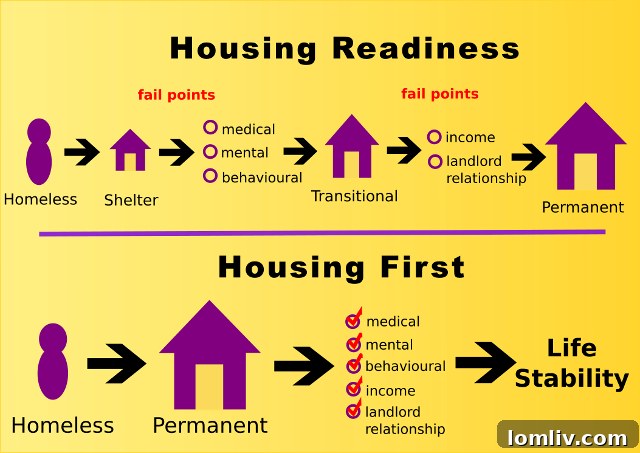
Homelessness programs often fall into similar traps, echoing these systemic failures. A substantial proportion of chronically homeless individuals grapple with severe drug addiction. Traditional programs frequently impose sobriety as a strict prerequisite for housing, completely overlooking the obvious truth: if individuals possessed the capacity and resources to achieve sobriety while living on the streets, many would have already done so. The same logic applies to individuals living with mental illness, who desperately require consistent structure and comprehensive support systems to adhere to treatment regimens and manage their conditions effectively. Simply mandating sobriety or treatment compliance without providing a stable environment sets people up for failure.
Moreover, the journey for unemployed homeless individuals to secure and maintain a job is riddled with obstacles that most housed individuals take for granted. Imagine the daily ordeal of trying to prepare for a job interview or maintain employment when your day begins by meticulously packing up all your worldly possessions and pushing them to your work location. Consider the profound difficulty of maintaining basic personal hygiene without access to washing machines, fresh clothes, toothpaste, or shampoo. While some may have the “luxury” of a car to store their belongings, they still lack many fundamental resources and amenities essential for successful employment and social integration. These seemingly minor details create insurmountable barriers that perpetuate the cycle of homelessness.
And tragically, once an individual experiences homelessness, the difficulty of escaping that condition intensifies with each passing day. The longer one is without stable housing, the more challenging it becomes to access resources, maintain mental and physical health, and reconnect with societal structures, trapping them in a cycle that is incredibly difficult to break.
Housing First: A Paradigm Shift in Addressing Homelessness
Born out of necessity in Los Angeles in 1988 to address the growing crisis of family homelessness, the Housing First model has since evolved into the foundational approach for tackling the complex underlying issues that lead to homelessness. It’s crucial to clarify what Housing First truly entails, as it is often misunderstood. At its core, it is a comprehensive program designed specifically for mitigating and ultimately ending homelessness. It is not, as some mistakenly believe, a program for individuals who are already in stable housing; it is for those who desperately need a home.
The program’s philosophy is rooted in long-term success and holistic support, extending far beyond simply providing a roof over someone’s head. It does not operate on the premise of merely “chucking a homeless person in an apartment and walking away.” Instead, the Housing First model mandates intensive case management, regular wellness visits, and crucial skills training. These integrated services are designed to systematically address the myriad of personal challenges participants face, while simultaneously equipping them with the tools and confidence necessary to successfully re-enter society as productive and self-sufficient individuals. While enrolled in the program, participants receive ongoing support, ensuring they do not fall back into the precarious conditions that led to their homelessness, thus fostering an environment of stability and accountability.
The results of Housing First initiatives have been nothing short of dramatic and profoundly impactful. Between 2005 and 2007, the U.S. Department of Housing and Urban Development reported a significant 30 percent decrease in chronic homelessness nationwide, a reduction largely attributed to the widespread implementation of Housing First strategies. Utah, a pioneering state in adopting this model, has reported an astonishing 72 percent decrease in overall homelessness, with an ambitious expectation of entirely eliminating chronic homelessness within its borders. Furthermore, Utah’s data indicates that approximately 10 percent of Housing First program residents successfully transition to normal, independent living conditions each year, demonstrating the program’s efficacy in fostering self-sufficiency.
But for those who, like the lyrics famously sung by Bruce Hornsby, cheer at the idea that those experiencing homelessness should simply “get a job,” believing it’s a matter of individual will rather than systemic barriers:
“The man in the silk suit hurries by
As he catches the poor old lady’s eyes
Just for fun he says, ‘Get a job’”
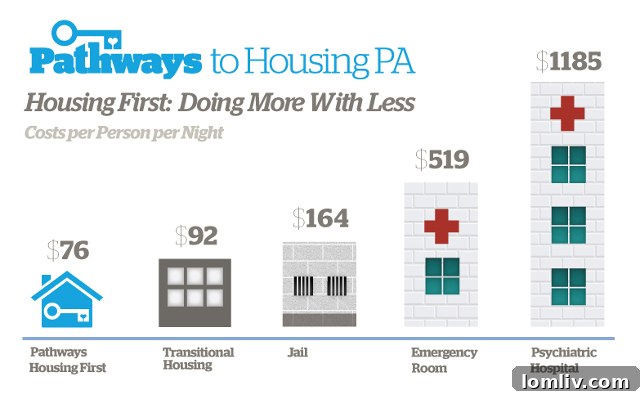
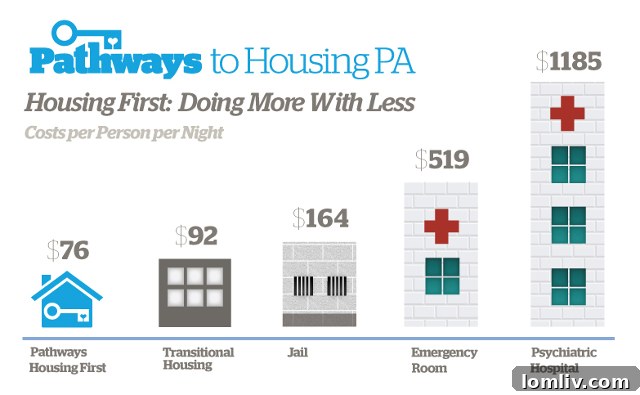
The profound benefits of Housing First extend far beyond merely helping the homeless population. Research conducted in both Utah and New York City has revealed that each individual enrolled in their respective Housing First programs saves taxpayers an estimated $8,000 to $10,000 annually. A single program in North Carolina reported an astounding $2.4 million in annual county cost savings. How is this possible? Homeless individuals, by virtue of their precarious situation, place an immense burden on public systems, incurring elevated medical expenses, increased policing costs, and frequent incarceration. Providing a stable, indoor place to live dramatically curtails these public expenditures. In essence, homelessness costs taxpayers significantly more than the comprehensive solutions offered by Housing First, and this calculation doesn’t even account for the invaluable benefit of transforming formerly homeless individuals into tax-paying, contributing members of the economy. One influential think tank even estimated that the total cost to eliminate homelessness across the United States is less than what the nation collectively spends in a single year on Christmas decorations and flowers—approximately $20 billion, highlighting a profound misallocation of resources and priorities.
Of course, no program is entirely immune to missteps. Can Housing First be mismanaged? Absolutely. One need only look at the experience of San Francisco, a city that allocates substantial funds to homelessness initiatives yet often sees minimal benefit. This outcome is largely due to critical shortcomings, such as a severe lack of dedicated caseworkers and the provision of subpar housing options that fail to offer the necessary dignity and stability, causing homeless individuals to understandably refuse to stay in them. Successful implementation requires commitment to both housing *and* comprehensive support services.
Beyond Homelessness: Navigating Low-Income Support Programs
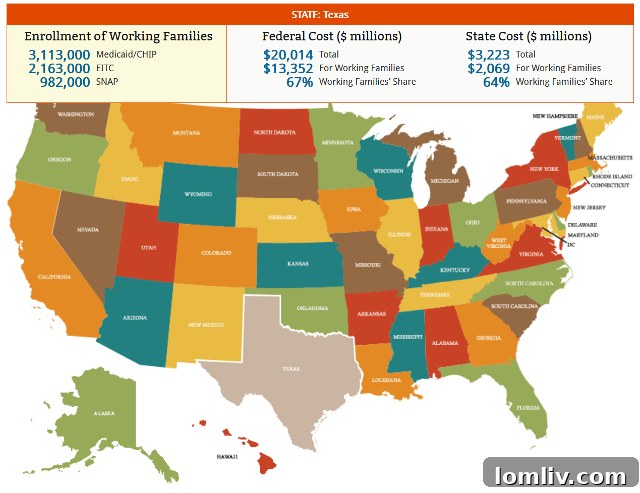
While Housing First presents an exceptional model for directly addressing the crisis of homelessness, it is equally important to consider the broader challenges faced by the “just plain poor”—individuals and families struggling with chronic low income but not necessarily experiencing homelessness. In 2013, for example, the state of Texas allocated a staggering $23 billion in various forms of assistance to its impoverished and homeless populations. Nearly two-thirds of this substantial sum was directed towards the working poor, highlighting the immense scale of financial hardship even among those actively employed.
There persists an outdated and often harmful rubric that unfairly labels poor people as lazy, suggesting that generous benefits render working pointless. Such a perspective often originates from individuals who have never personally endured a single day of true, grinding poverty and thus fail to grasp its crushing realities. The truth is far more nuanced and challenging.
Consider the Supplemental Nutrition Assistance Program (SNAP), commonly known as food stamps. This vital program is available to those whose incomes fall below 130 percent of the federal poverty level. For a family of four, this means an annual income of approximately $24,600, or a maximum qualifying income of around $31,900. To put this in perspective, this income level often requires two full-time workers earning minimum wage. Furthermore, recipients cannot possess more than $3,150 in total assets, a stringent limit that further constrains financial stability. Notably, half of all SNAP participants are families with children under 17, and just over half rely on a single wage-earner. Despite the profound poverty experienced by recipients, the average SNAP benefit amounts to a mere $30 per person per week—a meager sum that barely scratches the surface of food insecurity. Texas alone has approximately 1 million working families dependent on SNAP, illustrating the critical role these programs play in basic survival.
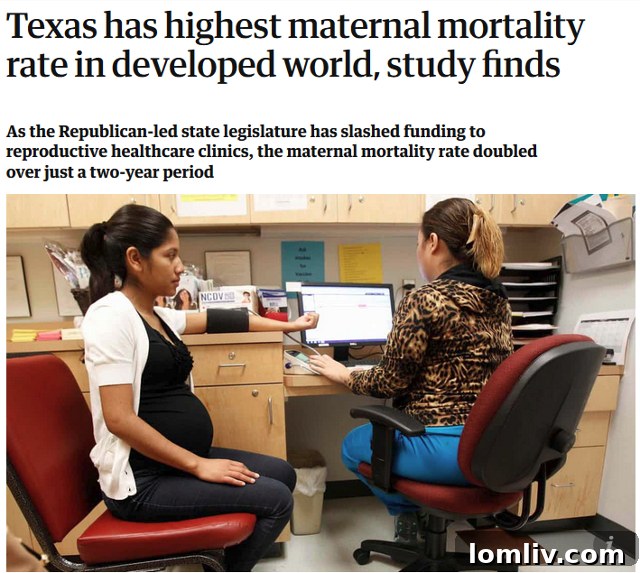
The policy choices made by individual states also significantly impact the lives of their low-income residents. Texas, for instance, chose not to expand Medicaid in conjunction with the Affordable Care Act. This decision, in part, directly explains why Texas consistently registers the highest rate and the largest total number of uninsured citizens in the entire United States. The stark headline depicted in the accompanying image speaks volumes about the severe consequences of such policy decisions on public health and economic well-being, highlighting a fundamental flaw in the social safety net for many working families.
A Real-Life Glimpse: Navigating the Complexities of Poverty and Assistance
To truly understand the labyrinthine nature of poverty and the systems designed to alleviate it, let’s consider the real-life experience of a college-educated friend of mine. She developed a degenerative eye disease that gradually led to blindness, rendering her unable to work. Consequently, she qualified for Social Security Disability benefits and Section 8 housing assistance. For many, the mere thought of having a person receiving such aid as a neighbor evokes discomfort or unfounded prejudice, a sentiment that tragically explains why Dallas, despite having over 1,000 affordable housing vouchers, struggles to find landlords willing to accept them.
The fundamental reality of Social Security Disability is that its benefits are directly tied to an individual’s past contributions. My friend, who had worked diligently as an office manager and seamstress throughout her life, never earned a substantial income, which meant her monthly benefits amounted to only a few hundred dollars. While Section 8 housing assistance covered the majority of her rent, it did not cover the entirety. She was expected to pay the remaining balance using her meager Social Security benefits—an undertaking that proved almost impossible. I vividly recall her never going grocery shopping without a calculator, meticulously accounting for every single penny and every morsel of food to make ends meet, a testament to her constant financial precarity.
Herein lies the profound dilemma, or “the rub,” of such assistance programs: if my friend were to have found even a small amount of supplemental work, perhaps taking in mending or other low-wage tasks, it would have immediately reduced her benefits and potentially disqualified her from Section 8 housing. It’s crucial to remember that her sight was deteriorating, meaning any job she could secure would be low-wage, physically demanding, and inherently precarious as her blindness progressed. In such an impossible situation, who would rationally seek work that would only make them poorer and, critically, risk losing their housing assistance altogether? The fear of leaving Section 8 was immense, as regaining eligibility could take years, with no guarantee of success, leaving her vulnerable to true homelessness.
Furthermore, negative stereotypes persist that Section 8 housing and its tenants are inherently “filthy” or “dishonest.” While isolated instances of misuse may exist, my friend, like many others, underwent a rigorous annual inspection process. This detailed inspection ensured that her apartment remained clean and well-maintained, that she had not augmented her declared income without reporting it, and that she was not illegally renting out a room. Even seemingly small gestures, like me purchasing her a new radio or tape player (so she could listen to audiobooks) or blindness charities providing various assistive aids, had to be meticulously accounted for and documented by the authorities, highlighting the intense scrutiny placed on recipients.
However, Section 8 also served a crucial protective function for tenants. The program actively inspected the apartment to ensure the landlord was fulfilling their obligations in maintaining the property. If Section 8 determined that a repair was necessary and the landlord failed to address it, the program would cease making rent payments until the issue was resolved. This mechanism effectively shielded tenants from predatory landlords who might otherwise take advantage of vulnerable individuals, underscoring the dual role of oversight and protection that such programs aim to provide.
The Silent Struggle: Homeowners Caught in the Grip of Poverty
The challenges of poverty extend beyond those who rent or are homeless; they also quietly afflict homeowners. If you own a home and suddenly find yourself plunged into poverty—perhaps due to devastating medical bills, prolonged unemployment, or other unforeseen financial crises—you are largely left to fend for yourself when it comes to housing support. Unlike rented properties, city authorities typically do not inspect privately owned homes to ensure they are being adequately maintained. For homeowners who are “cash poor” but asset-rich in terms of property, the grim reality often dictates that essential needs like food or critical property tax payments take precedence over household maintenance, such as buying Windex or repairing a leaky roof. While community outreach services are available, their accessibility often depends on individuals being aware of them and, crucially, being willing to ask for help. Many homeowners, especially those who have always prided themselves on self-sufficiency, are too proud or embarrassed to seek assistance, suffering in silence.
Age and social isolation are powerful factors that can make it incredibly easy for anyone, regardless of their prior economic status, to fall through the cracks of societal support. Consider my own situation: I have lived alone for most of my life. If I were to suddenly pass away, the smell would likely alert my neighbors long before my absence was noticed by distant contacts, and I am far from being socially isolated or impoverished. This stark example underscores how vulnerable individuals can become when their social networks are thin or non-existent, making it difficult for problems to be identified and addressed before they escalate into crises.
Ultimately, the notion that vast numbers of poor people are “scamming the system” or “living the life of Riley” is a deeply flawed misconception perpetuated by those who have never experienced the crushing reality of true poverty. As the City of Dallas deliberates on the valuable data provided by the recent Market Value Analysis, it is my fervent hope that policymakers and community leaders will keep these complex realities in mind. A nuanced understanding of poverty, its multifaceted causes, and the genuine struggles of those trapped within its cycle is essential for crafting truly effective, compassionate, and economically sensible solutions that benefit not just individuals, but entire communities.

Remember: High-rises, HOAs, and renovation are my beat. But I also appreciate modern and historical architecture balanced against the YIMBY movement. If you’re interested in hosting a Candysdirt.com Staff Meeting event, I’m your guy. In 2016 and 2017, the National Association of Real Estate Editors has recognized my writing with two Bronze (2016, 2017) and two Silver (2016, 2017) awards. Have a story to tell or a marriage proposal to make? Shoot me an email [email protected].