Navigating Absentee Ballots: Understanding Why Dallas County Voters Received Multiple Mail-in Ballots
The integrity of elections hinges on clear communication and voter confidence. However, a recent incident in Dallas County caused confusion and concern among absentee voters, particularly college students living away from home. The unexpected arrival of two sets of mail-in ballots prompted questions and highlighted the critical need for transparent electoral processes. This article delves into the experience of one Dallas family and the official explanation behind the duplicate ballots, providing essential guidance for voters.
A Double Take: The Ballots That Caused Confusion
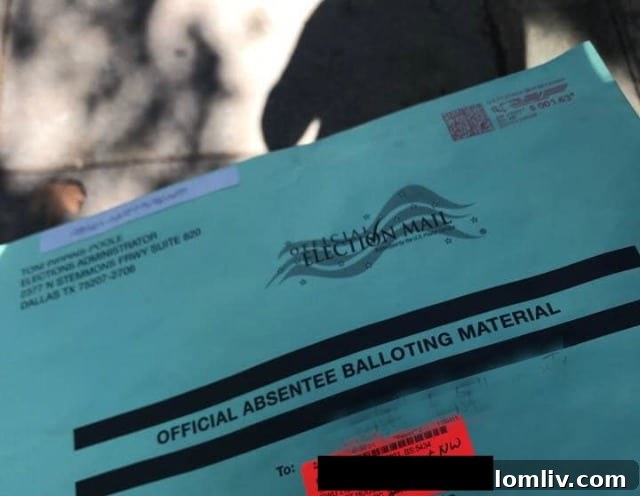
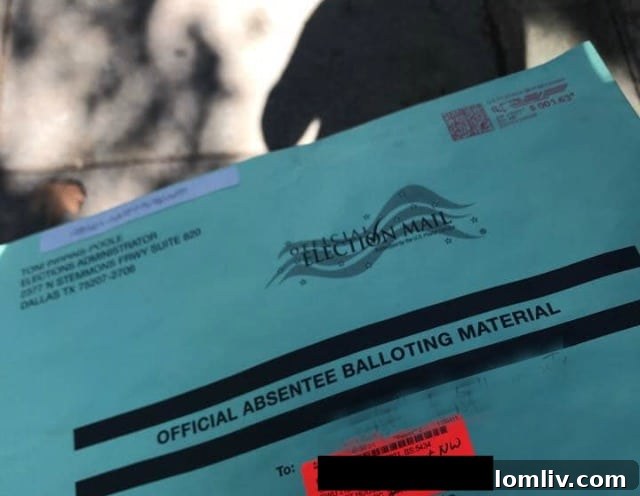
Anna Wilson, a college student at Washington University in St. Louis, was anticipating the arrival of her absentee ballot from Dallas County. Like many out-of-state students, she relies on mail-in voting to exercise her democratic right. However, her mailbox check yielded an unexpected surprise: not one, but two envelopes containing ballots from the Dallas County Elections Department.
“I think these were actually sent out at slightly different times,” Anna recounted. “I don’t always check my mailbox every day, but when I checked this time, I had two of these green envelopes.” Her initial reaction was, understandably, confusion. “I was confused, and wondered if these were two different ballots,” she added, articulating a sentiment likely shared by many other voters in a similar predicament.
The envelopes themselves offered little immediate clarity. Anna noted, “Outside, wasn’t descriptive. I think it just said reprint? Didn’t say anything like, ‘Send this one!’ or, ‘Ignore the other one!’” This lack of explicit instruction on the exterior of the envelopes was a significant source of the initial bewilderment, leaving voters to guess which document was the legitimate one for casting their vote.
Parental Guidance and Voter Advocacy: Rebecca Bell Wilson Steps In
Fortunately for Anna, her mother, Rebecca Bell Wilson, is a dedicated voting rights advocate in Dallas. Rebecca spends considerable time educating new and returning voters, making her an invaluable resource when her daughter encountered this unusual situation. A quick call home provided Anna with an instant expert, though Rebecca also emphasized the importance of self-advocacy.
“My daughter called and told me about these two envelopes, and I encouraged her to call the county elections department,” Rebecca explained. “This is her first time voting in a general election, and I really wanted her to advocate for herself.” This approach not only empowered Anna but also underscored Rebecca’s commitment to ensuring every voter understands their rights and responsibilities.
Anna followed her mother’s advice, contacting the Dallas County Elections Department. She found that one of the envelopes did have an orange sticker, which, upon clarification, indicated it was the corrected ballot. However, the explanatory letter inside the corrected ballot envelope still didn’t fully address all potential scenarios. “Once I actually opened the envelope, there was a letter explaining what happened, but it still didn’t really clarify what you should do if you had already sent the other ballot in,” Anna noted. This pointed to a gap in communication that could lead to genuine concern for voters who might have acted quickly.
The confusion wasn’t isolated to Anna. “One of my friends who goes to George Washington University in D.C. got the same thing,” she added. “He texted me because he knows my mom is pretty involved with voting and elections and asked me what was going on, too.” This anecdotal evidence suggested a systemic issue affecting numerous absentee voters, highlighting the broader impact of unclear communication during a crucial election period.
The Official Explanation: Why Corrected Ballots Were Necessary
To address the widespread confusion, Dallas County Elections Administrator Toni Pippins-Poole provided an official explanation. The core reason for the duplicate mailings stemmed from an oversight in the initial ballot printing process.
“Corrected ballots were mailed to voters that were sent before we were advised by the Secretary of State of the missed certification of a Libertarian candidate name that should be on the ballot,” Pippins-Poole stated. This meant that a candidate who had legally qualified to be on the ballot was inadvertently omitted from the first batch of absentee ballots. To ensure all voters had the opportunity to cast a vote for all certified candidates, new, corrected ballots had to be issued.
Pippins-Poole clarified the legal basis for this action: “According to the State procedures in the Texas Election Code Sec.86.009, we can only send out a corrected ballot with the certified Notice of Correction prescribed by the State.” This legal requirement underscores the importance of electoral accuracy and compliance with state regulations, even if it introduces temporary confusion for voters.
The notice of correction was included with the new ballot, but as Anna’s experience showed, the process was not entirely intuitive for first-time voters or those who might not scrutinize every detail.
Addressing Voter Concerns: What Happens to My Vote?
The immediate concern for many voters receiving two ballots was the validity of their vote, especially if they had already returned the first ballot or were unsure which one to send. Pippins-Poole’s explanation offered crucial clarity on these points:
What if a voter already returned the first ballot?
If an eager voter had already returned the first, uncorrected ballot, their vote is not necessarily lost. The system is designed to handle this scenario to ensure voter intent is honored.
What if a voter only sends the first or second ballot?
Pippins-Poole explained, “If the voter doesn’t return the corrected ballot, the original ballot will count.” This is a critical piece of information for voters who might have been unable to send the second ballot or were still confused. The original, albeit incomplete, ballot would still be processed and counted for the races that were correctly listed.
How is a corrected ballot identified?
The corrected ballot is visually distinct. “The corrected ballot does have the orange label to alert our office that it is the corrected ballot that is being returned,” Pippins-Poole confirmed. This label serves as an internal mechanism for election officials to identify and prioritize the corrected version.
What if both ballots are returned, or only the corrected one?
The presence of the orange label on the corrected ballot is key. When the elections department receives a corrected ballot with the orange label, “the original ballot will be voided.” This mechanism prevents double voting and ensures that the most accurate and complete ballot is the one that ultimately counts. Voters who correctly identified and returned only the corrected ballot can rest assured their vote will be counted accurately.
For any remaining questions or concerns, Pippins-Poole noted that the elections department phone number is included in the paperwork accompanying the ballots, encouraging voters to reach out directly.
Spreading the Word: The Importance of Voter Education
Both Anna and Rebecca expressed surprise that they hadn’t heard about the new ballots through official channels before they arrived in Anna’s mailbox. This highlights a need for proactive public awareness campaigns when such changes occur.
Rebecca took to Facebook to alert her network, urging friends to spread the word, especially among those with college-age children or elderly and infirm relatives. “I have so many friends with college-age kids, and they need to know about this,” she emphasized. The risk of confusion is particularly high for these demographics, who might be less connected to local news or more susceptible to feeling overwhelmed by unexpected changes.
She also pointed out that the presence of two ballots could mistakenly be interpreted as a sign of fraud, potentially leading some voters to discard both or lose confidence in the process. Clear, pre-emptive communication from election officials could mitigate such concerns, reinforcing trust in the electoral system.
Anna, despite the initial confusion, successfully mailed in her correct ballot. She expressed pride in voting in her first general election, even from afar, and gratitude for her mother’s encouragement to contact the county. “It all worked out but definitely worked out later, but it was really confusing at first,” she reflected, capturing the mixed emotions of frustration and ultimate satisfaction.
Essential Deadlines for Mail-in Ballots
Beyond the issue of corrected ballots, understanding mail-in ballot deadlines is crucial for ensuring your vote is counted. These deadlines can vary based on where the ballot is mailed from:
-
Ballots Mailed within the County/U.S. (Without Postmark or Delivery Receipt):
Mail-in ballots that do not have a postmark or delivery receipt must be delivered to the county by mail or another carrier by 7 p.m. on Election Day.
-
Ballots Mailed within the U.S. (With Postmark or Delivery Receipt):
Ballots that are postmarked or have a delivery receipt showing the ballot was mailed from within the U.S. by 7 p.m. on Election Day must arrive by 5 p.m. the next business day after Election Day.
-
Hand-Delivered Absentee Ballots:
Voters also have the option to hand-deliver their absentee ballot to the county elections office. This must be done by 7 p.m. on Election Day.
-
Ballots Mailed from Overseas:
Special provisions exist for overseas voters, including military personnel. Ballots mailed from overseas that are postmarked or accompanied by a delivery receipt showing it was mailed by 7 p.m. on Election Day must arrive by 5 p.m. on the fifth day after Election Day. For the election in question, since the fifth day fell on a Sunday, the deadline was extended to November 12.
It is vital for all absentee voters to be acutely aware of these deadlines and to plan accordingly, allowing ample time for mailing and delivery. Always double-check the specific dates for each election cycle.
Conclusion: Strengthening Voter Confidence Through Clarity
The experience of Anna Wilson and other Dallas County voters highlights a critical lesson: clear, proactive communication from election officials is paramount, especially when unforeseen circumstances necessitate changes to the voting process. While the Dallas County Elections Department ultimately provided mechanisms to ensure all votes were counted correctly, the initial confusion underscores the need for streamlined, unambiguous instructions on all voter materials.
Voter confidence is the cornerstone of a healthy democracy. When voters are met with unexpected challenges like duplicate ballots without clear guidance, it can lead to frustration, distrust, and even accidental disenfranchisement. The efforts of advocates like Rebecca Bell Wilson in disseminating information become invaluable in filling these communication gaps.
Ultimately, the incident served as a reminder of the resilience of voters and the dedication of those working to safeguard election integrity. Voters, particularly those participating by mail or for the first time, are encouraged to stay informed, read all accompanying documentation carefully, and not hesitate to contact their local elections department with any questions or concerns. Your vote is your voice, and understanding the process ensures that voice is heard.
For more information about voting in Dallas County, including updated deadlines and procedures, please visit DallasCountyVotes.org.