
Fort Worth Leads the Nation: The Fastest Path to Homeownership for Renters
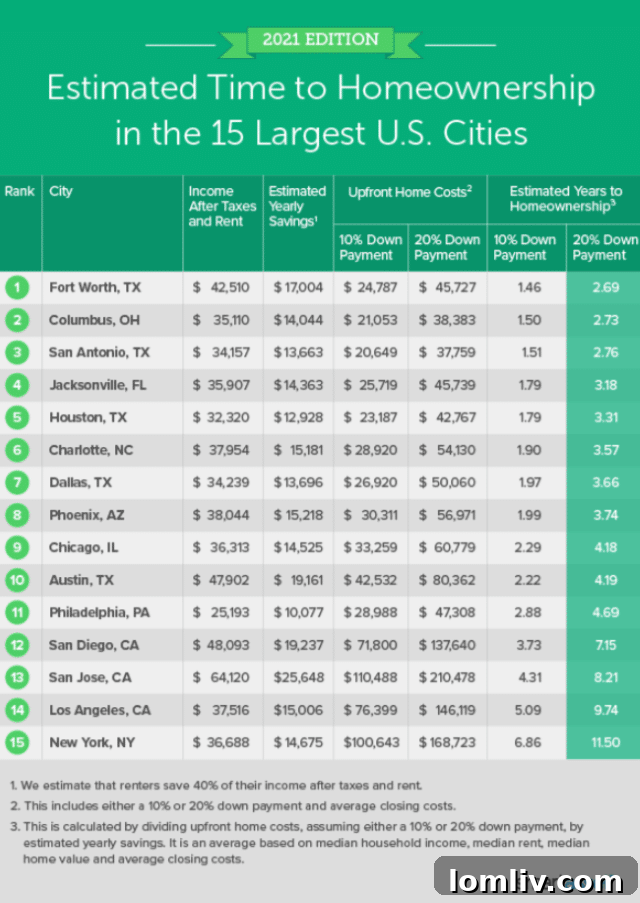
For many renters, the dream of homeownership often feels like a distant aspiration, especially with the persistent challenge of saving for a substantial down payment. However, a groundbreaking study by SmartAsset offers a beacon of hope for aspiring homeowners in Fort Worth, revealing that residents in this thriving Texas city are on the fastest track nationwide to achieving their homeownership goals. According to the comprehensive 2021 SmartAsset study, Fort Worth renters can anticipate saving enough for a 10 percent down payment in an estimated 1.46 years, and a 20 percent down payment in just 2.69 years. These remarkable figures position Fort Worth at the forefront of the nation’s 15 largest cities, making it a uniquely accessible market for those looking to transition from renting to owning.
This compelling finding not only highlights Fort Worth’s distinctive real estate landscape but also signals a promising outlook for its residents. The study suggests a confluence of economic factors within the city that facilitates quicker savings for future homeowners. While the national average for accumulating a down payment can often span many more years, Fort Worth stands out by providing a tangible and expedited pathway forward, rigorously supported by meticulous data analysis.
Understanding the SmartAsset Study: A Deep Dive into Homeownership Timelines
The 2021 SmartAsset study, aptly titled “How Long Does It Take to Become a Homeowner?”, offers an insightful exploration into the financial realities faced by prospective homebuyers across major urban centers. As a leading personal finance technology company, SmartAsset is well-regarded for its data-driven analyses, and this particular report meticulously crunched numbers to determine the precise time required for residents to save for the initial costs associated with purchasing a home. These upfront expenses are crucial and typically encompass both the requisite down payment and various closing costs, which can collectively add a significant sum to a buyer’s financial commitment. The study’s robust methodology takes into account median income levels, average rental expenditures, and median home prices in each surveyed city to project realistic and actionable savings timelines.
For its primary analysis, the study focused on the 15 largest cities in the United States, providing a direct and comparable benchmark between major metropolitan areas. In this latest iteration of the report, Columbus, Ohio, and Fort Worth, Texas, notably swapped positions, underscoring the dynamic and ever-evolving nature of housing markets. This shift reflects the fluctuating economic conditions that continuously influence affordability, income growth, and overall savings potential across the country. The consistent annual execution of this study by SmartAsset enables critical year-over-year comparisons, yielding invaluable insights into the ongoing trends and accessibility of homeownership.
Texas’s Strong Showing: Other Lone Star Cities in the Top National Rankings
While Fort Worth undeniably captured the national spotlight among the largest U.S. cities, other major metropolitan areas across Texas also demonstrated exceptionally strong performances in the SmartAsset study. This collective success further emphasizes the broader appeal and relative affordability of the Texas housing market when juxtaposed against other regions of the nation. The state’s renowned economic resilience, consistent job growth, and diverse urban centers continue to act as powerful magnets, attracting new residents and fostering ample opportunities for aspiring homeowners to plant roots and build equity.
Among the 15 Largest U.S. Cities:
- San Antonio secured an impressive third-place ranking, indicating a similarly swift and achievable path to homeownership for its residents. This favorable position is likely attributed to its robust and diversified economy, coupled with generally more affordable housing options compared to many other large Texas cities and national counterparts.
- Houston followed closely behind, achieving a respectable fifth place. As a significant economic powerhouse with diverse industries ranging from energy to healthcare, Houston provides abundant employment opportunities. This, combined with its relatively expansive and diverse housing market, plays a crucial role in assisting residents in their down payment savings endeavors.
- Dallas earned a solid seventh spot on the list. Despite its status as a major financial and commercial hub, which often translates to higher median home prices than some other Texas cities, Dallas continues to offer a more accessible pathway to homeownership than a multitude of other large U.S. cities included in the top 15 analysis.
- Austin, while still ranking commendably within the top 10 at tenth place, has experienced its housing market become increasingly competitive and expensive in recent years. Its burgeoning tech industry and rapid population influx have significantly driven up demand. Nevertheless, Austin continues to outperform many other large national markets in terms of the time required for down payment savings, reflecting its strong economic fundamentals.
These rankings collectively illustrate a significant and pervasive trend: Texas cities, widely recognized for their business-friendly environments, lower regulatory burdens, and generally lower costs of living compared to traditional coastal metropolises, consistently provide a more attainable route to homeownership for a substantial segment of the population. This advantage positions Texas as a highly desirable destination for individuals and families aspiring to achieve long-term financial stability and build wealth through real estate.
Expanding to the 100 Largest Cities: Showcasing Broader Texas Affordability
Beyond its initial focus on the 15 largest cities, SmartAsset’s comprehensive analysis extended its scope to include the 100 largest cities nationwide. This broader examination unveiled further intriguing trends, particularly within Texas, where smaller yet rapidly growing cities often surpassed their larger counterparts in terms of homeownership accessibility. This phenomenon is largely due to even more favorable housing-to-income ratios found in these burgeoning areas.
- Laredo emerged as an unexpected leader, clinching the coveted top spot and ranking first in the entire nation for estimated years to homeownership, with a remarkable timeline of just 2.10 years. This exceptional performance underscores Laredo’s outstanding affordability, likely driven by significantly lower median home prices relative to the median income of its residents, making it a stellar example of truly accessible homeownership.
- El Paso secured a commendable seventh-place ranking, further reinforcing the consistent trend of West Texas cities offering comparatively more affordable housing options and quicker paths to homeownership.
- Corpus Christi placed ninth, highlighting the coastal city’s appeal not only for its quality of life and recreational opportunities but also for its notable potential for faster homeownership attainment.
- Garland tied with Tulsa for 15th place, demonstrating that even cities situated within the broader, bustling Dallas-Fort Worth metroplex can provide relatively expedited routes to homeownership, offering diverse options within a major economic region.
- Fort Worth, while having already led among the 15 largest, continued its strong performance within the top 100, securing an impressive 17th place. This consistent ranking across different scales of comparison powerfully emphasizes its enduring strength and appeal as a market conducive to homeownership.
These detailed rankings from the extended study offer a nuanced and expansive view of the American housing market. They vividly demonstrate that opportunities for quicker homeownership are far from being exclusively confined to the nation’s largest urban centers. Instead, such opportunities are actively thriving in numerous mid-sized and regional cities, a significant number of which are strategically located within Texas. The geographical and economic diversity of these highly ranked Texas cities—ranging from vibrant border towns to picturesque coastal hubs and dynamic major metros—strongly indicates that the Texas economic model generally fosters a more attainable and sustainable path to housing stability for a broad spectrum of its residents.
Navigating the Current Housing Market: Key Factors Influencing Homeownership
The journey towards homeownership is profoundly shaped by a complex interplay of various economic and societal factors. The SmartAsset study not only provided granular data on savings timelines but also touched upon several pivotal elements that have significantly influenced homeownership rates and the duration it takes to save for a home, even amidst unprecedented global events like the COVID-19 pandemic.
The Pandemic’s Nuanced Impact on Homeownership Trends
Contrary to initial widespread predictions that the COVID-19 pandemic might trigger a significant decline in homeownership, the gathered data presented a far more intricate reality. The pandemic did not, in fact, seem to negatively impact the homeowners’ rate in the long run. On the contrary, it appears to have galvanized certain segments of the population towards the pursuit of homeownership. This unexpected resilience can be attributed to several underlying factors:
- Shifting Priorities and Lifestyle Changes: With increased time spent at home due to lockdowns and remote work, many renters underwent a re-evaluation of their living situations. They increasingly recognized the myriad long-term benefits of owning a home, including the desire for more personal space, enhanced stability, and greater control over their immediate environment.
- Expanded Remote Work Opportunities: The rapid and widespread adoption of remote work policies liberated many individuals from the necessity of living in traditionally expensive urban centers. This newfound flexibility allowed a significant portion of the workforce to consider relocating to more affordable regions, including numerous attractive cities within Texas.
- Government Stimulus and Accelerated Savings: Various government aid packages, coupled with reduced discretionary spending on activities like travel, dining out, and entertainment during periods of lockdown, may have inadvertently enabled some households to accumulate savings at a faster rate than they otherwise would have anticipated.
Interest Rates and Housing Inventory: A Double-Edged Market Dynamic
Two critical and often opposing market forces have played an undeniably significant role in shaping the contemporary housing landscape:
- Historic-Low Interest Rates: Throughout much of 2020 and extending into 2021, mortgage interest rates plummeted to unprecedented historic lows. This drastic reduction made monthly mortgage payments considerably more affordable, even in the face of steadily rising home prices. Lower interest rates fundamentally reduce the overall cost of borrowing over the life of a loan, thereby making homeownership more financially accessible for qualified buyers. This factor acted as a significant tailwind for the housing market, attracting a surge of buyers eager to lock in highly favorable financing terms.
- Limited Housing Inventory: Conversely, the housing market has been persistently characterized by a severe lack of available homes for sale. This constrained inventory, often exacerbated by slower new construction rates and existing homeowners’ reluctance to sell and potentially lose their low mortgage rates, has inevitably led to intense and often fierce competition among prospective buyers. While the advantage of low interest rates enhances affordability, the severe constraint on supply can simultaneously drive up purchase prices, creating a challenging environment, particularly for many first-time buyers. The delicate balance and interaction between these two powerful forces fundamentally dictate current market dynamics and accessibility.
Down Payment Assistance Programs: A Vital Lifeline for First-Time Homebuyers
Another crucial factor that has significantly aided aspiring homeowners, particularly those who face the formidable barrier of accumulating a substantial down payment, is the increasing availability of various assistance programs. Homebuyers have been able to leverage commercial, state, and local government grants specifically designed for down payment assistance. These invaluable programs are strategically designed to bridge the financial gap for eligible buyers, thereby making the dream of homeownership a more immediate and attainable reality. These forms of assistance can manifest in several key ways:
- Grants: These are non-repayable funds provided directly to the buyer, which effectively reduce the total amount of money a buyer needs to save and contribute toward a down payment.
- Forgivable Loans: These are loans that, under specific conditions (such as the homeowner residing in the purchased home for a predetermined number of years), do not need to be repaid, offering significant financial relief.
- Deferred-Payment Loans: These types of loans allow for the postponement of repayment until a future event occurs, typically when the home is sold, refinanced, or the mortgage is paid in full.
Crucially, numerous states and cities throughout Texas actively offer such programs, providing a vital and often indispensable resource for individuals and families who might otherwise find themselves priced out of the housing market. Diligent research into and effective utilization of these assistance resources can dramatically shorten the down payment savings timeline, turning aspirations into concrete reality.
The Broader Picture: Homeownership Rates and Market Resilience
The overall health and vitality of the housing market can be comprehensively gauged by examining the national homeownership rate. This metric provides a crucial snapshot of the proportion of households that own their primary residence versus those who rent. SmartAsset’s analysis, drawing upon official Census data, revealed particularly interesting and dynamic trends in this metric during the critical period surrounding the COVID-19 pandemic:
- In 2019, the national homeownership rate stood at 64.1 percent. This figure represented a steady, albeit gradual, recovery from the significant lows experienced in the aftermath of the 2008 financial crisis, indicating a period of cautious optimism.
- By the second quarter of 2020, amidst the initial and profound shockwaves of the pandemic, the homeownership rate remarkably surged to 67.9 percent. This unexpected and substantial jump suggests that for many Americans, the intensified desire for stability, combined with the unprecedented opportunity presented by historically low interest rates, significantly outweighed the pervasive economic uncertainties of that tumultuous time. It also might reflect an increase in individuals purchasing second homes or investment properties as other investment avenues became increasingly volatile.
- In the second quarter of 2021, the rate experienced a slight and natural adjustment, settling at 65.4 percent. While this represented a marginal decrease from the peak observed in Q2 2020, this figure still robustly remained higher than the pre-COVID-19 rates. This sustained elevated rate serves as a powerful indicator of a remarkably robust and resilient housing market that effectively adapted to the myriad challenges of the pandemic, with a continued and strong emphasis on homeownership as both a valuable asset and a secure, desirable living arrangement.
These illuminating statistics collectively highlight the enduring appeal and the perceived inherent stability of real estate investment, even when faced with turbulent economic times. The impressive ability of the market to not only recover but to also significantly exceed pre-pandemic homeownership rates speaks volumes about its underlying strength, the continued confidence of buyers, and the fundamental desire for homeownership in America.
Strategies for Aspiring Homeowners in Today’s Dynamic Market
For individuals inspired by Fort Worth’s leading position and the generally positive homeownership trends observed across Texas, taking proactive and strategic steps is absolutely crucial. Becoming a homeowner, while potentially quicker in certain Texas markets, still demands diligent planning, unwavering financial discipline, and informed decision-making.
Financial Planning and Rigorous Budgeting
- Create a Detailed and Realistic Budget: Thoroughly understand your income, track all your expenditures, and identify specific areas where you can effectively cut back and save more aggressively towards your homeownership goal.
- Set Clear and Achievable Savings Goals: Precisely determine your target down payment amount (e.g., aiming for 10% or 20% of the median home price in your desired area) and then work backward to formulate a realistic and sustainable monthly savings plan.
- Account for All Associated Costs: It is imperative to remember that a down payment represents only one component of the overall financial commitment. Accurately factor in closing costs (which typically range from 2-5% of the total loan amount), potential moving expenses, and initial home maintenance costs that are often overlooked.
Exploring Diverse Mortgage Options
- Research Different Loan Types Thoroughly: Familiarize yourself with various mortgage products. FHA loans, for instance, often require lower down payments (sometimes as little as 3.5%), while VA loans for eligible service members and veterans may require no down payment whatsoever. Conventional loans typically demand a higher credit score and down payment but can offer greater flexibility and potentially lower private mortgage insurance costs.
- Obtain Mortgage Pre-Approval: Securing pre-approval for a mortgage early in your home search journey is a critical step. It not only helps you understand your realistic affordability range but also significantly enhances your credibility, making you a much more competitive and attractive buyer in a hot and fast-moving market.
Leveraging Available Assistance Programs
As previously highlighted, a multitude of down payment and closing cost assistance programs exist. It is absolutely vital to:
- Proactively Research Local and State Programs: Directly consult resources such as the Texas Department of Housing and Community Affairs (TDHCA) and local city housing authorities to discover available grants, forgivable loans, and deferred-payment loans specifically tailored to first-time homebuyers.
- Consult with Experienced Mortgage Lenders: Many reputable mortgage lenders possess extensive knowledge of these various programs and can expertly guide you through the application process, helping you identify and qualify for the assistance that best suits your financial situation.
Conclusion: Fort Worth and Texas – A Beacon for Homeownership Dreams
The SmartAsset study unequivocally positions Fort Worth as a national leader in offering a swift and achievable path to homeownership for its renting population, characterized by remarkable timelines for saving a down payment. This impressive achievement, coupled with the consistently strong performance of other prominent Texas cities such as San Antonio, Houston, Dallas, Laredo, El Paso, Corpus Christi, and Garland, paints a truly compelling and optimistic picture of Texas as a whole. It underscores the state’s unique advantage as a region where the long-held dream of owning a home is significantly more attainable for a broader segment of the population than in many other parts of the country.
Despite the inherent challenges presented by factors like limited housing inventory and fluctuating economic conditions, the powerful confluence of relatively lower housing costs, robust and expanding job markets, historically low interest rates, and the proactive availability of effective down payment assistance programs continues to cultivate fertile ground for aspiring homeowners across the expansive Lone Star State. For renters in Fort Worth and throughout Texas, these encouraging findings serve not merely as abstract data points, but as a genuine source of encouragement, empowering them to pursue their homeownership aspirations with renewed vigor, strategic planning, and a clear understanding of the supportive resources available.
For a detailed breakdown of the comprehensive data and the precise methodology utilized in this insightful SmartAsset study, interested readers are highly encouraged to visit the official publication through the link provided below:
SmartAsset’s 2021 Study on Homeownership: How Long Does It Take?