Dallas District 7: A Deep Dive into Crime Trends, Political Dynamics, and the Promise of Revitalization
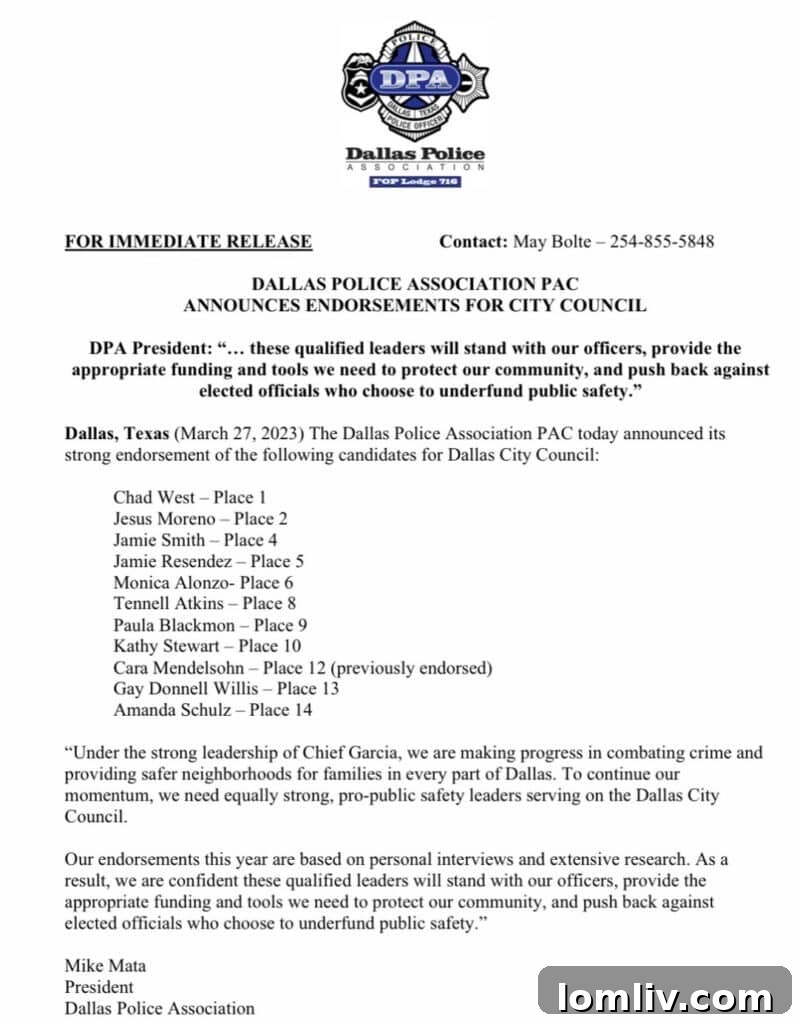
Last week, the Dallas Police Association Political Action Committee (DPA PAC) released its highly anticipated endorsements for the upcoming city council elections, revealing a notable absence of recommendations for several key districts. Among these were Districts 3 and 7, leaving voters and candidates alike to ponder the implications. While the DPA PAC hinted at forthcoming recommendations for races like District 11, which includes prominent local figure Candace Evans, the focus remains sharply on areas undergoing significant transformation and facing persistent challenges, particularly District 7.
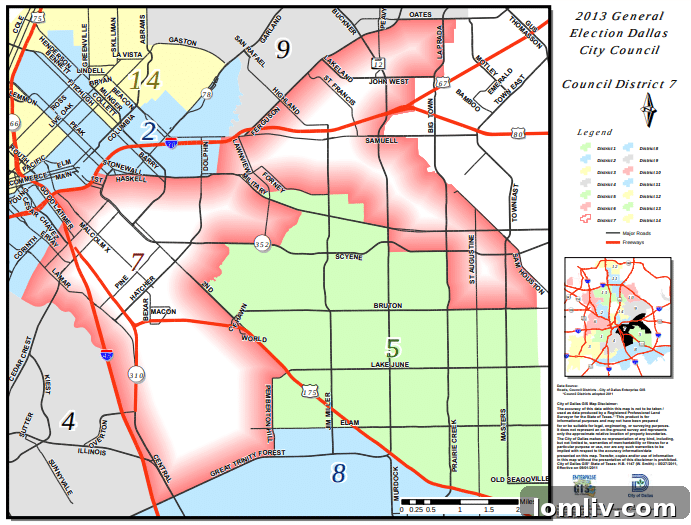
District 7, a vast expanse covering parts of South Dallas and the historic Fair Park area, has long been a focal point for discussions on public safety and urban renewal. In 2022, it recorded the fourth-highest crime rate among Dallas’s 14 City Council districts, underscoring the urgent need for effective solutions. However, a sense of cautious optimism now permeates the community, fueled by ambitious revitalization projects, most notably a multimillion-dollar makeover planned for Fair Park. Residents and local leaders are hopeful that this transformative investment will not only enhance the physical landscape but also instill a renewed sense of pride and security within the neighborhoods.
Crime Trends and Public Safety in Dallas District 7
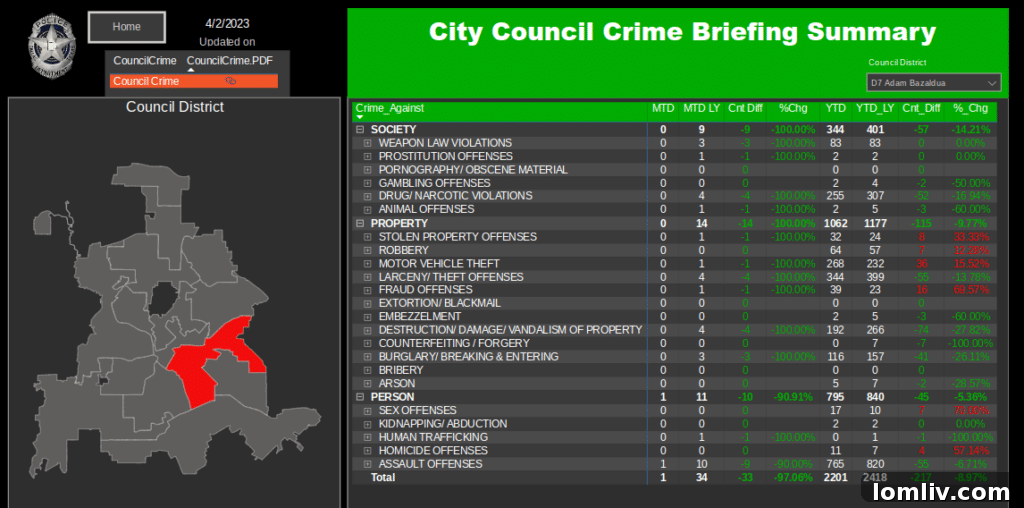
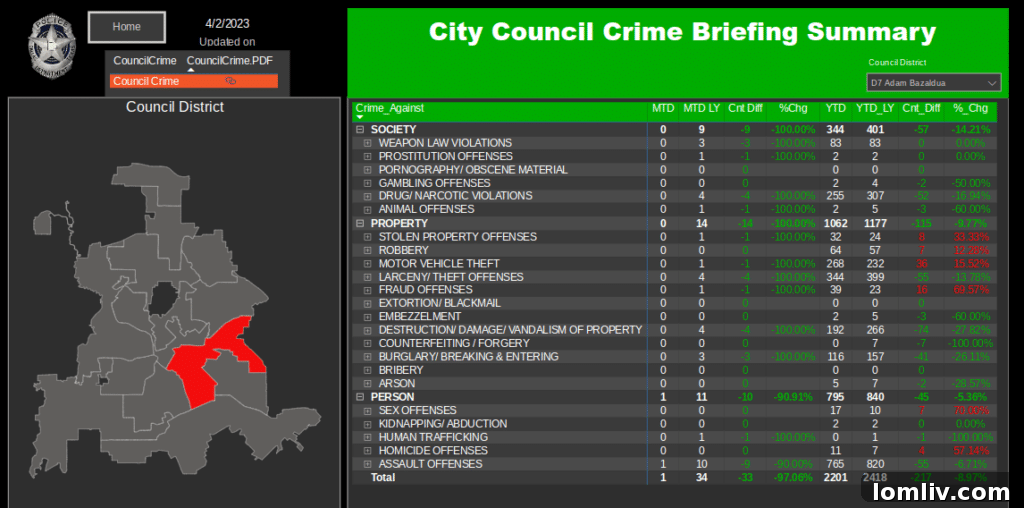
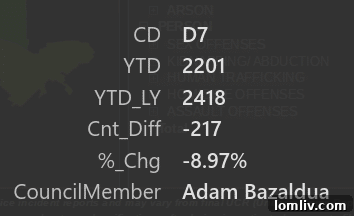
Public safety remains a paramount concern for all Dallas residents, and insights from daltxrealestate.com’s ongoing series on crime by council district reveal a nuanced picture across the city. While overall crime rates in Dallas have seen a downward trend, District 7 presents a compelling case study of targeted improvements amidst persistent challenges. Since this time last year, District 7 has experienced an encouraging decrease in overall crime by approximately 9 percent, a testament to various community and law enforcement efforts.
Delving deeper into the statistics for District 7, the number of crimes against persons reported year-to-date stands at approximately 795, marking a 5.36 percent reduction compared to the same period last year. This category includes serious offenses such as assaults and homicides. Specifically, the district has reported 11 homicides so far this year, while assaults have reached 765, and reports of larceny or theft total 344. While thefts and assaults have seen a decrease, the murder rate has regrettably shown a slight increase. These figures, meticulously tracked on the Dallas Police Department Crime Dashboard, provide critical data for understanding the district’s evolving safety landscape and informing strategic interventions.
The Political Battleground: Public Safety on the Campaign Trail
The Dallas City Council elections frequently serve as a referendum on pressing issues, and public safety consistently ranks at the top. The DPA PAC’s decision to withhold endorsements in certain races, including District 7, speaks volumes about the complexity of the political landscape. Despite four candidates vying for the District 7 seat, the PAC opted not to back any particular contender at this stage.
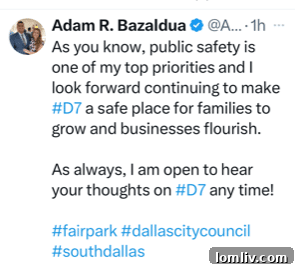
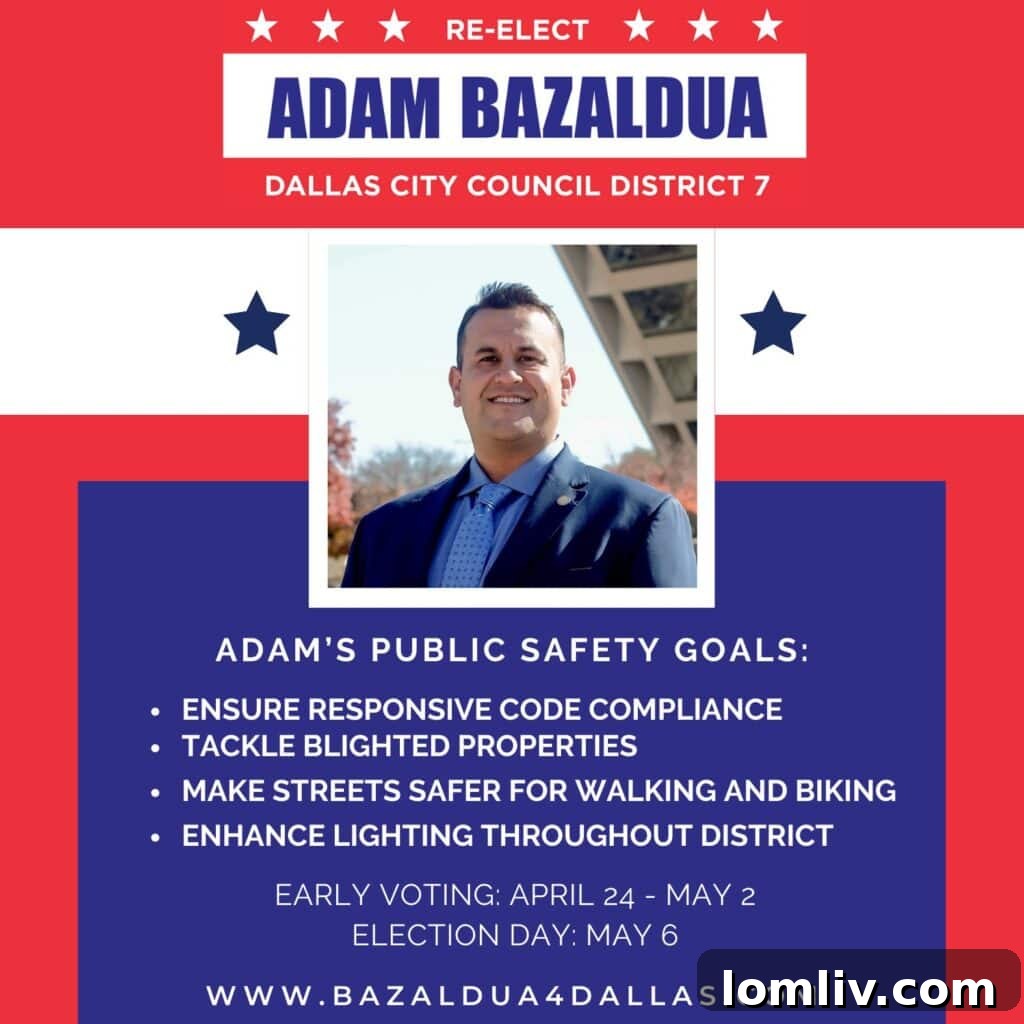
The incumbent, Councilman Adam Bazaldua, who has represented District 7 since 2019, faces formidable challengers in Okema Thomas, Tracy Dotie Hill, and Marvin Crenshaw. Each candidate brings their unique vision for the district, with public safety undoubtedly featuring prominently in their platforms. Councilman Bazaldua, recognizing the community’s concerns, recently unveiled his public safety platform. His strategy centers on ensuring responsive code compliance, aggressively tackling blighted properties, making streets safer for pedestrians and cyclists, and significantly enhancing lighting throughout the district. “Public safety is one of my top priorities,” Bazaldua affirmed, expressing his commitment to “continuing to make D7 a safe place for families to grow and businesses to flourish.” Such comprehensive approaches aim to address both the symptoms and root causes of crime, fostering an environment conducive to well-being and economic prosperity.

DPA PAC’s Stance and Law Enforcement Challenges
Dallas Police Sgt. Mike Mata, who chairs the Dallas Police Association Political Action Committee, clarified the PAC’s decision to hold back on endorsements in races with multiple candidates. He explained that this tactical wait-and-see approach is common when runoffs are anticipated, allowing the PAC to assess the final contenders for the June 10 runoff election. However, Mata also candidly pointed out that Councilman Bazaldua has actively “gone against our police budget” in the past, a significant factor for an organization dedicated to supporting law enforcement.
Mata articulated the core criteria the DPA PAC uses to evaluate candidates: “The No. 1 thing we’re looking at is if they’re educated in the position they’re trying to fill.” He lamented instances where candidates enter the race without a comprehensive understanding of a city council member’s role, the intricacies of city government, or the city budget. The PAC’s rigorous vetting process includes inquiries into candidates’ policy proposals, their objectives, strategies for achieving those goals, their understanding of the city budget, and crucially, their perspectives on public safety. This detailed approach ensures that endorsed candidates possess not only the intent but also the knowledge to effectively serve their constituents and support the city’s law enforcement.
Beyond abstract policy, discussions with candidates often extend to tangible issues directly impacting law enforcement, such as hiring practices, officer retention, competitive pay, comprehensive benefits, and the stability of the police pension fund. Mata highlighted a common political rhetoric: “Everybody who’s running for public office says their No. 1 thing is public safety. Then when they get into office, that’s where they try to take money from.” He emphasized the importance of accountability, stating, “That’s why I go to every single council meeting. I call them out on certain things.”
The health of the Dallas Police and Fire Pension Fund represents a significant hurdle for the Dallas Police Department’s ability to recruit and retain officers. In November, public servants were informed of a staggering $3 billion unfunded liability within the pension fund, which covers retirement, disability, and other essential benefits. This financial strain directly impedes the department’s capacity to attract top talent and maintain its workforce.

Addressing these critical issues, Mata underscored the immediate priorities: “Obviously, we have a serious pension problem. Outside of the pension, I think the No. 1 concern needs to be our hiring. We’re already over 600 officers short. We’re still not beating attrition.” He provided stark figures, noting that last year, the department lost over 225 officers while only managing to hire just over 170, further exacerbating the personnel deficit. A third crucial point raised by Mata is the retention of Chief Eddie Garcia. Appointed in 2021, Chief Garcia has garnered significant acclaim, leading the city to lower its violent crime rate for two consecutive years. This success has made him a desirable leader for other major U.S. cities. “Lastly, we have got to keep this chief in the city of Dallas. This council has to be in support of this department, this police chief, and the exceptional job that he and his command staff are doing,” Mata stressed, emphasizing the need for stable and supportive leadership.
It’s worth noting that the Dallas Fire Fighters Association has also refrained from endorsing a candidate in the District 7 race, signaling a broader cautious approach by public safety organizations in the current political climate.
Fair Park First: A Jewel in District 7’s Crown
The crown jewel of District 7, and a symbol of its potential, is the historic Fair Park. This sprawling urban park is not just the cherished home of the iconic Texas State Fair and the legendary Cotton Bowl Stadium, but it is also poised for a monumental transformation. Voters approved an increase in hotel occupancy taxes in November, which will funnel a staggering $300 million in upgrades into the park. This substantial investment is expected to breathe new life into Fair Park, enhancing its facilities, green spaces, and overall appeal, turning it into an even more vibrant community asset and regional attraction.


Jason Brown, a Fair Park First board member and a Realtor residing in South Dallas, has been a vocal advocate for these improvements. Ahead of the Proposition A vote, he shared with daltxrealestate.com his belief that the park upgrades would significantly contribute to instilling pride in the surrounding neighborhoods. “People get excited about what’s happening with Fair Park,” Brown noted. “It gives people in the area a sense of hope. It reaffirms that Fair Park is a great area.” He further elaborated on the broader impact, stating, “The overall perspective of positive growth and revitalization in the park gives people some pride in Fair Park. It reassures buyers and stakeholders.” This sentiment highlights the profound psychological and economic benefits that major urban revitalization projects can bring to a community.
In a recent follow-up, Brown reiterated the residents’ pride in the reported crime reduction and emphasized an “all-hands-on-deck approach to keep the momentum going.” He commended the city’s commitment, stating, “We credit the City with putting dollars toward public safety efforts in the South Dallas/Fair Park area and beyond.” This proactive engagement from both the community and the city government underscores a shared vision for a safer, more prosperous District 7.
Community Profile and Future Outlook
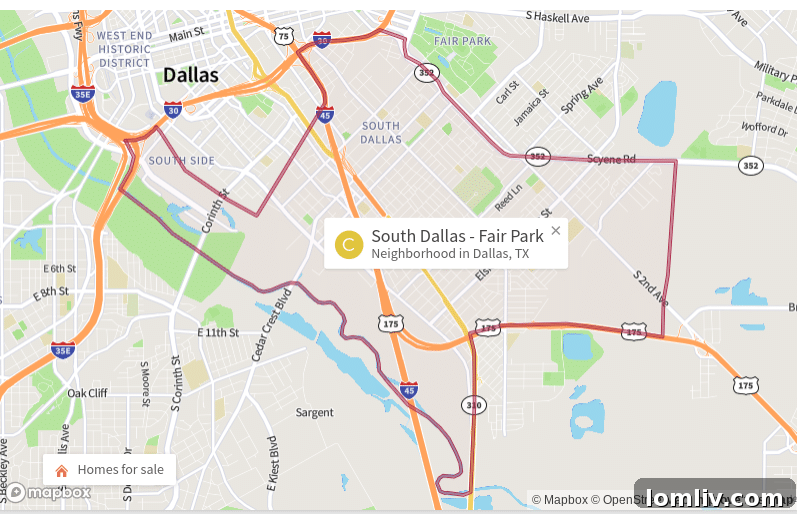
A closer look at the demographics and lifestyle in the South Dallas-Fair Park area, as compiled by the Niche data collection website, paints a diverse picture. The area receives an impressive A rating for diversity and nightlife, and a solid B rating for cost of living and outdoor activities. However, it earns a C rating in critical areas like crime and safety, and public schools, indicating significant room for improvement. The housing market in the area also presents a unique profile, with most residents opting to rent their homes. The median home value in South Dallas-Fair Park stands at $148,285, which is notably well below the national average of $244,900, suggesting opportunities for affordable living but also potential for property value growth as revitalization efforts take hold.
Addressing the broader urban challenges, Councilman Bazaldua has been a vocal proponent of increasing housing options across the city. During a March 1 Dallas City Council meeting, he argued that existing demand necessitates doubling the local housing capacity. “If we’re not doubling our capacity every year and investing in addressing that issue in an aggressive manner, then we are not as serious as we are saying we are on this piece of paper in addressing displacement,” Bazaldua asserted, referencing Dallas Housing Policy 2033, a strategic document slated for adoption on April 12. This policy aims to guide the city’s housing development for the next decade, with a focus on affordability, accessibility, and preventing displacement.
Despite the positive momentum, residents in the Fair Park area have expressed ongoing concerns about quality-of-life issues like loitering and panhandling, common challenges in many metropolitan centers. Jason Brown, however, believes that the planned investment in Fair Park will naturally lead to safer neighborhoods. “I believe this will happen organically,” Brown stated. “Crime tends to occur in areas where criminals don’t think officers are looking. As Fair Park is further activated, it’ll bring more eyes and ears into the neighborhood, which would deter some of the crime occurring.” This concept, often referred to as “eyes on the street,” suggests that increased public activity and engagement can inherently improve safety. He also highlighted that “Additionally, the city has already begun to enhance public safety efforts.”
These city-led efforts include Mayor Eric Johnson’s Safe Communities Initiative Fund, which has supported the installation of energy-efficient LED lighting and various beautification projects across the city, directly impacting areas like District 7. Brown further elaborated on the holistic nature of these interventions: “Efforts are ongoing for quality-of-life measures including blight remediation and the expansion of social and emotional learning programs in public schools.” These comprehensive strategies acknowledge that true public safety extends beyond law enforcement, encompassing urban planning, community development, and educational initiatives.
Editor’s Note: This article is the fourth installment in our ongoing series examining neighborhood crime trends across Dallas City Council districts. We invite residents to share their experiences. If you have been a victim of a crime in a Dallas neighborhood or shopping center, please reach out to us at [email protected]. Your insights are invaluable as we continue to shed light on these critical issues.