In a landmark move designed to tackle pressing affordable housing challenges and foster equitable urban growth, consultants have unveiled a strategic plan to focus significant investment in three pivotal areas of Southern Dallas. This initiative, a core component of the ambitious Dallas Housing Policy 2033, follows an extensive period of community engagement and in-depth analysis, aiming to redefine housing accessibility and neighborhood revitalization across the city’s southern sector.
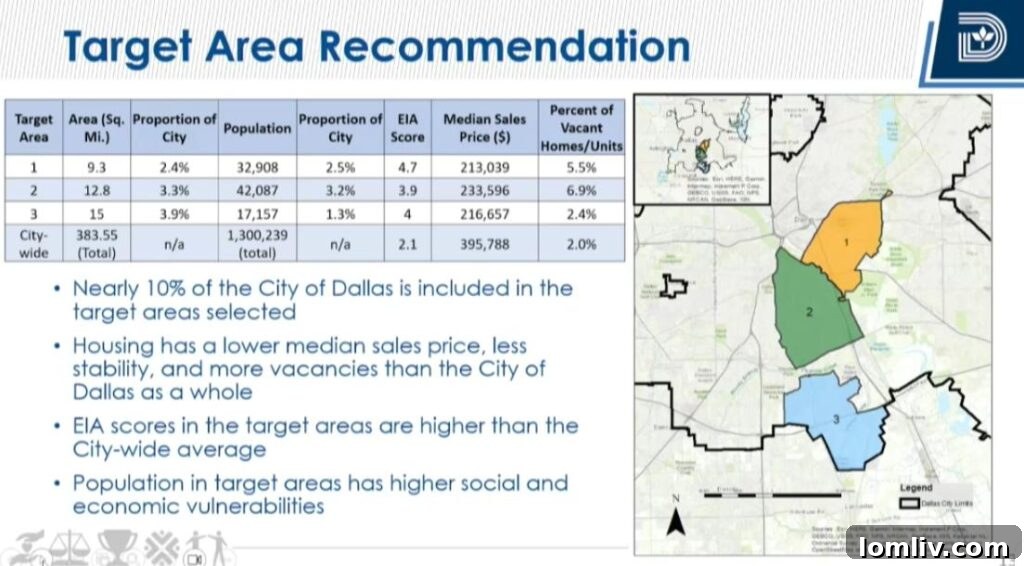
Dionne Roberts, President and CEO of TDA Consulting Group, the firm spearheading this monumental effort, highlighted the strategic importance of these chosen regions. Comprising approximately 10 percent of Dallas’s total land area, these target zones are not arbitrary selections but rather carefully identified hubs where various public department investments can be synergistically combined with private market capital. “The target areas are intended to pinpoint locations where investment from city departments can be effectively overlaid with crucial private market contributions,” Roberts explained. “This creates a dual opportunity for both the preservation of existing affordable housing and the production of new units, addressing diverse housing needs. These are areas marked by significant needs and opportunities, yet also profound disparities that demand our focused attention.”
The strategic framework for the Dallas Housing Policy 2033 identifies three distinct target areas, each presenting unique opportunities and challenges for revitalization and affordable housing initiatives:
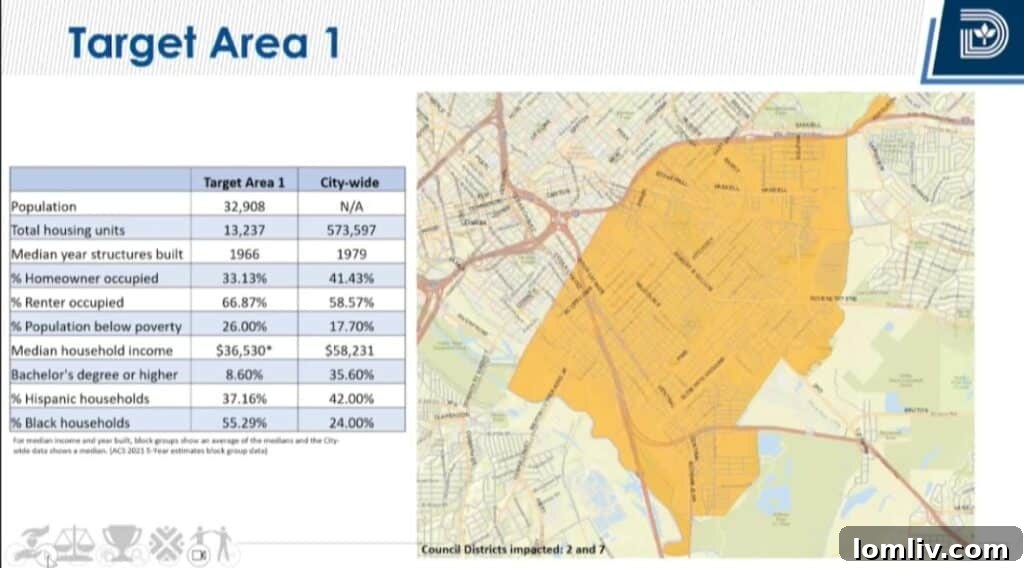
- Target Area One: This region encompasses critical portions of Council Districts 2 and 7, strategically located near the iconic Fair Park. This area is slated for significant investment in both housing production and preservation, leveraging its cultural importance and existing community infrastructure.
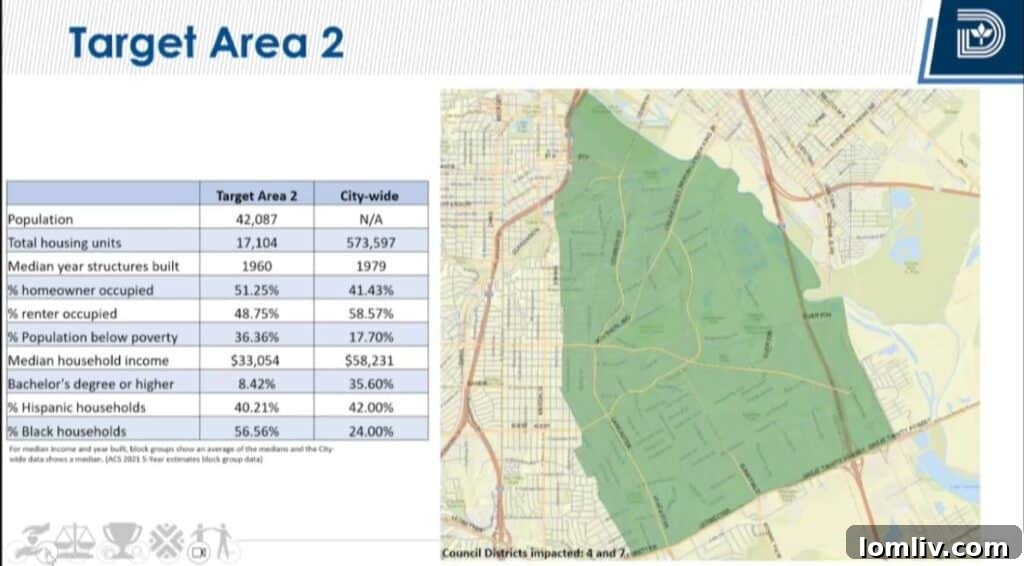
- Target Area Two: Situated within Council Districts 4 and 7, this area is geographically defined at its northern boundary by the Trinity River. This sector is characterized by specific demographic and housing characteristics that make it ripe for targeted intervention.
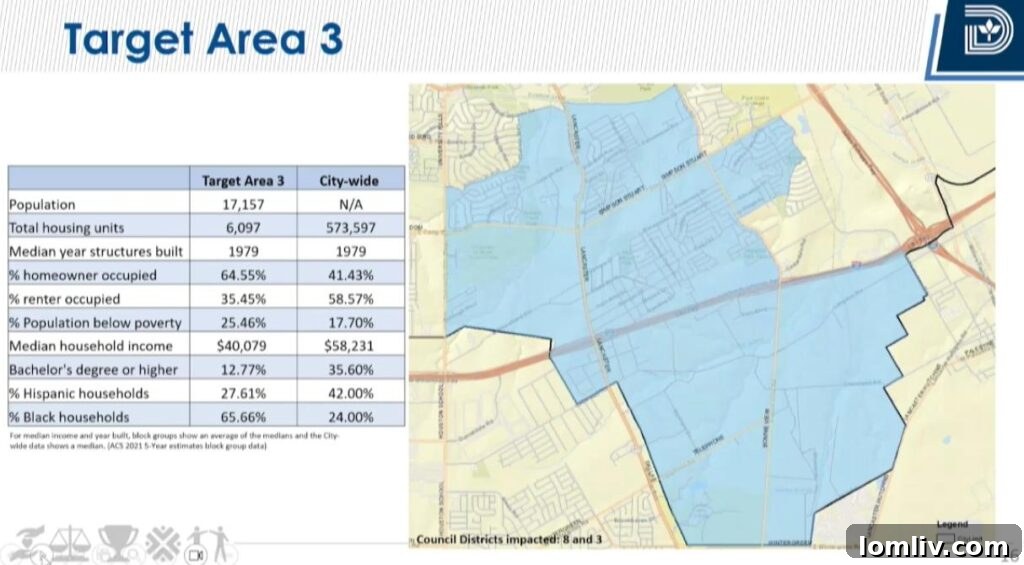
- Target Area Three: Covering parts of Council Districts 8 and 3, this area notably includes the University of North Texas at Dallas. The presence of an educational institution offers unique possibilities for developing mixed-income communities and supporting student and faculty housing needs, alongside broader community revitalization.
Strategic Selection of Key Housing Investment Zones in Southern Dallas
Delving deeper into the rationale, Roberts elaborated on the specific attributes that make Target Area One particularly compelling. “This area around Fair Park and its adjacent neighborhoods presents immense opportunities for both the development of new housing units and the crucial preservation of existing affordable homes,” she stated. The demographic profile of this region further underscores its importance. “You’ll observe that the demographic breakdown of households here is markedly different from the overall city average,” Roberts noted. “There’s a significantly lower percentage of owner-occupied homes, a higher proportion of rental units, and unfortunately, a much greater percentage of residents living below the poverty line. These indicators signal a clear need for concentrated housing support and economic empowerment.”
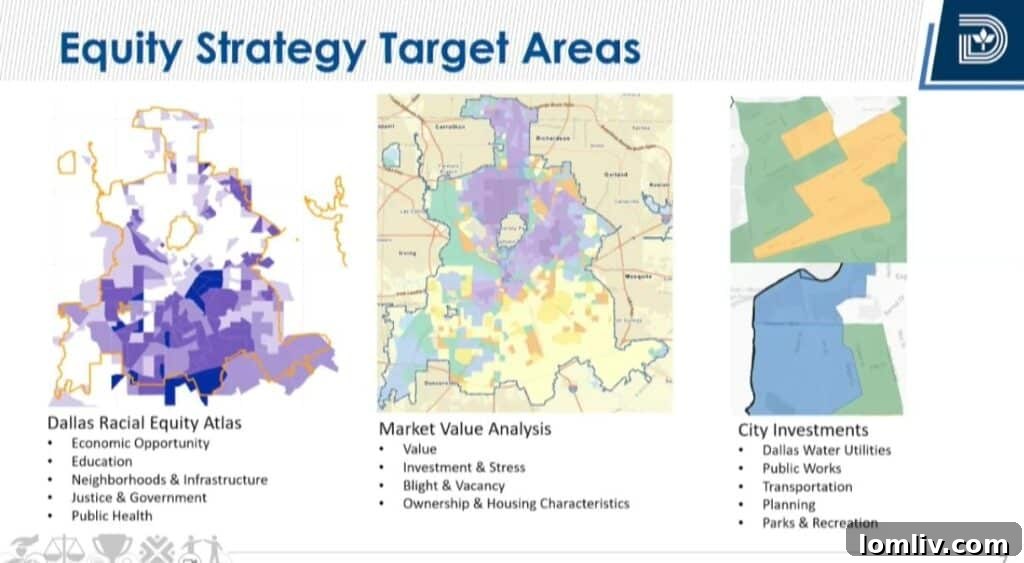
Thor Erickson, Assistant Director of Housing and Neighborhood Revitalization, underscored the broader impact of such focused investments. He explained that neighborhoods bordering these target areas, such as Elm Thicket/Northpark, could also experience positive spillover effects. “Any time you invest in one neighborhood, there are ‘edge effects’ – a ripple outward. Conversely, when investment occurs around a neighborhood, it can create market pressure,” Erickson elucidated. He cited the Market Value Analysis, which has shown rapid changes in average home sales prices in these adjacent areas. “With new development or repurposed properties, we anticipate market pressures that will begin to filter out. The market naturally responds when focused investment and attention are directed towards an area.”
However, Erickson also acknowledged the inherent complexities and potential downsides of such market dynamics, particularly the risks of gentrification and displacement. The Dallas Housing Policy 2033 aims to implement safeguards and strategies to mitigate these challenges, ensuring that revitalization benefits current residents rather than displacing them.
Target Area Two, characterized by a substantial vacancy rate nearing 7 percent, presents a different set of urgent needs. Roberts highlighted the stark reality of poverty in this region, noting that “the poverty rate here is extreme, more than double the city’s average.” This profound disparity necessitates a multi-faceted approach, combining housing solutions with broader economic development initiatives to create sustainable change.
Similarly, Target Area Three has been identified for its significant potential in both housing production and preservation. Roberts pointed out a key distinction for this area: “These homes are generally not among the oldest in the city, unlike what you might find in Target Area Two, for example.” This difference in housing stock suggests varied strategies for renovation, new construction, and community enhancement.
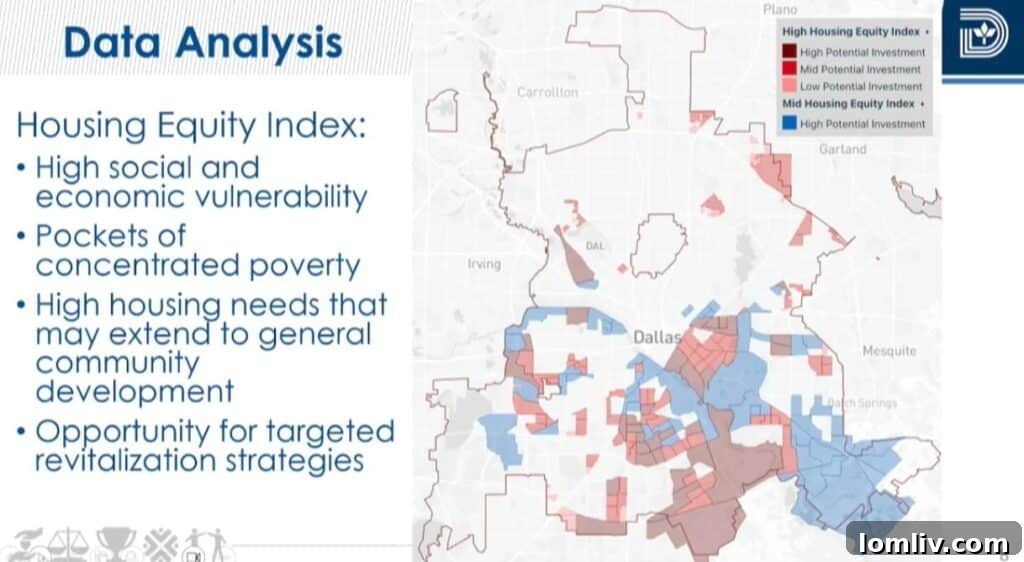
The rigorous selection process for these target areas was rooted in comprehensive data analysis and extensive community feedback. Key indicators examined included equity metrics, distinct community characteristics, existing housing characteristics, historical disparities, and current market conditions. This holistic approach ensures that investments are directed where they can have the most profound and equitable impact. City staff and TDA officials also actively explored potential partnerships with the private sector, recognizing that public-private collaboration is essential for maximizing resources and achieving sustainable outcomes.
“It’s crucial to understand that these target areas are not intended to eliminate citywide funding or detract from a citywide focus on other important initiatives,” Roberts emphasized. “Rather, these areas will serve as a strategic framework. They will be utilized for identifying specific projects and potentially awarding bonus points on future funding applications, thereby incentivizing and encouraging deeper investment in these designated zones. This strategy is also designed to help the Housing Department effectively align its resources with other public and private investments already flowing into these neighborhoods, creating a more cohesive and impactful approach to urban development.”
Targeting Affordable Housing Needs: Southern Dallas at the Forefront
Further bolstering the potential for robust investment, Roberts mentioned that the U.S. Department of Housing and Urban Development (HUD) offers grant funding through its Neighborhood Revitalization Strategy Areas program. This program could provide significant financial opportunities and technical assistance to support the ambitious goals set for Dallas’s newly designated target areas, further accelerating their transformation.
During the committee meeting, the proposed approach sparked a lively discussion among council members. District 13 Councilwoman Gay Donnell Willis expressed her reservations regarding the presentation of only three target areas in a “take it or leave it” manner. “I might have preferred to see five areas to gain a more comprehensive understanding of the data’s depth,” Willis suggested. She also acknowledged a crucial point raised about the geographical concentration: “Another valid point has been brought up concerning the geography. We know that our Economic Development Policy goals are heavily focused on Southern Dallas. This policy directly addresses that imperative, which is certainly a positive aspect.”
Councilwoman Willis also urged for a more integrated approach, suggesting that public safety issues should be a critical consideration when planning focused investments in specific areas. “I believe we cannot afford to overlook that crucial dimension,” she asserted, emphasizing the interconnectedness of housing, economic development, and community safety.
District 1 Councilman Chad West voiced significant concern over the perceived slow pace of the Dallas Housing Policy update. “We’ve been working on this housing policy – which we approved almost a year ago – and today we’re really only discussing one pillar out of seven,” West stated, highlighting his frustration. “At this rate, if we don’t dramatically accelerate our efforts, it’s going to take years to fully roll this out. Please, prove me wrong, and demonstrate that we are indeed moving forward with greater aggression and urgency.”
Councilman West also questioned the exclusive concentration of target areas in the southern part of the city. “We are undeniably placing a significant number of our eggs in the Southern Dallas basket, which we’ve advocated for years due to the dire need for infrastructure there,” West acknowledged. “However, I believe it’s imperative that we explicitly acknowledge this strategic choice and its implications.”
Erickson responded by clarifying the city’s strategy, affirming that while the entire city undoubtedly needs affordable housing, the target area approach offers a pragmatic and highly effective method for concentrating resources. This focused strategy allows for enhanced collaboration with other city departments, which is crucial for achieving more progressive and impactful housing activity. “When it comes to areas in town where we have the resources to deploy, particularly where we can preserve existing housing to ensure it remains affordable and allows people to stay in their homes, that’s precisely where we need to identify areas with a higher current rate of homeownership,” Erickson explained.
He further elaborated on how new housing opportunities are being addressed: “When we have opportunities for new construction, we typically see those scattered throughout the city, utilizing a variety of different resources. Sometimes this involves an acquisition and rehabilitation project; other times, it’s entirely new construction. The target areas allow us to amplify specific types of interventions where they are most critically needed.”
District 3 Councilman Zarin Gracey acknowledged the concerns regarding the exclusive focus on the southern sector but ultimately expressed his strong support for the recommendations. “Southern Dallas has faced decades of neglect, and the true extent of this impact is often hard to quantify unless you’ve lived through it,” Gracey stated, emphasizing the historical context and the profound need for these targeted interventions. His remarks underscored a shared sentiment among many proponents of the policy: that while citywide affordable housing is a goal, rectifying historical imbalances and addressing concentrated disadvantage in Southern Dallas is a moral and strategic imperative.
This comprehensive approach, combining rigorous analysis, strategic targeting, and collaborative efforts, sets the stage for a transformative era in Dallas’s housing landscape. The Dallas Housing Policy 2033, with its focus on these three vital Southern Dallas target areas, aims not just to build houses but to build stronger, more equitable communities for all its residents, ensuring that affordable housing solutions are at the forefront of the city’s urban development agenda for years to come.