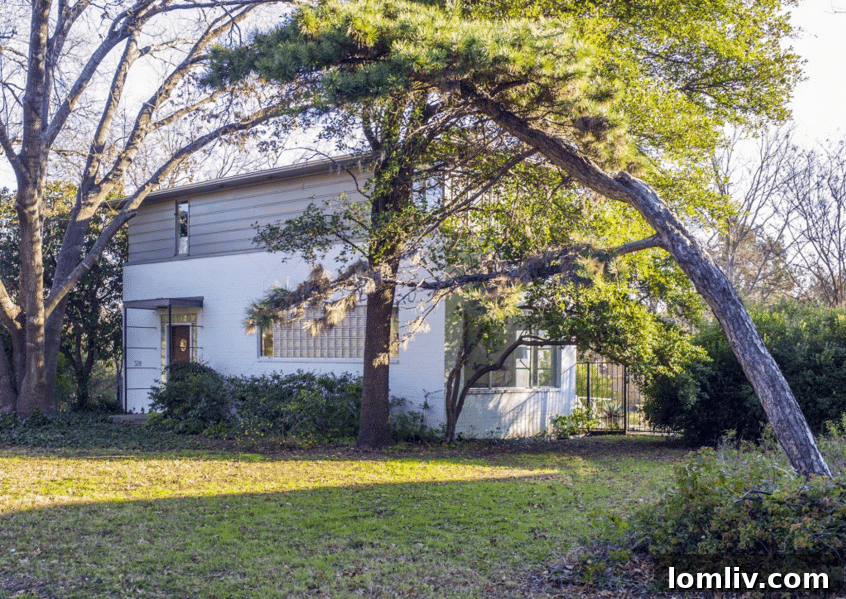
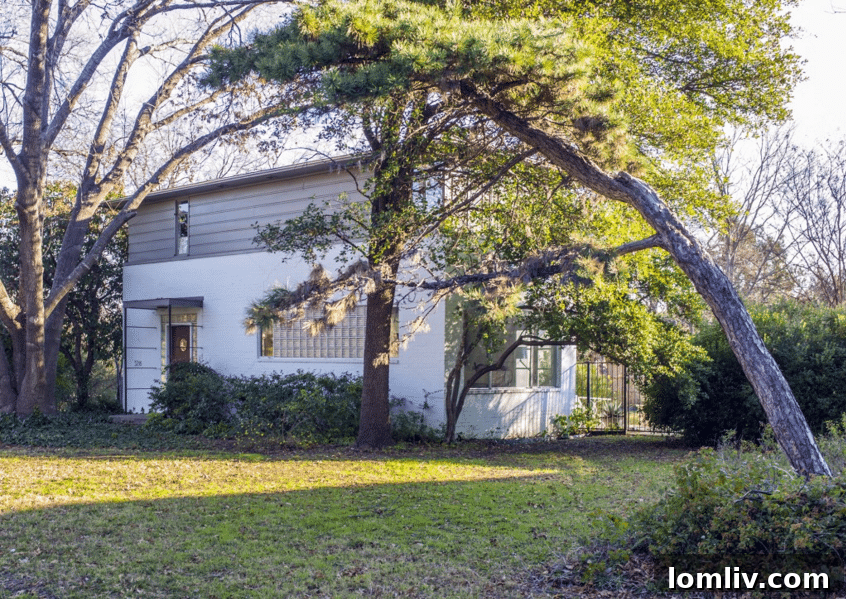
Discover a Dallas Gem: Howard Meyer’s Pioneering Modernist Home at 3216 Jacotte Circle
Ten years ago, a profound connection was forged when Catherine Horsey, a steadfast advocate for architectural heritage, discovered a house that would not only capture her heart but also embody her vision for a sustainable future. This is the compelling story of 3216 Jacotte Circle, a property not merely defined by its address but by its groundbreaking history and a meticulously executed rehabilitation that blends the past with innovative green building practices.

Catherine Horsey: A Visionary in Dallas Preservation and Sustainable Development
Catherine Horsey brings a wealth of experience and a deep commitment to the preservation landscape of Dallas. After dedicating seven impactful years as the executive director of Preservation Dallas, where she championed the protection and revitalization of the city’s historic structures, she returned to contribute to the innovative sustainable neighborhood project, Urban Reserve. It was during this pivotal time that she encountered an article detailing the distinctive home at 3216 Jacotte Circle. For Horsey, it was love at first sight, instantly recognizing its unparalleled historical value and immense potential to showcase how thoughtful rehabilitation can honor the past while embracing the future.
The Enduring Legacy of Howard Meyer: Dallas’s Modernist Pioneer
The significance of this Dallas residence cannot be overstated, primarily due to its pedigree. Built in 1937, it proudly holds the distinction of being Howard Meyer’s very first modernist house. Meyer stands as one of Dallas’s foundational and most celebrated modern architects, whose visionary designs profoundly shaped the architectural fabric of the region. His prolific career includes designing landmarks such as Temple Emanu-El, widely regarded as one of Texas’s most distinguished works of contemporary architecture from the 1950s. He also conceived the elegant Lipshy-Clark House at 5381 Nakoma Drive, an exemplary illustration of International Modernist style in Texas, and 3525 Turtle Creek Boulevard, an apartment building often hailed as the most fully realized and successful modernist residential structure not just in Texas, but possibly across America. The Jacotte House represents the very inception of this illustrious career, a critical piece of his architectural journey and a precursor to his later iconic works.
A Pioneering Vision: Howard Meyer’s Modernist Debut in Dallas
Before embarking on these grander projects, the Jacotte House served as Howard Meyer’s intimate laboratory for nascent modernist principles. In an insightful interview conducted many years later, Meyer himself reflected on its origins: “My first client was Eugene Sanger, recently married and somewhat adventurous,” Meyer recounted. “So I did a modern house for them on Jacotte Circle, with brick up to the second-floor windows, a low-pitched roof, and a very open plan.” This description perfectly encapsulates the pioneering spirit of the home, which boldly broke away from the traditional architectural norms prevalent in Dallas during that era. It introduced the city to a new aesthetic of clean lines, highly functional spaces, and an innovative emphasis on natural light – characteristics that would come to define Meyer’s subsequent masterpieces and significantly influence modern residential design throughout Texas.
Seamlessly Blending Past and Future: Historic Preservation Meets Green Building
For Catherine Horsey, the rehabilitation of the Jacotte House was more than just a renovation project; it was a profound opportunity to demonstrate how historic preservation and cutting-edge green building practices could not only coexist but thrive together in perfect synergy. She embarked on a comprehensive year-long project, meticulously updating every facet of the house while respecting its profound architectural integrity. This endeavor was a testament to her steadfast belief that true sustainability isn’t solely about new construction, but also about intelligently renewing and optimizing existing structures, especially those endowed with significant historical and architectural value.
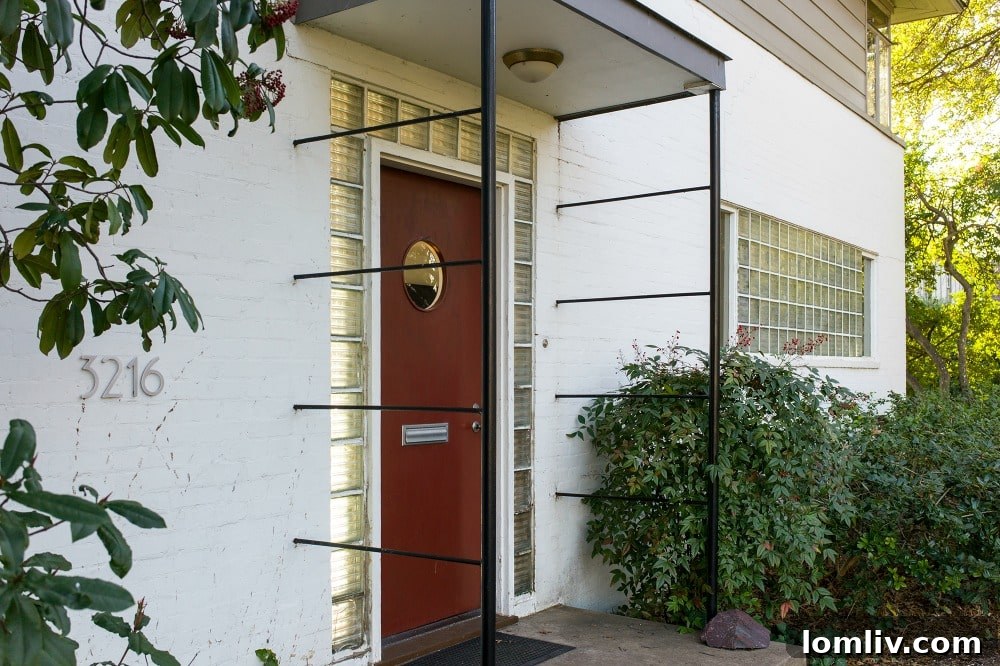
Horsey’s restoration efforts were guided by an unwavering dedication to authenticity and efficiency. She meticulously consulted the home’s original blueprints, pored over photographs from a seminal 1940 Architectural Record article, and engaged in invaluable conversations with Eugene K. Sanger, Sr., the original homeowner for whom Meyer had designed the house. This diligent historical research allowed her to precisely identify and restore its character-defining elements – those unique features that make the house unmistakably a Howard Meyer original – while simultaneously adapting it for contemporary, resource-efficient living. From strategic insulation upgrades to the integration of modern, energy-efficient HVAC systems and sustainable materials, every improvement was carefully considered to reduce the home’s environmental footprint without compromising its historic charm, structural integrity, or the architect’s original visionary intent.
A Masterpiece Designed for the Texas Climate
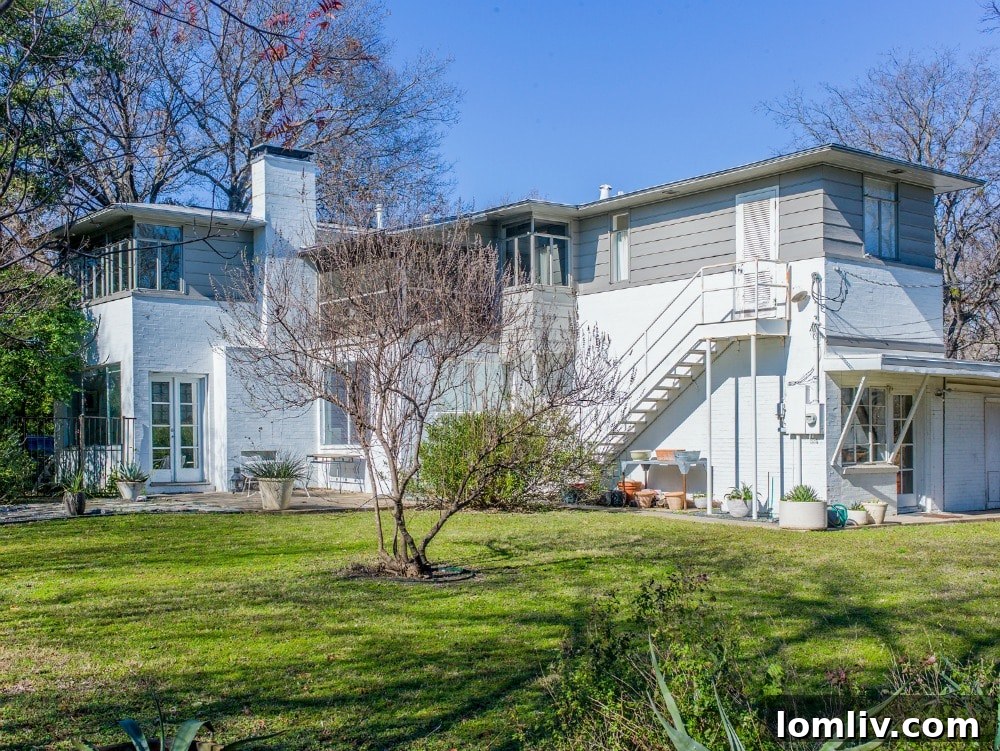
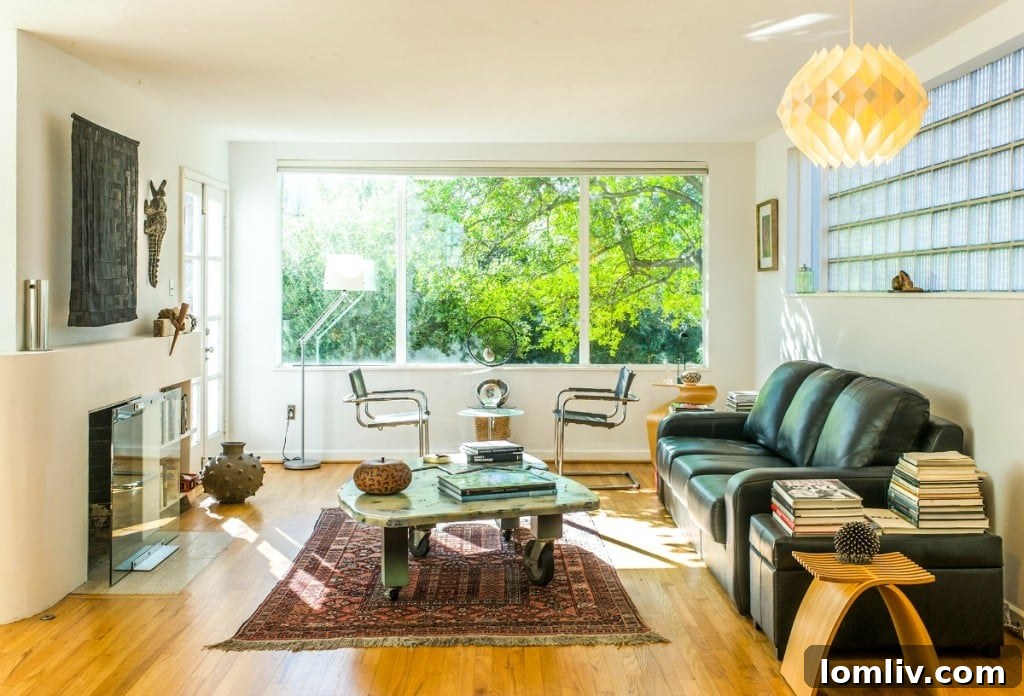
Living in the house has only deepened Horsey’s profound admiration for Meyer’s architectural genius. “The longer I have lived in this house, the more I have loved it—that must be one of the definitions of good architecture,” Horsey mused, reflecting on her decade-long stewardship. “What I love about the house is the light—so many large windows that open out to the nearly 17,000-square-foot yard, and the very low utility costs. Howard Meyer really knew what he was doing when he designed this house for the Texas climate.” This sentiment eloquently underscores a core principle of modernist design: functionality tailored to its specific environment. Meyer’s design ingeniously integrated passive cooling and optimal natural lighting strategies, creating a dwelling that remains remarkably comfortable and cost-effective even in the challenging Texas heat, a true testament to sustainable design concepts long before the term became widespread.
Architectural Influences: From Le Corbusier to Lakewood Living
This bellwether midcentury modern home, gracefully nestled on a generous corner lot on a peaceful street in the highly desirable Lakewood neighborhood, visibly reflects the profound influences Howard Meyer absorbed from the renowned Swiss-French architect Le Corbusier. Meyer’s extensive studies and deep admiration for Le Corbusier’s innovative “five points of architecture” – pilotis, the free plan, the free facade, horizontal windows, and roof gardens – are subtly yet powerfully integrated into the Jacotte House. While not a direct replication, elements like the flowing open plan, the strategic use of brick, and the emphasis on abundant natural light streaming through numerous large windows showcase a clear understanding and sophisticated adaptation of these international modernist principles for a specific Texas context. It’s a compelling and sophisticated blend that makes the Jacotte House a significant piece of Dallas’s architectural narrative and a vibrant, living example of how global modernism translated into a locally relevant and enduring design.
A Thoughtfully Designed Interior and Expansive, Private Exterior
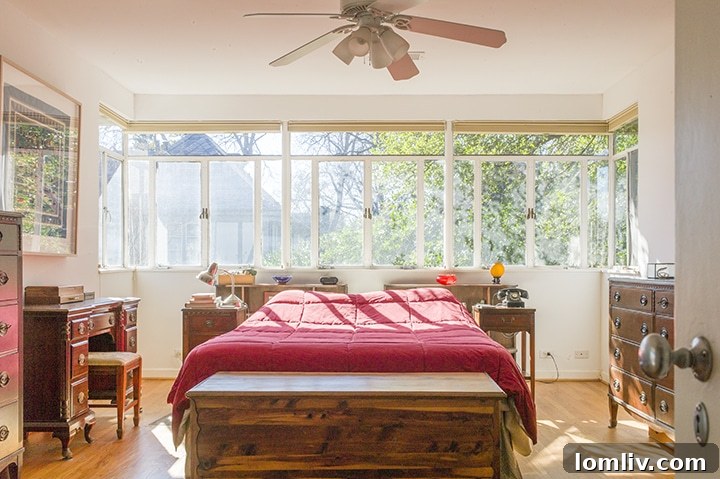
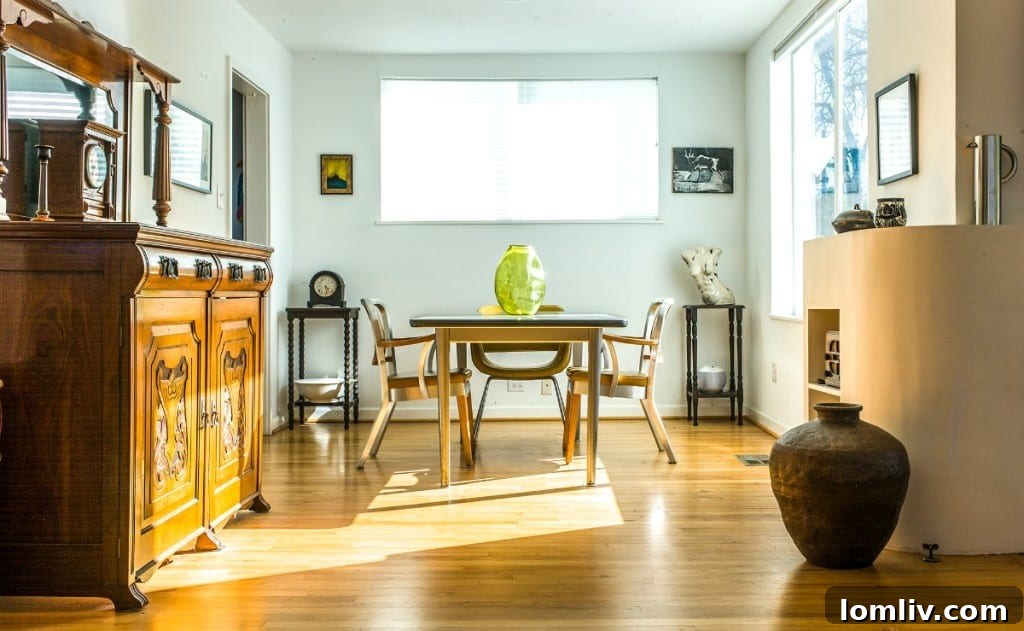
Spanning 2,034 square feet, this exceptional residence features three thoughtfully appointed bedrooms and four bathrooms, offering a comfortable yet elegantly refined living experience. The interior layout is a testament to Meyer’s modernist vision, emphasizing seamless flow, abundant natural light, and a deep connection to the picturesque outdoors.
On the first floor, residents are greeted by inviting living and dining rooms, perfectly proportioned for both intimate family gatherings and larger social entertaining. A modern, fully equipped kitchen serves as the vibrant heart of the home, complemented by two conveniently placed half baths and a practical utility room. This utility space was cleverly created by converting the original one-car garage, a resourceful adaptation that not only added valuable interior square footage but also speaks to the home’s inherent adaptability and efficient use of space.
Ascending to the second floor reveals the private quarters, comprising two spacious bedrooms, each accompanied by a full, well-appointed bathroom, ensuring optimal comfort and privacy for residents and guests alike. A cozy family room offers an additional communal space, ideal for relaxation, media enjoyment, or a quiet retreat. One of the most enchanting and beloved features of the upper level is the serene screened porch, accessible through elegant French doors located off both the master bedroom and an adjacent den. This porch provides a tranquil retreat, seamlessly blending indoor comfort with outdoor serenity, offering a perfect spot to savor the gentle Texas breeze and the sounds of nature without the intrusion of elements.
Beyond its meticulously crafted walls, the home sits on an impressive, almost 17,000-square-foot corner lot. This expansive exterior space contributes significantly to a secluded and private feel, a rare and highly sought-after commodity in an urban setting like Dallas. The generous plot also offers immense potential for future owners, whether they envision elaborate landscaping projects, the addition of extensive outdoor living spaces such as a pool or garden, or even further structural additions, all while preserving the home’s historic footprint and surrounding natural beauty. It’s a true urban oasis.
A Stewardship Sale: Protecting an Architectural Masterpiece for Future Generations
The current offering of this Dallas treasure is as unique as the home itself: Catherine Horsey is selling it herself for $739,000. Her decision to manage the sale personally stems from a deep-seated commitment to the house’s profound legacy and its future. “It’s for sale by owner right now, because I’m going to do my best to keep it from falling into the wrong hands,” she passionately states. This is not just a typical real estate transaction; it’s a dedicated quest for the next thoughtful steward, someone who will genuinely appreciate its historical significance and continue its journey of sustainable, respectful living for decades to come.
This unwavering commitment is rooted in her initial purchase experience. As Horsey candidly shared with The Advocate Lakewood/East Dallas back in 2005, many interested buyers at the time were contemplating demolition, failing to see beyond the initial challenges. The house, despite its inherent architectural brilliance, presented practical issues, including a lack of central heating or air conditioning and what was effectively a one-and-a-half-bedroom configuration prior to her extensive renovations. “There were issues with the house—no central heat or air, it really has only one and a half bedrooms—I could see why you wouldn’t want to buy this house if you have more than two people,” she acknowledged. However, her resolve was absolute: “I don’t know how long I will live here…but after all the money I’m putting down for this house, I’ll be damned if the person that comes after me demolishes it.” Her substantial investment, both financial and emotional, underscores the profound value she places on this unique piece of Dallas’s modern architectural history. The decision for a “sale by owner” ensures a careful and personalized vetting process, aiming to transfer ownership to an individual or family who shares her vision for preserving and cherishing this irreplaceable home, securing its future as a celebrated landmark.
An Unparalleled Opportunity: Own a Piece of Dallas Modernist History
The Jacotte House at 3216 Jacotte Circle is far more than just a home; it represents a meticulously preserved and thoughtfully updated piece of Dallas’s invaluable architectural heritage. It stands as the very genesis of modernism in the city, an early and profoundly influential work by one of its most celebrated architects, Howard Meyer. Under Catherine Horsey’s dedicated stewardship, this house has not only retained its essential historical integrity but has also been significantly enhanced for modern, sustainable living, proving unequivocally that historic preservation and green building practices are not mutually exclusive, but intrinsically linked and mutually beneficial.
This is a rare and truly exceptional opportunity for discerning buyers to acquire a home that offers both significant historical value and contemporary comforts. It’s an astute investment in art, history, and a sustainable lifestyle, all situated in one of Dallas’s most cherished and desirable neighborhoods, Lakewood. For those who deeply appreciate visionary design, the enduring legacy of a master architect, and a home with a soul and a story, 3216 Jacotte Circle stands as an unmatched offering. We invite you to discover the timeless appeal and enduring quality of Howard Meyer’s first modernist masterpiece, lovingly brought into the 21st century by a true preservationist.
To delve deeper into the fascinating story and unique features of the Jacotte House, and to explore this exceptional for-sale-by-owner opportunity, please click here. Don’t miss the chance to become the next steward of this remarkable piece of Dallas history.