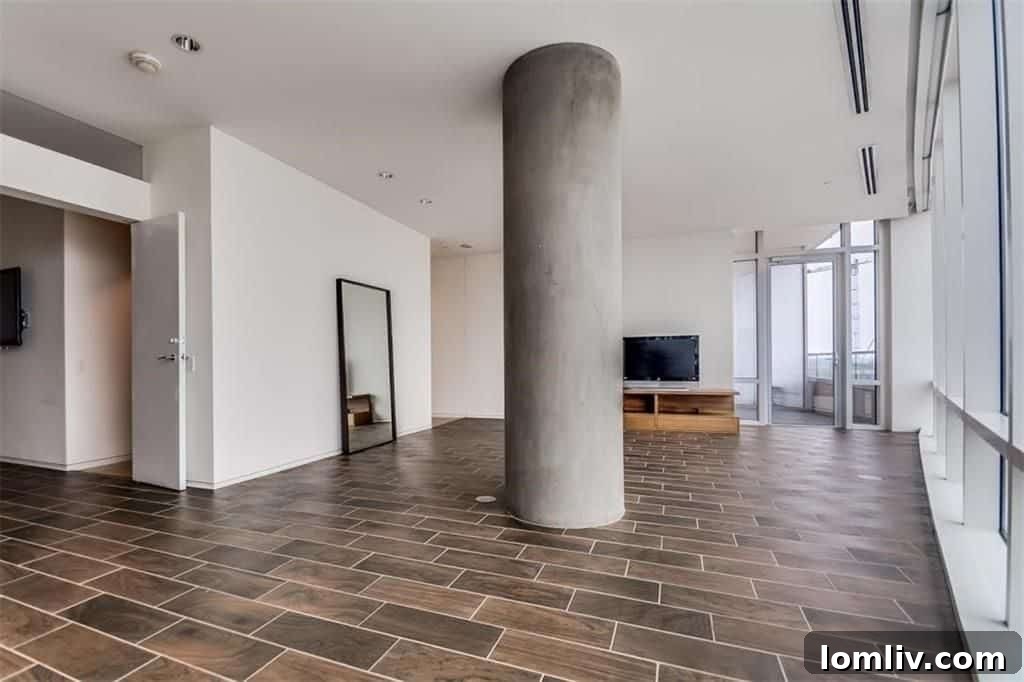
The Unseen Flaws: Why Modern High-Rise Floor Plans Often Fall Short of Timeless Design
Back in 2016, I singled out 3525 Turtle Creek for having what I considered the pinnacle of high-rise floor plans. I praised their inherent quality and their remarkable adaptability, allowing owners to update spaces as needs and trends evolved. This iconic Dallas building, erected in 1957, holds the distinction of being the city’s first residential high-rise. Ever since that observation, a persistent question has lingered in my mind: Why do older buildings generally boast superior floor plans? Logic would suggest that with decades of experience and technological advancements, contemporary designs should surpass their predecessors. Yet, this often isn’t the case. My inquiries with several architects have led me to a compelling theory that explains this perplexing trend in modern high-rise architecture.
The Disconnect in Design: Too Many Cooks Spoil the Blueprint
My primary theory points to a fundamental shift in the architectural design process, which I’ve dubbed “too many cooks in the kitchen.” In the early days of high-rise construction, particularly mid-20th century, a single visionary architect typically oversaw both the exterior facade and the intricate interior layouts. This integrated approach meant one cohesive mind shaped the entire building, ensuring that external aesthetics harmonized perfectly with internal functionality. The design process was holistic, allowing for seamless integration of structural elements, natural light, and practical living spaces right from the initial concept.
Today, the landscape has changed dramatically. The municipal and neighborhood approval processes for new high-rise developments are notoriously protracted, complex, and incredibly expensive. These extensive regulatory hurdles often stretch over years, creating significant delays and increasing costs. Consequently, the architect initially responsible for the building’s striking exterior — its “skin” — is frequently detached from the team that ultimately finalizes the interior floor plans. By the time interior layouts are being detailed, often after numerous concessions, revisions, and budget adjustments, the original exterior architect may no longer be involved or available. This fragmentation leads to a critical disconnect: the exterior’s agreed-upon envelope constraints might not align with practical interior considerations, resulting in compromised or “wonky” floor plans.
I recall a recent high-rise project where the placement of windows was an egregious example of this disjointed design. Finding windows perfectly centered on walls was a rare luxury, limited to just a handful of floor plans. Instead, the majority featured window banks awkwardly clustered into one corner or another. In the most severe instances, double and even triple window banks were jarringly separated by wide structural or decorative “blank” spaces. This created internal layouts where, for example, a triple window would be followed by a six-foot blank wall, only to have a single window jammed into the opposite corner – the second part of a set appearing on the other side of a solid wall. The exterior’s intended balance often bears no resemblance to the interior’s unsettling asymmetry, creating a living experience that feels fundamentally unbalanced.
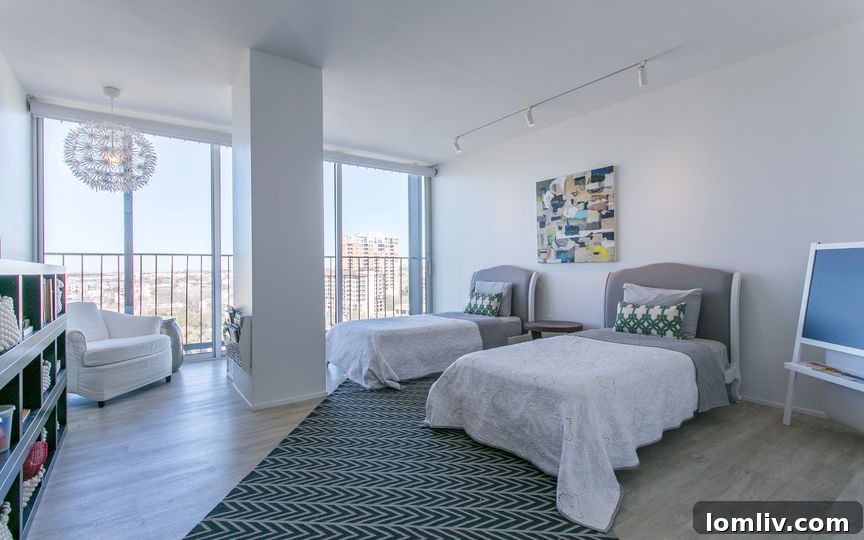
The Curse of the Cylinder: Structural Elements vs. Livable Space
Beyond the lack of design cohesiveness stemming from multi-party involvement, another significant factor contributing to less optimal floor plans is the modern assembly-line approach to construction. Historically, high-rises were more akin to handcrafted masterpieces. Older structures frequently incorporated custom-designed support structures and columns, often fabricated or assembled on-site to exact specifications. These purpose-built, immovable objects were meticulously sized and placed with profound consideration for their ultimate impact on the interior spaces and overall liveability.
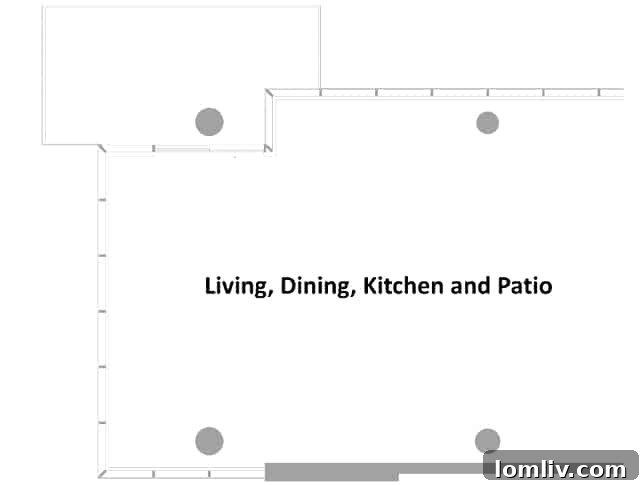
In stark contrast, many contemporary high-rises appear almost enslaved to the cylindrical column. These standardized concrete cylinders are invariably positioned a mere 18 inches from the glass curtain wall and, quite often, inexplicably in the very middle of a room or even a balcony. High-rises from the mid-to-late 20th century generally avoided this pervasive issue. Columns of that era were typically square or rectangular, placed strategically on the building’s exterior skin or further within the structure where they could be easily integrated into walls or architectural features, becoming virtually invisible.
Observing the partial floor plan displayed above, one can appreciate the aesthetic intention behind having glass corners, designed to maximize views and light. However, I contend that the functional trade-off is far too steep. Aside from the formidable challenge of arranging furniture around an intrusive column, the sheer number of patios with a structural column disrupting the space is baffling. Such an oversight feels like an “oops” moment one might expect from a student project, not a sophisticated luxury high-rise. These columns not only obstruct views and hinder furniture placement but also significantly diminish the usable square footage, impacting the perceived spaciousness and the practical functionality of the entire living area. The constant presence of such a monolithic obstruction forces residents to compromise on their interior design choices and overall enjoyment of their home.
The Quest for Functional Beauty: Prioritizing Residents’ Needs
This critique is not to imply that all older building floor plans were masterpieces, but rather that a considerably higher percentage prioritized function and liveability. It’s truly perplexing why, in our quest for ever more dramatic exteriors, we seem to have become less precise, less concerned with the practicalities of a building for its inhabitants. The focus has shifted, often at the expense of the resident experience, toward external grandeur that may mask internal shortcomings. The allure of a sleek, modern facade can often overshadow fundamental design flaws that negatively impact daily life within the structure.
I believe the two issues I’ve highlighted—the fragmented design process and the unconsidered placement of structural elements—are deeply interconnected. Were a single, visionary architect entrusted with both the interior and exterior design from conception to completion, a multitude of floor plan issues would likely vanish. Such an integrated approach fosters a holistic understanding of how structural elements intersect with living spaces, encouraging more thoughtful placement and integration. Similarly, a deeper understanding of structural engineering, and how these elements could be innovatively managed, would lead to columns being more discreetly placed, receding into the background rather than dominating the foreground. Finally, a return to more custom and purpose-built structural components, rather than relying solely on standardized solutions, would enable them to be more effectively concealed or incorporated as intentional design features. And please, covering one of those imposing concrete cylinders with tiny mosaic tiles does not disguise the problem; it merely accents a fundamental design flaw, drawing more attention to it rather than mitigating its impact.
Navigating the High-Rise Market: Essential Advice for Buyers
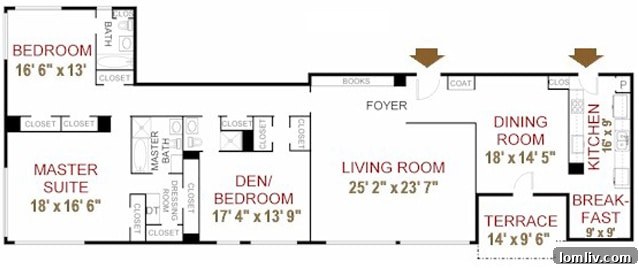
For prospective high-rise residents or real estate professionals guiding clients, this insight is invaluable. When you’re evaluating a high-rise unit, always ensure you obtain a copy of the original floor plan. Don’t hesitate to ask the building manager for it, even if it means snapping a quick picture. This document is irreplaceable for understanding the building’s fundamental structure and how immovable objects – like those pesky columns or awkwardly placed windows – truly integrate into the living space. A perfectly staged model unit can be incredibly deceptive, artfully hiding design deficiencies with clever furniture placement and lighting. The original floor plan cuts through the staging illusion, revealing the true dimensions and challenges of the space.
Furthermore, don’t automatically dismiss older buildings simply because they might require some renovation or updating. As exemplified by 3525 Turtle Creek, many mid-century high-rises offer inherently superior, more adaptable floor plans that, with a little investment, can be transformed into stunning, highly functional modern homes. The bones of these older structures often represent a more thoughtful and resident-centric approach to design, making the effort of renovation well worth the long-term benefits of a truly liveable and flexible space. Always prioritize the underlying design and functionality over superficial aesthetics.

About the Author: My passion lies in exploring high-rises, understanding the intricate dynamics of Homeowners Associations (HOAs), and uncovering the nuances of renovation projects. Yet, my appreciation extends beyond, embracing a balanced view of modern and historical architecture, particularly in the context of the YIMBY (Yes In My Backyard) movement. My writing has been recognized by the National Association of Real Estate Editors, earning me three Bronze awards in 2016 (for an article on housing styles), 2017 (exploring property taxes), and 2018 (on an urban blaze), alongside two Silver awards in 2016 (for an international second home piece) and 2017 (delving into Bermudan second homeownership). If you have a compelling story to share or even a marriage proposal to make, feel free to reach out to me via email at [email protected]. You’re also welcome to search for me on Facebook and Twitter, though finding me there might prove to be a charming challenge.