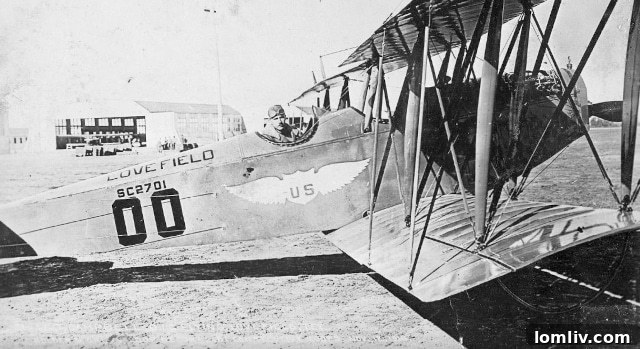
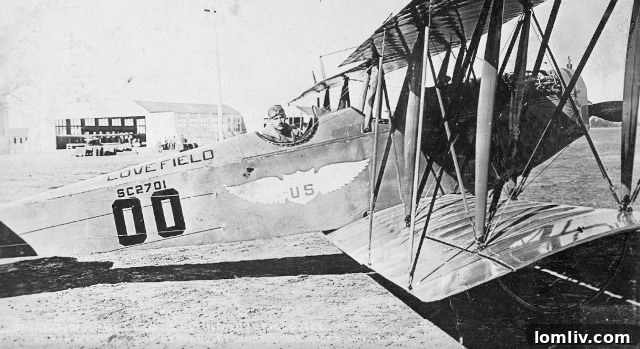
On August 20th, the Parks and Recreation Board convened to receive a pivotal briefing from the Dallas Aviation Department. The focus of the discussion revolved around a critical urban planning challenge that has lingered for several years: the potential for adding a much-needed second entrance to Dallas Love Field (DAL). This concept, though not new, has gained renewed urgency as Dallas continues its rapid growth and Love Field navigates its evolving role as a key regional airport.
The imperative for a second access point for Dallas Love Field is undeniable, a sentiment I share despite lingering skepticism among some Park Board members. While it’s true that Love Field operates within specific constraints—namely, its limited hours of operation from 6 a.m. to 11 p.m. and a fixed number of 20 gates—it would be shortsighted to assume these limits cap its growth or negate the need for expanded infrastructure. The dynamics of air travel, urban development, and ground transportation are constantly shifting, demanding a forward-thinking approach to airport accessibility. Incremental changes, often overlooked, are already contributing to significant increases in passenger volume and vehicular traffic.
Adapting to the Evolving Landscape of Air Travel and Urban Growth
The assumption that Love Field’s capacity is static ignores several critical trends. Firstly, the aviation industry is continually innovating. The gradual increase in the average size of commercial airplanes directly translates to a higher raw passenger count per flight, even if the number of flights remains constant. A larger aircraft means more travelers arriving and departing, intensifying the demand on ground facilities and access roads.
Secondly, the dramatic rise of ride-sharing services has fundamentally altered urban traffic patterns. Unlike traditional private car trips or taxis, a single ride-share booking can generate multiple legs of travel for the vehicle. Consider a typical scenario: a car originates at point “A,” travels to pick up a passenger at point “B” (often a home or office), proceeds to the destination “C” (the airport), drops off the passenger, and then, as an empty vehicle, continues to point “D” (either for another pick-up or returning to a staging area). What was once a simple two-legged roundtrip for a passenger car has effectively become a six-legged journey for a ride-share vehicle. This exponential increase in vehicle movements, often to the chagrin of environmental advocates focused solely on emissions, significantly compounds traffic congestion around major hubs like Love Field.
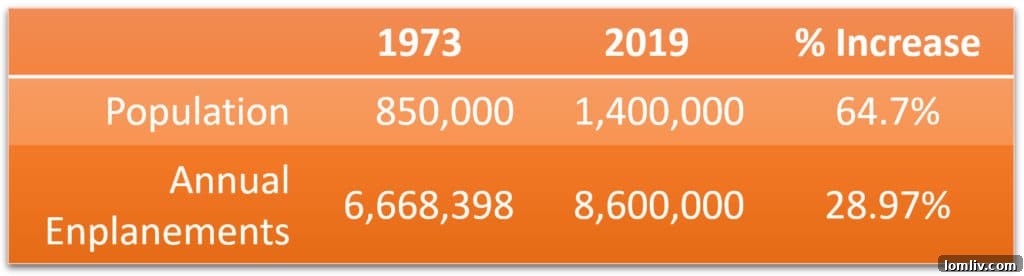
Beyond aviation and ground transport changes, the sheer force of population growth within Dallas and its surrounding metropolitan area cannot be overstated. If the Dallas population density surrounding Love Field had remained at its 1973 levels—the year before Dallas/Fort Worth International Airport (DFW) opened its gates—the current discussions about a second entrance might be entirely moot. However, the city has burgeoned, transforming the once less-dense areas around Love Field into vibrant, densely populated neighborhoods. This demographic shift places immense pressure on existing infrastructure, making the need for enhanced airport access more critical than ever.
The Unprecedented Surge: More Flights, More Fliers, More Pressure on Dallas Love Field
What might seem counterintuitive at first glance is the remarkable resurgence of Love Field. Despite DFW’s presence as a major international hub, Love Field is generating a higher volume of inbound and outbound flights and passengers than during its supposed heyday in 1973. The underlying reasons are multifaceted. In 1973, air travel was largely a luxury, accessible to a smaller percentage of the population who flew less frequently, often on planes that were not at full capacity and spent less time in the air. Today, flying has become democratized, evolving into a mode of transport as common and accessible as taking a bus was in the 1970s. This transformation has led to a significant increase in both the number of individuals flying and the frequency with which they travel.
The statistics paint a clear picture of the challenge: a staggering 64.7 percent increase in Dallas’s population combined with a 28.97 percent increase in Love Field’s utilization has placed immense strain on the primary access routes. Mockingbird Lane and Cedar Springs Road, the arterial veins leading to the airport, have not proportionally grown in size or capacity to absorb this burgeoning traffic. This choke point is further exacerbated by the historical context of the Wright Amendment, which, for decades, artificially constrained Love Field’s operational capacity. While it was in effect, the amendment inadvertently allowed the areas surrounding the airport to become more populous without the residents fully experiencing or anticipating the future traffic impact once those restrictions were lifted.
Adding another layer of complexity is the strategic scheduling practices of airlines. To cater to the highly lucrative last-minute, full-fare business traveler, airlines prioritize flights during peak commuter hours. This translates to a concentrated rush of departures in the early morning, allowing travelers to maximize their workday at a destination, and a corresponding surge of arrivals in the late afternoon or early evening. This “air rush hour” phenomenon directly amplifies ground rush hour conditions, creating gridlock on the existing access roads. When all these factors are stirred together—population growth, increased flight activity, ride-sharing proliferation, and strategic airline scheduling—it becomes abundantly clear why Love Field, and particularly Mockingbird Lane, desperately need relief from the estimated 80,000 daily vehicles navigating its approaches.
Addressing the Paradox: Opposition by Potential Beneficiaries to a Second Love Field Entrance?
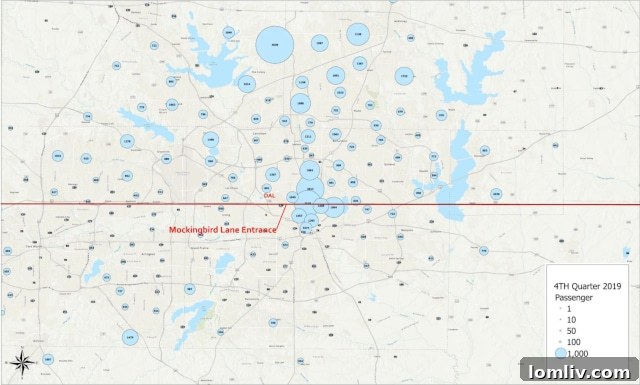
One of the most perplexing aspects of the second entrance discussion is the unexpected opposition from a segment of the population that stands to benefit most. Data from the fourth quarter of 2019, provided by Southwest Airlines, indicates that a significant 45 percent of Love Field’s local users originate from the northern parts of Dallas. This demographic routinely navigates the existing congested routes like Mockingbird Lane or Lemmon Avenue to access the airport. Logic dictates that a new entrance, particularly one situated on the north or west sides of Love Field, would offer a more direct route, substantially shortening travel times for these passengers and reducing overall vehicle miles traveled on already overburdened city streets.
And yet, an audible chorus of complaints and concerns has emerged from residents in these very northern neighborhoods. Public commentators have voiced apprehension, some questioning the impact of “doubling traffic” on surrounding communities. This concern, while understandable at a superficial level, misses a crucial point. The primary objective of rerouting airport traffic via a new entrance is not to double the volume but to *disperse* it. By providing an alternative, more efficient pathway directly onto airport property, the aim is to alleviate existing congestion on peripheral city streets, thereby improving overall traffic flow, rather than exacerbating it. Choosing to maintain the status quo and endure perpetual congestion, despite a viable solution being proposed, strikes as a counterproductive approach to urban planning and community well-being.
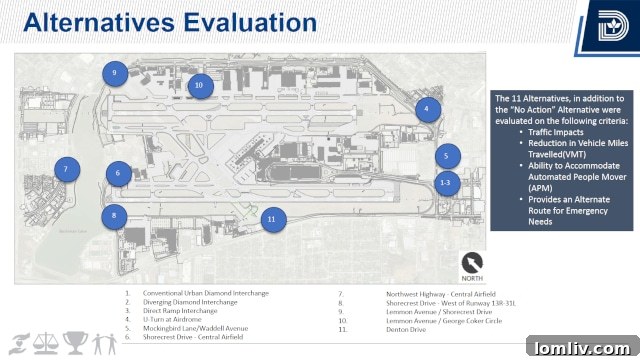
Dissecting the Dallas Park Board Briefing: Evaluating Love Field’s Future Access
The detailed briefing provided to the Dallas Parks and Recreation Board by Mark Duebner, Dallas’s Director of Aviation, served as a crucial step in understanding the long-term vision for Love Field’s accessibility. Duebner presented a historical overview of the discussions surrounding a second entrance, which then segued into the rigorous process by which an initial list of 11 potential candidate solutions was meticulously whittled down to a more manageable five. The selection criteria were stringent and clearly defined: any viable option had to demonstrate a tangible ability to reduce overall traffic and vehicle miles, integrate with or facilitate a people mover connection to Dallas Area Rapid Transit (DART), and, fundamentally, provide a legitimate second entrance and exit point to Love Field. The comprehensive meeting presentation can be accessed online, offering deeper insights into the Aviation Department’s analysis and proposals.
Immediately, a degree of friction became apparent during the briefing. Several board members expressed a sense of disenfranchisement, feeling that the Aviation Department had prematurely dismissed certain candidates without their explicit input or detailed review. While a whiff of self-importance might have permeated the Zoom call, for five of the six rejected proposals, I wholeheartedly agree with their dismissal. These five concepts largely amounted to merely re-stirring the existing traffic on Mockingbird Lane in convoluted ways, offering no discernible benefit to congestion relief or overall accessibility. Furthermore, many of these proposals likely fell outside the direct jurisdiction or strategic purview of the Park Board itself, making their prolonged consideration less relevant to the board’s core mission.
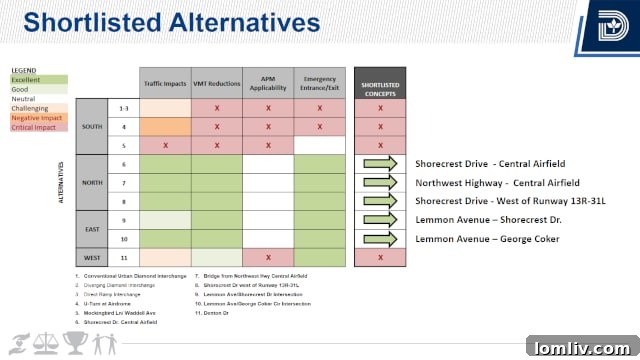
However, the rejection of the sixth candidate demands closer scrutiny. This particular option proposed utilizing Denton Drive on the west side of the airport. Crucially, it also envisioned a shared tunnel that would extend a leg from DART’s Burbank station directly into Love Field, establishing a vital public transit link. The Aviation Department cited the prohibitive steepness of the grade change as the primary reason for abandoning this promising proposal. Yet, as one astute board member rightly pointed out, engineering solutions often allow for routes to be modified and adapted to overcome challenging terrain. I concur with this perspective; a potentially transformative DART connection should not be summarily dismissed based on initial grade assessments, as creative design and construction techniques could very well mitigate such issues, warranting further exploration into its feasibility and long-term benefits.
My Alternative Vision for Love Field Access: Beyond Conventional Proposals
While I recognize the need for a second Love Field entrance, my vision diverges from some of the existing proposals, particularly regarding the extensive use of Denton Drive for vehicular traffic. My reservations are largely predicated on the absence of comprehensive traffic studies that precisely map the current routes taken by residents from northern Dallas when traveling to Love Field. Without this crucial data, it’s difficult to predict user behavior with certainty.
If a significant majority of northern commuters primarily utilize the Dallas North Tollway to Mockingbird Lane, or Northwest Highway, then I fear that an entrance via Denton Drive might prove too geographically remote to sufficiently incentivize a widespread change in their established driving patterns. For a new access point to be truly effective, it must offer a tangible, time-saving advantage. If it’s perceived as too far afield or inconvenient, many drivers will likely stick to their familiar, albeit congested, routes, negating the intended benefits of the new infrastructure.
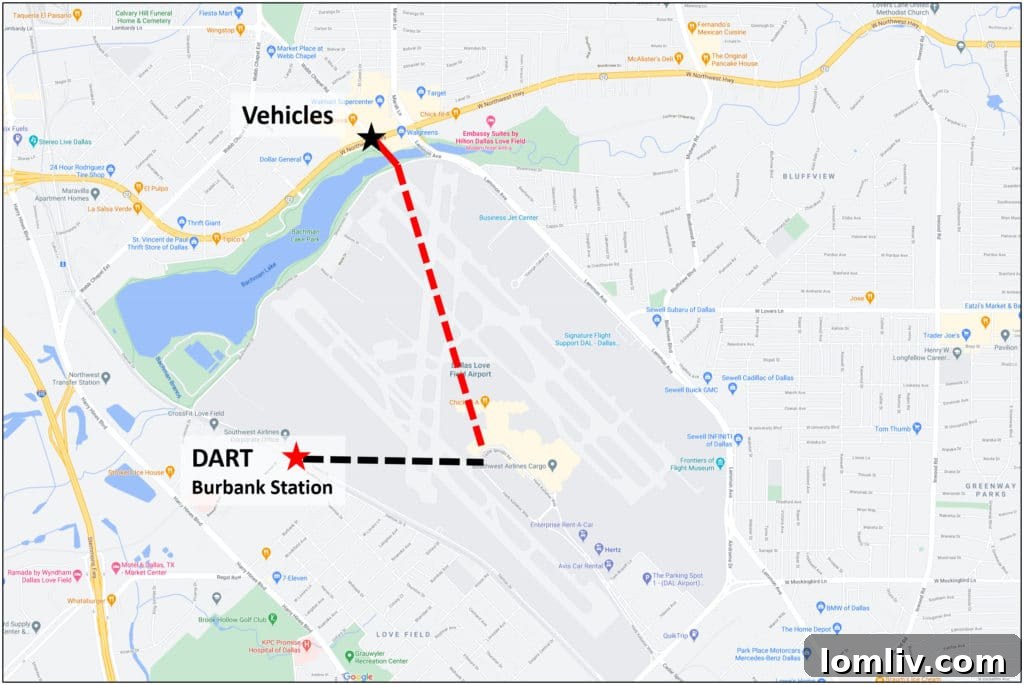
Therefore, my preferred alternative envisions a multi-pronged approach. Firstly, I strongly advocate for an underground DART connection between the Burbank station and Love Field. This subterranean transit link would provide a robust, efficient, and environmentally friendly alternative to vehicular traffic, seamlessly integrating the airport into the region’s public transportation network. Secondly, for vehicular access, I propose an entrance strategically located off Northwest Highway and Webb Chapel Road. This plan would leverage the existing bridge over Bachman Lake, which could then dead-end into a tunnel leading directly under the airport to the terminals and parking facilities. This approach minimizes surface disruption and environmental impact on the lake itself. The only potential downside I foresee with the Webb Chapel approach is its proximity to the major, already bustling intersection of Lemmon Avenue and Marsh Lane, which could potentially limit vehicle stacking capacity during peak hours without careful design.
Admittedly, my proposed plan, particularly the extensive underground DART connection, is likely to be considerably more expensive than what the self-funded Aviation Department might currently be willing to spend. However, in the absence of any publicly disclosed cost estimates for the various options, I believe it is vital to dream big and consider bold, future-proof solutions. Investing in truly transformative infrastructure, while initially costly, often yields immense long-term benefits in terms of efficiency, reduced congestion, environmental impact, and economic growth for the city.
The Digital Divide: Aviation’s Grounded Website and Public Information Access
While Mark Duebner’s presentation to the Park Board was commendably informative and he demonstrated impressive patience in the face of board members’ intermittent internet connections – a common challenge even seven months into the Zoom era – a significant issue arose concerning the accessibility of public information. Duebner referenced that all relevant documentation—meeting notices, minutes, surveys, and project updates—were readily available on the Aviation Department’s website. However, a quick digital reconnaissance reveals a starkly different reality, exposing glaring deficiencies in public transparency and digital upkeep.
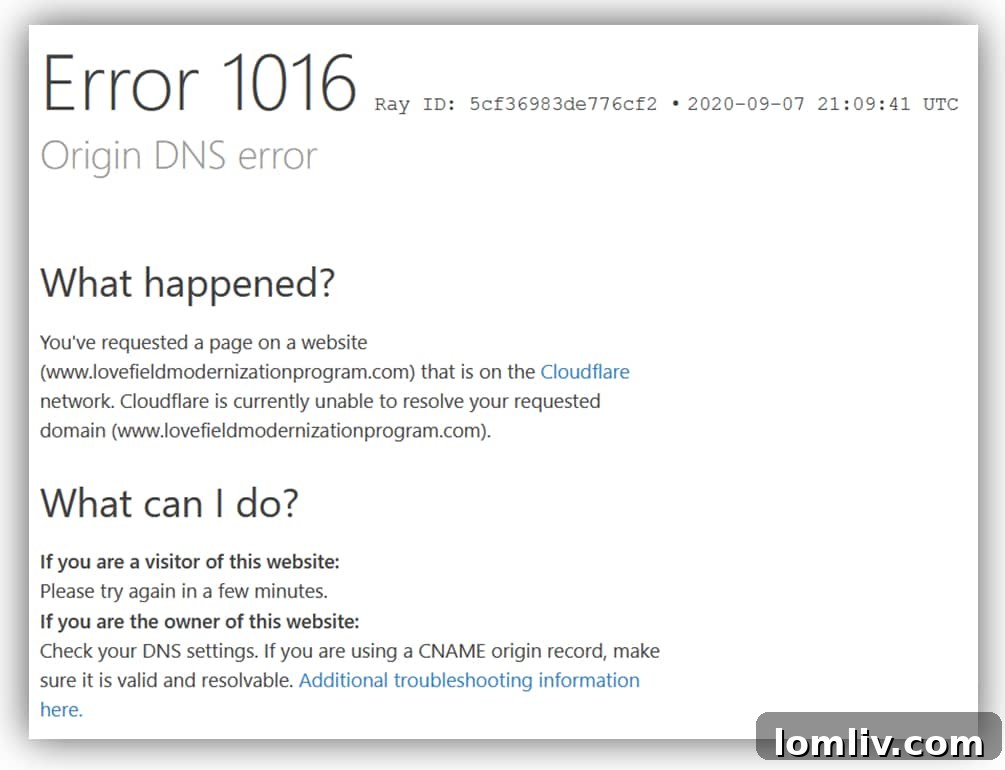
Navigating the official Dallas City Hall Aviation Department’s main page and attempting to access crucial information becomes an exercise in frustration. A click on the “news” section, ostensibly designed to provide updates, often leads to dead ends. For instance, selecting “News Releases” frequently returns a blank page, a predicament mirrored when attempting to access “LFMP Newsletters.” Furthermore, clicking on the link for the “Love Field Modernization Program”—a core initiative relevant to the second entrance discussion—is met with a disheartening “Error 1016,” as illustrated in the image above. These aren’t isolated incidents; numerous blank pages dot the “news” section, including missing reports for the 2010 Modernization Program and both summary and full reports for the “Love Field Impact Analysis Update.” This systematic failure to maintain current and accessible digital records is unacceptable for a public department.
Even finding the much-discussed public survey, which is vital for civic engagement on the Love Field Alternative Entry project, is an arduous, multi-step ordeal. From the Department of Aviation’s homepage, one must first click on “Airports” and then select “Love Field.” From there, the user is inexplicably directed to click yet another link for the “Dallas Love Field Official Website” (raising questions about why this isn’t the primary entry point). Once on this separate site, the process continues: hover over “Airport Info” and then select “Airport Projects.” Finally, after scrolling to the very bottom of that page, one can click on “DAL Alternative Entry” to reach the correct destination. This convoluted, seven-motion journey to access critical public information is anything but “easy peasy.”
Upon finally reaching the “DAL Alternative Entry” page, the perseverance is rewarded with a wealth of information, including recordings of past meetings and the opportunity to sign up for email updates. Here, one can also locate and complete the crucial public survey. For those looking to get up to speed quickly, I highly recommend reading the comprehensive FAQ document available at the very bottom of this page. However, this elaborate and often frustrating path to public documents signals a deeper issue. A note to the City of Dallas: The routine discovery of dead links and inaccessible content points not just to a website maintenance problem, but also to a fundamental barrier preventing citizens from engaging effectively with important civic projects. A streamlined, intuitive, and reliably updated digital delivery model is urgently needed to foster true public participation and transparency.

Strategic Patience or Costly Delays: Why Rushing Ahead is Prudent for Love Field
During the Park Board meeting, several members questioned the perceived rush to implement a second entrance, particularly in the wake of the COVID-19 pandemic. Their skepticism stemmed from uncertainty about the long-term recovery of air travel, suggesting that a second entrance might become an unnecessary and premature expenditure if passenger volumes did not rebound. This perspective, while cautious, fundamentally misjudges the resilience of human nature and the inherent demand for mobility. My immediate reaction: puh-lease. I, along with countless others, am already meticulously curating lists of destinations to visit as soon as feasible, eager to experience places before they are once again bustling with tourists – like me. My brief trip to London in early March feels like a lifetime ago, underscoring the deep-seated desire for travel that is merely on pause. Trust me, air travel will not only recover but will likely surge back with unforeseen vigor much sooner than many anticipate; if I have to personally lead the charge, it will happen.
It is imperative to understand that developing major infrastructure projects like a new airport entrance is not a short-term endeavor. These are multi-year undertakings with a lifespan intended to span 50 to 100 years, profoundly impacting generations. The notion that current, temporary reductions in air travel capacity due to a global health crisis should halt or significantly delay such a long-range project is shortsighted and potentially catastrophic. History teaches us that the cost of inaction and delay on critical infrastructure invariably results in substantially higher expenses down the line, coupled with compounded problems. Every year of delay means more traffic congestion, more frustrated commuters, greater economic inefficiencies, and ultimately, a more expensive solution when the inevitable need can no longer be ignored. Not planning proactively while current capacity is temporarily reduced is not strategic patience; it is simply a waste of precious time and resources, ensuring that the problem only intensifies and becomes more intractable.
Bachman Lake and the Future of Dallas Transportation: The Park Board’s Line in the Sand
A crucial consensus emerged during the Park Board meeting regarding Bachman Lake: the notion of cutting through it for a new road was deemed a non-starter. This is a stance with which I wholeheartedly agree. Bachman Lake represents a vital ecological and recreational asset for Dallas residents, and its integrity must be preserved. Constructing any new road directly over or through Bachman Lake would inflict unacceptable environmental damage and irrevocably alter a cherished public space. Therefore, any viable new northern entrance for Love Field must be planned either to the east or west of the lake, or, as I prefer, ingeniously utilize existing infrastructure such as the Webb Chapel bridge, which could then seamlessly transition into a tunnel beneath the airport.
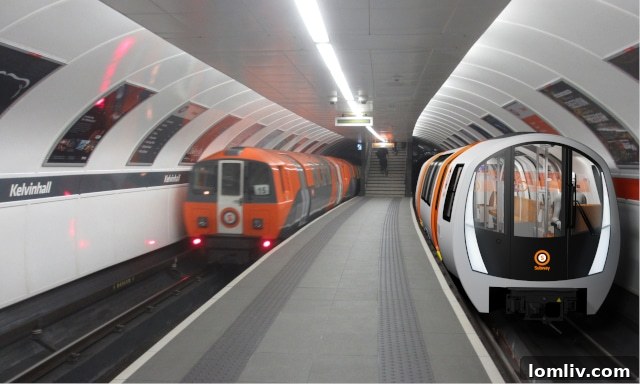
Throughout the Park Board meeting, a recurring thought kept surfacing: how much simpler these complex urban planning challenges would be if Dallas possessed a robust, expansive subway system. Imagine the transformative impact if the existing DART Green and Orange lines, which already run to the west of Love Field, were primarily underground. Building a relatively short spur from these subterranean lines directly to Love Field would undoubtedly be the most cost-effective and efficient method for connecting DART to the airport. Such an integration would not only alleviate vehicular congestion but also offer residents a truly multimodal transportation option, reducing reliance on private vehicles.
Following the compelling discussions at the Park Board meeting, I reiterated to a council member the pressing need for Dallas to develop an underground subway network. This isn’t a radical or unprecedented idea; history demonstrates that nearly every major city that began with a modest subway system has consistently expanded it over time. Consider the example of the San Francisco Bay Area: local counties vehemently resisted the expansion of BART (Bay Area Rapid Transit) around the bay in the 1960s. Decades later, they are finally undertaking those very expansions, but at an exponentially higher cost and with greater logistical hurdles. This historical lesson is clear: regardless of how much more the “right decision” might cost today, the right decision made tomorrow will always cost even more. For Dallas, investing in underground transit, even if it begins with a less-than-ideal spur for Love Field or the proposed D2 subway line, is an absolute necessity. As Dallas’s above-ground landscape becomes increasingly developed and congested, going underground remains the only sustainable and effective strategy to address major transportation issues without irrevocably tearing apart or disrupting existing neighborhoods and communities. Planning for such a future is not merely about convenience; it’s about future-proofing Dallas as a vibrant, livable city.
(Wasn’t it nice, at least for a moment, to read about an airport proactively planning for the future – for the inevitable day when we all take to the skies once again?)