Exchange Park: Uncovering the Lost Legacy of Dallas’s Pioneering Mixed-Use Development
David Preziosi, FAICP, Hon. AIA Dallas
Executive Director, Preservation Dallas
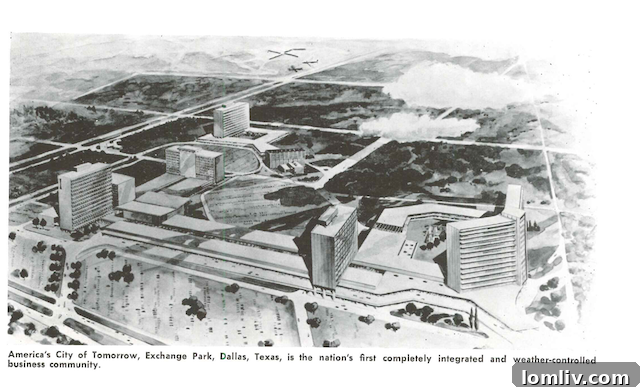
In 1956, a groundbreaking concept emerged just a few miles north of downtown Dallas, forever changing the landscape of urban development: Exchange Park. This visionary project was far ahead of its time, introducing a revolutionary mixed-use model that seamlessly integrated office towers, diverse shops, exquisite restaurants, and even a vibrant bowling alley, all within a single, connected, and climate-controlled indoor environment. It wasn’t just a building; it was a self-contained community, laying the essential groundwork for what we now recognize as the modern indoor mall. Indeed, Exchange Park predated the renowned NorthPark Center by a remarkable nine years, establishing a precedent for integrated commercial and social spaces.
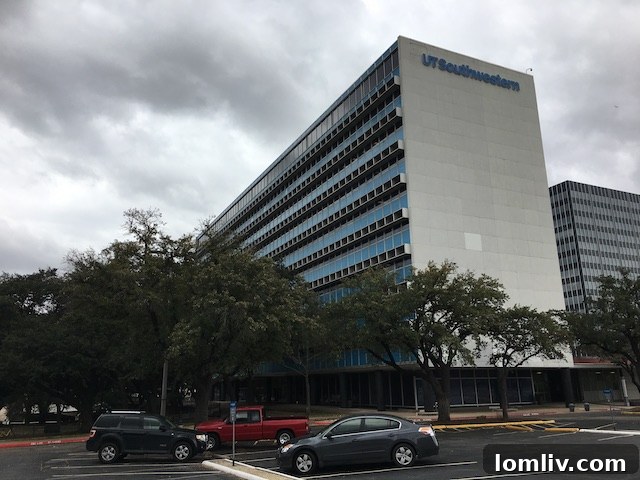
Despite its undeniable influence and pioneering spirit, Exchange Park, a complex boasting over one million square feet, now faces an uncertain future. Its fascinating, barrier-breaking history is on the verge of being irrevocably lost. UT Southwestern, the current owner of this monumental site, has unveiled plans to demolish the entire complex in early 2022 to make way for an as-yet-undisclosed future development. This decision represents a critical juncture for Dallas’s architectural heritage, as it threatens to erase a significant chapter in the city’s urban evolution, discarding a landmark that once proudly embodied “America’s City of Tomorrow.”
A Call for Preservation: Why Exchange Park Deserves a Future
The potential demolition of Exchange Park raises crucial questions about sustainable urban development and the intrinsic value of historical architecture. While UT Southwestern envisions new construction, there exists a compelling alternative: the adaptive reuse of these significant historic buildings. Preserving and repurposing the existing structures aligns perfectly with principles of environmental stewardship and offers substantial economic benefits, especially through available historic tax incentives. Dallas, a city with a proud and successful history of revitalizing its architectural treasures, is no stranger to such initiatives. Over the past two decades alone, the city has leveraged more than $1.5 billion in tax incentives for the rehabilitation of historic buildings. This demonstrates a clear precedent and a successful model for integrating the past into the future, creating vibrant, character-rich spaces.
By embracing preservation, UT Southwestern could not only honor a pivotal piece of Dallas history but also establish a unique, sustainable, and character-rich campus expansion. Such an approach stands in stark contrast to conventional new builds, offering a distinctive identity rooted in the site’s rich heritage. The opportunity to salvage the embodied energy and materials within this massive complex, rather than sending them to landfills, represents a responsible and forward-thinking path. Preserving Exchange Park would serve as a testament to UT Southwestern’s commitment to both the health of the community and the health of the environment, creating a legacy that respects history while embracing sustainability.
The Visionary Behind the Dream: William Blakley and the “City Within a City”
The genesis of Exchange Park lies in the remarkable foresight of William Blakley, a man whose bold vision transformed 120 wooded acres near the bustling intersection of Harry Hines Boulevard and Mockingbird Lane. Blakley didn’t just plan a development; he orchestrated a meticulously designed, integrated mixed-use commercial community, beautifully landscaped as a park. His ambition was crystal clear and audaciously declared: “Exchange Park will be a self-contained business community—America’s first completely integrated and weather-controlled commercial development.” This wasn’t merely a collection of buildings; it was conceived as a holistic ecosystem, a micro-city where every element, from commerce to climate, served a larger purpose within a harmonized environment.
The realization of Blakley’s dream involved an intensive three-year planning phase, requiring the expertise of architects and engineers from the esteemed Dallas firm of Lane, Gamble & Associates, who meticulously drafted the comprehensive plans. While the completed structure ultimately represented only a fraction of a much grander scheme—which originally envisioned numerous additional office buildings, more extensive retail options, two major department stores, a dedicated hotel, and multiple residential towers—even the partially realized complex garnered immediate national attention. The press hailed it as a true “city within a city” and prophetically dubbed it “the city of tomorrow,” recognizing its revolutionary approach to urban planning and commercial integration. Though the full scope of Blakley’s ambitious vision was never entirely brought to fruition, the significant portion that was built undeniably set a powerful trend, influencing similar future developments across the nation and firmly cementing Exchange Park’s legacy as an architectural and urban planning trailblazer.
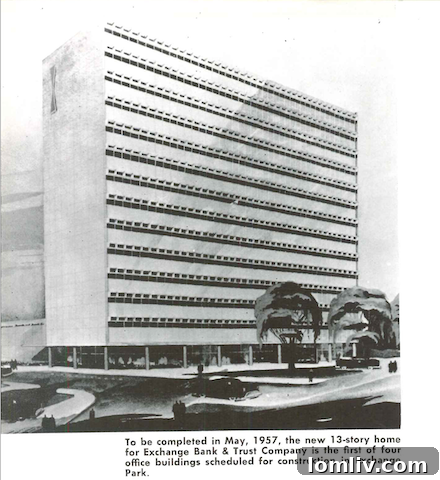
Pioneering Architecture: Banking on a Flexible Future
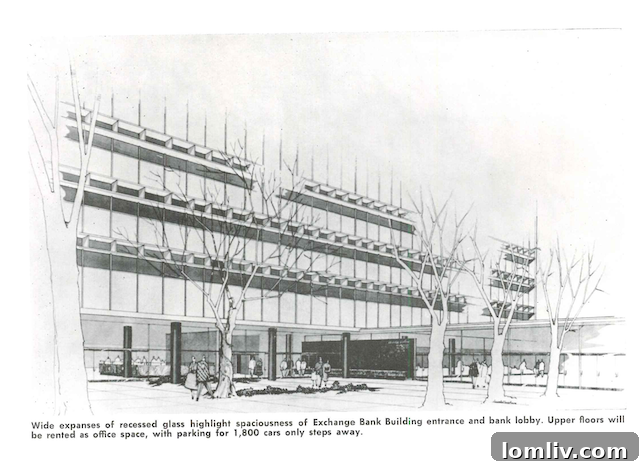
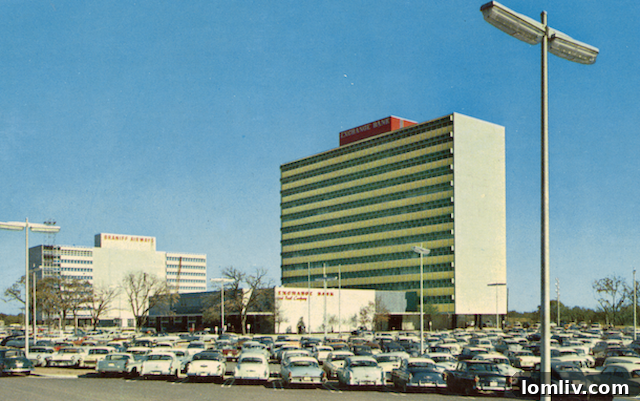
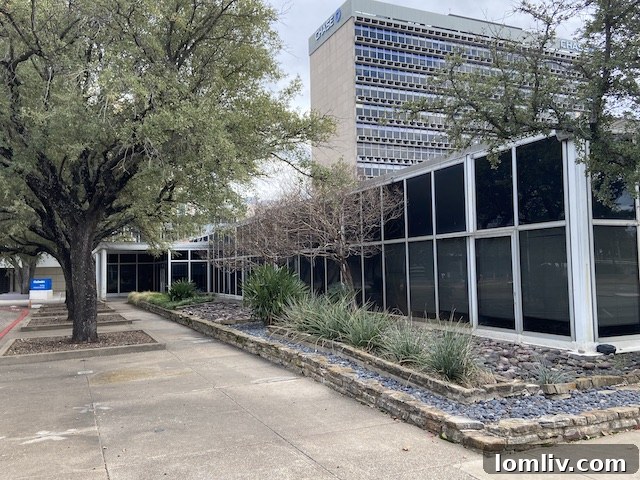
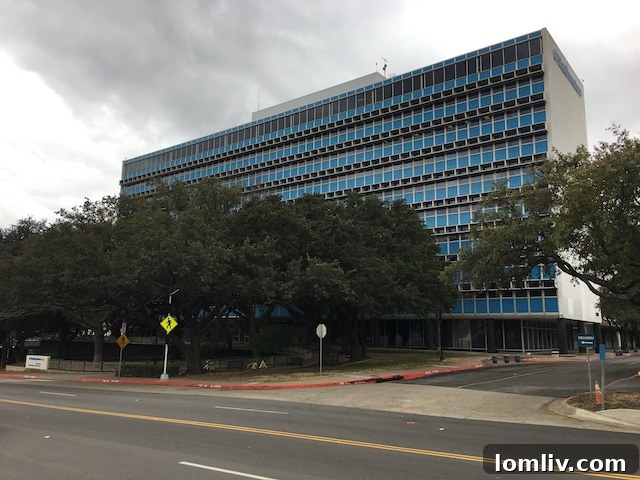
The architectural innovation of Exchange Park was immediately evident with the completion of its first office tower in 1956, proudly housing Exchange Bank. This magnificent 14-story edifice showcased a sleek, clean-line modern design, characterized by continuous strips of windows brilliantly contrasted with vibrant yellow panels—a striking original feature that has since been painted a more subdued charcoal gray. Beyond its compelling aesthetic, the building was ingeniously engineered for environmental efficiency. Projecting sun visors were thoughtfully integrated into the façade—a truly novel concept for its era—strategically designed to mitigate direct sunlight. This innovation dramatically reduced interior heat gain during Dallas’s intense summer months, thereby enhancing occupant comfort and contributing significantly to energy savings long before such considerations became commonplace.
The interior of the Exchange Bank tower was equally revolutionary, embodying a philosophy of complete modular flexibility that redefined corporate workspaces. It introduced pioneering concepts such as movable wall partitions, which could be effortlessly rearranged overnight to reconfigure office layouts and create new tenant spaces with unprecedented speed. Complementing this adaptability were innovative snap-in air outlets and light fixtures, integrated seamlessly into the modular design. Furthermore, a unique floor construction system allowed for wiring and electrical outlets to be easily relocated, adapting to the evolving technological and spatial requirements of new tenants with remarkable ease. This comprehensive modularity was so advanced that, according to The Dallas Morning News, Exchange Bank was hailed as the very first office building in the country to fully incorporate such an adaptable design, setting a new benchmark for corporate workspaces nationwide and influencing future architectural practices for decades.
Braniff Airways and the “Weather-Conditioned Street”
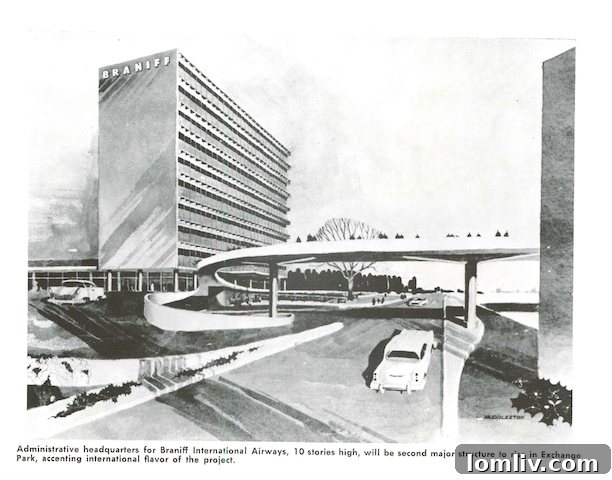
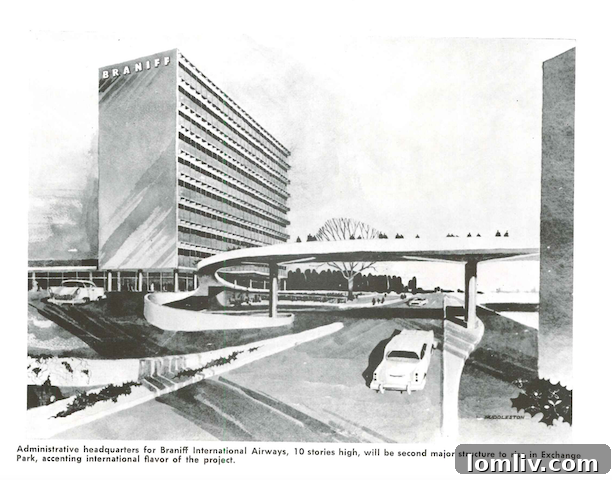
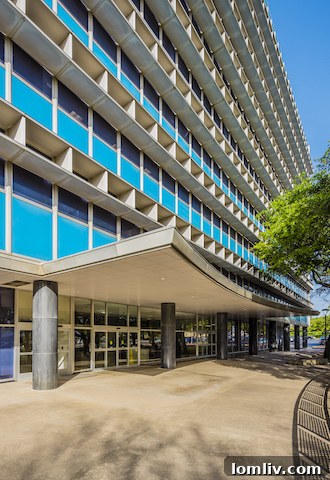
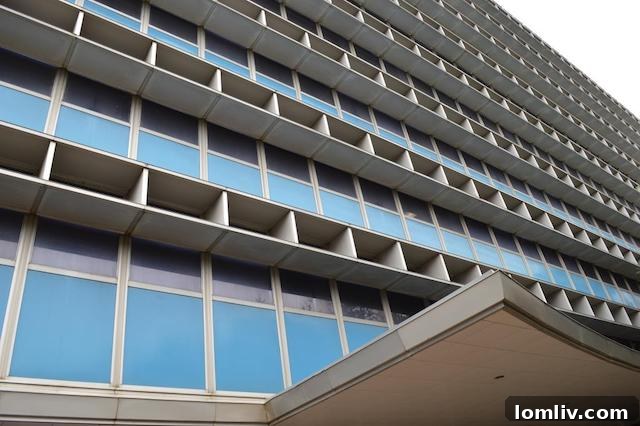
The vibrancy of Exchange Park continued to grow with the arrival of Braniff Airways, which established its impressive presence in the site’s second office tower in 1958. This elegant 10-story structure echoed the sleek modernism and architectural prowess of the Exchange Bank tower, featuring similar projecting sun visors on its primary facade to optimize natural light and reduce heat. However, the Braniff building distinguished itself with striking bright blue panels, which remarkably retain their original vivid hue to this day, providing a memorable splash of color. Further architectural differentiations included a unique shading system on its rear façade and an exclusive top floor adorned with a beautifully landscaped terrace, offering Braniff executives panoramic views of the nearby Love Field and a serene outdoor retreat for relaxation and corporate events. Consistent with Exchange Park’s innovative design ethos, the interior of the Braniff tower also featured the same highly flexible wall system, ensuring unparalleled adaptability and efficiency for its corporate occupants, allowing for easy reconfiguration of office layouts as business needs evolved.
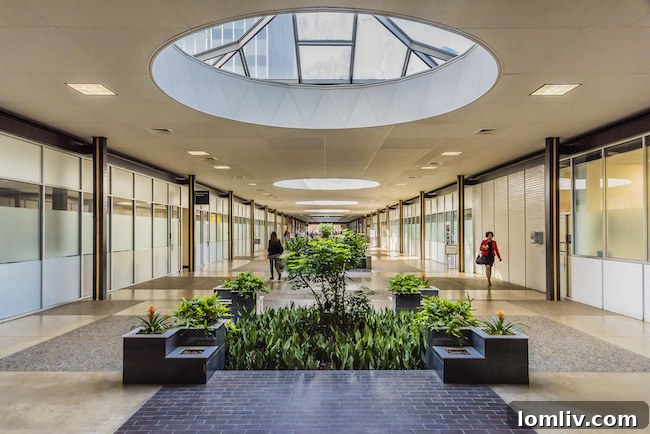
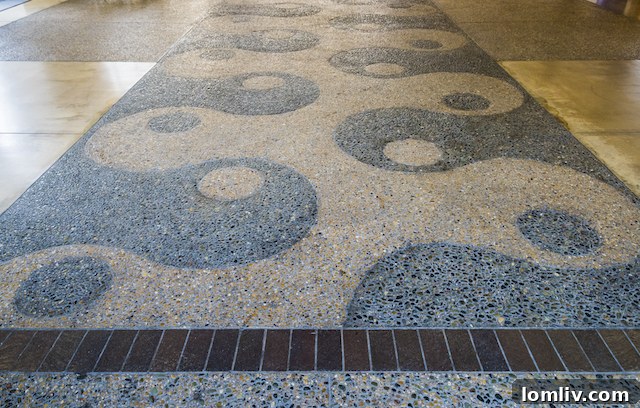
A truly pioneering element of Exchange Park, and a harbinger of future retail architecture, was the “weather-conditioned street.” This ingenious, enclosed, and air-conditioned concourse served as a vital artery, seamlessly connecting the two prominent office towers. Far more than a mere hallway, this innovative space was a vibrant hub featuring a curated selection of shops, essential services, and diverse restaurants, creating a self-contained urban experience. Its surface, a visually rich blend of brick and exposed concrete, was laid out in intriguing patterns of varying shades and aggregate sizes, creating a dynamic visual appeal that encouraged leisurely strolls. A series of large skylights bathed the entire area in abundant natural light, nurturing the built-in planters below, which teemed with lush foliage, transforming the indoor street into an inviting urban oasis. This architectural solution was a clear and influential precursor to the modern mall environment, and its innovative concepts can be distinctly observed in the original design sections of iconic retail destinations like Northpark Center, solidifying Exchange Park’s role as a visionary blueprint for future commercial and mixed-use complexes.
Expanding the Vision: Frito-Lay Tower and Celebrity Glamour
As Exchange Park continued to flourish and attract prominent businesses, its infrastructure was meticulously designed with future growth in mind. Ample parking facilities, comprising both generously landscaped surface lots and a multi-level parking garage, were thoughtfully integrated around the complex to accommodate the burgeoning traffic and ensure convenience for tenants and visitors. A remarkably foresightful engineering marvel was the 3,600-foot-long tunnel system constructed entirely beneath the complex. This subterranean network allowed delivery trucks to unload goods and service vehicles to operate efficiently without ever being visible on the main site or interfering with pedestrian and automobile traffic at ground level, thereby preserving the aesthetic beauty and seamless flow of the commercial environment above.
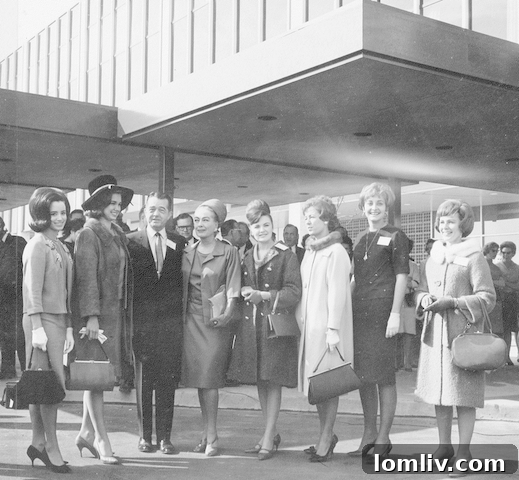
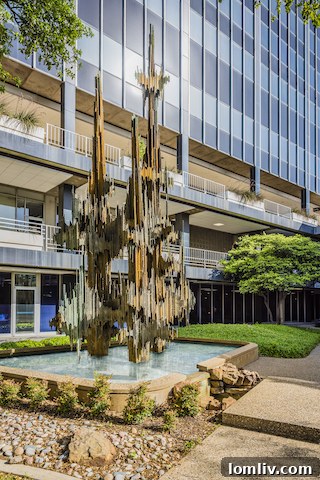
The third and final office tower to grace Exchange Park was purpose-built as the new corporate headquarters for Frito-Lay. Its grand opening in 1966 was a spectacle of fanfare and celebrity, most notably featuring the iconic Hollywood star Joan Crawford. Crawford, who was married to the former CEO of Pepsi-Cola (which famously merged with Frito-Lay in 1965), held a position on the Board of Directors after his passing in 1959, demonstrating her enduring influence in the corporate world. Her photograph proudly adorned the Frito-Lay boardroom at Exchange Park, a testament to her prominent role. For the Frito-Lay Tower, Lane, Gamble & Associates departed from the design of its predecessors. Eschewing the attached sun visors, they opted for a striking 17-story, clean glass-walled cube, directly connected to the central mall, reflecting evolving design trends towards sleek, unadorned glass facades while maintaining Exchange Park’s commitment to modernity. The building featured luxurious amenities including a private rooftop club, an atmospheric medieval-themed pub, and a spacious cafeteria. Complementing the tower was an elaborately landscaped garden area, highlighted by a magnificent five-ton copper water sculpture crafted by the acclaimed artist Wilbert Verhelst, adding a touch of artistic grandeur to the corporate landscape.
Leisure and Entertainment: La Tunisia and Mickey Mantle Bowling Center
Beyond its corporate prowess, Exchange Park quickly established itself as a premier destination for leisure and entertainment, attracting visitors from across Dallas and far beyond its city limits. Two establishments, both opening in 1959, rapidly achieved widespread renown and cemented Exchange Park’s reputation as a multifaceted hub offering something for everyone.
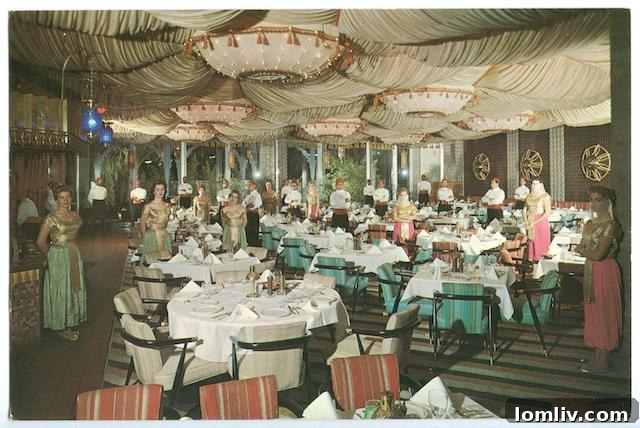
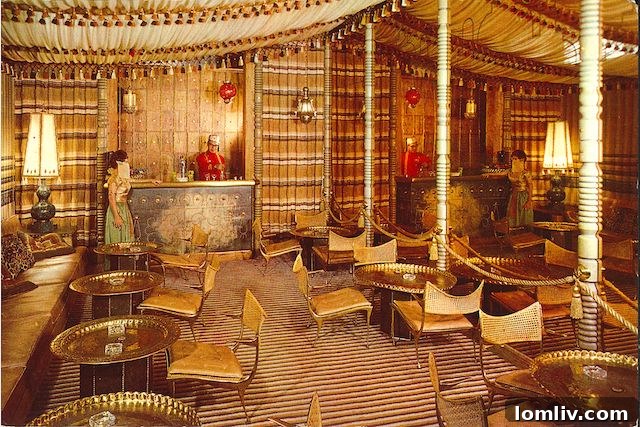
The first was La Tunisia, an extraordinarily unique restaurant concept that captivated Dallas diners with its immersive, exotic theme. Guests embarked on an unforgettable experience, entering through a serene loggia surrounded by an exotic garden featuring a luxuriant array of tropical plants and swaying palm trees, before proceeding into the opulent main dining room. The interior was a breathtaking spectacle: hundreds of yards of meticulously hand-woven silk fabric draped elegantly from the ceiling and adorned the walls, creating the mesmerizing illusion of dining within a colossal tent set amidst the mystical Arabian desert. To enhance this captivating ambiance, subtly integrated lights within the ceiling dynamically shifted throughout the evening, mimicking the elusive, shimmering lights of a desert night, transporting diners to another world. This visionary restaurant space was masterfully designed by the very same Los Angeles firm responsible for supervising the construction of Disneyland, a testament to its exceptional artistry and immersive design. Critics hailed La Tunisia for possessing the “romantic charm of a North African desert oasis” and lauded it as “one of the best examples of interior design in the nation,” underscoring its unparalleled contribution to the city’s culinary and cultural scene.
Equally iconic was the Mickey Mantle Bowling Center, an establishment that boasted 32 state-of-the-art lanes and proudly bore the legendary baseball player’s name – the very first facility in the world to do so. Mickey Mantle himself demonstrated his personal commitment to the venture by relocating his family to Dallas to be closer to this flagship center, underscoring its significance. Its grand opening was an unforgettable event, drawing an astonishing crowd of over 10,000 people, including a galaxy of notable figures such as baseball greats Whitey Ford, Yogi Berra, and Billy Martin, alongside Hollywood starlet Dorothy Malone, and many more local dignitaries. The center quickly became a beloved community landmark, offering both a premier recreational haven for families and enthusiasts alike, and a direct connection to a national sports icon, becoming a focal point of entertainment for decades.
The Evolution and Current State: A Changing Legacy
Over the decades, Exchange Park has undergone a significant transformation, reflecting the dynamic shifts in corporate landscapes, economic pressures, and broader urban development trends. While much of its original architectural design remains largely intact, having received various updates over the years to incorporate modern conveniences and maintain functionality, its primary use has dramatically evolved. The once vibrant corporate headquarters of Braniff Airways famously relocated to D/FW airport in 1976, followed by Frito-Lay’s strategic move to Plano in 1985, decentralizing these major corporations from the original complex. Exchange Bank, a foundational tenant, transitioned through an acquisition to become Texas American Bank before its eventual closure; the prominent space is now occupied by Chase Bank, adapting to the changing financial sector.
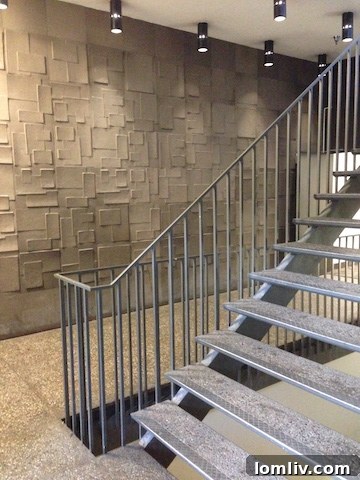
The exotic allure of La Tunisia restaurant, once a highlight, gave way to Arthur’s West restaurant in 1972, which itself eventually closed its doors, marking the end of an era for fine dining within the park. Similarly, the bustling Mickey Mantle Bowling Center, a beloved recreational hub, has long since ceased operations, leaving a void in the entertainment offerings. The complex itself changed ownership multiple times before UT Southwestern acquired it in 2008, subsequently expanding their medical campus with offices for the UT Southwestern Medical School. The bustling shops and diverse services that once characterized the pioneering indoor mall have been replaced by essential medical offices and a functional food court, reflecting the new institutional purpose. Yet, poignant glimpses of its visionary past endure: the original skylights continue to illuminate the space with natural light, and the distinctive “street” of patterned brick and concrete still anchors the concourse, serving as a palpable, albeit quieter, link to its visionary origins. However, the proposed demolition threatens to sever this last physical connection, irrevocably erasing the material manifestation of a crucial period in Dallas’s architectural and urban development history.
A Landmark Ahead of Its Time, Regardless of Era
From its very inception, Exchange Park was lauded as a beacon of architectural and urban innovation. When it first opened its doors in 1956, its revolutionary concept of seamlessly blending retail and office spaces within a climate-controlled, integrated environment, coupled with its advanced architectural features like exterior sun shading systems and unparalleled modular flexibility for office towers, truly set it apart from contemporary developments. Architectural South magazine, in 1956, accurately captured its transformative essence, proclaiming Exchange Park as “an entirely new concept of the business community of the future—a city within a city, containing all of the facilities necessary to provide goods and services under the most favorable conditions—comfort and convenience without congestion.” This profound accolade wasn’t merely praise; it was a recognition of a paradigm shift in urban planning and commercial design, a bold vision that anticipated future needs and trends for integrated, pedestrian-friendly urban environments, proving its timeless relevance and enduring influence.
The Irreversible Loss: Preserving Our Architectural and Environmental Heritage
Tragically, Exchange Park, a monument to foresight and architectural brilliance, is poised to become nothing more than a historical footnote, marking yet another profound and unnecessary loss in Dallas’s rich architectural narrative. It appears that UT Southwestern, regrettably, perceives only the raw land as valuable, overlooking the immense historical, architectural, and critically, the embodied energy value inherent in the existing office towers and integrated retail complex. This approach mirrors a regrettable and unsustainable trend seen among many developers who opt for the expedient path of razing historic structures to make way for new construction, rather than exploring more sustainable, cost-effective, and culturally enriching alternatives such as adaptive reuse.
The consequences of such a decision are far-reaching and deeply concerning. Our irreplaceable architectural heritage, the tangible link to our city’s innovative past and its pioneering spirit, is irrevocably lost. Furthermore, the environmental impact is staggering: copious amounts of building materials, a truly colossal volume given the over one million square feet of the complex, will be summarily carted off to landfills, consuming valuable space and exacerbating waste management challenges. The immense energy and raw materials invested in constructing this massive complex decades ago will be utterly wasted, necessitating the consumption of precious new raw materials and considerable energy to erect replacement structures. This destructive cycle of demolition and new construction is fundamentally unsustainable, contributing significantly to carbon emissions, resource depletion, and the ongoing climate crisis.
It is a profound disappointment that an organization dedicated to safeguarding public health appears to overlook the crucial imperative of environmental health and sustainable practices. By failing to diligently pursue the adaptive reuse of Exchange Park’s existing buildings, and instead choosing to demolish them, UT Southwestern is contributing to an egregious waste of resources and an unnecessary environmental burden that contradicts its stated mission of well-being. A more responsible and forward-thinking approach would involve leveraging the intrinsic value of these historic assets, demonstrating a comprehensive commitment not only to human well-being through medical advancement but also to the health and sustainability of our planet and its invaluable cultural legacy. Preservation offers a pathway to innovation that honors the past while building a truly sustainable and meaningful future for Dallas.