The Battle for Boy Scout Hill: Preserving Dallas’ Last Virgin Blackland Prairie
In a city bustling with continuous development and urban expansion, the story of Boy Scout Hill stands as a poignant reminder of the delicate balance between progress and preservation. Nestled discreetly at the southwest corner of Mockingbird and Buckner Boulevard, just before the overpass leading to Old Lake Highlands and Peavy Road, this seemingly ordinary stretch of land holds an extraordinary secret. For many, including this author, it was a landscape passed almost daily without a second glance, its profound significance overlooked. Yet, Boy Scout Hill is no ordinary parcel; it is celebrated as one of the last remaining remnants of “virgin Blackland Prairie” in Dallas, serving as a vital habitat for a diverse array of wildlife surrounding the iconic White Rock Lake. This unique ecological treasure, largely untouched by the hands of urban sprawl, has become the focal point of a passionate community struggle.
Boy Scout Hill: A Rare Ecological Gem in Urban Dallas
The term “virgin Blackland Prairie” is not just a poetic description; it signifies an ecosystem of immense ecological importance. Historically, the Blackland Prairie once covered vast swathes of North Central Texas, characterized by its deep, rich, black soils and a vibrant mosaic of native grasses and wildflowers. Today, over 99% of this unique prairie ecosystem has been lost to agriculture and urban development, making the surviving fragments, like Boy Scout Hill, incredibly precious. These undisturbed prairies act as critical biodiversity hotspots, supporting a complex web of life that includes native insects, birds, small mammals, and a myriad of plant species adapted to this specific environment. For White Rock Lake, a beloved urban oasis, Boy Scout Hill serves as an essential buffer, contributing to the area’s air and water quality, and providing crucial foraging and nesting grounds for the migratory birds and local wildlife that frequent the lake. Preserving such a site is not merely about saving a patch of green; it’s about protecting a living legacy, an irreplaceable piece of Texas’ natural heritage within the heart of a major metropolitan area.
The Spark of Conflict: Development Plans Emerge
The tranquility surrounding Boy Scout Hill was abruptly shattered when plans came to light proposing a significant commercial development on this ecologically sensitive site. Local developers Lyle Burgin and Richard Kopf, envisioning a prime location for a new establishment, put forth a proposal to construct a restaurant and an accompanying parking lot on the hill. While developers often highlight economic benefits, job creation, and increased amenities for residents, the specifics of this proposal immediately raised red flags for the surrounding communities. The prospect of transforming a natural, undeveloped landscape into a commercial venture, complete with increased traffic, noise pollution, and the inevitable impact on local wildlife and scenic views, ignited a firestorm of opposition. For many, this wasn’t just another development; it was a direct threat to the very character and environmental integrity of the White Rock Lake area, an issue that quickly transcended local interest to become a rallying cry for environmental stewardship and community autonomy.
Community Mobilizes: The “Save Boy Scout Hill” Movement
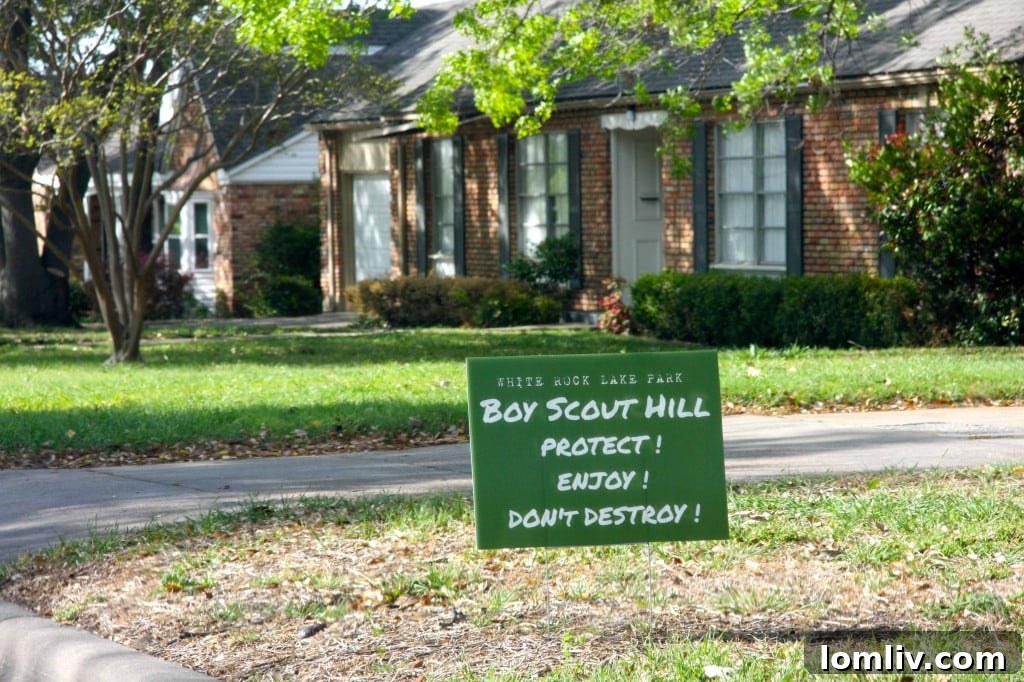
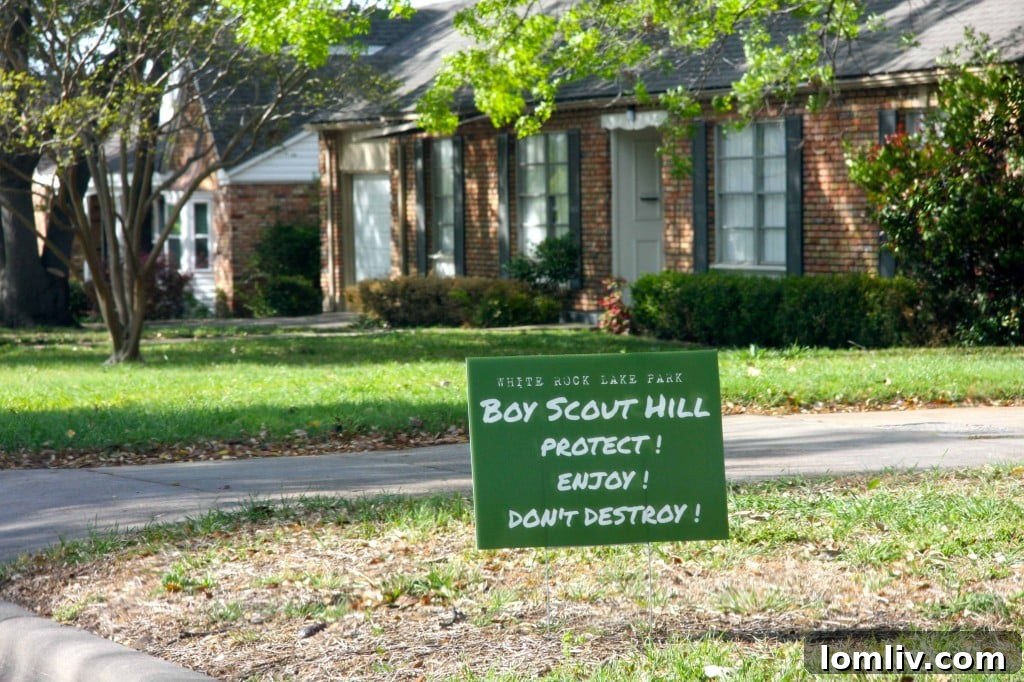
In the face of what many perceived as an egregious overreach, residents of neighborhoods surrounding White Rock Lake responded with the organized fervor characteristic of communities defending their cherished spaces. The initial outcry quickly coalesced into a potent “Save Boy Scout Hill” movement. The signs became ubiquitous, appearing in front yards across various neighborhoods, each one a silent but powerful declaration of resistance. Protests and pickets were organized, drawing attention to the proposed development and galvanizing public opinion. Recognizing the need for a centralized platform, an online presence was swiftly established. The website, saveboyscouthill.org, became a vital hub for information, updates, and calls to action, allowing residents to stay informed, voice their concerns, and coordinate their efforts. This multi-pronged approach, combining grassroots activism with digital outreach, demonstrated the community’s deep commitment to preserving Boy Scout Hill, showcasing how local residents can effectively challenge large-scale development projects that threaten their natural environment and quality of life.
Media Spotlight: Publicizing the Preservation vs. Profit Debate
The escalating conflict surrounding Boy Scout Hill did not go unnoticed by the local media. Several prominent news outlets quickly picked up on the story, framing it as a classic battle between community preservation efforts and the forces of commercial development. Publications like The Dallas Morning News City Hall Blog and The Dallas Observer provided extensive coverage, detailing the arguments put forth by both sides. On one hand were the residents, passionately advocating for the preservation of the virgin Blackland Prairie, the stunning scenic views, and the natural habitat for wildlife that defines the White Rock Lake experience. They spoke of the intrinsic value of undisturbed green space, the potential for increased traffic congestion, noise pollution, and the irreversible environmental damage. On the other side were the developers, who likely presented arguments centered on economic growth, property value enhancement, and the potential for a high-quality dining establishment to serve the community. The media’s role in highlighting these contrasting viewpoints was crucial, transforming a local dispute into a public discourse about urban planning, environmental ethics, and the future identity of Dallas.
Key Players: Developers and Defenders
At the heart of any development dispute are the individuals and entities driving the proposed changes and those rising to oppose them. On the development side, Lyle Burgin and Richard Kopf are the visionaries behind the restaurant and parking lot proposal for Boy Scout Hill. Their professional backgrounds and motivations for this particular project, while not explicitly detailed in every public record, typically stem from an assessment of market demand, strategic location, and the potential for a successful commercial enterprise. Developers often see undeveloped land as opportunities for growth and revenue, contributing to the urban fabric in ways they believe are beneficial. However, their vision often clashes with the established values and environmental concerns of existing communities.
P. Michael Jung: A Seasoned Advocate for Residents
The community’s organized resistance gained significant traction with the involvement of experienced legal counsel, specifically P. Michael Jung. A name that resonates in Dallas’ legal and community advocacy circles, Jung is a distinguished member of the White Rock Lake Task Force, a body dedicated to overseeing and protecting the interests of the lake and its surroundings. His involvement signals the serious legal and strategic dimensions of the “Save Boy Scout Hill” campaign. For many, his presence on their side is a beacon of hope, indicating that their fight is not just a symbolic protest but a robust, well-represented legal and community challenge. Jung’s reputation precedes him; he is known for his adeptness in land use and zoning law, often representing homeowner groups against large-scale developments. Indeed, if his name sounds familiar, it’s because he has a proven track record in similar battles across Dallas. He notably represented a group of homeowners in Preston Hollow East HOA who were against Transwestern’s proposed multi-family development at Preston and Northwest Highway, a case that also saw intense community opposition. His expertise in navigating complex zoning cases and his commitment to community interests make him a formidable asset for those seeking to preserve Boy Scout Hill. His involvement suggests that the community is prepared for a prolonged and sophisticated engagement to protect this invaluable natural asset.
The Town Hall Meeting: A Critical Forum for Dialogue
Tonight, the ongoing debate over Boy Scout Hill reaches a crucial juncture with a town hall meeting designed to bring all parties to the table. The public is cordially invited to attend this pivotal gathering at Lake Highlands Baptist Church’s Fellowship Hall, located at 642 Brookhurst (adjacent to Hexter Elementary), commencing promptly at 7 p.m. Such town hall meetings are often the primary democratic mechanisms through which residents can directly engage with developers, elected officials, and community leaders. It offers a unique opportunity for attendees to gain a firsthand understanding of the developers’ proposed plans for the site, allowing them to visually assess the scale and scope of the restaurant and parking lot. More importantly, it provides a direct platform to hear from Kopf and Burgin, enabling residents to question their motives, understand their vision, and voice their objections or support directly. Beyond the developers, attendees may also have the invaluable opportunity to hear from P. Michael Jung, who can offer insights into the legal implications and potential strategies for both sides. These meetings are more than just informational sessions; they are vibrant forums for public discourse, where community concerns can be formally registered, alternative solutions explored, and the collective will of the people can be powerfully demonstrated, ultimately influencing the trajectory of such significant local developments.
The Broader Context: Dallas’ Growth and the Value of Green Spaces
The conflict over Boy Scout Hill is not an isolated incident but rather a microcosm of a larger, ongoing debate in rapidly growing cities like Dallas: how to balance urban development with the preservation of vital green spaces. As Dallas continues its impressive expansion, the remaining undeveloped parcels of land become increasingly valuable, not just for potential commercial or residential use, but as ecological anchors and communal havens. Green spaces, even small ones like Boy Scout Hill, provide invaluable ecosystem services—they filter air and water, mitigate urban heat island effects, support biodiversity, and offer critical psychological and recreational benefits to residents. The loss of such spaces contributes to a diminishing quality of life, increasing environmental strain and reducing access to nature for city dwellers. The “Save Boy Scout Hill” movement, therefore, represents more than just a local zoning battle; it is a critical stand for the principle that natural heritage and environmental sustainability must be integral considerations in urban planning. The outcome of this dispute could set a significant precedent for how future development projects are evaluated in environmentally sensitive areas throughout Dallas, making it a pivotal moment in the city’s ongoing narrative of growth and green preservation.
Looking Ahead: The Future of Boy Scout Hill
As the community gears up for further engagement, including tonight’s town hall meeting, the future of Boy Scout Hill remains uncertain. The path forward will undoubtedly involve complex negotiations, potentially contentious zoning hearings, and possibly legal challenges. The developers will present their case, emphasizing economic benefits and property rights, while the community, bolstered by legal expertise and widespread public support, will continue to champion environmental protection, quality of life, and the preservation of a unique natural habitat. The battle for Boy Scout Hill highlights the enduring tension between urban expansion and ecological stewardship. Its outcome will not only determine the fate of a singular piece of Blackland Prairie but will also send a clear message about Dallas’ commitment to its natural legacy and the power of its citizens to shape their urban landscape. Engaging in these discussions, attending public forums, and supporting preservation efforts are crucial for anyone invested in the sustainable growth and environmental health of our dynamic city.