The landscape of short-term rentals (STRs) in Dallas is rapidly evolving, marked by a significant legal challenge that pits property owners against city governance. The Dallas Short-Term Rental Alliance (DSTRA) announced a major legal offensive on Monday, retaining the services of Lynn Pinker Hurst Schwegmann, a distinguished litigation firm. Their objective is clear: to file a lawsuit seeking an injunction that would permit short-term rentals to continue their operations across Dallas city limits without the impending residential restrictions.
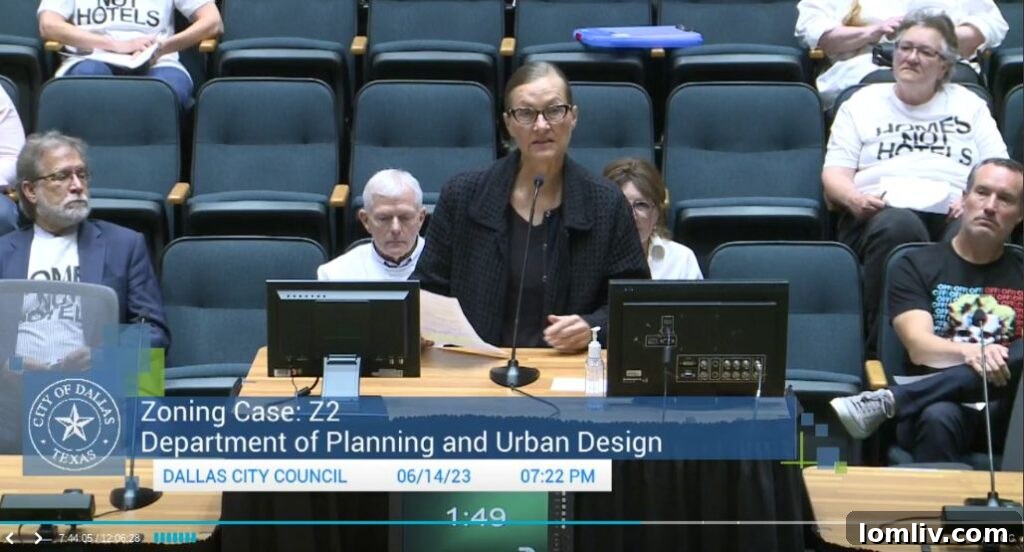
This bold move comes in direct response to a pivotal decision by the Dallas City Council in June, which prohibited short-term rentals in the vast majority of the city’s residential neighborhoods. The Council concurrently set a firm enforcement deadline for this new initiative in mid-December, creating a sense of urgency and apprehension among STR operators. This ban, a culmination of months of debate and public hearings, effectively reshapes the future of home-sharing and vacation rentals within the sprawling Texan metropolis.
DSTRA’s Stance: Protecting Property Rights and Economic Contributions
Lisa Sievers, a prominent board member of the DSTRA, conveyed the Alliance’s primary concerns to daltxrealestate.com on Monday. She underscored that the vast majority of Dallas’s short-term rental operators are responsible individuals who contribute positively to their respective communities. These operators often maintain high-quality properties, provide valuable accommodation options for tourists and business travelers, and contribute to the local economy through their services and associated spending.
“While the DSTRA is certainly open to and supports the implementation of a fair and sensible registration ordinance that addresses legitimate concerns, we fundamentally oppose a blanket ban,” Sievers stated. She elaborated that such a broad prohibition unfairly penalizes nearly all legitimate STR owners and operators in an attempt to curb the actions of a minuscule number of problematic properties. “Our fight is to safeguard our inherent right to continue operating well-managed short-term rentals, which we believe provide a necessary and beneficial service to neighborhoods and the city at large,” she added, emphasizing the Alliance’s commitment to responsible operation and community engagement.
Advocates for the Ban Remain Undeterred
On the opposing side of this contentious issue stands Olive Talley, a staunch “Homes Not Hotels” advocate and a vocal supporter of the “Keep It Simple Solution.” This solution, which forms the basis of the residential STR ban, was endorsed by the Dallas City Council earlier this year. Talley, reflecting the sentiment of many residents concerned about neighborhood integrity and quality of life, expressed little concern regarding the impending lawsuit.
“We are neither surprised nor intimidated by the threats of litigation emanating from the short-term rental industry,” Talley conveyed to daltxrealestate.com shortly after the City Council’s approval of the residential ban. She characterized litigation as a common tactic employed by STR operators when their preferred outcomes are not realized. “Litigation is an expected maneuver in this ongoing debate, and we are confident that the City of Dallas possesses a robust legal standing should the matter proceed to court,” Talley affirmed, signaling the city’s readiness to defend its ordinance.
In the immediate aftermath of the lawsuit announcement, Dallas Executive Assistant City Attorney Casey Burgess and Director of Communications Catherine Cuellar did not provide an immediate response to requests for comment. This silence likely indicates the city’s legal department is preparing its strategy and coordinating its official communication in light of the new legal challenge.
Navigating Dallas City Code Compliance and Enforcement
Even before the DSTRA’s formal lawsuit announcement, a palpable sense of uncertainty gripped many STR operators. A significant number of them voiced unanswered questions concerning their obligations, particularly regarding the ongoing payment of hotel occupancy taxes and the precise mechanisms of the upcoming enforcement. This ambiguity created a climate of confusion as operators tried to anticipate the practical implications of the impending December 14 deadline.
daltxrealestate.com reached out to both the City Attorney’s Office and the City Controller’s Office, the latter being responsible for the critical task of collecting hotel occupancy taxes. Several days later, a comprehensive response was issued by the Communications Department, shedding some light on these critical compliance issues.

The official statement confirmed that “Dallas City Code Article V, which pertains to the Hotel Occupancy Tax (HOT), remains entirely unaffected by the recently passed Ordinance Numbers 32473 and 32482.” This clarification is crucial, as it means that regardless of whether an STR operates legally or illegally under the new zoning ordinances, all such establishments are still unequivocally obligated to collect, report, and remit the Hotel Occupancy Tax. The statement further warned, however, that an STR operating outside the bounds of the new legal framework “may face citations or other punitive consequences for operating illegally.” This dual obligation creates a complex scenario for operators, who must continue tax payments even as their operational legality comes into question.
Assistant Director of Code Compliance Jeremy Reed, in an interview with daltxrealestate.com conducted prior to the lawsuit’s public announcement, confirmed the intense internal activity within the City of Dallas Code Compliance office. “Conversations regarding the new ordinance and its intricate enforcement protocols are taking place daily,” he revealed, underscoring the city’s dedicated efforts to formulate a robust and effective implementation strategy. “We are diligently working towards finalizing the comprehensive enforcement plan,” Reed stated, indicating a systematic approach to the new regulatory landscape.
He further clarified the city’s official position, aligning it with previously communicated timelines and processes. “Our official response remains consistent with what has been previously stated regarding the timeline and the overall process,” Reed explained. He directed interested parties to the city’s official resources, noting, “All pertinent information is readily available on our dedicated FAQ page.” Reed also reiterated the critical enforcement date: “We cannot legally enforce these new regulations prior to December 14th.” For those STRs that will ultimately be deemed legal under the new framework, he emphasized a crucial two-step process: “Every STR that successfully achieves legal status will be required to register with Code Compliance and obtain a certificate of occupancy from Development Services.”
Reed offered additional insight into the enforcement strategy, clarifying that it would not be solely dependent on citizen complaints. “We are currently in the process of procuring sophisticated software designed to provide us with real-time booking information from across the entire city, extending to future bookings as well,” he disclosed. This technological investment signals a proactive approach to enforcement. “Should this software identify a property operating as an unregistered short-term rental, we will promptly initiate the process by issuing a notice of violation,” Reed explained. This notice will serve as an official alert, informing the operator of their non-compliant status. “We will then grant them a specific period to achieve compliance by securing the necessary registration and certificate of occupancy,” he continued. The consequences for non-compliance are clear: “If they opt not to comply or cease operations, and our data unequivocally shows continued operation beyond the designated compliance date, we will proceed to issue official citations.” This layered approach, combining technology with phased enforcement, aims for comprehensive oversight of Dallas short-term rental regulations.
Short-Term Rentals, Hotel Occupancy Taxes, and Economic Fallout
The Dallas STR Alliance maintains that the ordinances passed in June are poised to severely cripple the short-term rental market, projecting that a staggering 94 percent of existing STRs will be forced out of business. This statistic underscores the Alliance’s argument that the ban is draconian and disproportionate to the actual issues at hand.

In a recent press release, DSTRA board members highlighted a crucial point: “This drastic measure is being implemented despite the city’s own statistics revealing that over 80 percent of STRs have generated zero 311 or 911 calls.” This data suggests that the vast majority of short-term rentals operate without incident, challenging the narrative that STRs are inherently problematic or a widespread source of nuisance. The Alliance further emphasized its proactive efforts: “Over the past three years, the DSTRA has actively collaborated with the City, participating in several city-initiated task forces, all aimed at crafting sensible and equitable regulations for the handful of nuisance STR properties.” Many of these constructive suggestions, they note, were incorporated into the new Registration Ordinance also approved by the Council on June 14. However, the overarching ban on residential STRs effectively nullifies these collaborative efforts and leaves behind what the Alliance views as “fair and sensible solutions.” The ban, in their view, represents an overreach that disregards nuanced approaches in favor of a sweeping prohibition, with significant economic repercussions for property owners and the broader Dallas economy.
Increased Communication and the STR Budget Allocation
In a related development, the City Council’s Government Performance and Finance Management Committee reviewed the findings of an audit last month. This audit specifically assessed the efficacy of the process utilized by the City Controller’s Office for the collection of Hotel Occupancy Tax (HOT) from both traditional hotels and short-term rentals. The audit concluded that there were no major systemic issues with the existing collection procedures, indicating a robust framework for revenue generation from accommodation services.
Jennifer Brown, Manager of Public Information, elaborated on the proactive steps taken by the City Controller’s Office. She confirmed that this department collaborated closely with the Code Compliance Department to develop and disseminate an informative letter. This letter was specifically designed to provide essential information and resources pertaining to Ordinances 32473 and 32482, ensuring that operators were aware of the new regulations and their implications. “The letter was systematically sent to all STRs currently registered with the CCO for the purpose of reporting and paying hotel occupancy taxes,” Brown stated, emphasizing the targeted communication effort. She also assured that “The CCO will maintain its commitment to periodically sending out these letters to continuously assist STR operators in preparing for the impending enforcement deadline,” ensuring ongoing guidance.

Jeremy Reed further detailed the city’s extensive outreach efforts, revealing that city officials have dispatched emails and letters to approximately 3,000 addresses. This outreach targeted both officially registered STR operators and those identified as “suspected operators,” indicating a broad approach to inform the community. “Our plan includes intensifying the frequency of these messages between now and the December enforcement date,” Reed stated, outlining an aggressive communication strategy. The objective is to emphatically convey a clear message: “If your property falls within specified X, Y, and Z zones, continued operation as a short-term rental is already deemed illegal under the new regulations.” This concerted communication aims to eliminate any lingering confusion and impress upon operators the gravity of the upcoming changes.
In a testament to the city’s commitment to enforcing the new regulations, the Dallas City Council adopted a comprehensive budget on September 20 for Fiscal Year 2024-25. This substantial budget, totaling $4.89 billion, includes critical allocations directly related to STR enforcement. Notably, it earmarks funding for nine new code enforcement positions, significantly bolstering the city’s capacity for oversight. Furthermore, a substantial allocation of $1.4 million has been designated specifically for the new short-term rental registration and inspection program. This financial investment underscores the city’s serious intent to implement and sustain the new regulatory framework effectively. City officials have affirmed that the controller’s office will maintain vigilance in monitoring the collection of hotel occupancy taxes, ensuring that this revenue stream remains consistent even amidst the regulatory shifts.
The Constitutional Challenge: DSTRA’s Legal Strategy
As of late Monday, the immediate ramifications of the DSTRA’s lawsuit on the planned December 14 enforcement date remained unclear. The legal challenge introduces an element of uncertainty, potentially prompting a reevaluation or temporary halt of the enforcement process, pending court decisions. The core of the DSTRA’s legal argument, as articulated by David Coale, an attorney with Lynn Pinker Hurst Schwegmann, centers on constitutional rights. Coale contends that the city’s ban on residential STRs constitutes a violation of fundamental property rights protected under the Texas Constitution of 1876.
“From a legal perspective, the City’s zoning ordinance can only be described as using a sledgehammer to swat a fly,” Coale asserted, employing a vivid metaphor to underscore the disproportionality of the measure. He argued that the ban imposes an “extremely drastic and far-reaching prohibition” that is entirely out of sync with, and disproportionate to, any harm or nuisance issues identified by city staff. Coale further elaborated that in enacting such a sweeping ban, the City of Dallas has transgressed upon fundamental rights enjoyed by STR owners, rights that are explicitly safeguarded by the Texas Constitution. This legal strategy suggests that the DSTRA will seek to prove that the ban is an arbitrary and excessive restriction on property use, infringing upon the constitutional liberties of property owners to utilize their assets as they deem fit, provided they do not cause demonstrable harm to the community. The outcome of this legal battle will undoubtedly set a significant precedent for property rights and urban planning in Dallas and potentially across Texas.