

The Pritzker Architecture Prize, often hailed as the “Nobel Prize of architecture,” stands as the profession’s highest honor. Established in 1979 by the esteemed Pritzker family, founders of the Hyatt Hotels chain, this prestigious award is bestowed annually upon a living architect or architects whose built work demonstrates a combination of talent, vision, and commitment, producing consistent and significant contributions to humanity and the built environment. Unlike awards for a single project, the Pritzker Prize recognizes a lifetime body of work, celebrating an architect’s enduring impact and innovation. The inaugural recipient of this distinguished accolade was the visionary architect Philip Johnson, known for his groundbreaking designs like Crescent Court.
In 2019, the architecture world celebrated a true master as the prize was awarded to the venerable Japanese architect Arata Isozaki. At 87 years old, Isozaki received the news with characteristic wit and humility, reportedly expressing that he was “overjoyed” and, with an impish grin, adding, “it’s like a crown on a tombstone.” This poignant remark perfectly encapsulated the veteran architect’s perspective on a career spanning over six decades, reflecting on his legacy as he continued to push boundaries well into his later years. Isozaki’s architectural journey began in the ashes of post-war Japan, where he witnessed the devastation that claimed much of the country’s urban fabric. This formative experience profoundly shaped his philosophy, instilling in him a deep understanding of destruction, rebirth, and the constant flux of urban spaces. His early career blossomed during Japan’s second wave of aggressive rebuilding, allowing him to contribute significantly to the redefinition of a nation’s architectural identity, often challenging existing norms and embracing a forward-thinking, postmodern approach that would define much of his work.
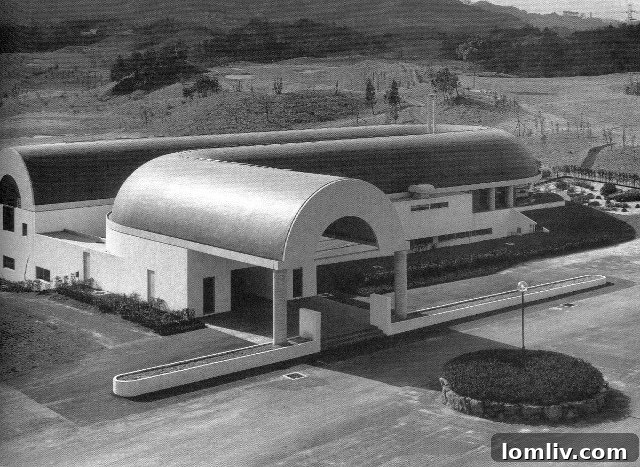
Fujimi Country Club: Oita, Japan (1973) – A Philosophical Interrogation
One of Arata Isozaki’s earlier and most conceptually intriguing commissions was the clubhouse for the Fujimi Country Club in Oita, Japan, completed in 1973. At first glance, the structure captivates with its bold, curving tubular form. However, a closer inspection reveals a deeper, more intellectual layer: the building is subtly shaped like a colossal question mark, with a small, circular green patch of landscape serving as its period. This ingenious design was not merely an aesthetic choice but a literal and symbolic questioning of Japan’s pervasive golf mania during that era. Isozaki, ever the provocateur, used the commission as a platform to embed a philosophical commentary on societal trends within the architecture itself. Intriguingly, the client reportedly never specified or even requested such a symbolic shape, highlighting Isozaki’s independent and intellectual approach to design. The Fujimi Country Club remains a testament to his early embrace of postmodernism, demonstrating his willingness to imbue functional buildings with intellectual depth and a critical perspective, transforming mere structures into statements that engage viewers in a thoughtful dialogue about their environment and cultural context.
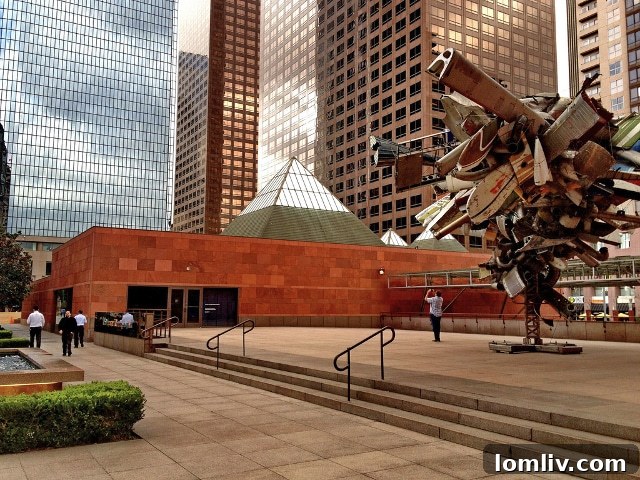
Museum of Contemporary Art (MOCA): Los Angeles, CA (1980) – Global Stage Debut
Arata Isozaki’s first significant work outside Japan marked a pivotal moment in his career and in contemporary museum architecture: the Museum of Contemporary Art (MOCA) in Los Angeles, designed in 1980. At a time when many museums favored artificial lighting to meticulously control exhibition environments, Isozaki championed a different vision. He sought to create a light-filled museum, embracing natural illumination as an integral part of the visitor experience and the presentation of art. To achieve this, he innovatively punctured the roof with large, geometrically precise glass pyramid skylights. These skylights were strategically positioned to allow ample natural light to flood the interiors while carefully avoiding direct sunlight on artworks, thus protecting them from damage. The building’s exterior, clad in a vividly red Indian sandstone, was an audacious choice that made MOCA an immediate architectural landmark. This striking use of color and material, combined with his thoughtful integration of natural light, catapulted Isozaki’s career onto a truly global stage, solidifying his reputation as a master architect capable of blending cultural sensitivity with bold, functional design for the next four decades.
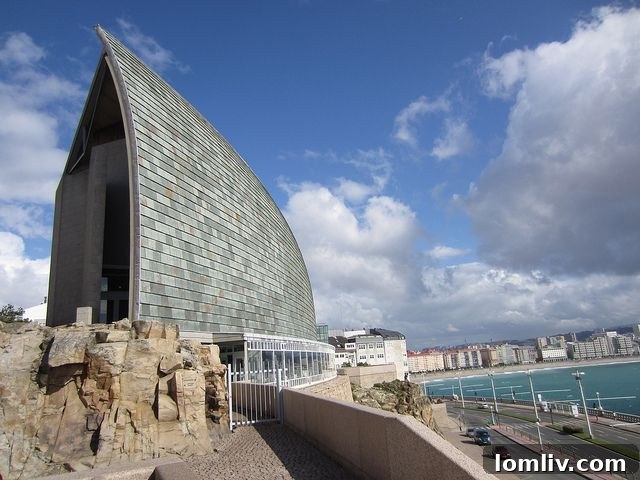
Domus Casa del Hombre: A Coruña, Spain (Mid-1990s) – Celebrating Humanity
In the mid-1990s, Arata Isozaki continued his international exploration of cultural institutions with the design of another groundbreaking museum, the Domus Casa del Hombre (House of Man), located on the picturesque coast of A Coruña, Spain. This unique institution is entirely dedicated to the study and celebration of mankind, exploring human biology, evolution, and cultural diversity. Isozaki’s design for the Domus is deeply evocative and perfectly captures its thematic essence. The building’s primary facade dramatically shapes like a sail, billowing majestically out towards the harbor, symbolizing humanity’s journey across seas, its spirit of discovery, and its profound connection to the natural world. In contrast, the rear of the building adopts the elegant and intricate form of a folding fan, a subtle nod to Isozaki’s Asian heritage and a metaphor for the multifaceted and unfolding complexities of human existence. This project exemplifies Isozaki’s extraordinary ability to weave narrative and symbolism into architectural form, creating buildings that not only house their functions but also eloquently speak to their purpose and context, enriching both the landscape and the human experience.
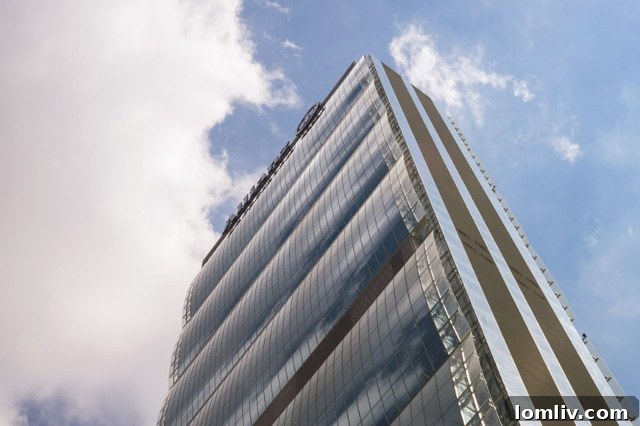
Citylife Tower (Allianz Tower): Milan, Italy (2003-2014) – Vertical Grandeur
Leaping forward another decade, Arata Isozaki’s ingenious touch is evident in the formidable Citylife Tower, also known as the Allianz Tower, dominating the modern skyline of Milan, Italy. This towering structure, a remarkable 50-story, 686-foot high-rise, serves as the regional headquarters for the prominent German insurance company Allianz. Plans for this ambitious project commenced in 2003, culminating in its completion in 2014, a testament to the intricate process of modern skyscraper construction. Isozaki collaborated with the talented Milanese architect Andrea Maffei on this monumental undertaking. The building’s distinctive exterior is characterized by a series of six-story connected convex segments that gently twist upwards, giving the illusion of a continuous, fluid motion, an elegant spiral reaching for the sky. This dynamic form is not merely aesthetic; it’s a brilliant architectural solution born from practical constraints. The local government’s demand to allocate more ground space back to public parks necessitated an extremely vertical building strategy. The only economically viable way to free up valuable ground space in such a dense urban environment was through vertical construction, pushing the boundaries of height and slender design.
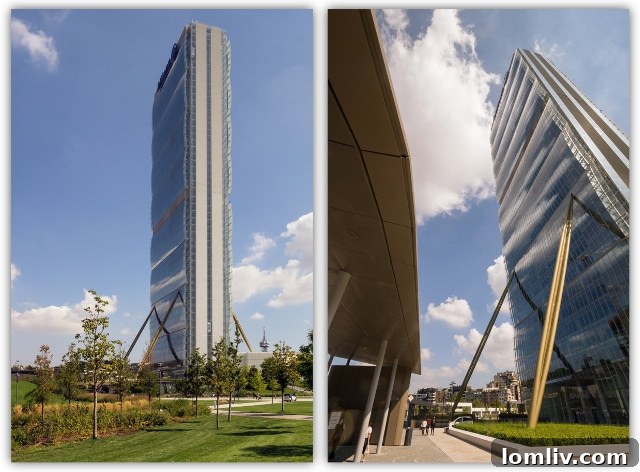
The Allianz Tower is notably slender, measuring just 70 feet by 190 feet at its base. Such tall, thin buildings often face significant engineering challenges, primarily concerning wind forces and the resulting sway, which can induce a sensation akin to seasickness for occupants. Architects and engineers have developed various sophisticated methods to mitigate these issues. Some designs incorporate “blow-out” floors, where sections without windows allow air to pass directly through the building, minimizing wind resistance and swaying. Others utilize massive suspended ballast tanks at their apex, where water or other heavy materials act as a counterbalance to oppose strong wind forces. For the Allianz building, Isozaki and Maffei opted for a bold and aesthetically integrated solution. Instead of concealing the structural supports, they chose to express them prominently and with striking elegance. Four massive, angled supports are driven deep into the bedrock, visibly propping up the building and adding exceptional stability. These gleaming golden supports are not just functional; they are celebrated elements of the design, proudly displaying the building’s engineering prowess as an integral part of its architectural identity.
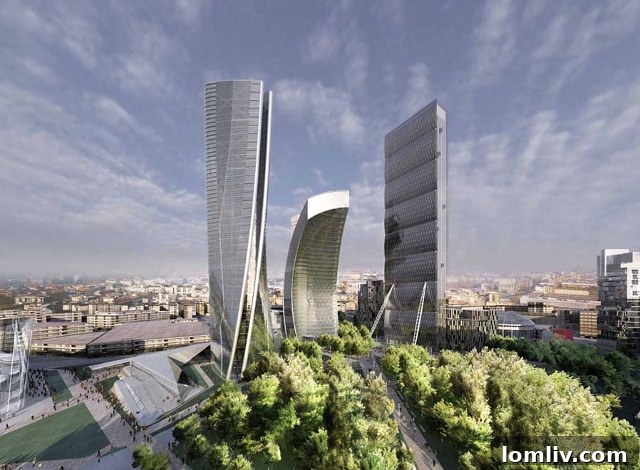
It’s important to understand that the Allianz Tower doesn’t stand in isolation on a blank urban canvas. It is, in fact, the first of three distinctive high-rises planned for the Citylife district, a vibrant new commercial and residential area. The other two prominent towers in this ambitious development are designed by equally celebrated architects: one by the late, revered Zaha Hadid, known for her fluid and futuristic forms, and the other by Daniel Libeskind, renowned for his deconstructivist and often symbolic designs. This trio of architectural marvels from some of the world’s most influential designers transforms the Citylife area into a captivating outdoor gallery of contemporary urban architecture, with Isozaki’s tower serving as a magnificent anchor.
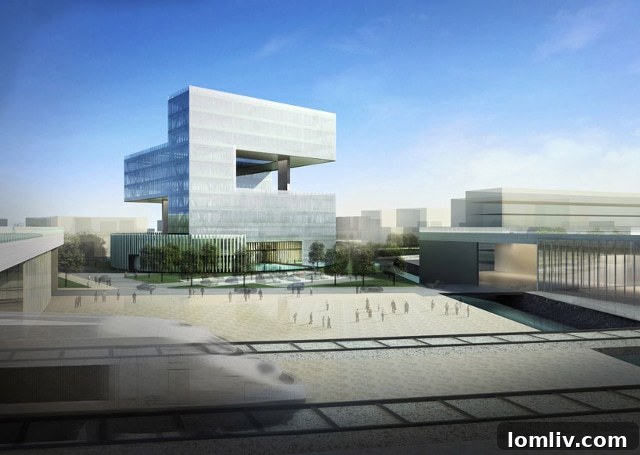
Bergamo Provincial Government Offices: Bergamo, Italy (2011 Proposal) – Defying Gravity
Another striking example of Arata Isozaki’s collaborative genius with Andrea Maffei is the 2011 proposal for the Bergamo Provincial Government Offices in Bergamo, Italy. This ambitious design featured an almost 300-foot-tall structure, characterized by its heavily-glassed exterior and an intricate interplay of geometric shapes and voids, creating a sense of visual excitement and dynamism. The most arresting feature of this project is its dramatically cantilevered plan, where substantial sections of the building appear to float unsupported, extending far beyond their foundational base. This daring structural feat harks back conceptually to the “question mark” country club, challenging the viewer’s perception and leaving one to wonder how such a massive structure defies gravity without collapsing. It’s a profound architectural statement that pushes the boundaries of engineering and design, creating an exhilarating sense of tension and wonder.
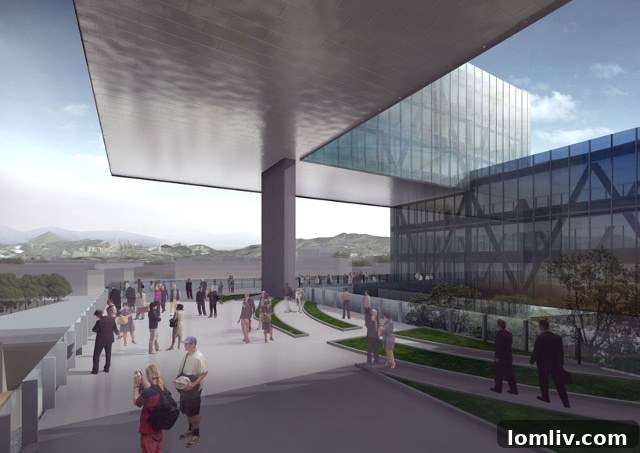
Indeed, walking beneath the vast, shaded expanse of this seemingly floating building would undoubtedly evoke a strong sense of awe and curiosity. While a single, large support beam is visible, the sheer scale of the cantilevered sections makes one instinctively question its adequacy. Yet, it must be sufficient, a testament to sophisticated engineering. Even as the eye traces the connection points to the more grounded parts of the building, a large interior support remains elusive, adding to the mystery. This design masterfully plays with perception: what appears to be an impossibly light and airy structure, defying conventional expectations of mass and stability, is in reality an incredibly, exceptionally heavy marvel of modern construction. Isozaki and Maffei skillfully manipulate visual weight and structural expression to create an experience that is both intellectually stimulating and viscerally thrilling, blurring the lines between art and engineering.
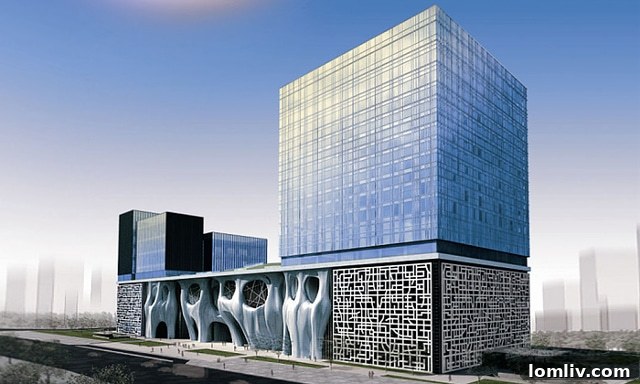
Zendai Himalayas Center: Shanghai, China – A Multifaceted Marvel
The Zendai Himalayas Center in Shanghai, China, is often described as a “rich soup of a building,” a truly apt metaphor for its complex, layered, and deeply engaging design. At its core, the eye is immediately drawn to a series of free-flowing, organic shapes that evoke a sense of raw, untamed nature. These forms resemble either the robust, intertwined roots of an ancient tree system or the beautifully eroded caverns of a natural cave, creating a primal and grounding experience. Flanking this organic heart is an intricately carved screen, a delicate yet powerful element that mimics the fluid brushstrokes of traditional Chinese calligraphy, seamlessly blending ancient cultural aesthetics with contemporary architectural expression. Capping this multifaceted base are a series of high-rise towers, distinguished by an “electric skin” of dynamic lighting that transforms their appearance with changing nighttime colors, reflecting the vibrant energy of Shanghai itself.
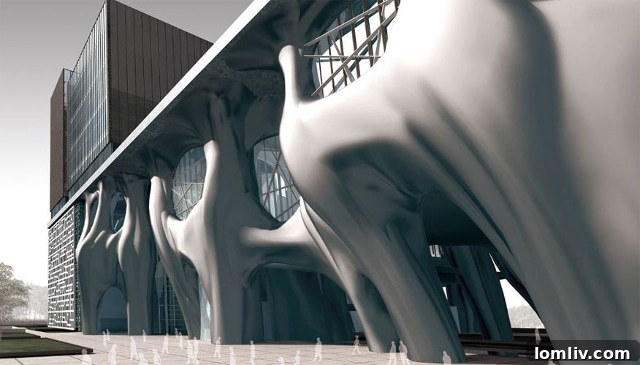
A closer examination of the central organic structure reveals its incredible strength, acting as a powerful foundation that supports the expansive platform of high-rises above. The cavernous spaces within these “roots” dwarf the scale of humanity, creating a sense of wonder and humility, yet simultaneously promoting an inviting openness that beckons visitors to explore its depths. This duality of imposing scale and welcoming accessibility is a hallmark of Isozaki’s ability to craft spaces that are both monumental and intimately engaging.
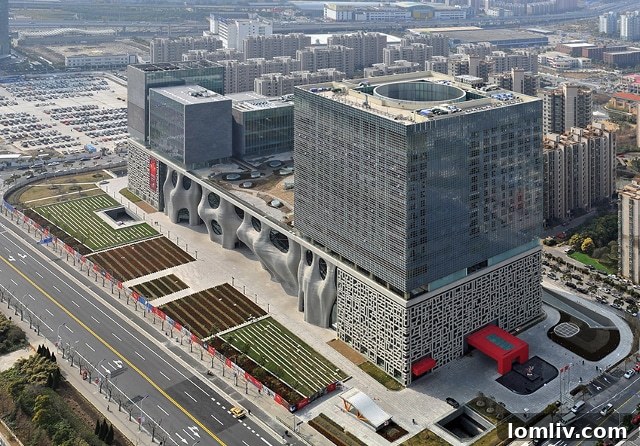
Zooming back, one can better appreciate the vast platform and the array of buildings resting upon it. A particularly notable feature is the large cube in the foreground. In what could have been a darkly lit interior within such a deep and expansive building, Isozaki employed an ingenious solution: “fixing a round peg in a square hole.” This large, circular well penetrates deep into the thick recesses of the structure, ensuring that natural light floods even the most interior spaces, defying the conventional challenges of illumination in large-scale commercial buildings. Furthermore, lush green spaces are integrated between the buildings, appearing to sprout organically from the outsized “roots” below, fostering a connection to nature amidst the urban density and promoting an environment of tranquility and sustainability.
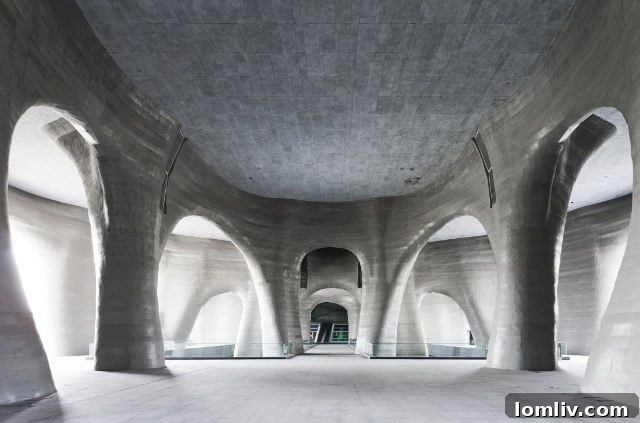
The interior of the root structure itself is precisely as one might anticipate from its exterior impression – profoundly organic, with expansive, curving spaces that evoke the enchanting sensation of exploring a darkened, mystical forest. This deliberate design creates an immersive and almost primordial experience for visitors, appealing to a sense of childlike wonder and discovery.
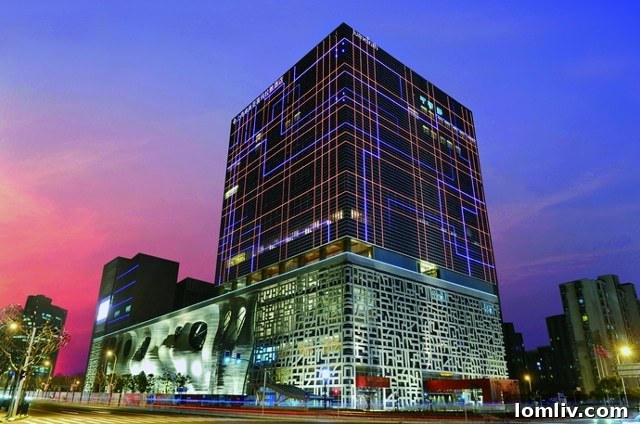
The building’s interior public spaces are exceptionally well-lit, a masterclass in urban illumination. At one end, an enormous TV screen captivates audiences, while the central cube is meticulously crisscrossed with fiber optic lighting, capable of projecting dynamic advertisements, intricate patterns, or ambient mood lighting with seamless versatility. The lower levels are equally considered, with backlit screens and strategic up-lighting meticulously designed to accent the organic central section, further enhancing the building’s dramatic effect and creating a truly immersive sensory experience for all who visit.
This brief exploration merely offers a glimpse into Arata Isozaki’s extraordinary, decades-spanning architectural portfolio. As evidenced by these diverse projects, his style is notoriously difficult to categorize, perpetually evolving and adapting to each unique context and philosophical inquiry. Reflecting on his career in 1993, the discerning New York Times architecture critic famously observed of Isozaki, “He perceived that a time that had lost its faith in the future had also lost its grip on the past.” This profound statement perfectly encapsulates Isozaki’s unique position as an architect who navigated the complexities of postmodernism, often drawing from both historical precedents and futuristic visions, all while questioning conventional wisdom. His work consistently challenges expectations, blending Eastern and Western influences, and forever leaving an indelible mark on the global architectural landscape.

Remember: My focus areas encompass high-rises, homeowners associations (HOAs), and renovation projects. However, I also hold a deep appreciation for both modern and historical architecture, always considering their balance against the burgeoning YIMBY (Yes In My Backyard) movement. My commitment to insightful architectural and real estate commentary has been consistently recognized. In 2016, 2017, and 2018, the National Association of Real Estate Editors honored my writing with three Bronze awards (2016, 2017, 2018) and two Silver awards (2016, 2017). If you have a compelling story to share, a challenging architectural question, or even a marriage proposal to make, don’t hesitate to reach out! Shoot me an email at [email protected]. Feel free to look for me on Facebook and Twitter; while I maintain a private presence, your curiosity is always welcome.