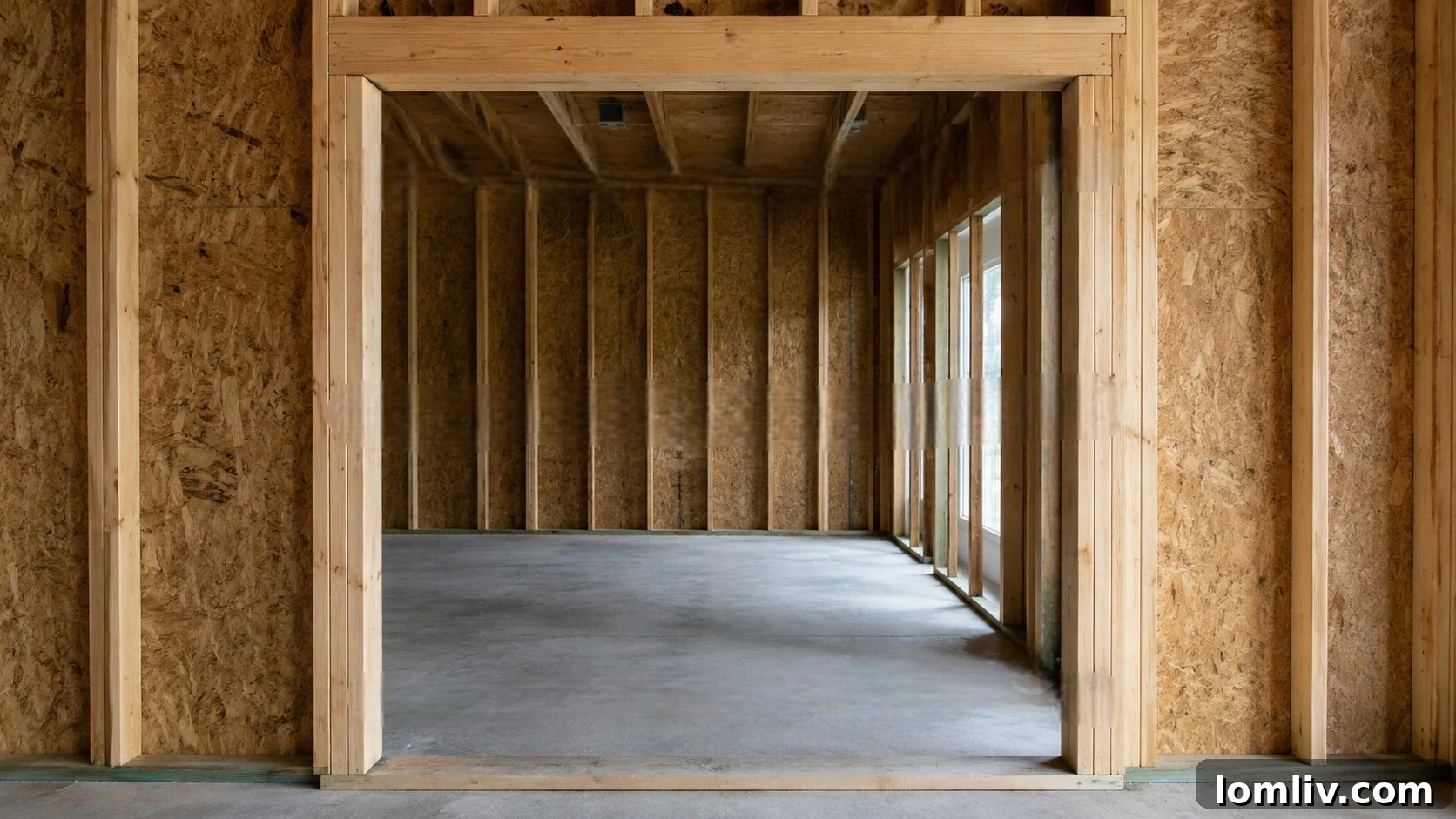
I once watched a DFW handyman remove newly installed drywall because the rough opening was half an inch too narrow for the prehung door waiting on the porch.
The door itself was fine. The opening wasn’t. He framed first and bought the door second.
That small mistake cost him an afternoon, a sheet of drywall, and an unbillable callback.
In North Texas, where slab-on-grade foundations, brick veneer, and both 2×4 and 2×6 walls are common, door planning needs to begin before framing is finished. When the rough opening is correct, the door is easier to shim, latch, flash, and get through inspection.
When it’s wrong, you end up patching drywall, reordering materials, or explaining delays to the homeowner.
The simplest rule is this: plan the opening around the door unit, not the other way around. That gives the door the best chance to hang, swing, and latch correctly on the first try.
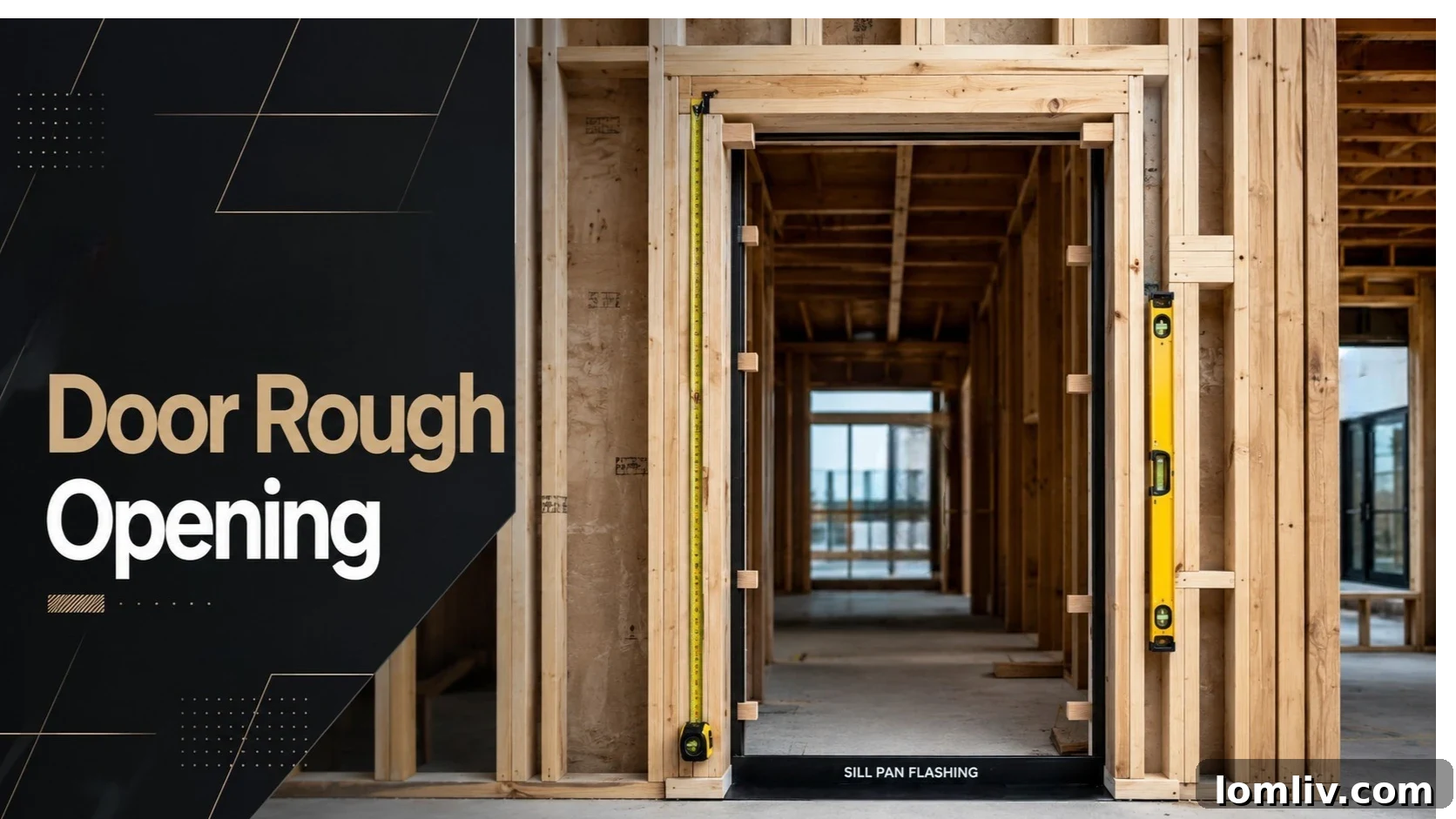
Key Takeaways
Keep these basics in mind so you can frame once, order once, and avoid the mistakes that slow down the job.
- Plan the rough opening before you buy: Match the framed opening to the manufacturer’s unit specs and the local code requirements.
- Egress matters: Every home needs at least one side-hinged egress door with a minimum 32-inch clear width and 78-inch clear height.
- Exterior prehung doors need clearance: Most major brands call for a rough opening about an inch wider and roughly three-quarters of an inch taller than the assembled door unit.
- Interior prehung doors need less room: Interior units typically need about half an inch of extra width and height, assuming the opening is square, level, and plumb.
- Jamb depth must match the wall: Common jamb depths are 4-9/16 inches for a 2×4 wall and 6-9/16 inches for a 2×6 wall, assuming half-inch drywall on both sides.
- Sidelites change the math: A sidelite is the fixed glass panel beside the door and can add significant width to the required rough opening.
- Flash exterior openings correctly: In the Dallas–Fort Worth area a sill pan and self-adhered flashing tied into the wall wrap are essential to keep wind-driven rain out of the wall assembly.
What Is a Rough Opening, and Why Does It Matter?
A rough opening is the framed space that holds the door unit, the shims, and the adjustments you need during installation.
It’s measured from stud to stud and from the subfloor to the bottom of the header. The opening must be larger than the assembled door unit so there’s room to plumb, level, and square the jamb before fastening it in place.
Knowing the framing terms helps: king studs run the full height of the wall, jack studs support the header, cripple studs fill the space above the header, and the header carries the load over the doorway. When you buy a prehung door, the slab is already mounted inside the jamb.
Do not confuse clear width with rough opening width. Clear width is the usable walk-through space when the door is open 90 degrees. Rough opening width is the stud-to-stud measurement. The outside width of the door unit falls between those two numbers.
Most prehung doors need about half an inch of shim space on each side. Head clearance depends on the brand, threshold, and jamb design. Major manufacturers generally recommend keeping the extra width close to an inch total, so always check the installation sheet before framing or setting the door.
Why You Should Plan the Rough Opening First
Planning the rough opening early saves labor, reduces waste, and prevents callbacks.
Faster Installation
A square, level, and plumb opening lets you focus on setting the door instead of shaving studs, fighting bowed framing, or packing huge shim stacks into oversized gaps. On remodels with multiple doors, that saves hours.
Fewer Material Returns
Accurate rough opening measurements help you avoid ordering wrong-size units and incorrect jamb depths. Many projects include both 2×4 and 2×6 walls, so verifying jamb depth before ordering is important.
Fewer Callbacks
North Texas clay soils can shift and expose weak door installations. Proper shim space, straight framing, and long hinge screws into the structural framing help keep the reveal even and the latch operating smoothly.
Common Door Rough Opening Sizes
Standard planning sizes are useful early in a project, but the manufacturer’s spec sheet should control the final rough opening.
- Interior single prehung doors: A common rule is to add about two inches to the slab width and two inches to the slab height. For example, a 30×80 slab often needs a rough opening around 32×82, though tolerances vary by brand.
- Exterior single prehung doors with a threshold: A standard 36×80 front entry unit often needs a rough opening around 38 inches wide and 82 to 82-1/2 inches tall. The final size depends on the threshold, trim, and jamb profile.
- Entry doors with sidelites: Add the manufacturer’s sidelite width to the rough opening. Some framing tables allow about 1-1/2 inches for one sidelite and 3 inches for two, but confirm the exact unit build before cutting lumber.
- Eight-foot doors: Check the full assembled unit height, not just the slab size. You may need a higher header or floor adjustments to keep the exterior landing code-compliant.
- Bifold, bypass, pocket, and barn doors: These systems use their own track kits and framing requirements. Do not assume standard swing-door rough opening dimensions will work for sliding or folding doors.
How to Measure a Rough Opening
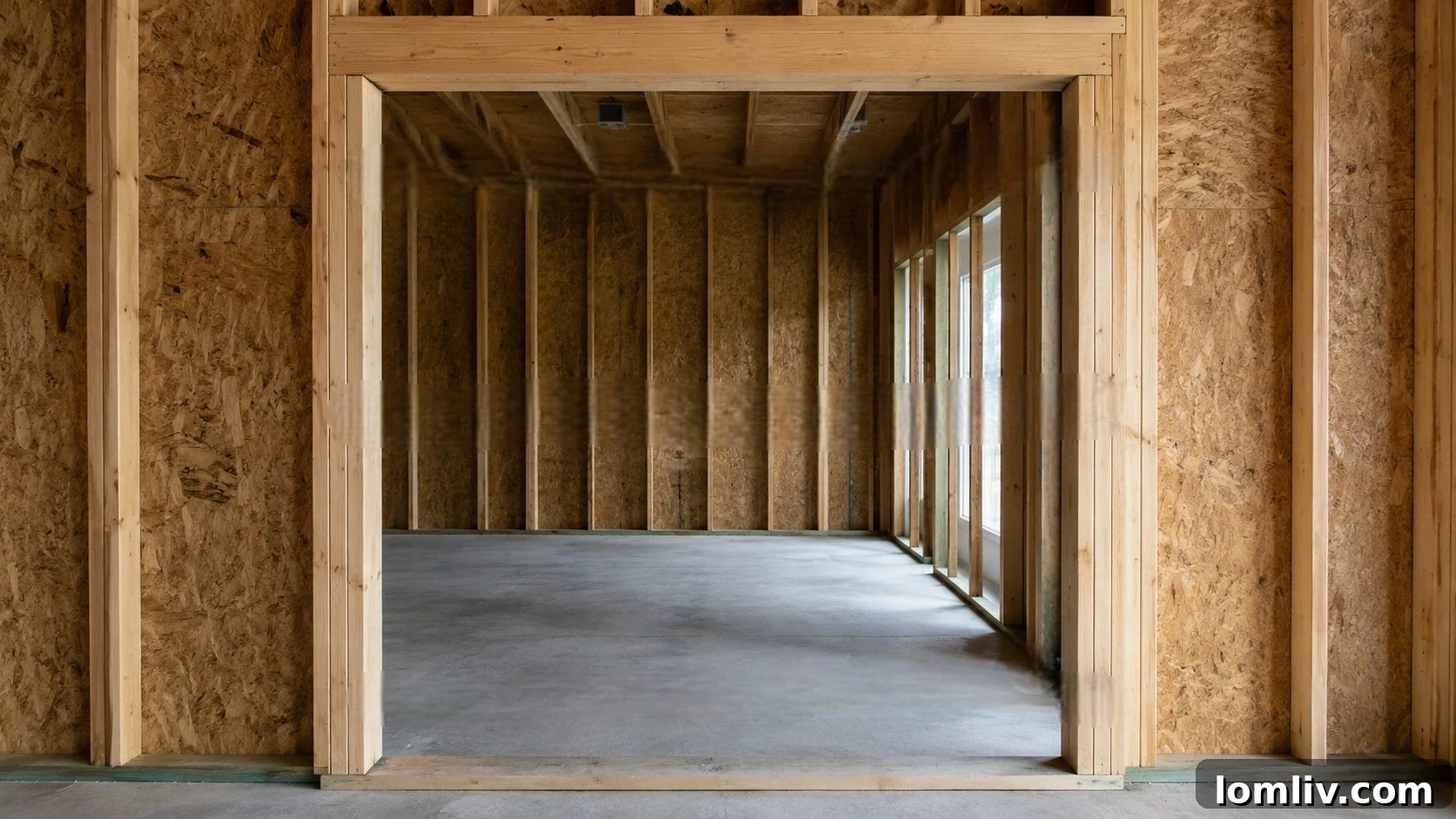
Measure width, height, and wall depth in multiple places. When ordering a door, use the smallest measurement.
Major manufacturers recommend taking three horizontal measurements and using the smallest one. That ensures the replacement unit fits even if the framing is not perfectly straight.
Step 1: Expose the framing
Remove the interior casing so you can see the true stud-to-stud opening. For exterior doors, confirm whether you are measuring from the bare subfloor or from the finished sill reference point.
Step 2: Measure the width
Measure between the trimmer studs at the top, middle, and bottom of the opening. Record the smallest number, not the average.
Step 3: Measure the height
Measure from the subfloor or finished floor to the bottom of the header on the left, center, and right sides. If hardwood, tile, or another finished floor will be installed later, account for that buildup now so the door does not drag.
Step 4: Measure the wall depth
On interior walls, measure from the face of drywall on one side to the face of drywall on the other. On exterior walls, measure the full wall thickness. That tells you whether you need a 4-9/16-inch jamb, a 6-9/16-inch jamb, or custom jamb extensions.
Step 5: Check for plumb, level, and square
Put a level on both trimmer studs, check the header, and compare diagonal measurements. If a stud is bowed, twisted, or out of plumb, fix the framing before ordering or setting the door.
If measurements are inconsistent or the header looks off, do a visual field check before sending numbers to your supplier. For most prehung doors, keep about half an inch of shim room on each side. If the existing opening gives you less than that, reframe it before installation.
How to Frame the Rough Opening Correctly
Straight studs, proper clearance, and good flashing matter as much as final dimensions.
Lay out the framing first
Set the full-height king studs, then install the jack studs that support the header. Size the header according to IRC span tables or an engineered detail when the opening is wide or carrying a heavy load. Fill the space above the header with cripple studs up to the top plate.
Straighten the opening before the door arrives
Plane, shim, or replace bowed studs before setting the unit. The hinge-side trimmer should be plumb because even a small crown can create an uneven reveal from top to bottom.
Keep the planned clearance
Do not tighten the rough opening just because it looks cleaner during framing. That extra space is what allows for small adjustments during installation.
Prepare exterior openings for water
Install a sill pan and tie self-adhered flashing into the house wrap so water drains out rather than into the wall. In warm, humid climates like much of North Texas, this protection is essential against wind-driven rain.
Prepare interior openings for support
Dry-fit the unit, pre-shim the hinge side if needed, and use long screws through the top hinge. Those screws must bite into structural framing, not just the soft jamb.
Code Checkpoints for North Texas Door Installations
Inspectors commonly focus on clear width, exterior landing heights, garage fire separation, and water management.
Dallas and Fort Worth currently use the 2021 International Residential Code with local amendments, but adopted codes vary by jurisdiction. Verify the adopted code with the local authority before framing or ordering.
- Primary egress door: Every house needs at least one side-hinged egress door with a minimum 32-inch clear width and 78-inch clear height. Clear width is measured from the face of the open door to the door stop with the slab open 90 degrees.
- Exterior landing heights: At the required egress door, the interior floor landing cannot be more than 1-1/2 inches below the top of the threshold. Other exterior doors may allow a larger step-down in some situations, but local amendments can change the rule.
- Garage-to-dwelling fire separation: The door between the garage and the dwelling must be self-closing and self-latching, and be a solid wood door, a solid or honeycomb-core steel door at least 1-3/8 inches thick, or a 20-minute fire-rated assembly. Inspectors may check the self-closing action on site, so don’t rely on the label alone.
- Climate note: Confirm the project’s county and jurisdiction before applying energy-code assumptions; local climate-zone assignments can affect details like flashing and sealing.
How to Shim, Set, and Troubleshoot the Door
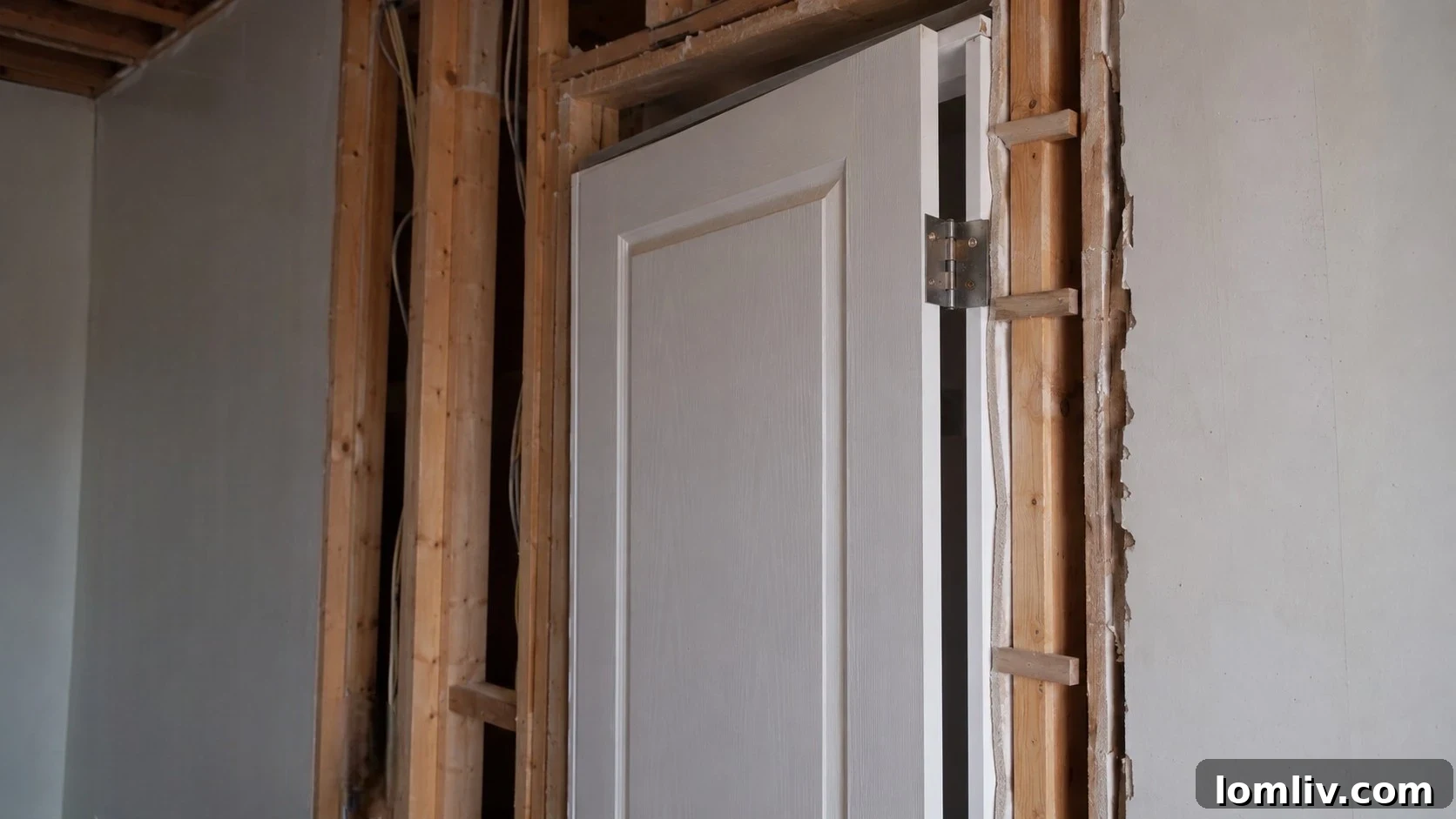
Set the hinge side first, lock that vertical plane in place, then adjust the rest of the unit around it.
Set the sill on the pan, tilt the unit into the opening, and fasten the hinge side through properly placed shims. Drive long screws through the top hinge into the framing. Once the hinge side is secure, adjust the latch side and head jamb until the reveal is even around the slab.
Before installing casing, check the swing, latch engagement, and weatherstrip compression. It’s far easier to correct a small bind before the trim goes on.
- If the rough opening is too small, reframe it. Forcing a prehung door into a tight opening removes adjustment space and usually results in a bad reveal or sticky latch.
- If the rough opening is too large, add solid filler framing where shim stacks would otherwise be too thick. Also confirm that the casing will cover the drywall gap.
- If the jamb depth does not match the wall, correct the jamb with custom jamb extensions or reorder the door with the proper depth. A 4-9/16-inch jamb in a 2×6 wall will leave a visible gap standard casing won’t hide.
- If studs are out of plumb, correct the framing first. Trying to fix poor framing with oversized shim stacks usually creates another door problem.
A Quick Closeout Checklist
A short closeout check can catch most fit and code issues before trim, inspection, or handoff.
Before calling for inspection or turning the project over to the homeowner, confirm the following:
- The rough opening matches the manufacturer’s size tolerances.
- The opening is square, level, plumb, and properly flashed for exterior exposure.
- The hinge side is locked in place with long screws driven into structural framing.
- The door reveal is even, the latch works smoothly, and the sweep and threshold are adjusted.
- Egress sizes, exterior landing heights, and garage fire-separation rules have been checked where applicable.
- The door model, jamb depth, and final rough opening dimensions are recorded in the project notes.
Quality door work starts before the delivery truck arrives. The cleanest installations come from accurate measurements, straight framing, proper shim space, and flashing that can handle the local climate.
Frequently Asked Questions
How much bigger should the rough opening be than the door?
It depends on whether you measure the slab or the assembled prehung unit. Most exterior prehung doors need a rough opening about an inch wider and roughly three-quarters of an inch taller than the unit’s outside dimensions. Most interior units need about half an inch of extra width and height. Always follow the manufacturer’s installation sheet.
What is the rough opening for a standard 36×80 front entry door?
A common framing range is about 38 inches wide by 82 to 82-1/2 inches tall for a typical 36×80 exterior prehung unit. The exact size depends on the threshold, jamb, and trim profile, so confirm the manufacturer’s specs before cutting lumber.
Do I need a sill pan for an exterior door in North Texas?
Yes. A sill pan and proper flashing are inexpensive and effective protection against water intrusion. In the Dallas–Fort Worth area, wind-driven rain can force moisture into small gaps, so the pan should drain outward and tie into the flashing system.
How do I choose between a 4-9/16-inch and 6-9/16-inch jamb?
Measure the actual wall thickness on site. A typical 2×4 wall with half-inch drywall on both sides uses a 4-9/16-inch jamb. A 2×6 wall with the same drywall setup uses a 6-9/16-inch jamb. For non-standard wall thicknesses, order custom jamb extensions.
What kind of door is required between the garage and the house?
Under common building codes, the opening between the garage and the dwelling requires a self-closing solid wood door, a solid or honeycomb-core steel door at least 1-3/8 inches thick, or a 20-minute fire-rated assembly. Inspectors may verify both the door construction and the self-closing hardware at final inspection.