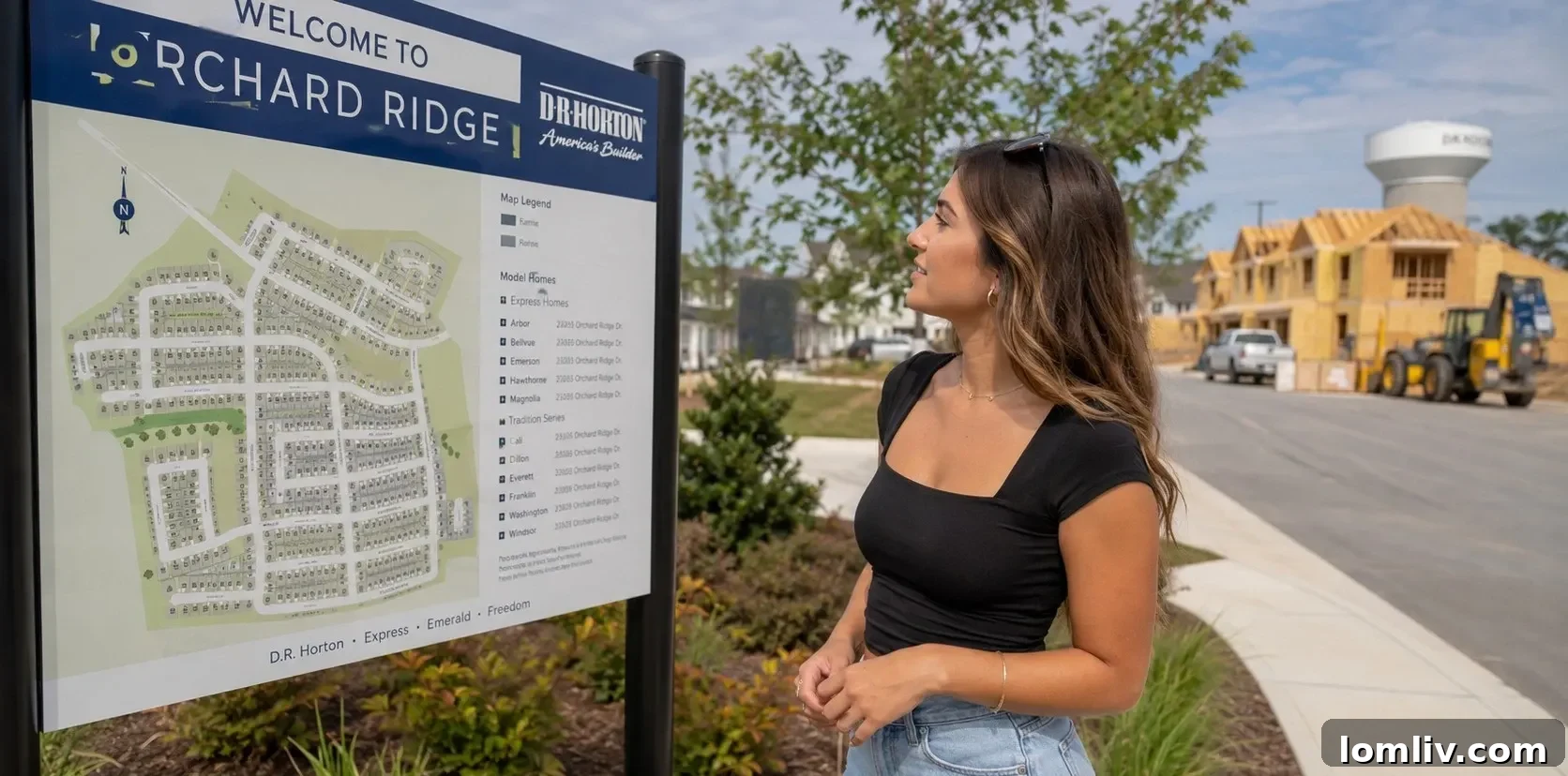
If you study migration and population trends, one thing is clear about the Dallas–Fort Worth region: the metro continues to grow rapidly, but the biggest gains are not centered in downtown Dallas.
Between mid-2024 and mid-2025, the Dallas–Fort Worth metro area added 123,557 residents, ranking it second in the nation for numeric population growth. At the same time, Dallas County experienced a slight population decline. That contrast shows where North Texas growth is concentrated in 2026: farther up the Dallas North Tollway, deeper into Collin County, and east toward Rockwall and Kaufman counties.
Why DFW’s Outer Suburbs Keep Pulling Buyers
Three main forces explain the shift.
- Job growth and corporate expansion: DFW continues to attract employers and corporate relocations. Companies such as Toyota, JPMorgan Chase, the PGA of America, and Caterpillar have helped make Plano, Frisco, and Irving major employment centers for professionals who want more space while staying in the region.
- Housing supply: Collin County added nearly 18,000 housing units in a single year, among the highest totals nationwide. Available land, active builders, and master-planned communities are meeting demand that more built-out suburbs cannot absorb.
- School access: Fast-growing suburbs share common appeals: newer communities, family-friendly amenities, and school districts that many buyers are willing to commute farther for.
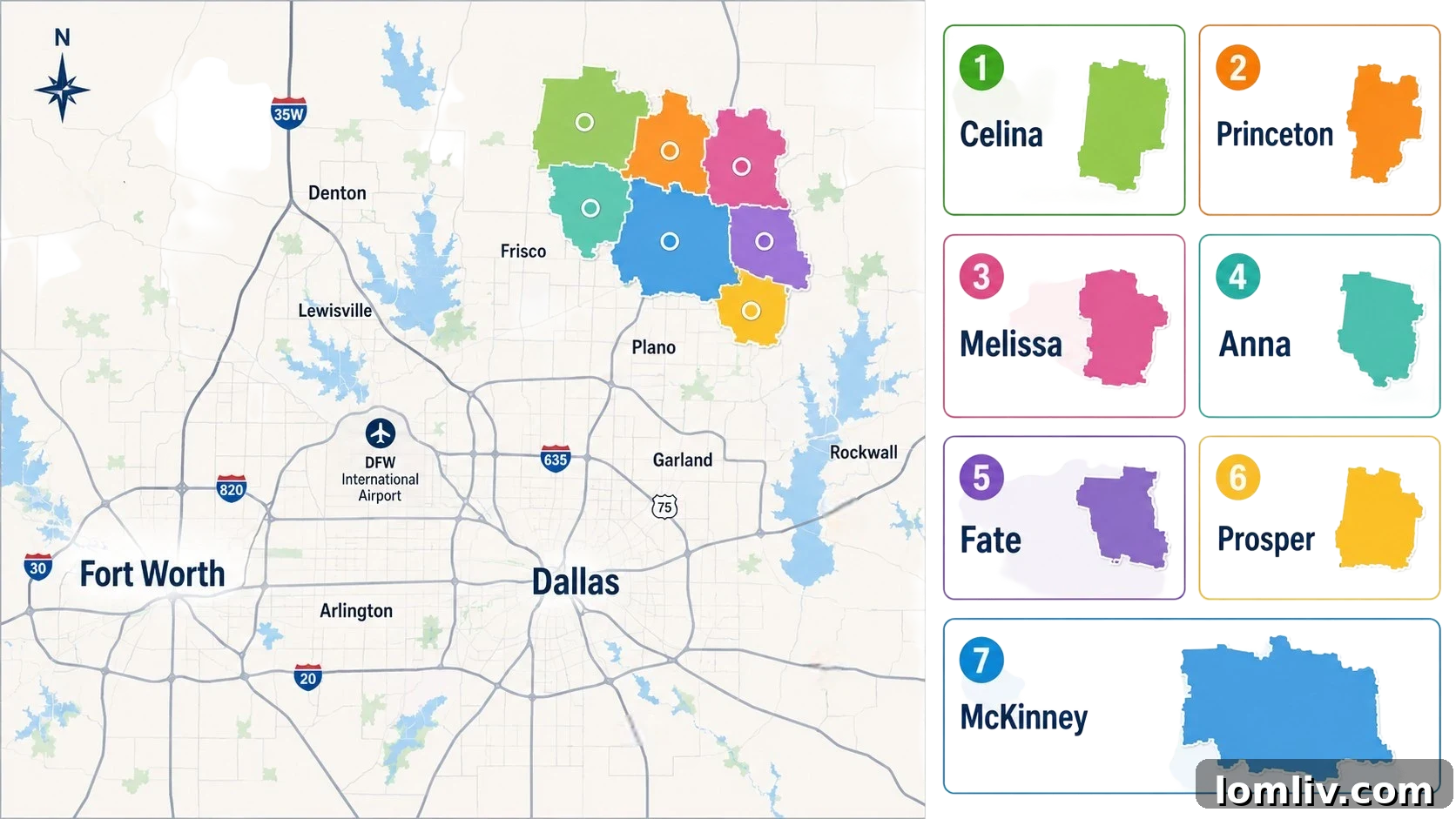
1. Celina
Celina has become the headline growth story in North Texas. In the most recent Census release, Celina ranked as the fastest-growing U.S. city with at least 20,000 residents, adding roughly 12,700 people in one year and reaching about 64,000 residents.
The reasons are straightforward: available land, newer master-planned communities, a small-town identity, and fast-growing retail. Walmart has opened a Celina Supercenter, Costco is expected to follow, Lowe’s is planned, and Methodist Celina Medical Center is already open after a $237 million investment.
Celina is no longer just “the next Frisco.” It is emerging as its own market.
2. Princeton
Princeton led growth in the prior Census release, increasing 30.6% from 2023 to 2024, and it remains one of the strongest growth stories in the latest data.
Affordability drives much of Princeton’s appeal. Compared with many Collin County neighbors, Princeton still offers a more accessible entry point for buyers seeking new construction who find Frisco, Prosper, or parts of McKinney out of reach.
Rapid growth has brought challenges. Princeton temporarily paused new residential development to allow infrastructure, roads, utilities, and public safety services to keep pace.
3. Melissa
Melissa is a clear example of spillover growth from North Texas’s core. Located just north of McKinney, Melissa provides access to newer homes and strong schools while remaining less built-out than larger Collin County communities.
The latest Census data placed Melissa among the top five fastest-growing U.S. cities with populations over 20,000. Buyers who missed earlier price windows in McKinney and Prosper are looking farther north, and Melissa is absorbing much of that demand.
4. Anna
Anna has moved from “emerging” to firmly established on the growth map. Like Melissa and Princeton, it benefits from Collin County demand, new construction, and buyers willing to travel farther north for more space.
Anna also ranked among the top five fastest-growing U.S. cities in the latest Census release. The value proposition is clear: newer homes and larger floor plans at prices below Celina or Prosper.
5. Fate
Fate is often overlooked because it lies east of Dallas rather than along the northern Collin County corridor — and that is part of its advantage.
The city has emerged as one of Rockwall County’s stronger growth stories, aided by Lake Ray Hubbard access, proximity to Rockwall and Royse City, and a steady flow of new communities. For buyers seeking suburban life east of Dallas, Fate offers a more affordable alternative to many northern suburbs.
It may not get the same buzz as Celina or Princeton, but buyer demand is tangible.
6. Prosper
Prosper targets the upscale family-suburb market rather than affordability.
Master-planned communities such as Windsong Ranch, Star Trail, and Light Farms attract professionals seeking a luxury suburban lifestyle without Southlake pricing. Buyers are drawn to newer homes, larger lots in certain neighborhoods, strong school demand, and a polished suburban feel appealing to those relocating from higher-cost areas.
7. McKinney
McKinney is the most established city on this list, and its maturity is a reason it remains relevant.
With a historic downtown, mature neighborhoods, Stonebridge Ranch, major retail, and a mix of newer and older housing stock, McKinney still attracts movers. It ranked sixth on U-Haul’s 2025 list of top growth cities, indicating sustained demand even as the city transitions from a rapid-growth phase.
For buyers seeking suburban comfort without living amid constant construction, McKinney remains a default choice in North Texas.
Honorable Mentions Worth Watching
Several nearby cities deserve attention because they could become bigger relocation stories over the next year.
- Forney continues to grow quickly and remains a key affordability option east of Dallas.
- Royse City follows a similar path, with pricing that still appears approachable compared with many Collin County suburbs.
- Little Elm continues to absorb spillover from Frisco and The Colony.
- Northlake is another Denton County community to watch as buyers seek newer options north and northwest of Fort Worth.
What New Residents Are Figuring Out

Recent arrivals to these suburbs report a few consistent lessons.
Build timelines can stretch. The promise of a home “ready in six months” is no longer guaranteed. Depending on the builder, community, and permitting, new construction often takes longer than expected. Buyers planning moves to Celina, Princeton, Prosper, or Melissa should allow extra time for delays.
Commute times can vary widely from what mapping apps predict. A drive that looks easy at 6:30 a.m. may feel very different at 7:45 a.m. The Dallas North Tollway, U.S. 380, U.S. 75, and I-30 are carrying more traffic than they were designed for, so residents with hybrid schedules tend to adjust more easily.
Much of the movement is local and regional, not only out-of-state. While some newcomers arrive from California, New York, Illinois, and other high-cost markets, many moves are DFW residents relocating one ring farther out: Frisco to Celina, Plano to McKinney, Allen to Anna, or Mesquite and Garland toward Fate and Forney. These moves are often motivated by the desire for a larger home, newer construction, better affordability, or more space.
Even relatively simple regional moves require planning. Packing an established household and moving into a larger home takes time. Working with a local moving company familiar with DFW traffic patterns, master-planned community rules, HOA restrictions, gate codes, and reservation systems can reduce stress on moving day.
What This Means for the Next 12 Months
Collin County is already among the fastest-growing counties in the country, and state projections suggest it could exceed 1.4 million residents by 2030 and approach roughly 2.2 million by 2050 under a middle-range migration scenario.
That projected growth must be absorbed somewhere. With Plano, Allen, and much of Frisco largely built out, the next wave is pushing into Celina, Princeton, Melissa, Anna, Prosper, and nearby cities that still have land available.
For buyers, the opportunity to enter these markets at lower, early-stage prices is shrinking. Celina and Prosper are moving into higher price tiers. Princeton, Forney, Royse City, and parts of Anna still offer more approachable entry points, but the gap is narrowing as infrastructure, retail, and schools expand to meet demand.
The common narrative is that everyone moving to North Texas is arriving from out of state. The reality is more nuanced. While many newcomers come from higher-cost markets, a significant portion of growth comes from people already living in DFW who are moving one ring farther out in search of more house, newer construction, better schools, and extra breathing room.
The boom is not over — it has simply moved farther north and, in parts, a little farther east.