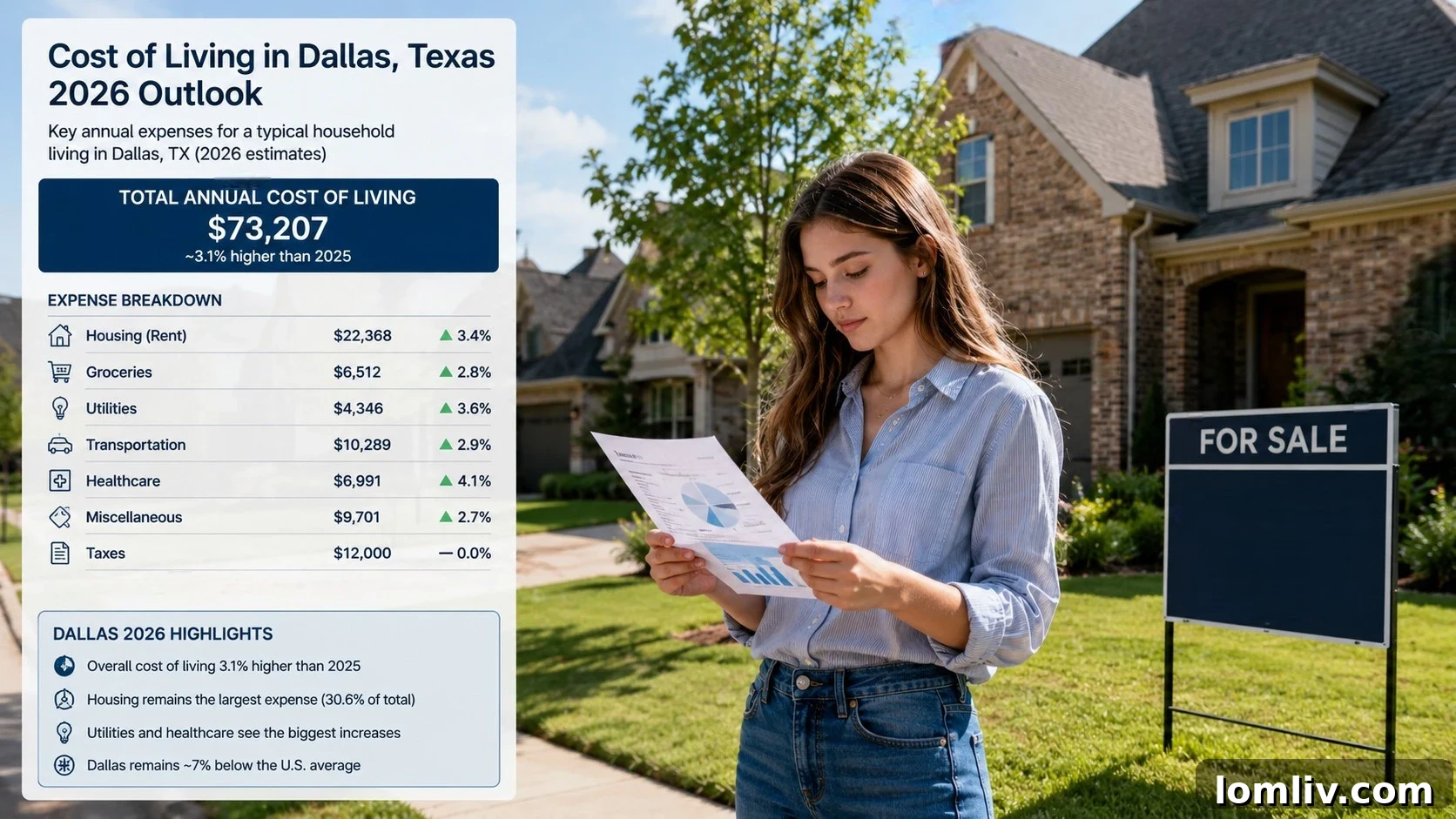
Everyone assumes Texas is cheaper. That belief shapes relocation conversations, “leaving California” headlines, and countless social media posts about Texas freedom. The reality is more nuanced, though, especially after two years of changing home prices, rising insurance premiums, and larger property-tax exemptions.
Dallas generally costs less than cities such as Los Angeles, New York City, San Francisco, Boston, and Seattle. But the gap is not as wide as many newcomers expect. For some buyers, the apparent savings shrink quickly once property taxes and insurance are added into the monthly costs.
Here’s what the numbers look like in 2026.
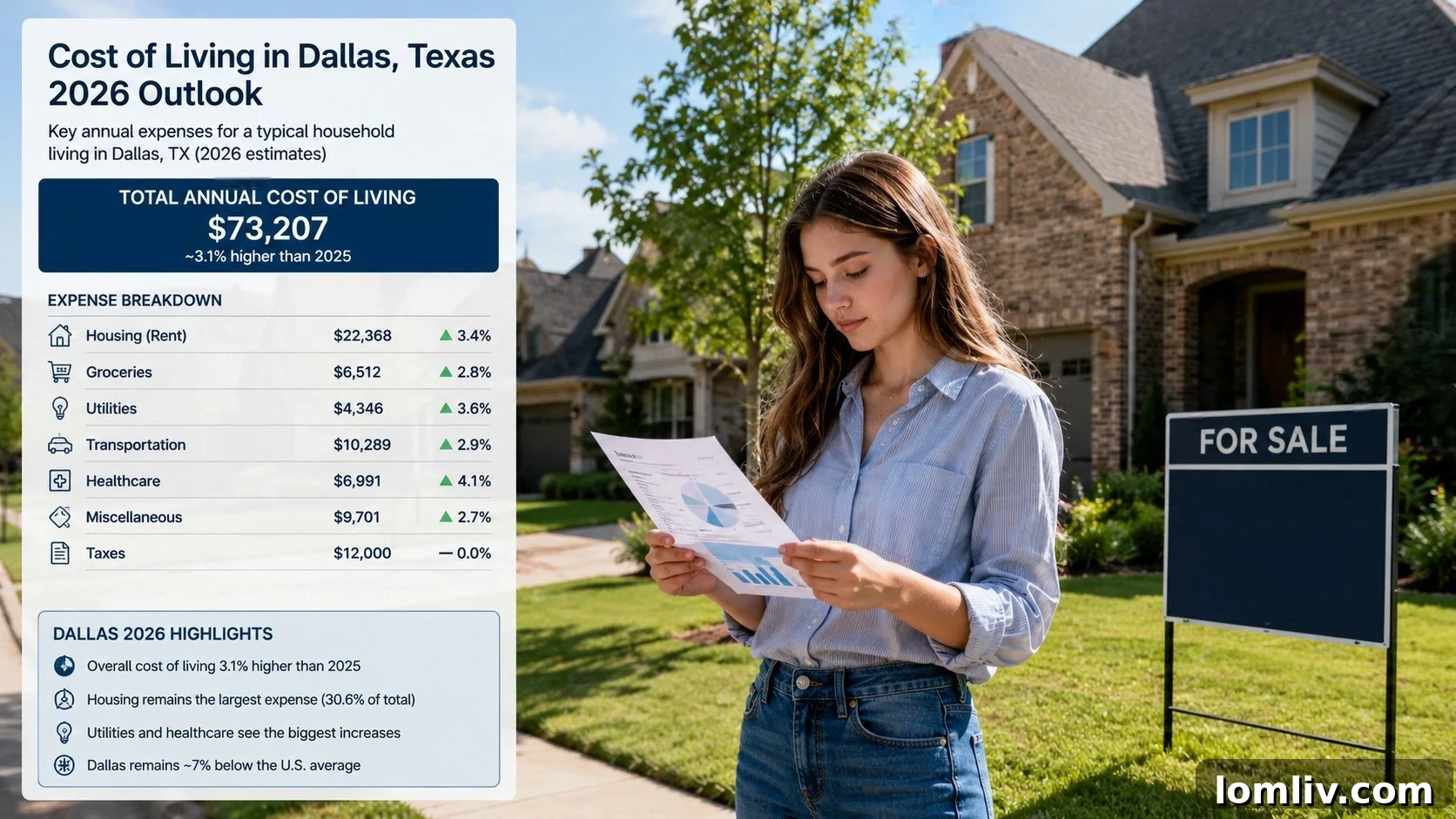
The Short Version on Dallas Affordability
Dallas’s overall cost of living is roughly in line with the national average, which still represents meaningful savings compared with most major coastal markets. The four factors that most affect a relocation decision are state income tax, property tax, insurance, and housing prices. Get those four right and you can usually tell whether the move actually makes financial sense.
What Zero State Income Tax Actually Means
This is the claim that largely holds true: Texas has no state income tax. There are no progressive brackets, no flat state income rate, and no surcharge on high earners because the Texas Constitution bans a tax on individual net income.
For someone moving from California, the difference can be substantial. Considering California’s state tax structure and the 2026 State Disability Insurance (SDI) withholding, rough yearly savings by income level look like:
- At $100,000: about $5,000 to $7,000 per year
- At $150,000: about $10,000 to $13,000 per year
- At $250,000: about $22,000 to $25,000 per year
- At $500,000: roughly $50,000+ per year
California also levies SDI at 1.3% in 2026 with no taxable wage ceiling, so a $200,000 earner would pay about $2,600 in SDI in addition to state income tax. Texas has no equivalent. The New York comparison can be similarly dramatic because NYC residents pay city tax on top of state tax. Illinois is closer to a wash but still costlier for many earners because of its flat 4.95% rate.
The Hidden Impact of Texas Property Taxes
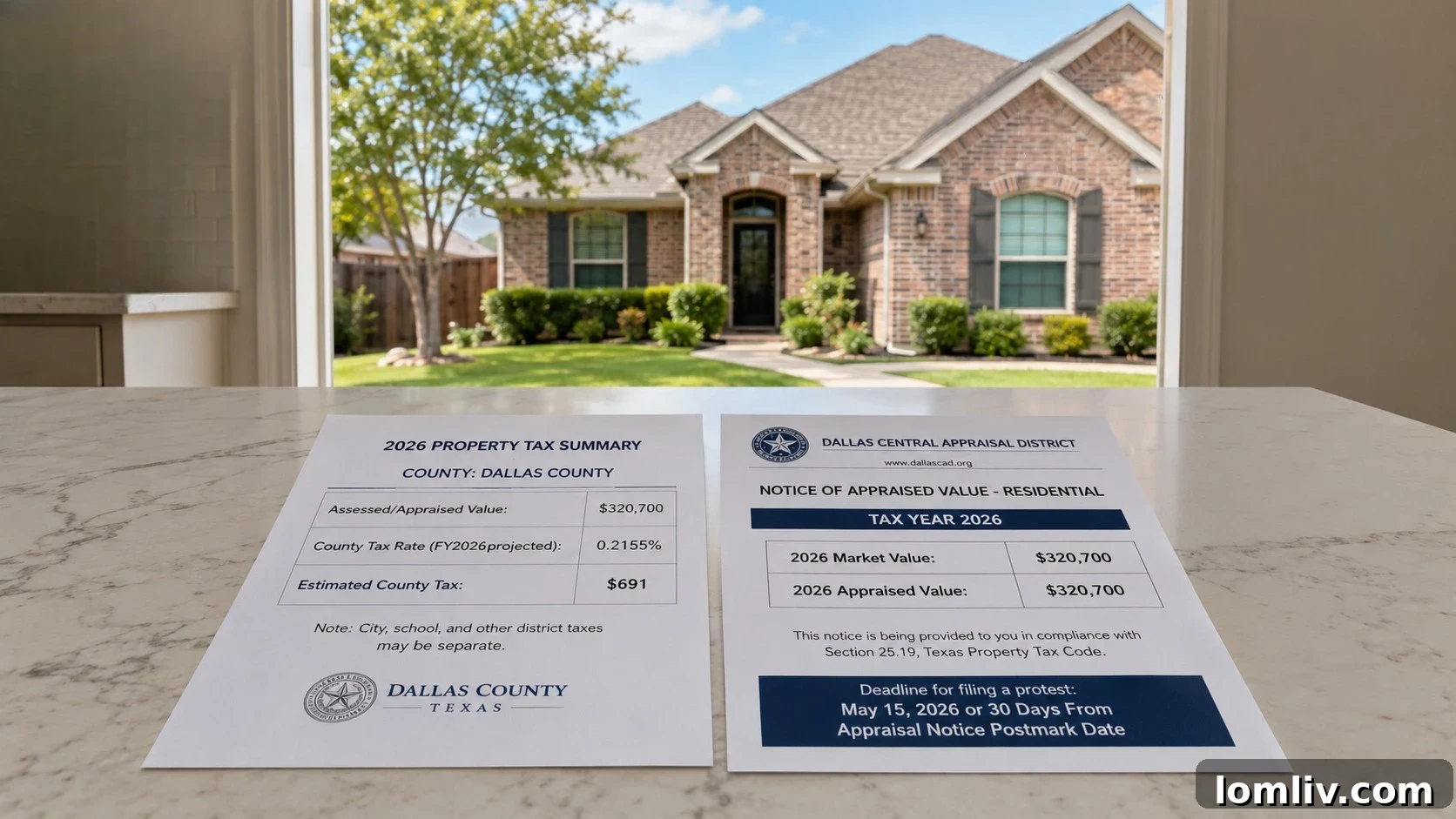
Texas funds local government largely through property taxes, and rates are relatively high. In many Dallas–Fort Worth cities, expect an effective property-tax burden in the high-1% to low-2% range, depending on school district, exemptions, and assessed value.
Example annual property-tax burdens:
- A $500,000 home in Plano: roughly $9,000 to $11,000
- A $750,000 home in Frisco: roughly $13,500 to $16,500
- A $1,000,000 home in Southlake: roughly $18,000 to $22,000, sometimes more
California’s Proposition 13 limits general property-tax increases to 1% of assessed value and caps assessment growth for long-term owners. That can make the tax bill for a longtime California homeowner far lower than current market value. When someone sells a long-held California home and buys a newer home in Texas, the property-tax reset can be a surprise.
Recent Texas changes offer some relief but do not eliminate the issue. SB 4 raised the school district homestead exemption from $100,000 to $140,000, and eligible homeowners aged 65 or older or disabled can receive an extra $60,000 exemption, totaling $200,000. Texas also caps annual appraised value increases for qualified homesteads at 10%, which benefits long-term owners but doesn’t help buyers entering the market today.
One practical point: homeowners generally must apply for exemptions with the county appraisal district—usually before May 1. Missing that deadline can mean paying more than necessary for a year.
Rising Insurance Premiums in 2026
Homeowners insurance has become a major affordability concern in Texas. Dallas–Fort Worth carries one of the higher insurance burdens in the state.
- Average Texas home insurance premium in 2026: about $4,085 per year
- National average: about $2,543 per year
- Dallas-area typical range: roughly $3,500 to $5,000+ per year, depending on home, roof age, deductible, carrier, coverage, and ZIP code
Severe weather—hail, wind, roof losses—and rising rebuilding costs drive premiums. DFW sits in a major hail-risk region, so roof claims are common. Older homes or homes with aging roofs can be more expensive or harder to insure.
Auto insurance often follows a similar pattern due to heavy traffic, hail exposure, uninsured motorists, and vehicle-theft risk in certain ZIP codes. For many families, the combined home and auto insurance bill can erode income-tax savings faster than expected. Budgeting an extra $2,000 to $3,000 per year compared with a lower-risk state is a reasonable starting point.
Housing Costs Compared With Coastal Markets
The “Dallas is cheap” narrative relies on older comparisons; the 2026 market has shifted.
Dallas recent market snapshot:
- Median sold price: about $408,000
- Median listing price: about $435,000
- Median rent: about $1,665 per month
- Average one-bedroom rent: about $1,400 per month
Suburbs can be significantly pricier. Collin County median listing price is around $500,000; Frisco around $700,000; Plano around $538,000; Celina around $585,000.
Comparisons with other metros:
- Los Angeles County median listing price: about $950,000
- New York City average one‑bedroom rent: about $4,100 per month
- Chicago median listing price: about $355,000
- Denver median listing price: about $541,000
Dallas remains cheaper than Los Angeles, New York City, San Francisco, and often Denver on most housing metrics. Chicago can be more complicated: some Chicago neighborhoods and properties are cheaper, but state income tax and local property taxes change the overall picture. Renters typically realize the clearest savings in Dallas, since they avoid property tax, homeowners insurance, and roof risk.
Utilities, Groceries, and Daily Living Expenses
Smaller categories matter too. Dallas is not low-cost across the board, though it is reasonable in many areas.
- Housing: 8% below national average
- Utilities: 16% above national average
- Groceries: 1% below national average
- Healthcare: 4% above national average
- Clothing: 6% above national average
- Entertainment and personal services: 6% above national average
- Transportation: below the national average in this dataset, though car dependency still matters
Utilities deserve special attention. Texas summers are long and hot, so air conditioning drives high electric bills from June through September. The electricity market is deregulated in many areas, so shopping for the right plan matters—choosing poorly can add hundreds per year, while a good choice reduces summer-bill shock.
Sales tax also adds to the cost. Dallas’s combined sales tax rate was 8.25% in 2026, reflecting the state’s reliance on consumption and property taxes rather than an income tax.
Comparing Dallas to Los Angeles
For a single filer earning $150,000 and buying a roughly $500,000 home, Dallas usually wins but not by as much as many expect.
| Category | Los Angeles | Dallas |
|---|---|---|
| State income tax | High, based on California brackets | $0 |
| SDI charge | 1.3% of wages, no wage ceiling | $0 |
| Property tax | Often lower for long-term owners under Prop 13 | Often higher as a percentage of value |
| Home insurance | Varies, but often lower than North Texas for standard risk | Often higher because of hail and storm risk |
| Auto insurance | Expensive | Also expensive in many ZIP codes |
| Bottom line | Baseline | Usually cheaper, but not automatic |
Renters tend to save more moving from Los Angeles to Dallas. A Dallas one‑bedroom averages about $1,400 while Los Angeles averages around $2,180, producing substantial monthly savings.
Comparing Dallas to New York City
Moving from NYC to Dallas often produces the clearest cost drop. NYC rent, city and state income taxes, and daily living costs are all high. A renter can cut rent by thousands per month, even after accounting for the likely need for a car, insurance, and related expenses in Dallas. For most NYC movers, Dallas still comes out ahead financially, though the lifestyle change—less walkability, more car dependency—can be significant.
Comparing Dallas to Chicago
Chicago can be surprising. Median listing prices in parts of Chicago are lower than Dallas, and public transit is stronger. Illinois’s 4.95% flat income tax and high local property taxes reduce some of Dallas’s advantages. For some households, Chicago may be cheaper on pure housing cost, while Dallas may win on job growth, tax structure, newer housing stock, and long-term metro growth.
Comparing Dallas to Denver
Denver is straightforward: Colorado’s flat 4.4% income tax and higher Denver home prices make Dallas more affordable for many buyers. A $150,000 earner could save about $6,600 per year in state income tax alone by moving to Texas. Insurance differences are mixed because both regions face hail risk, but lower housing entry points often favor Dallas.
Who Benefits Most From Moving to Dallas

Typical beneficiaries:
Big winners:
- Renters at most income levels, especially those leaving coastal markets
- High earners buying homes under about $600,000
- Remote workers who keep coastal salaries
- Business owners with pass-through income
- Retirees with modest taxable income, since Texas does not tax Social Security or retirement income at the state level
Moderate beneficiaries:
- Middle-income families buying homes between $400,000 and $700,000
- People moving from California, New York, or Illinois with similar salaries
- Buyers who file their homestead exemption on time
- Households that shop insurance and electricity plans carefully
Likely break-even cases:
- Buyers purchasing homes above $800,000
- Long-term California homeowners protected by Prop 13 who sell and rebuy in Texas
- People moving from Chicago or other relatively affordable Midwest metros
- Households with multiple cars and high insurance costs
Potentially higher-cost cases:
- Retirees with expensive, paid-off California homes who buy expensive Texas homes
- Buyers who forget to file the homestead exemption
- Buyers purchasing older homes with roof, foundation, or insurance issues
- Luxury buyers who assume Texas property taxes will be low because the state has no income tax
The Final Verdict on Relocation Costs
Dallas is generally cheaper than the coastal markets many people leave, but the savings are not automatic. The absence of a state income tax is the largest advantage. Property taxes and insurance are the primary offsets.
A straightforward way to estimate the impact:
- Start with projected income and estimate current state income tax.
- Subtract that tax to see potential savings.
- Add projected Texas property-tax burden for the home you plan to buy.
- Add likely insurance differences for home and auto.
- Compare housing costs and other living expenses honestly.
For most households earning above $100,000 and buying under about $600,000 to $700,000, Dallas still tends to work financially. Renters typically benefit the most. For buyers above $1 million, the math gets closer.
None of this requires guessing: county appraisal districts publish tax information, insurance quotes are free, and electricity plans can be compared in advance. People who assume “Texas is cheap” without doing the math are the ones who most often get surprised.
Once the numbers align, execution matters. Moving to Dallas involves practical steps such as HOA rules, utility setup, storage timing, and coordinating overlap between homes. Hiring a moving company familiar with interstate and local DFW moves can reduce stress during the transition.
Texas is likely cheaper than where you came from, but the margin is often smaller than the internet suggests. The savings happen when you run the numbers carefully and plan accordingly.