If you own a rental home in Plano, a duplex in Oak Cliff, or an Airbnb in Fort Worth’s Stockyards, a federal tax strategy could meaningfully increase your cash flow. Many Dallas–Fort Worth (DFW) landlords are unaware of it or assume it’s only for large commercial owners. In reality, cost segregation applies to single-family rentals, duplexes, fourplexes, and small multifamily buildings—and it can deliver substantial first-year deductions for typical DFW investors.
With 100% bonus depreciation restored for qualifying property acquired and placed in service after January 19, 2025, the benefit for many investors has become stronger. Below is a clear explanation of how cost segregation works for the types of properties most DFW investors own, realistic examples, and scenarios where the strategy is and isn’t worthwhile.
What Cost Segregation Actually Does
When you buy a long-term rental, the IRS requires you to depreciate the building over 27.5 years for residential property. On a $400,000 rental after removing land, that typically yields around $11,000 of annual depreciation under straight-line rules.
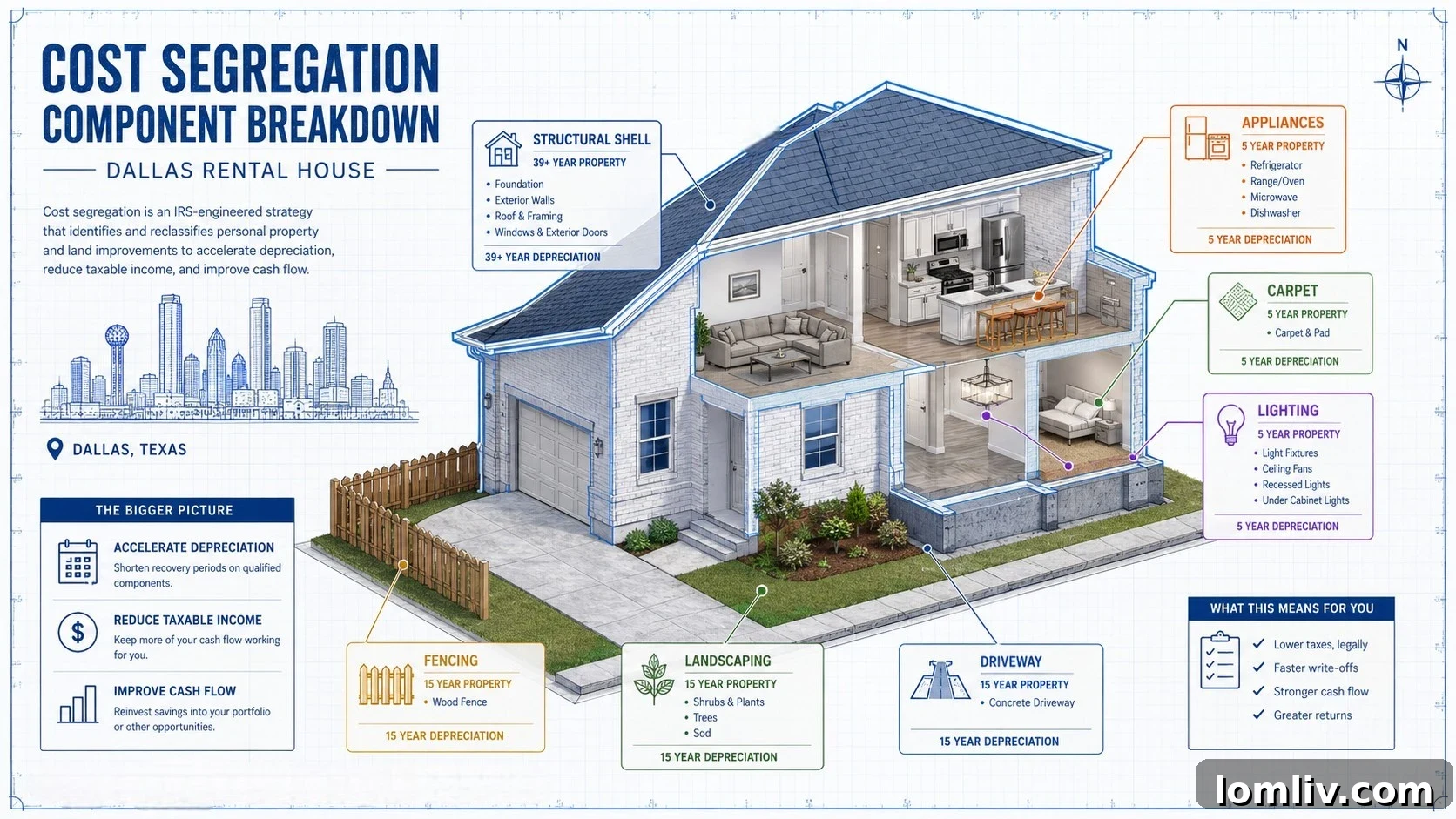
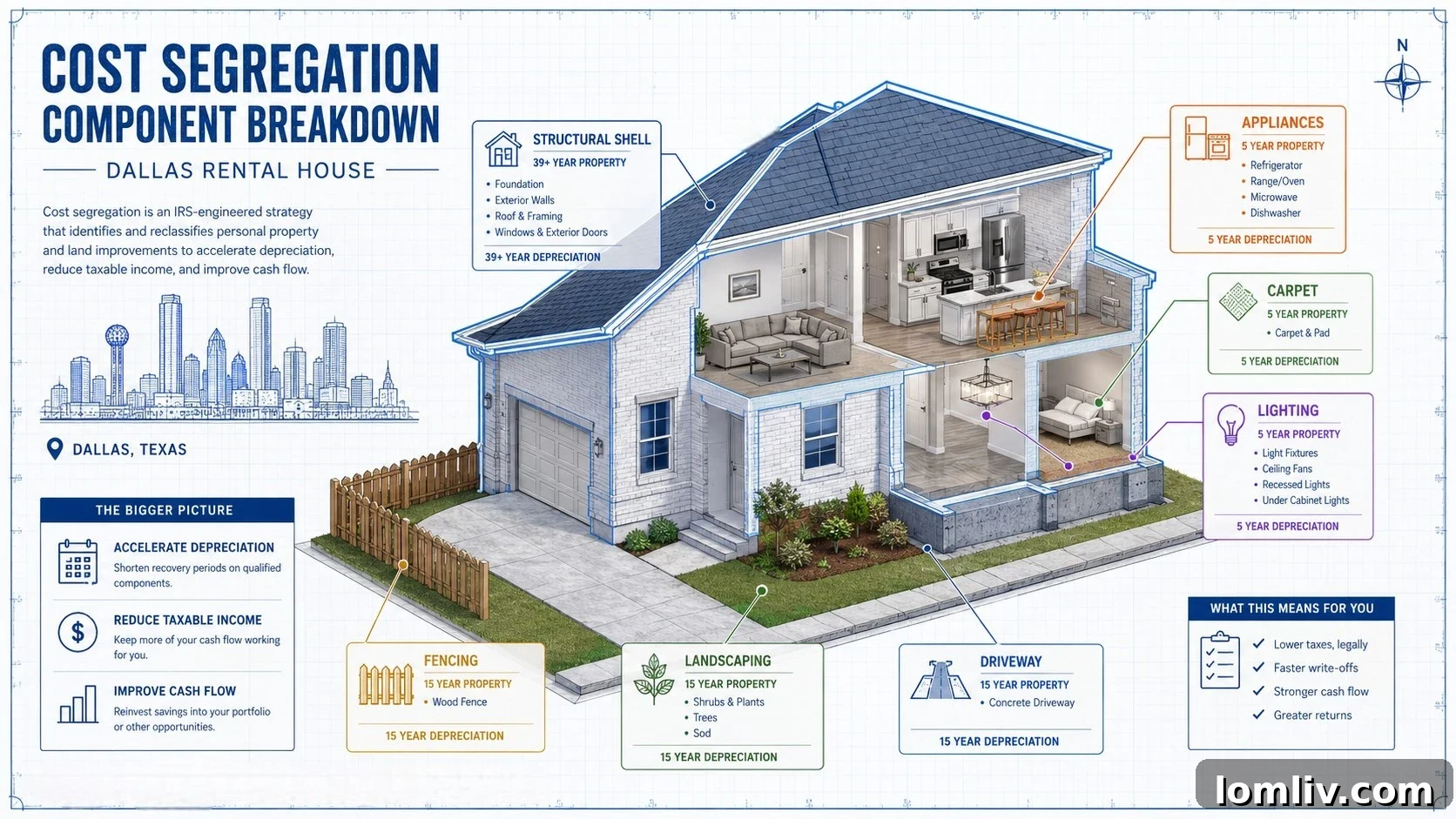
A cost segregation study is an engineering-based analysis that separates the building into component parts and reallocates items that qualify for shorter recovery periods. Items like carpet, appliances, furniture, light fixtures, and certain electrical or plumbing features can be reclassified as 5-year property. Site improvements such as driveways, fencing, landscaping, and parking may qualify as 15-year property. The structural shell remains on the 27.5-year schedule.
Because 100% bonus depreciation applies to qualifying 5- or 15-year assets placed in service after January 19, 2025, any amount reclassified to those shorter categories can be deducted in the first year. For many DFW single-family rentals, roughly 20% to 30% of the depreciable basis is reclassifiable; for furnished short-term rentals the share is often 25% to 35%, and short-term rental condos can sometimes reach about 40% because of furniture and guest amenities that qualify as personal property.
What the Numbers Look Like on a DFW Property
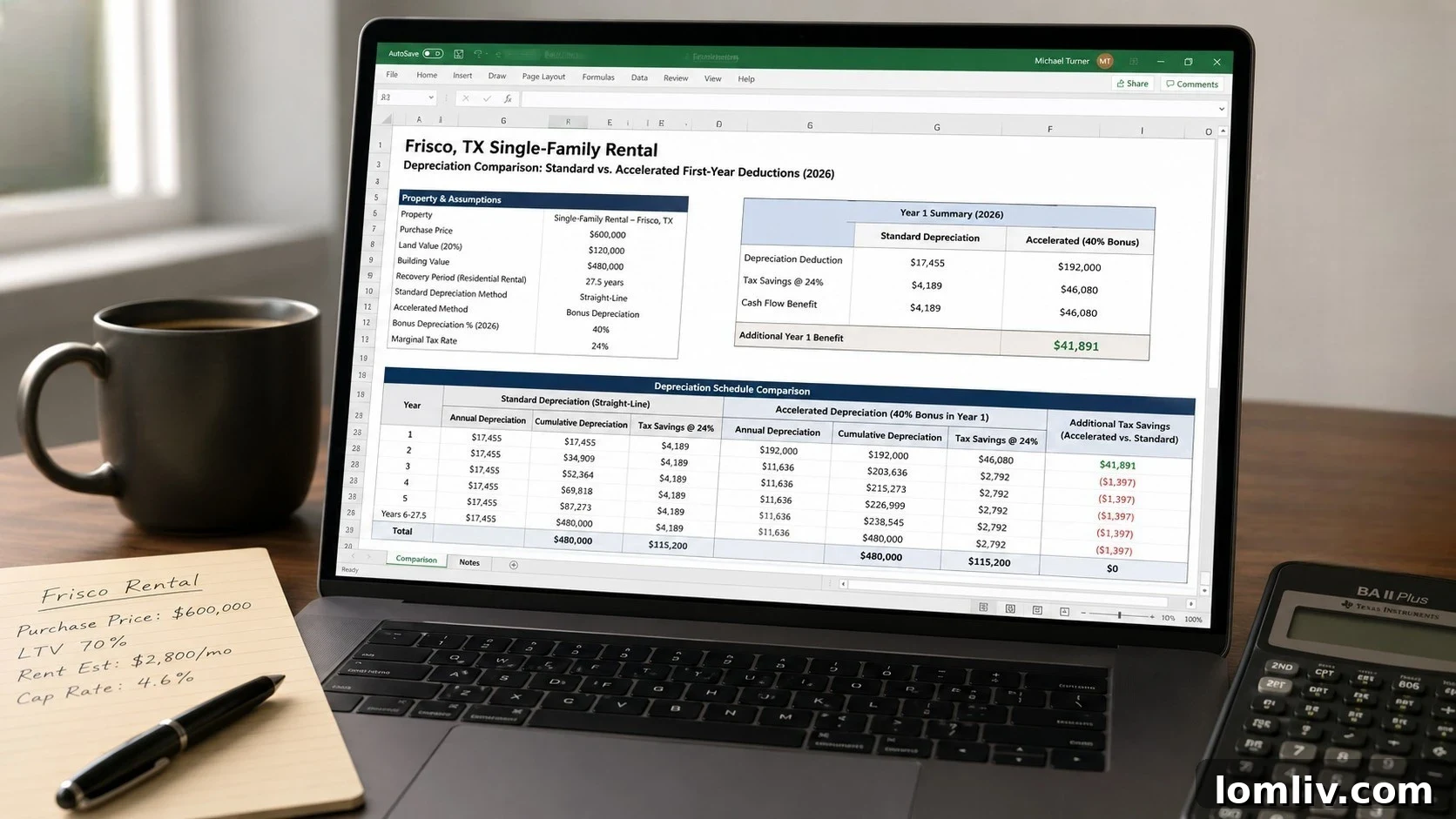
Consider a $425,000 single-family rental in Frisco. After removing roughly 20% for land, the depreciable basis is about $340,000. Straight-line depreciation would provide roughly $12,400 in year one.
A typical cost segregation study might reclassify $80,000 to $100,000 into 5- and 15-year categories. With bonus depreciation, that reclassified amount becomes a first-year deduction. Combined with the remaining straight-line depreciation, total year-one deductions commonly fall between $90,000 and $115,000.
For a DFW investor in the 32% to 37% federal tax bracket—many W-2 earners who buy rentals on the side—that could amount to approximately $25,000 to $40,000 in federal tax savings in year one, depending on allocation, study outcomes, and the investor’s overall tax picture. Because Texas has no state income tax, there is no state-level decoupling to factor in as there is in some other states.
Applying this approach across a portfolio of three or four rentals can produce combined first-year deductions well into the low hundreds of thousands of dollars.
Short-Term Rentals: Where It Gets Aggressive
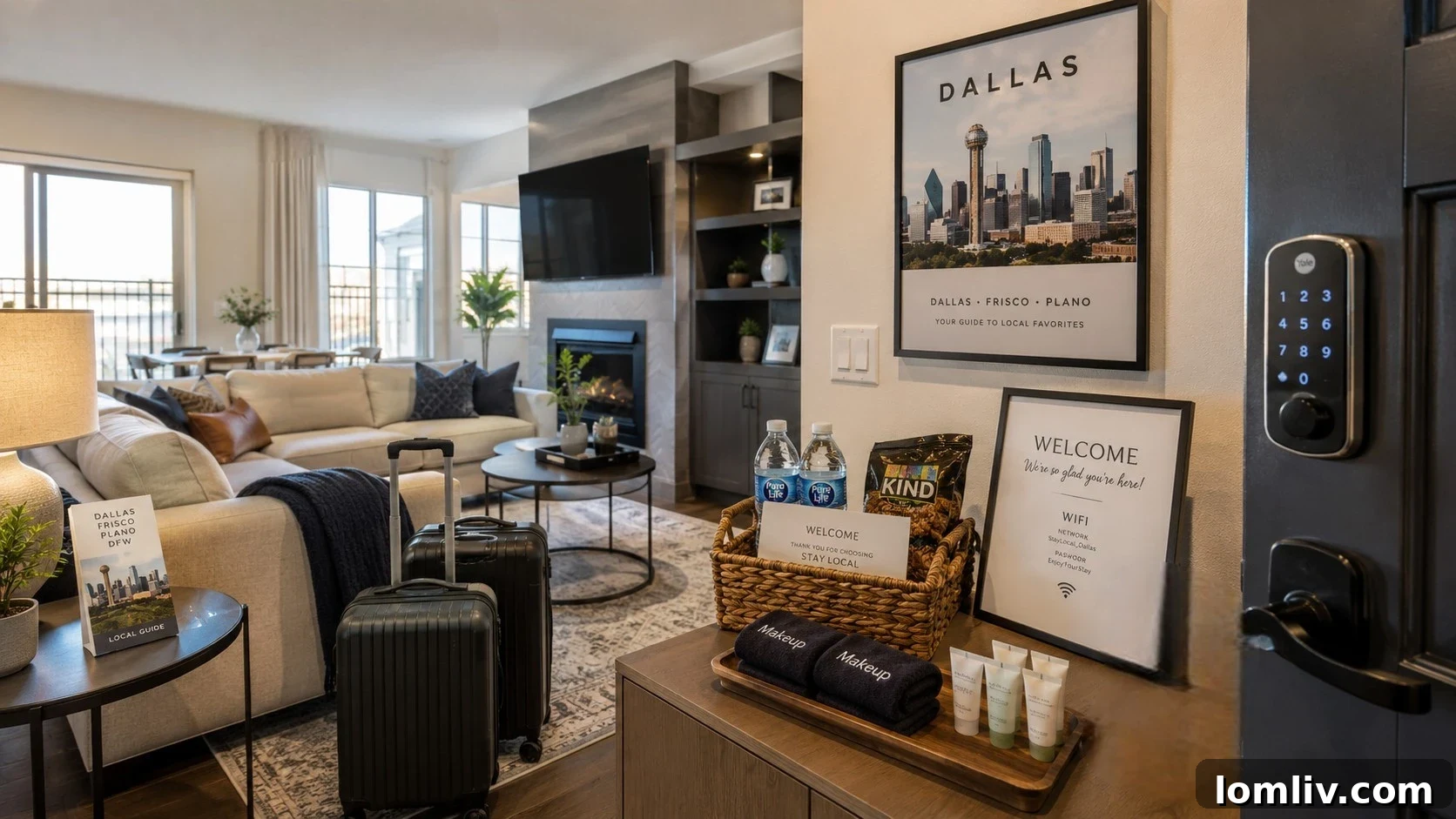
DFW suburbs support strong short-term rental (STR) demand thanks to the region’s major travel hub and popular neighborhoods and lakeside destinations. For STR owners, cost segregation combined with IRS rules for short-term stays can be especially powerful.
If average guest stays are seven days or less, the IRS often does not treat the activity as passive rental for loss limitation purposes. If the owner materially participates—typically by meeting specific hour thresholds—the accelerated depreciation losses can offset active W-2 income instead of being limited to passive income. Many high-earning professionals in DFW use this approach to shelter a portion of active income with STR-related depreciation.
As an example, a $500,000 furnished STR with a properly executed cost segregation study could generate $130,000 to $180,000 of year-one deductions. Applied against a $400,000 W-2 income at a higher marginal rate, that can translate to substantial active tax savings. That strategy is legitimate when substantiated by accurate records and supported by a CPA familiar with the relevant rules.
Local regulations also matter. Before acquiring or converting a property to an STR, verify city-level zoning, registration, and occupancy tax requirements in Dallas, Fort Worth, and suburban municipalities.
When Cost Segregation Doesn’t Make Sense
Cost segregation is not appropriate for every property or investor. Common situations where the strategy is less beneficial include:
- Short holding periods: If you plan to sell within two or three years, recapture rules can offset much of the upfront benefit. The strategy typically favors holds of five years or longer.
- Low depreciable basis: When the building basis after land is under about $150,000, study costs can erode the net benefit. This matters in lower-priced markets or cases where land comprises most of the value.
- Passive investors without W-2 income to offset: For long-term rentals owned passively, accelerated depreciation produces passive losses that can only offset other passive income or be carried forward, not directly reduce W-2 taxes. STR owners who materially participate are the common exception.
What a Real Study Looks Like
A defensible engineering-based cost segregation study is more than a spreadsheet. It’s a documented report—often 30 to 50 pages—that identifies and quantifies reclassifiable assets using IRS-aligned methodology. A complete deliverable includes asset schedules, MACRS depreciation tables, instructions for filing Form 3115 for catch-up depreciation when applicable, and engineering documentation that can withstand an audit.
Typical pricing for studies on 1- to 10-unit residential properties ranges from about $2,000 to $5,000, depending on complexity. Software-only offerings are less expensive but usually provide thinner documentation and greater audit risk because they may omit physical inspection. Large national providers often charge more and focus on commercial or institutional clients rather than small residential investors.
For many DFW residential rentals, virtual engineering-based firms strike a good balance: they can complete virtual site visits, produce thorough reports suitable for audits, and deliver faster turnaround—often within a few business days—at a price point that makes sense for 1- to 10-unit investors.
Next Steps for DFW Investors
Cost segregation can create substantial, IRS-defensible tax savings without changing how you operate a property. The sensible first step is a no-cost qualification analysis: provide the property address, purchase price, and placed-in-service date, and a provider can estimate the likely year-one deduction before you commit. Review that estimate with your CPA before ordering a full engineering study.
If you own residential rentals in the 1- to 10-unit range, consider providers that specialize in this market and deliver complete documentation, virtual site visits, and CPA-ready reporting. A qualified provider will outline projected savings, explain study scope and cost, and confirm the audit support included with the report.
About the Author:
Max is the founder of SMF Cost Segregation Advisors, an engineering-based firm focused on 1- to 10-unit residential rental properties, including single-family homes, short-term rentals, and small multifamily buildings. SMF provides flat-rate pricing, virtual site visits, and IRS audit support on studies tailored to small residential investors. Max also leads New Summit Capital, which acquires and operates mid-sized multifamily properties, and holds a BS in Business from NYU’s Stern School of Business with concentrations in Accounting and Finance.