In the vibrant world of real estate and architectural appreciation, discovering the hidden narratives behind a structure is akin to unearthing a priceless treasure. Every home, particularly those with a storied past, holds secrets within its walls, details that connect us to a bygone era, to the vision of its creators, and to the lives lived within its embrace. Today, we embark on a journey into one such captivating tale, weaving together the genius of architect Howard Meyer with the unexpected provenance of a distinctive design element: glass blocks. This is a simple yet profound exploration into how architectural details can serve as time capsules, bridging generations and revealing a rich tapestry of history, design, and innovation.
For those immersed in the architectural landscape of Dallas, the name Howard Meyer resonates deeply. A titan of early 20th-century modernism in the region, Meyer’s designs are celebrated for their elegant functionality, clean lines, and forward-thinking use of materials. His houses are not merely dwellings; they are landmarks, each telling a unique story of adaptation, style, and the pursuit of a modern lifestyle. Our particular story begins with a deep dive into one of his remarkable creations: 4504 Bordeaux.
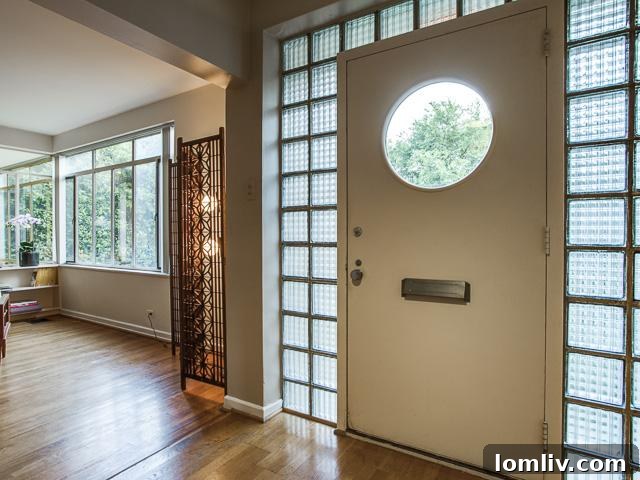
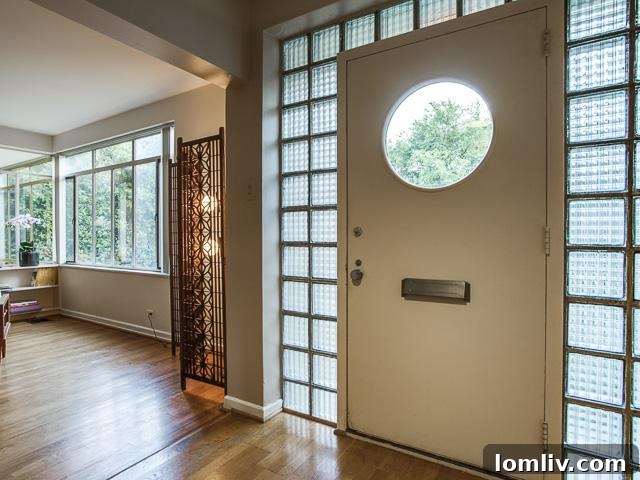
I recently had the distinct pleasure of touring and profiling 4504 Bordeaux as part of our “Monday Morning Millionaire” series – an ambitious endeavor dedicated to showcasing Dallas’s architectural treasures and the fascinating narratives they hold. These homes are more than just properties; they are living testaments to artistic vision and historical significance. While exploring the intricacies of this magnificent Meyer-designed residence, its owner, Mike Renfro, shared a tantalizing detail that would unravel a surprising historical thread. Mike, whose insightful webpage and blog, 1riot1ranger, are well worth exploring, pondered the origins of the distinctive glass bricks framing his front door. He initially speculated that these striking architectural elements might have been sourced from Fair Park, a hunch that would soon prove to be remarkably close to the truth.
The quest for clarity took an exciting turn when Mike had dinner with Catherine Horsey, a truly brilliant and passionate Dallas preservationist. Catherine is not only an ardent advocate for Dallas’s architectural heritage but also the proud owner of another significant Meyer house – the 1937 Sanger House in Lakewood. Her profound knowledge and personal connections within the preservation community often illuminate forgotten corners of history. It was through this conversation that the true lineage of the glass blocks began to surface, adding another layer of intrigue to Meyer’s architectural legacy.
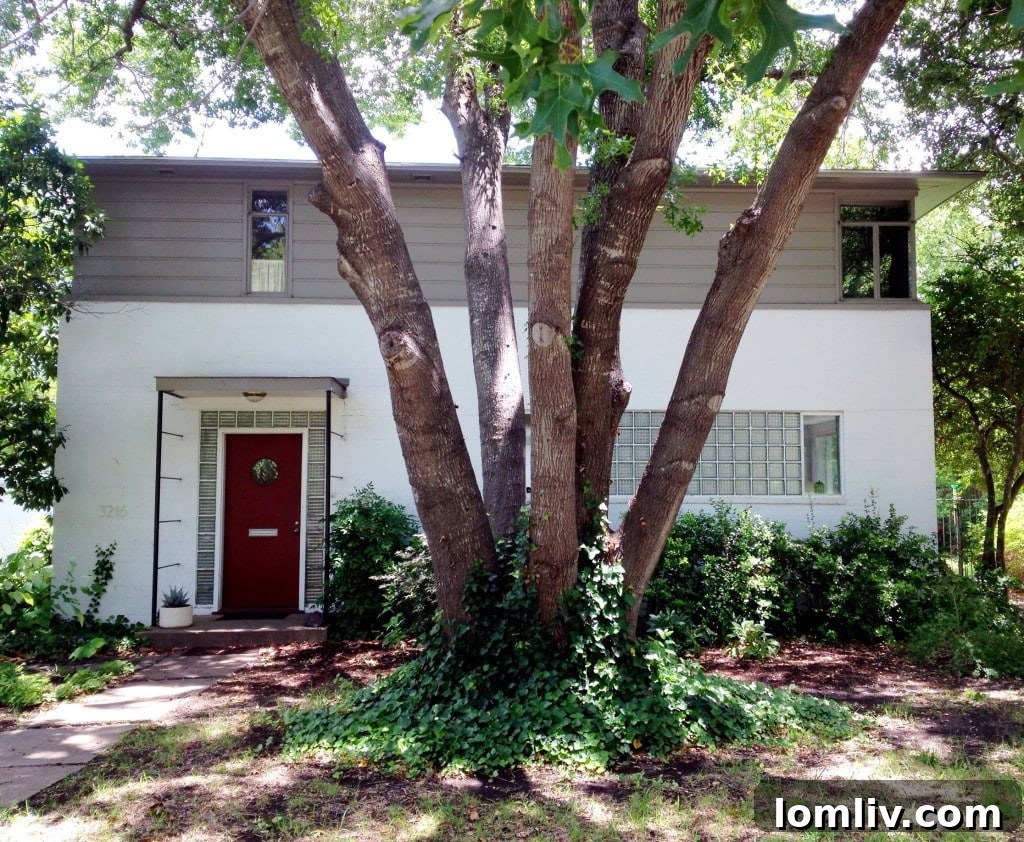
Mike’s update following this pivotal dinner conversation shed remarkable light on the situation:
She got to meet Mr. Sanger when he was in his 90s, and he recalled Mr. Meyer buying a bunch of glass brick from a demo booth at the Texas Centennial at Fair Park in 1936. I guess it may have been promoted as a material of the future or some such. Anyway, he apparently bought a bunch then used it in the Sanger House (1937) and mine–The Rose House (1938). Again, attributed to Mr. Sanger.
How incredibly cool is that! This revelation connects these seemingly ordinary glass blocks directly to one of Dallas’s most significant historical events: the Texas Centennial Exposition of 1936. Fair Park, an architectural marvel in its own right, served as the grand stage for this exposition, a monumental celebration of Texas’s 100th anniversary of independence. The Centennial was designed not only to commemorate history but also to showcase progress, innovation, and the spirit of the future. It was a dazzling display of Art Deco architecture, cutting-edge technology, and aspirational design, attracting millions of visitors and leaving an indelible mark on the city’s identity.
Within this bustling showcase of progress, various industries presented their latest innovations, including building materials. Imagine a “demo booth” at the Texas Centennial, vibrant with promises of modern living, featuring revolutionary materials like glass blocks. At the time, glass blocks were a cutting-edge material, symbolizing modernity, efficiency, and a new aesthetic. They offered a unique combination of light transmission and privacy, insulation, and a sleek, industrial-chic appeal that perfectly aligned with the emerging modernist architectural trends. For an architect like Howard Meyer, who was deeply committed to pushing the boundaries of design and embracing the avant-garde, encountering such a material would have been an irresistible opportunity.
The story suggests that Meyer, ever the visionary, acquired a significant quantity of these glass bricks, likely captivated by their potential to transform interior spaces with diffused natural light and add a distinctive, modern flourish to exteriors. This acquisition, directly from the site of the Texas Centennial, suggests a fascinating early instance of incorporating materials with an immediate historical provenance into new architectural projects. It raises questions about whether Meyer was engaged in an early form of recycling – repurposing materials from a temporary exhibition – or simply seizing the opportunity to adopt a “new-fangled” building material that promised to be the “material of the future.” Either way, the connection is profound, linking these homes not just to an architect’s vision but to a pivotal moment in Texas’s cultural and technological history.
The use of glass blocks by Meyer in both the Sanger House (1937) and the Rose House (1938) highlights his consistent pursuit of innovative design solutions. In these homes, the glass blocks would have served multiple purposes: allowing natural light to penetrate deeper into interior spaces while maintaining privacy, providing a degree of thermal insulation, and contributing to the overall modernist aesthetic. They transformed entryways and accent walls into luminous, textured surfaces, adding a sophisticated yet understated elegance that remains appealing today. This meticulous choice of materials underscores Meyer’s commitment to both form and function, characteristic of the Dallas Modernism movement he helped define.
This delightful discovery reminds me of another powerful encounter with architectural history, albeit one on a grander, more ancient scale. It’s a stretch to compare directly, but the emotional impact of the historical connection is strikingly similar. When I visited Hearst Castle at San Simeon in California, built by the legendary William Randolph Hearst, the sheer opulence and eclectic design were overwhelming. The guides shared incredible stories, one of which particularly captivated my impressionable twelve-year-old self. They told us that the intricate mosaics adorning the floor we were standing on dated back to the time of Christ – an astonishing claim that filled me with awe. To be walking on something so ancient, so steeped in history, was a profound experience.
While the exact timing was slightly adjusted by further research – the mosaics are actually from Ostia, an ancient Roman port city, and date to the second century AD, making them incredibly old, though perhaps not from the precise time of Christ – the essence of the story remained. These stunning remnants of a bygone civilization, carefully integrated into Hearst’s palatial estate, demonstrated an incredible reverence for history and the power of repurposing artifacts. The fact that you can no longer walk on them today, due to their fragility and immense historical value, only amplifies their significance. That narrative, shared with a wide-eyed pre-teen, profoundly shaped my understanding of provenance, the enduring power of historical objects, and the deep connections between past and present. It was probably the foundational experience that ignited my lifelong obsession with all things real estate, especially properties imbued with a rich historical narrative and unique architectural details.
The story of Howard Meyer, his forward-thinking design, and the glass blocks from the Texas Centennial Exposition serves as a compelling parallel. It highlights how architectural elements, seemingly minor details, can carry extraordinary historical weight, transforming a house into a living museum. These narratives enrich our appreciation of properties, offering glimpses into the societal trends, technological advancements, and individual visions of their time. They remind us that homes are not just structures; they are custodians of memory, tangible links to our collective past.
Uncovering these hidden stories adds immeasurable value to historic homes, elevating them beyond mere bricks and mortar to become profound cultural artifacts. It reinforces the importance of architectural preservation and the diligent work of historians and homeowners like Mike Renfro and Catherine Horsey, who dedicate themselves to understanding and safeguarding these precious connections. Each piece of information, whether about a celebrated architect or a humble building material, contributes to a more complete and vibrant understanding of our built environment.
Rosebud!