Reviving History: The Extraordinary Preservation of a Highland Park Spanish Revival Gem
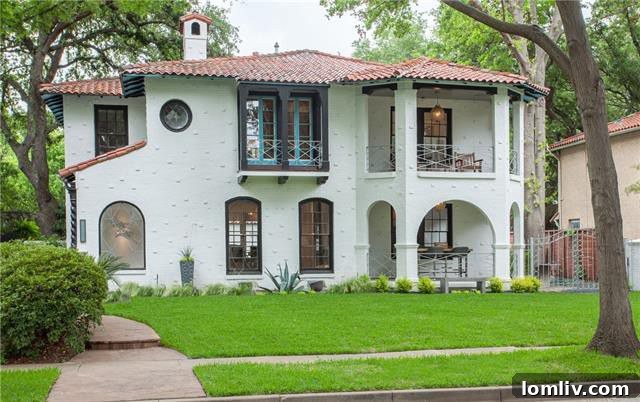
In the heart of Dallas’s prestigious Highland Park, where prime real estate often dictates the swift fate of older structures, a beautiful Spanish Revival home at 4538 Fairway Avenue faced an uncertain future. This architectural treasure, brimming with historical significance and timeless charm, could easily have been reduced to rubble to make way for new construction. However, thanks to the discerning eye and unwavering commitment of a visionary builder, this magnificent residence was not only saved but meticulously brought back to its former glory, enhanced for modern living.
The story of Fairway Avenue is not without its casualties. Many historic homes in this coveted neighborhood have regrettably met an “unjust fate,” losing their unique character to the wrecking ball. Such demolitions represent a significant loss, not just of bricks and mortar, but of the very architectural heritage that defines Highland Park. Preservation, in these instances, becomes more than an option; it’s a profound act of stewardship requiring a rare blend of insight, integrity, and inspiration. Fortunately, for this particular Highland Park Spanish Revival, that exceptional builder was Josh Zielke, the esteemed owner of Josh Zielke Homes.
While Josh Zielke is well-known for constructing luxurious new homes that meet contemporary demands, his true distinction lies in his passion for identifying and rescuing architecturally significant older properties. He possesses an innate ability to see beyond superficial wear and tear, recognizing the inherent value and potential within these historical canvases. His work stands as a testament to the belief that the past can be beautifully integrated with the present, offering homeowners a living experience that new builds simply cannot replicate.
An Enduring Architectural Legacy: The Genius of Lang and Witchell
To truly appreciate the significance of 4538 Fairway Avenue, one must delve into its illustrious past. This remarkable home was originally constructed by Frank Witchell, a prominent figure in Dallas’s architectural landscape. Witchell was a partner in the legendary firm of Lang and Witchell, an entity that profoundly shaped the urban fabric of Dallas throughout the first half of the twentieth century. Their influence was so pervasive that, according to the Alexander Architectural Archive at the University of Texas at Austin, “The local firm of Lang and Witchell dominated construction in Dallas from 1910 to 1942 and had a profound impact on the city’s architectural character.”
Lang and Witchell earned their reputation as the most respected architectural firm in Dallas during this period, consistently delivering high-quality designs across a spectrum of styles. Their long and prolific career left an indelible mark on the cityscape, demonstrating a remarkable ability to keep pace with evolving architectural thought, from the robust Chicago School to the elegant Art Deco movement. Their masterpieces, such as the iconic Dallas Power & Light and Lone Star Gas Company buildings, both completed in 1931, remain celebrated as Dallas’s finest Art Deco skyscrapers. These structures exemplify the firm’s dedication to sophisticated detailing and enduring design.
For this particular Highland Park Spanish Revival, Witchell collaborated with Robert Linski, an architect renowned for his work on the White Rock Lake boat and bathhouses alongside Jon D. Carsey. The combined pedigree of these architectural luminaries imbues the home with an extraordinary historical value. To consider demolishing such a property would be to disregard a tangible piece of Dallas’s artistic and structural heritage, demonstrating a profound lack of appreciation for character, heart, and intellect. As the saying goes, preservation matters—and it matters deeply to Josh Zielke.
The Art of Revival: “Looking New” vs. “Living New”
The journey to save 4538 Fairway Avenue began, as Zielke recounts, with a tip from Ebby Halliday listing agent Victoria Barr late one August. “It was right on the edge of being bulldozed or restored,” Zielke explained, highlighting the critical juncture at which many historic properties find themselves in rapidly developing areas. The decision-making process for such a valuable piece of land in Highland Park, where the dirt itself can command a million-dollar price tag, is inherently complex.
When asked how he makes such a pivotal determination for a home built in 1935, Zielke elaborated on his keen assessment criteria. “One of the things I look at are the architectural elements of the house,” he shared. “Does it have enough to stand on its own?” For this Highland Park Spanish Revival, the answer was a resounding yes. Key features like its original Ludowici tile roof, an inviting front porch, and a charming second-story balcony were all intact, signaling its potential. “I knew it could stand up to today’s buyer,” Zielke confidently stated, recognizing that these period details held enduring appeal.
Zielke’s appreciation for the home was further amplified by his knowledge of Frank Witchell’s involvement. He knew Witchell, along with Otto Lang, was also the architectural talent behind the handsome Spanish-Mediterranean Highland Park Town Hall, a structure revered for its elegant design. This awareness solidified the home’s status as a historically significant Spanish Revival masterpiece, making its preservation not just an option, but a compelling imperative. It was a clear candidate for his unique philosophy of restoration.
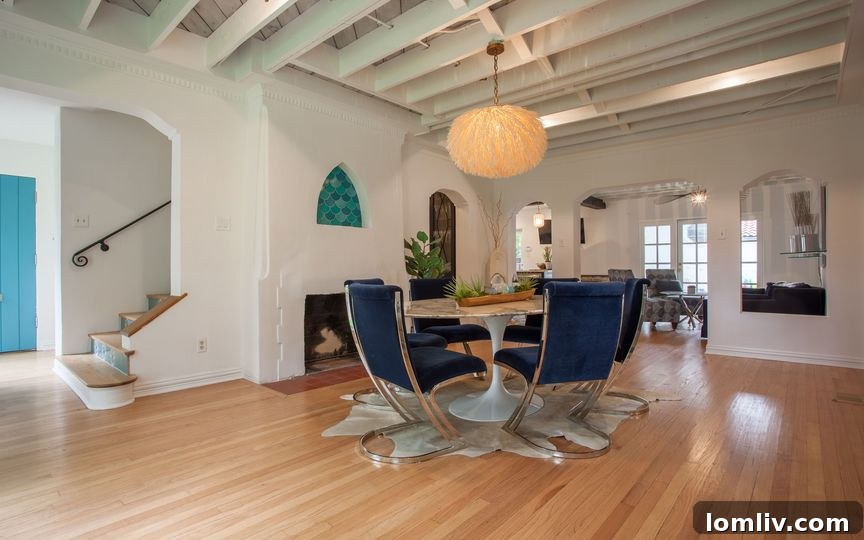
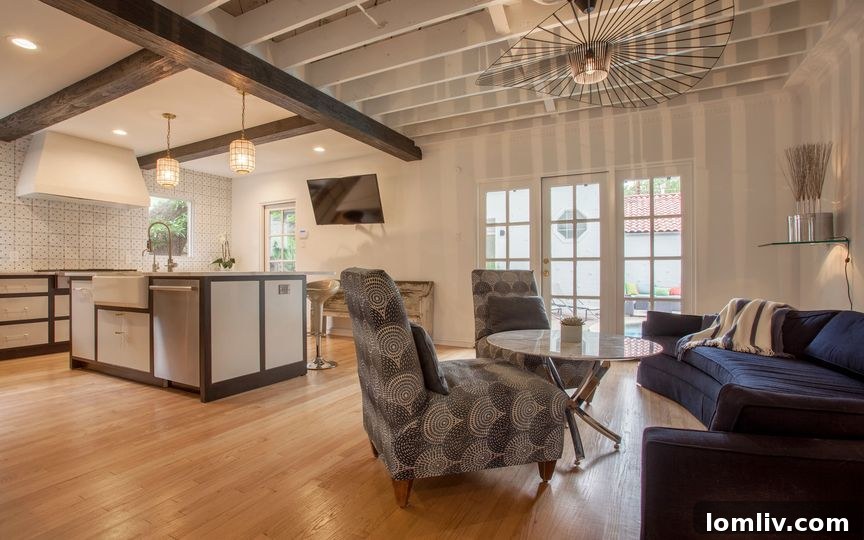
“When we do historical renovations, there is a difference between having a house look new, and having it live new,” Zielke explained, articulating a core tenet of his work. This philosophy emphasizes a delicate balance: retaining the authentic aesthetic and historical integrity of the original design while seamlessly integrating modern conveniences and structural updates that ensure comfort, efficiency, and functionality for contemporary homeowners. “Creating the right balance is crucial,” he added, highlighting the meticulous thought process required to bridge the gap between historical reverence and present-day practicality.
A Fortunate Discovery: Unearthing the Past to Guide the Future
Fate, it seems, often plays a hand in the most meaningful restoration projects. As Zielke walked through the Highland Park Spanish Revival, contemplating the intricate approach needed for its revival, he stumbled upon an extraordinary discovery: the original blueprints, tucked away in a closet beneath the stairs. This serendipitous find was a game-changer, providing invaluable insight into Witchell’s initial vision and offering a precise guide for authentic restoration.
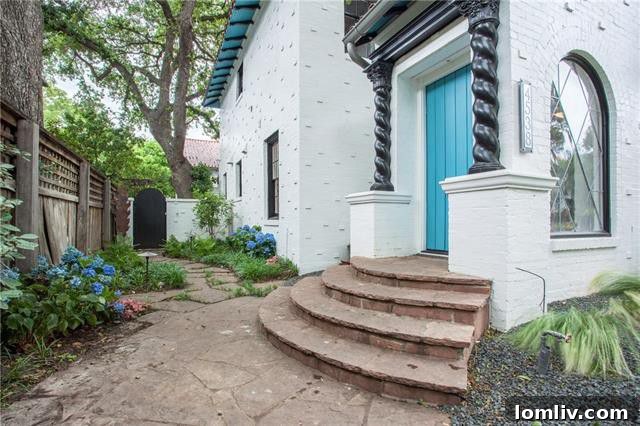
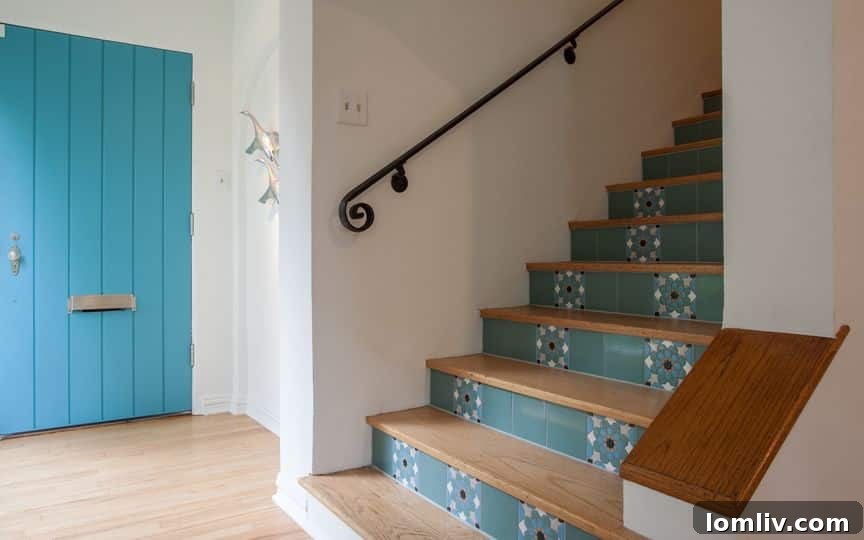
The blueprints immediately revealed a key discrepancy: the living room fireplace was not as Witchell had intended. An “inappropriate update” had taken place in the 1980s, veering away from the home’s original Spanish Revival character. Armed with the authentic plans, Zielke meticulously restored the fireplace to its intended historical appearance, but with a refined, modern twist. He updated the niche with stunning hand-glazed blue tile, a subtle yet impactful choice. This elegant blue theme was then thoughtfully carried throughout the home, appearing in the vibrant color of the front door and the custom staircase tile, creating a cohesive and harmonious design flow.
“We created the pattern and color combination and had the tile made,” Zielke proudly noted. This level of dedication extended to extensive research into period-appropriate geometric shapes, ensuring historical accuracy while selecting contemporary colors that allowed for a sophisticated “blending old and new.” This approach celebrates the home’s heritage while making it feel fresh and inviting, perfectly encapsulating Zielke’s “living new” philosophy.
The Art of Detail: Precision and Passion in Sourcing
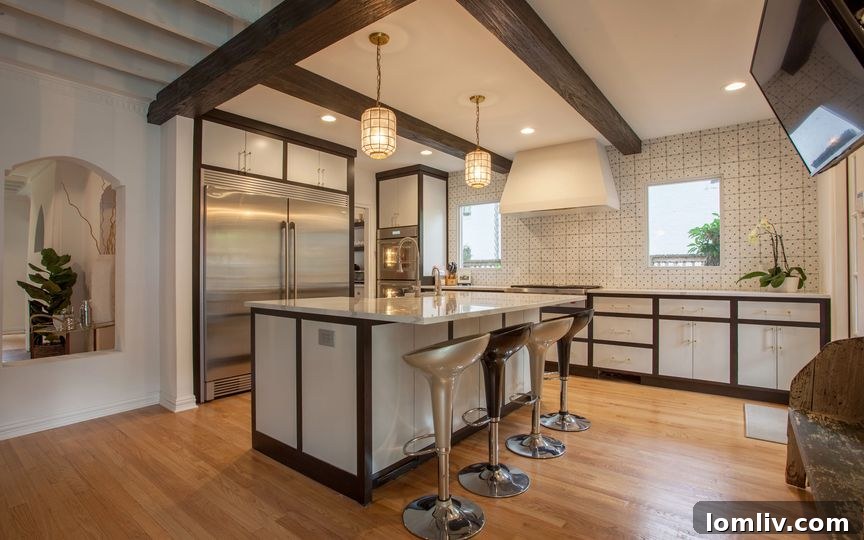
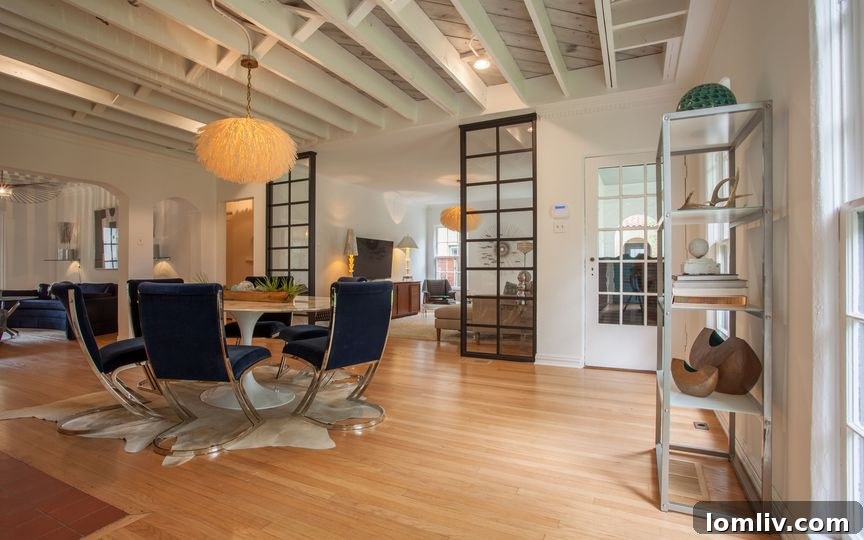
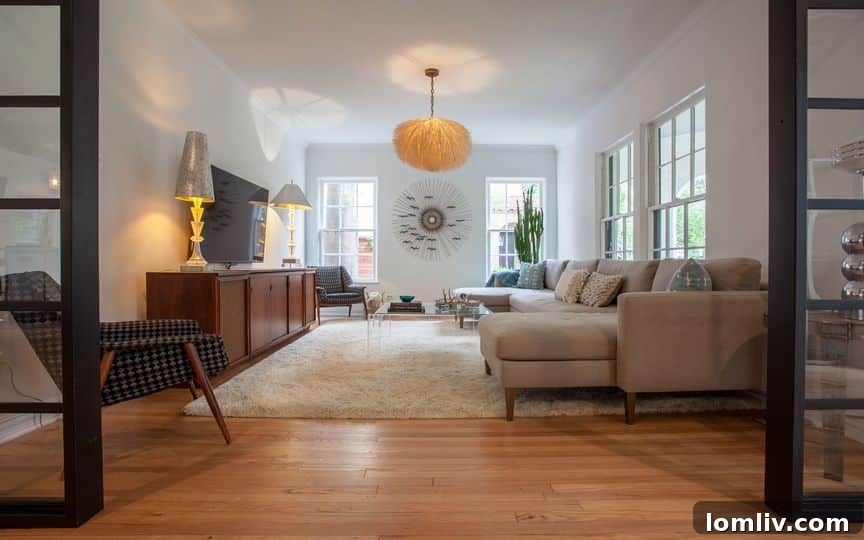
Josh Zielke’s dogged determination to perfect every detail is a hallmark of his restoration work. He understands that true historical accuracy and quality lie in the often-overlooked elements. A prime example of this meticulous approach can be found in the kitchen windows. “The two glass windows you see in the kitchen are Marvin wood frames, but I did not want new windows,” Zielke explained. Instead, he sought out single-pane, hand-poured glass from a specialized company in Germany. These bespoke panes were then painstakingly installed into the Marvin frames, with their unique pattern carefully matched to the leaded window at the front of the house. This level of custom craftsmanship ensures a seamless aesthetic and an authentic feel that mass-produced options simply cannot provide.
“Finding the right person to do the right thing is my favorite part of the job,” Zielke confessed, underscoring his commitment to partnering with skilled artisans and specialists who share his passion for excellence. This dedication to sourcing unique, high-quality materials and craftsmanship, even if it means looking beyond conventional suppliers, is what elevates his renovations from mere remodels to true restorations. It’s a process that inherently demands more time and energy than new construction, yet the preservation of a significant home is always, unequivocally, worth the investment.
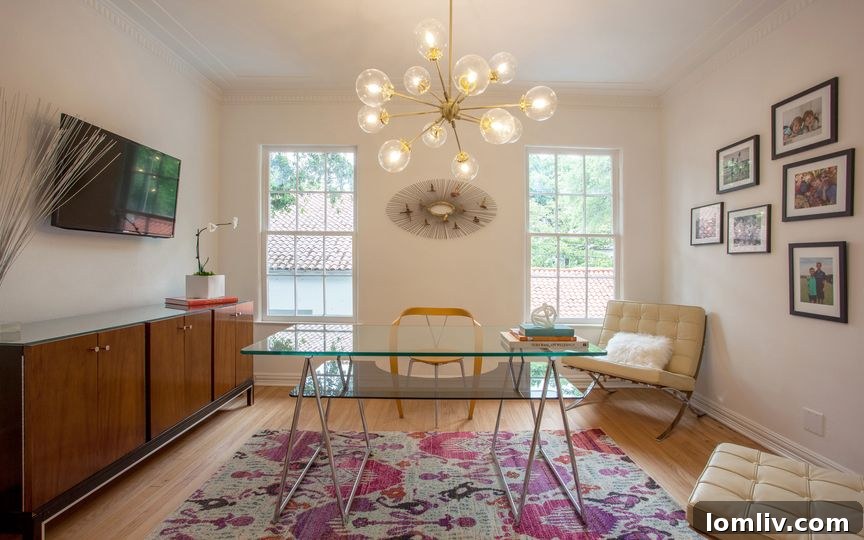
The unpredictability of historical renovations is another factor that Zielke embraces. “You must spend time thinking through the house, hunting, pecking, and finding the right pieces,” he articulated. This iterative process requires immense creativity and flexibility. When selecting materials and surfaces, the builder must constantly consider what would have been available and appropriate at the time the house was built. “There are a lot of amazing options that give you an updated feel but honor the period,” Zielke noted, highlighting the delicate balance between innovation and authenticity. “That is where you must have some creativity and flexibility. You must let the house dictate the pace and where it wants to go. It’s almost impossible to have things 100% planned because you don’t know what you will find when you remove something.” This adaptive approach ensures that the home’s inherent character guides the restoration, rather than rigid, preconceived notions.
Modern Comfort, Timeless Charm: Reimagining Interior Spaces
A crucial aspect of preserving old homes for contemporary buyers is providing them with a clear vision of how historic charm can coexist with modern comfort. Josh Zielke achieved this with considerable ingenuity, particularly in addressing a common challenge in older architecture: ceiling height. “One of the things I loved about the house was the exterior elevation and its scale,” Zielke said. However, this impressive exterior belied a more modest interior, with 8-and-a-half-foot ceilings on the first floor—a height often considered low by today’s standards for luxury homes.
Zielke’s innovative solution transformed the perception of space without sacrificing the home’s historic integrity. “So, we removed the plaster ceiling but left a 6-inch strip all the way around and the original plaster mold,” he explained. By carefully exposing the original ceiling joists above, he was able to achieve a generous 9-and-a-half-foot ceiling. This ingenious technique not only added a coveted foot of vertical space but also preserved a visible historical detail—the original plaster molding—creating an appealing contrast between rustic joists and refined plasterwork. “It created the volume people want,” Zielke confirmed, effectively merging historical character with modern spaciousness.
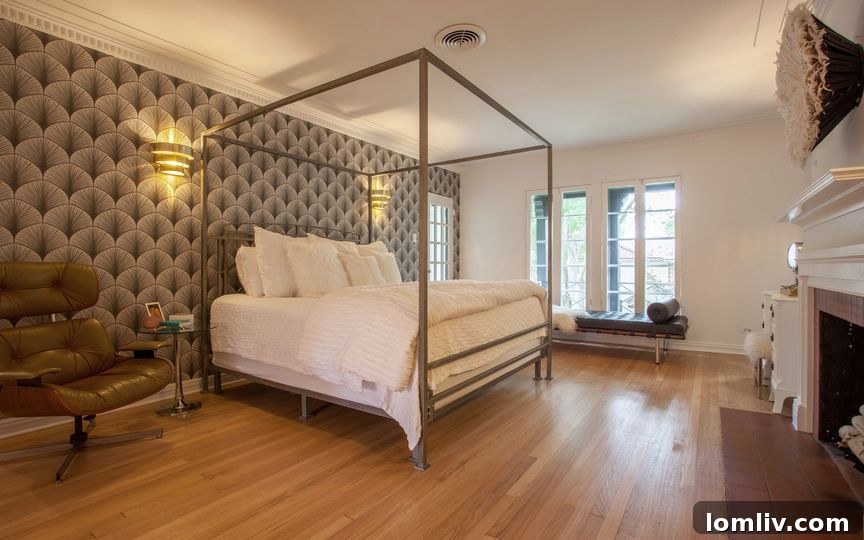
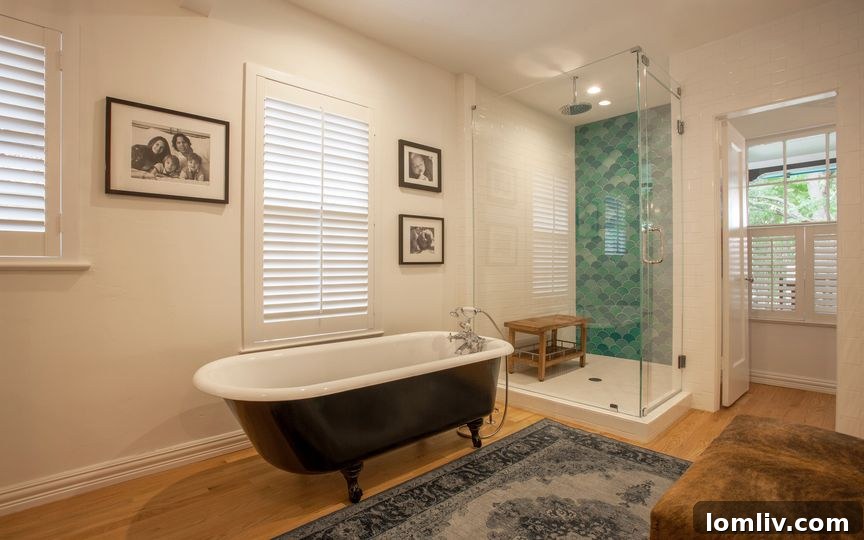
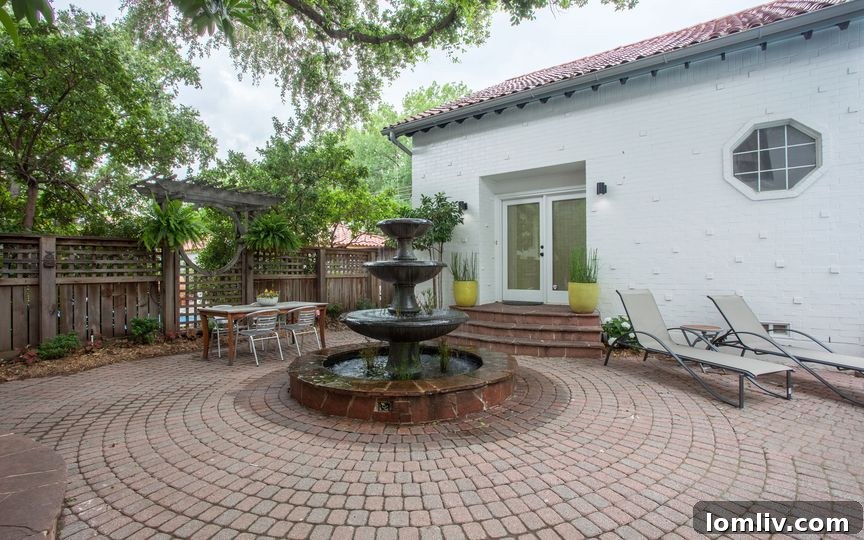
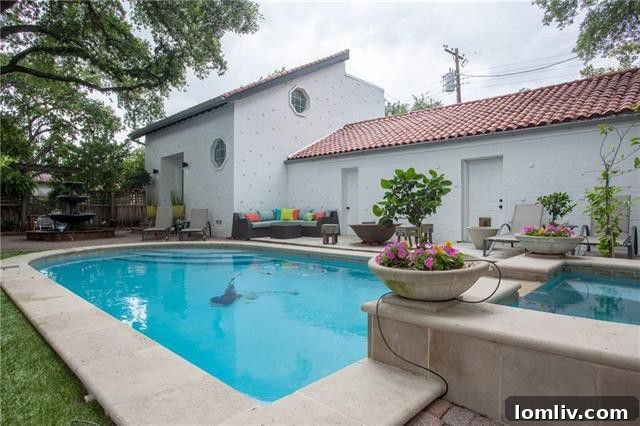
The result of this meticulous restoration is a truly reinterpreted Highland Park Spanish Revival. The home now spans an expansive 4,140 square feet, offering four luxurious bedrooms, four full bathrooms, a convenient powder bath, and two exquisitely restored fireplaces that serve as focal points. Adding to its allure is a charming two-story carriage house, providing versatile additional space perfect for guests, a home office, or a private retreat. This thoughtful integration of spaciousness and functionality ensures the home meets the demands of discerning buyers seeking both history and modern living.
Beyond Bricks and Mortar: The Enduring Value of Restoration
Josh Zielke often encourages prospective homeowners to “remember and think when choosing a new house over a renovation.” He passionately argues that “no matter what you do with a new house, you can never recreate the charm and architecture of an old house.” There’s an undeniable allure to an older home—a sense of history, character, and intricate detailing that modern construction, no matter how luxurious, struggles to replicate. “An old home is nostalgic and beautiful,” he affirms. “When you walk into one that has been restored, it gives you a feeling you cannot experience in new construction. Architecture should evoke an emotion that creates affection.” This emotional connection is a powerful, intangible asset that restored historic homes possess in abundance.
Moreover, Zielke highlights a crucial financial advantage of choosing a meticulously renovated historic home, especially in a high-value market like Highland Park. “Look at homes at this price point,” he challenges. “You can’t have a tile roof on a $1.685 million house if you are paying $1 million for the dirt.” This stark comparison underscores the reality that new construction on expensive land often necessitates compromises on premium, historically accurate features. A fully restored home, however, already comes with these irreplaceable elements, making it a superior value proposition for buyers seeking authenticity and enduring quality. “There are so many advantages to renovating an old home,” Zielke concludes, “but you must have a contractor that knows what they are doing.” The success hinges on expertise and a deep understanding of historical architecture and modern building practices.
A Legacy Preserved: Why Historic Homes Matter
“Preserving old homes is important,” Zielke states with conviction. “It’s part of our heritage. Newer is not better. People need to understand where we come from, and that we must preserve the amazing craftsmanship.” This sentiment beautifully encapsulates the core message of the 4538 Fairway Avenue restoration. It’s a project that goes beyond property development; it’s an act of cultural preservation, a celebration of Dallas’s architectural past, and a testament to the enduring beauty of quality craftsmanship. Through the dedicated efforts of builders like Josh Zielke, these historic treasures are given a new lease on life, ready to enchant future generations while serving as poignant reminders of the rich tapestry of our collective heritage.
Karen Eubank is the owner of Eubank Staging and Design. She has been an award-winning professional home stager and writer for over 25 years. Karen teaches the popular Staging to Sell class and is the creator of the online course, The Beginners Guide to Buying Wholesale. Her love of all dogs, international travel, good chocolate, great champagne, and historic homes knows no bounds. Her father was a spy, so she keeps secrets very well!