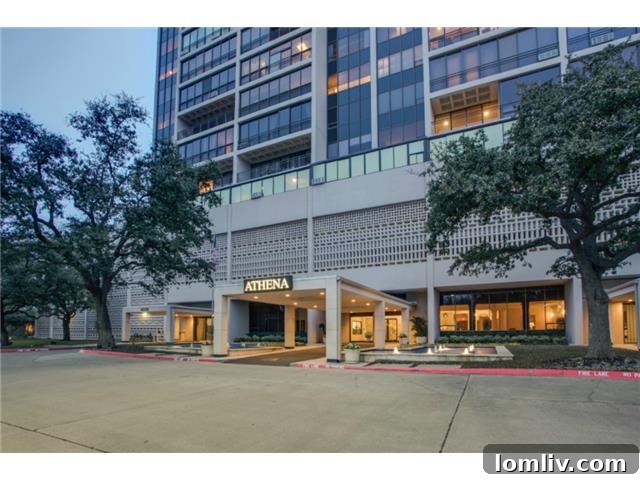
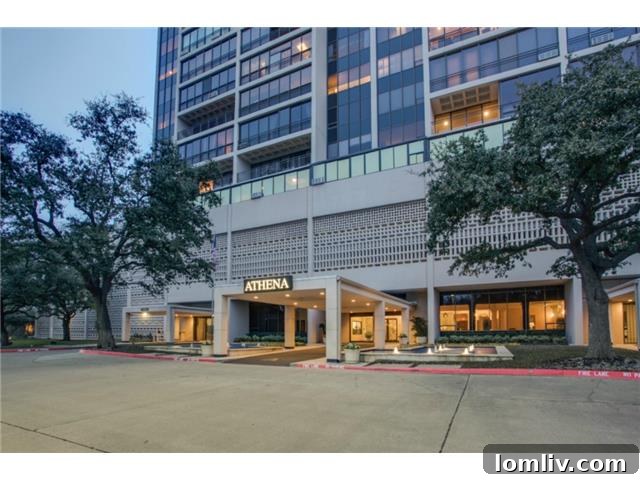
Crisis at The Athena: Intercity Investments Resigns Amidst Harassment Claims, Leaving HOA in Turmoil
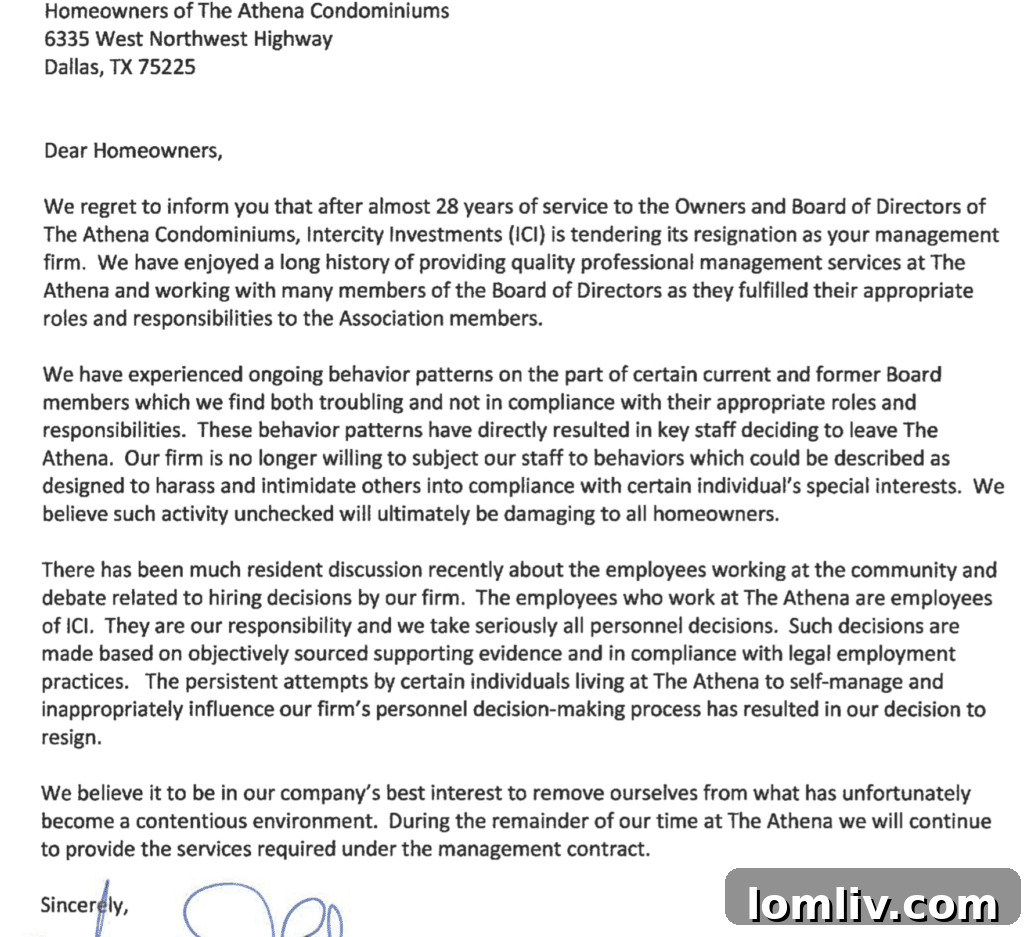
The prestigious Athena high-rise in Dallas is currently grappling with an unprecedented crisis following the abrupt resignation of its long-standing property management company, Intercity Investments (ICI). Citing an unbearable level of harassment from residents, ICI delivered a mere 30-day notice, leaving the Homeowners Association (HOA) scrambling to secure essential services and avert a potential operational shutdown by October 16. This sudden announcement has sent shockwaves through the community, highlighting the escalating challenges faced by property management firms in increasingly demanding residential environments.
The core of the issue, as articulated by Intercity Investments, centers on “behaviors which could be described as designed to harass and intimidate others into compliance with certain individual’s special interests.” This powerful statement paints a vivid picture of a potentially toxic and unworkable environment, where the professional boundaries of property management staff were allegedly repeatedly breached. Such accusations highlight the severe pressures often experienced by management companies attempting to mediate diverse resident demands, enforce community rules, and uphold operational standards amidst personal attacks or unreasonable expectations. The firm’s decision to sever ties so suddenly underscores the profound impact these alleged behaviors had on ICI’s staff morale, well-being, and overall ability to effectively manage the property.
The swiftness of ICI’s departure, marked by an unusually short 30-day notice, is a strong indicator of the profound frustration and untenable conditions experienced by the firm. In the property management industry, particularly for a large and complex high-rise building like The Athena, standard termination clauses typically require 60 to 90 days’ notice to facilitate a smooth and orderly transition. This extended period allows for the thorough handover of financials, contracts, vendor relationships, and critical operational knowledge, minimizing disruption to residents. An industry insider, who requested anonymity due to their prominent standing, corroborated this sentiment, stating, “My guess is ICI probably decided life is too short for conflict,” suggesting that the conflict had reached a point where the business relationship was no longer sustainable or worth the emotional toll on their team.
The immediate implication for The Athena residents is a looming period of “zero maintenance” post-October 16 if a new management solution isn’t secured promptly. This isn’t merely a minor inconvenience; it signifies a complete breakdown in the administrative and operational infrastructure of a sophisticated high-rise. Critical services such as security personnel, common area cleaning, landscaping, waste management, timely utility bill payments, emergency repairs, and the crucial oversight of existing vendor contracts could all cease. The absence of professional management could quickly lead to a decline in property aesthetics, potential safety hazards, and significant legal liabilities for the volunteer HOA board, ultimately impacting residents’ quality of life and the long-term value of their properties.
Managing a large, upscale high-rise like The Athena is an intricate endeavor that demands specialized expertise, extensive resources, and a delicate balance of stakeholder interests. Property management companies serve as the operational backbone for HOAs, handling everything from financial stewardship and regulatory compliance to maintenance coordination and conflict resolution. The challenges are often compounded when individual resident expectations clash with collective community rules, leading to internal divisions that can undermine the management firm’s ability to effectively govern the property. This crisis at The Athena casts a spotlight on the often-underestimated complexities of communal living and the vital, yet sometimes thankless, role professional management plays in maintaining harmony and functionality within a vibrant residential community.
The Urgent Search for a New Property Management Solution
The Athena’s HOA board is now thrust into an urgent and unenviable search for a new property management company. This task is made significantly more challenging by the circumstances of ICI’s departure, which could deter potential candidates wary of inheriting a similar high-conflict environment. Securing a reputable firm on such short notice requires not only speed but also meticulous due diligence, including thorough vetting of bids, complex contractual negotiations, and the establishment of a robust transition plan that minimizes disruption for residents. The stakes are incredibly high, as the long-term stability, safety, and financial value of The Athena depend critically on finding a competent, resilient, and respected management partner capable of navigating its unique community dynamics.
Several prominent names in the Dallas property management landscape have emerged as potential candidates, indicating the gravity of the situation and the concerted efforts being made at a high level to resolve it. Among them are former state senator John Carona, who owns two major property management entities: Principle Management Group of North Texas and Somerset Association Management. Both firms are well-established and known for managing large, upscale residential communities in the region, possessing the infrastructure and experience necessary for a complex like The Athena. Additionally, word suggests the board is actively engaging with Worth Ross and Associates for a bid, another respected name in the Dallas real estate management sector. The involvement of such high-caliber firms underscores the critical need for experienced hands to guide The Athena through this turbulent period.
Exploring Alternatives: Self-Management and Attempts to Retain ICI
While the primary focus is unequivocally on securing a new professional management firm, other, less ideal options are likely being considered by the HOA board in these desperate times. One highly improbable possibility is asking Intercity Investments to extend their contract by another 30 days. However, given the strong language in their resignation letter and the implied level of staff distress and alleged harassment, this scenario appears highly improbable. It would require a significant and immediate turnaround in resident behavior and a willingness from ICI to subject its employees to further perceived hostile interactions, which seems highly unlikely given their explicit reasons for departure.
Another challenging alternative is for The Athena to self-manage, effectively shifting all operational and administrative burdens onto its volunteer HOA board. For a high-rise of The Athena’s scale and complexity, self-management is a monumental undertaking, fraught with significant risks. It would necessitate board members dedicating extraordinary amounts of personal time, acquiring instant expertise in diverse areas like complex accounting, legal compliance specific to HOAs, maintenance scheduling, and intricate vendor management. Without professional support, the potential for errors, legal liabilities, and severe volunteer burnout is extremely high, making it a viable option only as a very short-term, emergency measure rather than a sustainable long-term solution for a luxury residential building.
Financial Implications for Residents and Property Values
The current crisis also raises pressing questions about the financial implications for The Athena’s residents, particularly regarding HOA dues. While it’s uncertain if dues would immediately change, the possibility exists, and often becomes a reality in such transitions. A new property management company, especially one taking on a project with such urgent and challenging circumstances, might command higher fees to compensate for the perceived risk, the rapid onboarding demands, and the specialized expertise required for high-rise management. Moreover, if the HOA is forced to self-manage or contract services individually for a period, the costs could fluctuate unpredictably, potentially increasing due to emergency rates or lack of bulk purchasing power. Any increase in dues or unforeseen expenses would add another layer of strain on the community, emphasizing the critical need for transparent financial planning and clear communication during this precarious transition period, ultimately impacting property values if not handled effectively.
Broader Context: The Pink Wall Redevelopment and Resident Dynamics
The internal strife at The Athena is not entirely isolated from broader community discussions and political dynamics within Dallas. The Athena’s board, alongside that of Preston Tower’s, has historically pushed hard against city-recommended redevelopment behind the Pink Wall in PD-15. This active and vocal engagement in local political and urban planning issues demonstrates a community that is deeply invested and often assertive in protecting its interests. Such external activism, while often beneficial for safeguarding community character and property values, can sometimes foster an environment of heightened scrutiny, strong opinions, and assertive communication. When such a culture is misdirected internally, it could inadvertently contribute to the very challenges faced by property management, creating an atmosphere where disagreements escalate rapidly into conflict.
Further underscoring the interconnectedness of resident dynamics and community leadership is the involvement of notable figures like Steve Wolens, a unit owner at The Athena and the husband of former Dallas Mayor Laura Miller. Reports indicate Wolens has been involved in communications, potentially reaching out to prominent figures like John Carona for assistance in identifying and securing a new management firm. The involvement of such politically connected and experienced individuals highlights the severity and public visibility of the crisis, demonstrating the concerted efforts being made at a high level to resolve it. Their unique blend of political acumen, extensive networks, and deep understanding of local community dynamics could prove invaluable in navigating the current turmoil and securing a viable, stable future for The Athena residents.
The Road Ahead for The Athena Community
As the October 16 deadline looms ominously, The Athena faces a pivotal and defining moment in its distinguished history. The abrupt departure of Intercity Investments serves as a stark and sobering reminder of the delicate balance required in managing complex residential communities and the critical importance of respectful, constructive engagement between residents and management staff. The HOA board’s immediate actions in securing a new property management solution will undoubtedly determine whether The Athena can smoothly transition and restore equilibrium or endure a prolonged period of significant operational disruption and uncertainty. The entire Dallas real estate community, alongside its residents, will be watching closely as this prominent high-rise navigates its way through an unprecedented crisis, striving to restore stability, harmony, and the continued excellence expected of an Athena address.