Decoding Historic Preservation: The White Rock Lake Stone Tables Saga
In the intricate world of historic preservation and urban development, the power of words cannot be overstated. A single term can define the scope, budget, and public perception of a project, shaping its destiny and the legacy of cherished landmarks. This has never been more evident than in the recent endeavor to revitalize the beloved White Rock Lake Stone Tables picnic area in Dallas. What began with the simple anticipation of a ribbon-cutting ceremony for a completed public space soon unfolded into a complex narrative, driven by the precise (or imprecise) use of language.
The controversy that enveloped this popular lakeside spot revolved around seemingly interchangeable terms: preservation, rehabilitation, restoration, reconstruction, and renovation. Each word, while sounding similar to the uninitiated, carries distinct technical meanings and implications within the architecture and historical conservation community. These definitions, often overlooked in casual conversation, became the cornerstone of a spirited public debate, revealing deep community attachment to a place woven into the very fabric of Dallas’s history.
Dallas’s Enduring Legacy: Structures Forged by The CCC
The roots of many iconic structures around White Rock Lake trace back to one of America’s most transformative Depression-era initiatives. In 1931, the City of Dallas was a fortunate beneficiary of President Franklin D. Roosevelt’s New Deal programs, notably the Civil Works Administration (CWA). While a significant portion of CWA workers were deployed to national parks, Dallas secured vital federal support for local infrastructure projects, a testament to the city’s proactive engagement during a period of national hardship.
A pivotal moment arrived in 1935 when the Civilian Conservation Corps (CCC) established a camp directly at White Rock Lake. These young men, often with limited prior experience or specialized skills, were put to work, embodying a spirit of on-the-job learning that defined the era. Their collective efforts were monumental, contributing to the construction of numerous enduring structures we still utilize and admire today, including pavilions, trails, and, of course, the Stone Tables picnic area. Beyond construction, the CCC also undertook crucial environmental work, performing the lake’s first comprehensive dredging, an essential step in maintaining its ecological health and recreational viability. Understanding the improvisational yet robust nature of these original constructions by a workforce learning as they built is key to appreciating the challenges and decisions faced decades later during their rehabilitation.
The Undeniable Allure of White Rock Lake’s Stone Tables
For generations of Dallasites, White Rock Lake is more than just a body of water; it’s a cherished oasis, a hub of recreation, and a communal backyard. Within this beloved landscape, the Stone Tables picnic area holds a particularly special place in the hearts of many. Its enduring popularity is hardly surprising, given its unique charm and historical significance.
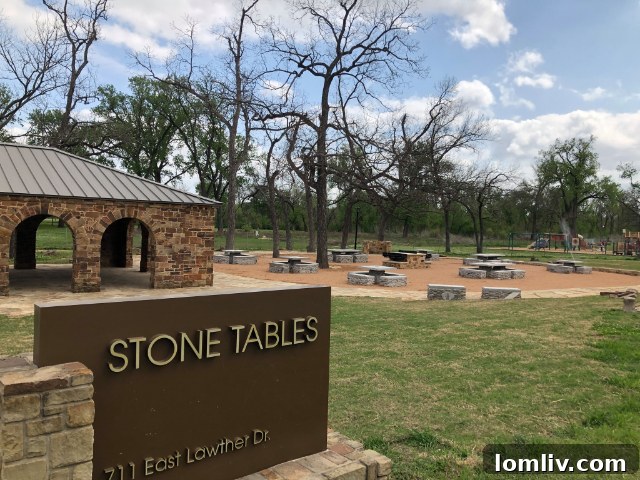
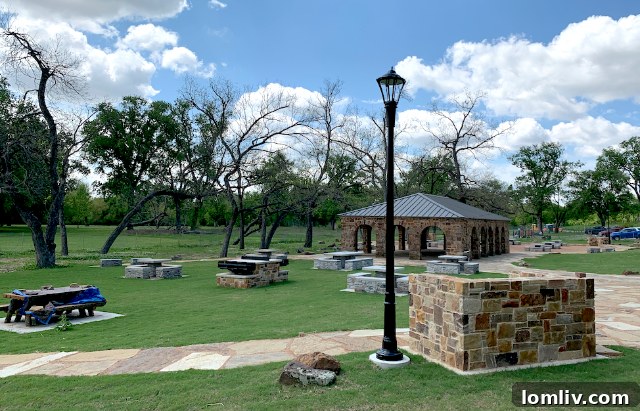
Tucked away in a tranquil grove of trees, the Stone Tables area exudes a magical, almost timeless atmosphere. It features a distinctive stone pavilion alongside an array of rustic stone tables and benches, all crafted by the diligent hands of the CCC. From its inception, this entire complex was conceived with a singular, noble purpose: to serve the public. The elegant Stone Pavilion was originally envisioned as a charming venue for weddings and community gatherings, while the robust Stone Tables were purpose-built for families seeking a picturesque spot to picnic by the lake. This vision endured for over eight decades, transforming the area into a beloved meeting point for countless organizations, from gardening clubs exchanging horticultural tips to running groups commencing their morning jogs. Virtually every imaginable public event has found a home under the pavilion’s sturdy roof, etching it deeply into the collective memory of Dallas.
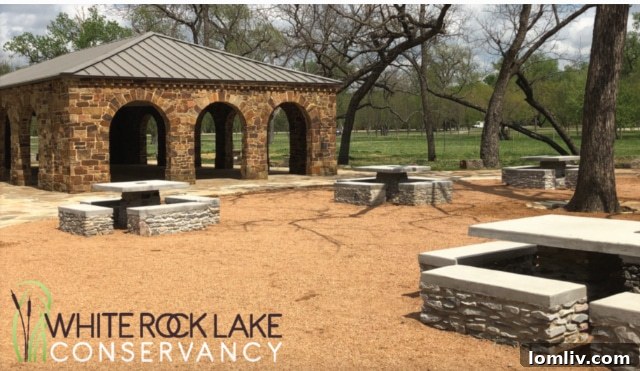
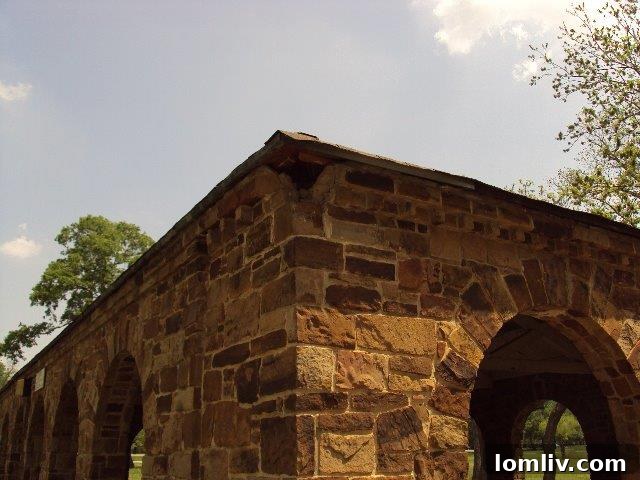
The Pavilion before Mark Hoestery’s work began. Note the significant hole in the corner stonework where it meets the roof, illustrating the extent of deterioration.
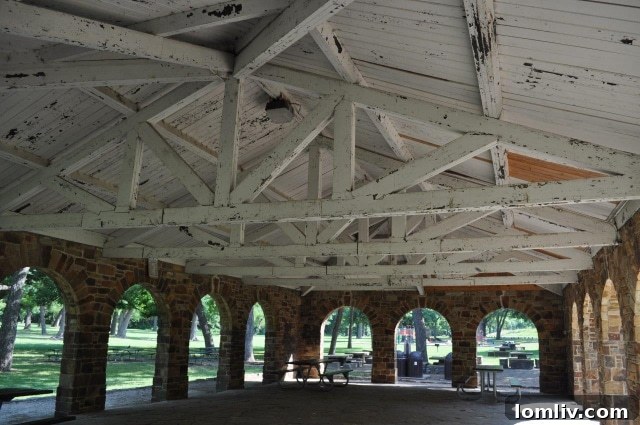
Despite its enduring appeal, the passage of time took its inevitable toll. Over more than 80 years, the entire area valiantly withstood the punishing “crazy Texas elements” – scorching summers, torrential rains, and occasional freezes – coupled with the constant heavy use from a bustling public. Such prolonged exposure and continuous activity meant that the wear and tear on these historic structures reached a point where appropriate intervention became not just desirable, but absolutely necessary.
The question then arose: what constitutes the “proper” approach to addressing the deterioration of public structures built nearly a century ago? Typically, in such complex scenarios, the City of Dallas and its Parks and Recreation Department seek strategic partnerships with local stakeholders and community organizations. These collaborations are crucial for fundraising substantial projects and leveraging specialized expertise. A standard process involves a commitment to public engagement, including open meetings, sharing of proposed designs, and fostering an environment of clarity and transparency to ensure community input and understanding.
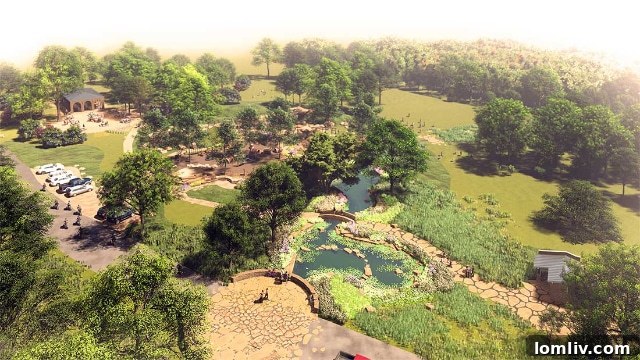
The Lexicon of Legacy: Restore, Renovate, Reconstruct, or Rehabilitate?
Into this critical juncture stepped the White Rock Lake Conservancy, a key player in the revitalization effort. The organization, a vital public-private partnership with the City of Dallas Park Department, outlines its mission and involvement clearly. They commit to identifying and helping to fund projects deemed essential to the park’s integrity by the Parks Department. In 2012, the Conservancy’s Board of Directors enthusiastically adopted the renovation and restoration of the Stone Tables Pavilion and Picnic area as a top priority. Volunteer architects and planners then dedicated themselves to developing a comprehensive plan, working closely with the City of Dallas to realize this ambitious goal.
A public and private partnership with the City of Dallas Park Department. We work together to choose projects the Conservancy can help fund that the Park Department has deemed vital to the integrity of the Park.
In 2012, the Board of Directors of the White Rock Lake Conservancy agreed to take on the renovation and restoration of the historic and very popular Stone Tables Pavilion and Picnic area for the Parks and Recreation Department as identified in the Top 10 projects. Volunteer architects and planners developed a renovation plan and worked with the City of Dallas to fulfill this goal.
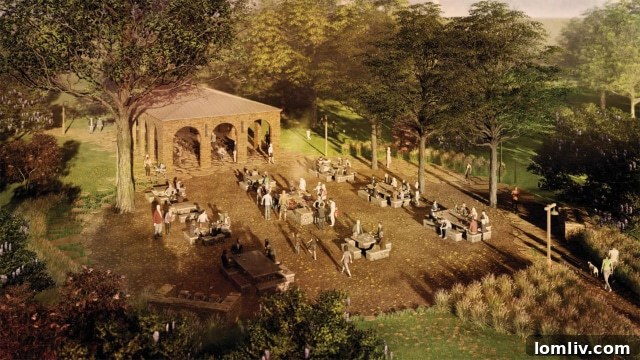
This is precisely where the specificity of language becomes paramount. The Conservancy’s initial description mentioned “renovation and restoration.” However, to move beyond common parlance and delve into the rigorous standards governing historic properties, we must consult authoritative sources. The National Park Service (NPS) provides the definitive framework, outlining “four distinct, but interrelated approaches to the treatment of historic properties—preservation, rehabilitation, restoration, and reconstruction.” These guidelines are not merely suggestions; they are the bedrock of ethical and responsible historic asset management in the United States.
To summarize these critical distinctions from the NPS standards:
Preservation is defined as the act or process of applying measures necessary to sustain the existing form, integrity, and materials of an historic property. Work, including preliminary measures to protect and stabilize the property, generally focuses upon the ongoing maintenance and repair of historic materials and features rather than extensive replacement and new construction.
Rehabilitation is defined as the act or process of making possible a compatible use for a property through repair, alterations, and additions while preserving those portions or features which convey its historical, cultural, or architectural values.
Restoration is defined as the act or process of accurately depicting the form, features, and character of a property as it appeared at a particular period of time by means of the removal of features from other periods in its history and reconstruction of missing features from the restoration period. The limited and sensitive upgrading of mechanical, electrical, and plumbing systems and other code-required work to make properties functional is appropriate within a restoration project.
Reconstruction is defined as the act or process of depicting, by means of new construction, the form, features, and detailing of a non-surviving site, landscape, building, structure, or object for the purpose of replicating its appearance at a specific period of time and in its historic location.
For those who might still question the nuanced differences, preservation architect Marcel Quimby offers invaluable insight. “Within the United States, the National Park Service is the keeper of preservation ethics. They were the first federal agency to preserve buildings and parks. They developed the common vocabulary we use in preservation,” Quimby explains. “There are about six words that, depending on who you are, mean different things to different people. Within the preservation community, we use the words specifically as defined by the National Park Service.” This emphasis on precise terminology is crucial, as it dictates the scope, methods, and ultimately, the historical integrity of any project involving significant structures.
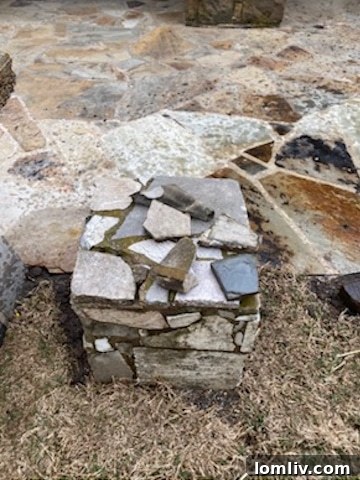
Applying these stringent NPS definitions, it becomes clear that the Stone Tables project was, in its various components, a combination of **rehabilitation** (for existing structures like the pavilion and restrooms) and **reconstruction** (for the tables themselves), rather than a pure “restoration” or “renovation” as popularly understood. This technical distinction, though subtle, profoundly impacts how the work is carried out, what materials are used, and the extent to which original elements are retained versus replaced. The discrepancy between popular understanding and expert terminology laid the groundwork for considerable public discussion and, at times, understandable frustration.
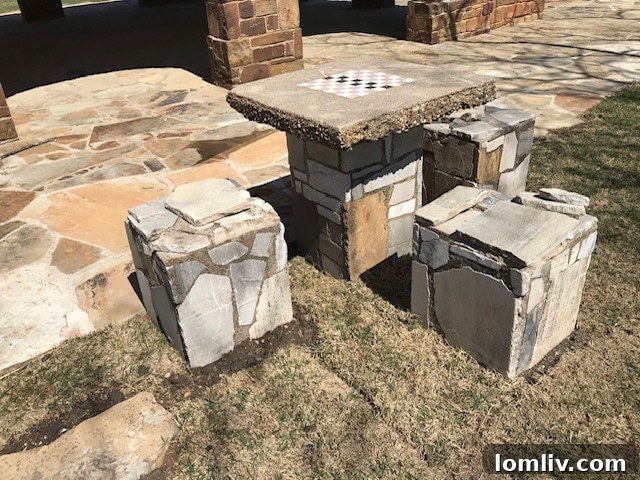
Two new game tables were later added to the area, with artist Lucan Watkins meticulously repairing the seats and resealing their tops, ensuring their longevity and aesthetic appeal.
Bridging the Gap: Addressing Misunderstandings and Community Concerns
The complexities inherent in such projects often lead to misunderstandings, and the revitalization of the Stone Tables was no exception. Public outcry erupted when community members witnessed bulldozers on site, perceiving the demolition of the familiar stone tables as a disregard for history. Social media, understandably, went “wild” with passionate condemnations. This reaction was entirely natural, fueled by a deeply ingrained affection for the lake and the widely held expectation that the project would involve straightforward preservation and rehabilitation—a gentle repair rather than a significant overhaul.
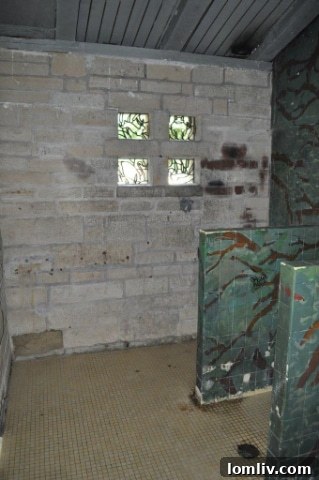
It’s important to clarify that parts of the project indeed adhered to high preservation standards. The historic pavilion, for instance, underwent meticulous preservation, a commendable effort recognized with an award from Preservation Dallas. Similarly, the public restrooms were not merely repaired but beautifully rehabilitated, incorporating modern amenities and achieving crucial ADA compliance. These upgrades were vital for making the facility accessible to all visitors, a critical consideration for any modern public space. However, the fate of the stone tables unfolded differently, becoming the primary flashpoint of the controversy.
-

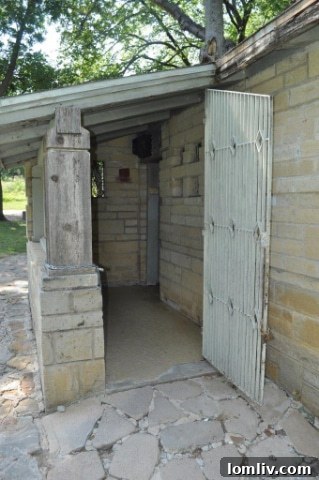
As illustrated, the original restroom doors were not designed to accommodate wheelchairs, highlighting a significant accessibility challenge. -
The site now features two contemporary, single-use restrooms that are fully ADA compliant, a considerable improvement from the previous facilities. -
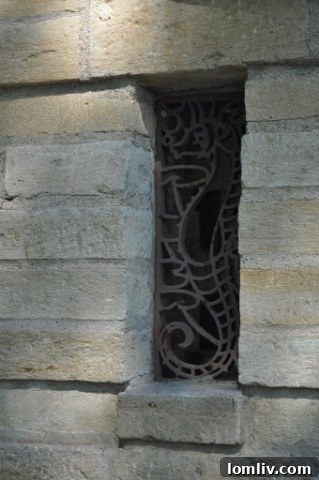
A detail of Potter Art Metal Studios’ remarkable original work, meticulously preserved in the windows of the pavilion.
The Tables: A Case for Necessary Reconstruction
Regarding the stone tables, Park Board Representative for District 9, Maria Hasbany, clarified the initial intent, stating, “It was never the intention here to do preservation. The project was always described as restore, which means that you restore as close as you can to the original.” While “restore” might imply retaining existing elements, the deeper technical meaning of the NPS definitions pointed towards a more significant intervention for the tables themselves.
The crucial term here became **reconstruction**. Architect Mark Hoestery, from the world-renowned firm SHM Architects, spearheaded this challenging project. Hoestery, a founding member of the White Rock Lake Conservancy, possesses an intimate understanding of the National Park Service’s precise preservation terminology and its critical implications. Both he and his wife, Jennifer (the current director of the Conservancy), poured hundreds of hours and substantial financial resources into ensuring the area could once again serve the public safely and efficiently. For the Hoesterys, this was more than a professional undertaking; it was a deeply personal passion project dedicated to the enduring vitality of White Rock Lake.
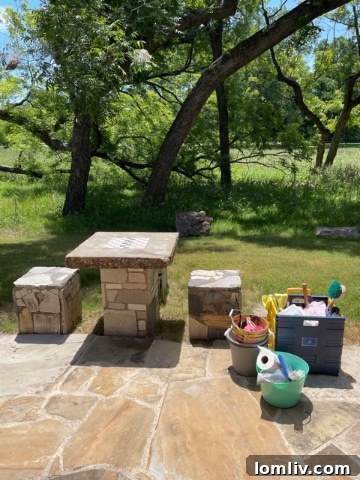
The game tables, expertly restored and fortified after Watkins completed the necessary repairs, ready for public enjoyment.
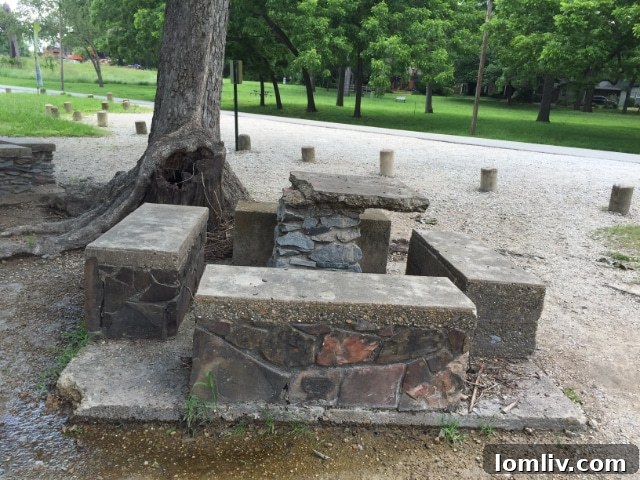
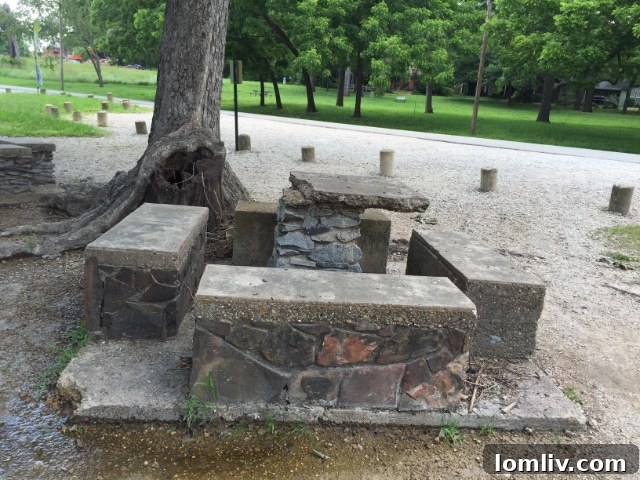
The decision to reconstruct the tables was not taken lightly, but was driven by compelling structural and safety concerns. Hoestery explained, “We had to dig out the tables from silt to put in a drainage system that was not needed in 1935. The tables were actually unsafe.” The original construction of these tables, undertaken by CCC workers without formal architectural training, involved “cobbling together” available materials, including salvaged granite, local stone, and concrete. This ad-hoc construction, while charming, proved unable to withstand decades of neglect, the relentless Texas climate, and most significantly, the persistent issue of poor drainage that had led to their structural compromise. The presence of concrete in their original foundations necessitated the use of heavy machinery like bulldozers to properly address the underlying problems.
Crucially, these tables were never designed to be architectural masterpieces or artistic statements; they were utilitarian structures built for public utility. They were not even intended to perfectly match the more formal pavilion. Yet, over time, the Dallas community developed a profound emotional attachment to their unique, rustic character. This sentiment, the desire to protect and preserve our city’s history and architectural integrity, is commendable and essential for a vibrant urban environment. However, the project highlighted the inherent difficulty in reconciling such deep emotional connections with the pragmatic realities of structural integrity, safety standards, and long-term sustainability. It underscored the challenge of making informed judgments without fully understanding all the technical and environmental parameters of a complex historic preservation project.
A Legacy Reimagined: The Future of White Rock Lake Stone Tables
“We wanted to preserve the legacy of the original intention,” Mark Hoestery affirmed, underscoring the guiding philosophy behind the project. Despite the technical complexities and the emotional public response, the project was conducted with a strong commitment to community engagement. “There were plenty of public hearings for people to address their concerns. We addressed everything from lighting and parking to signage,” Hoestery recalled. He acknowledged the passionate opinions, stating, “People have strong opinions, and that’s great. Everyone loves White Rock Lake, but everyone has a different idea. It was not easy, but I love where it’s going. It cleaned up an eyesore and made it usable for the public.”
Ultimately, the White Rock Lake Stone Tables, Pavilion, and restroom project stands as a remarkable, albeit complicated, example of how all the NPS terms—preservation, rehabilitation, restoration, and reconstruction—can converge within a single, integrated effort. Was the historic Pavilion meticulously preserved and honored? Absolutely. Are the reconstructed tables precisely identical to their original, structurally compromised predecessors? No, and by necessity, they are far safer and more durable. But the overarching question, and arguably the most crucial one, is whether the entire revitalized area will be enjoyed and cherished by countless generations to come. To that, the answer is a resounding YES.
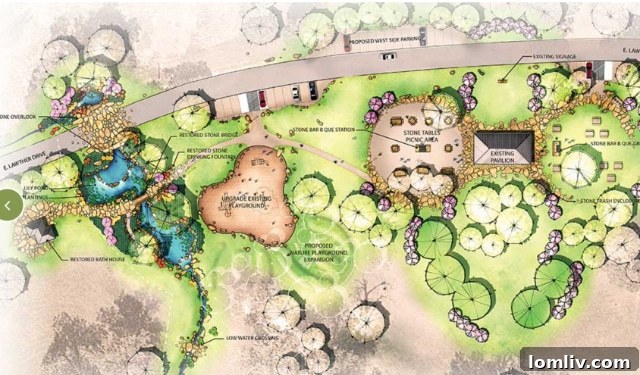
This comprehensive project, born from a blend of historical reverence, engineering necessity, and community vision, has transformed a deteriorating landmark into a vibrant, accessible, and sustainable public space. It represents a significant triumph for the City of Dallas, the White Rock Lake Conservancy, and most importantly, for the thousands of residents and visitors who will create new memories there for decades to come. The grand ribbon-cutting ceremony, marking the successful completion of this endeavor, took place at 10 a.m. on Saturday, August 28, at 711 East Lawther Road. We are incredibly fortunate to once again have such a usable picnic space, a magnificent event pavilion, and fully functional, ADA-compliant public restrooms at White Rock Lake. We wholeheartedly encourage everyone to visit, explore, and enjoy this beautifully revitalized Dallas treasure.