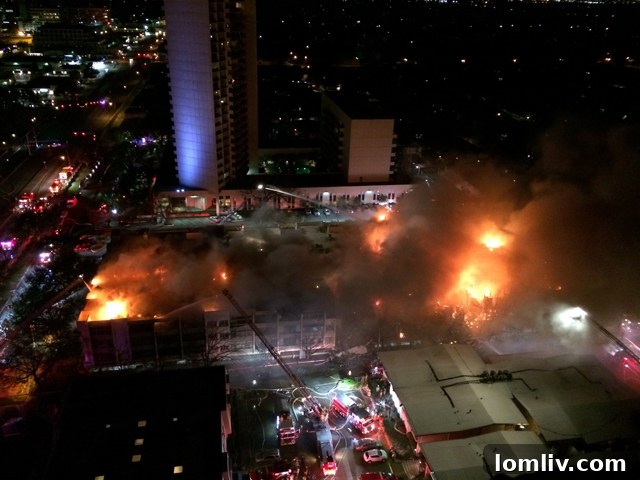
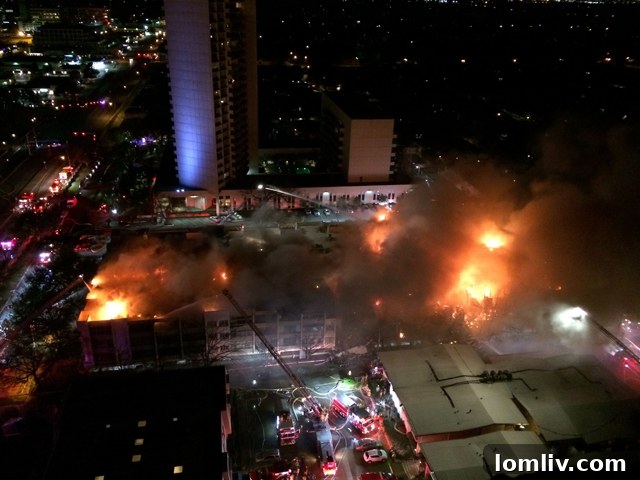
The air was filled with the delightful aroma of a newly renovated kitchen last week at a vibrant Daltxrealestate.com event in Preston Hollow. Amidst conversations about modern design and innovative temporary kitchen solutions, a more profound and pressing topic emerged as I was introduced to several local women: the complexities surrounding PD-15. It quickly became evident that these individuals shared a deep connection to the neighborhood; some were long-time residents, while one was a former owner of Preston Place, whose life was irrevocably altered when she was displaced by the devastating fire in March 2017. Their collective concern underscored a critical challenge facing the Preston Hollow community: how to rebuild and strategically redevelop properties while navigating the labyrinthine world of local zoning regulations and deeply entrenched neighborhood dynamics.
For those unfamiliar with the intricate urban planning of Dallas, PD-15, or Planned Development District 15, designates a pivotal stretch of the Preston Hollow neighborhood. This district is strategically situated between the iconic Athena and Preston Tower high-rises and encompasses a diverse architectural landscape, including four low-rise residential buildings alongside the two aforementioned towering structures. Being part of a Planned Development district carries significant implications; any substantial change, particularly concerning new construction, significant renovations, or alterations to existing structures, is subject to stringent regulatory oversight. The avenues for modifying the PD-15 framework are notably limited: either all property owners and members within the PD must unanimously agree to a proposed change, or the Dallas City Council must intervene to implement alterations. This regulatory structure, originally conceived decades ago to ensure orderly development, has now become the epicenter of considerable contention and mounting frustration, especially in the wake of the catastrophic Preston Place fire.
The fire at Preston Place was far more than just a destructive incident; it served as an undeniable catalyst for change and urgent discussion. Just four months after the tragic blaze, on July 13th, Council Member Jennifer Gates convened a crucial public meeting. The primary objective was twofold: to address the immediate aftermath and long-term consequences of the fire, and more importantly, to delve into the intricate processes required to amend the outdated PD-15 documents. The overarching goal was to streamline the path for new construction and facilitate the much-needed revitalization of the fire-damaged parcels. This meeting was a powerful demonstration of engaged community spirit, drawing a standing-room-only crowd, which clearly articulated overwhelming support for reopening the PD discussions and embracing essential change. This initial surge of enthusiasm led directly to the formation of a dedicated task force, which held its inaugural meeting on August 9th. However, as seven months have now elapsed since Council Member Gates’ meeting, and with the one-year anniversary of the Preston Place fire fast approaching, the initial momentum appears to have significantly waned. The task force, rather than making decisive progress towards its foundational mandate of facilitating meaningful change, seems to be increasingly bogged down in internal disagreements and a perceived inability to foster compromise, stalling vital community progress.
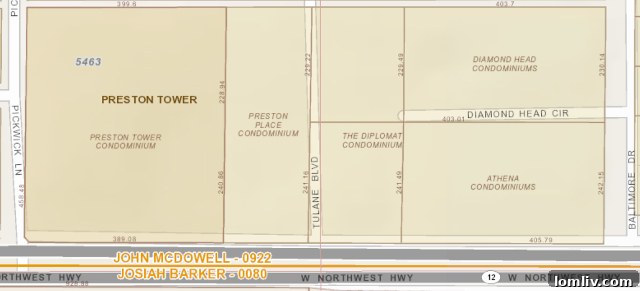
My conversation with the women at the event swiftly shifted to shared predictions about the eventual fate of the task force. There was a widespread and palpable sentiment that the task force would ultimately buckle under the weight of its own internal disagreements, characterized by trivial squabbles and an unyielding reluctance to negotiate or discover common ground. This escalating division was starkly underscored by a noteworthy letter sent to Council Member Gates in November, which explicitly solidified the “us versus them” battle lines. Essentially, the conflict pits the residents of the towering high-rises against those dwelling in the more modest low-rise buildings, embodying a classic urban planning struggle often categorized as NIMBY (Not In My Backyard) versus YIMBY (Yes In My Backyard). Each faction, deeply entrenched in its own perspective and often viewing the other with suspicion, severely impedes any potential for collaborative progress towards a cohesive and unified vision for the future development of PD-15. This adversarial dynamic threatens to derail the entire revitalization effort, prolonging the uncertainty for all stakeholders.
Further complicating this already fractured and tense scenario is the recent, and to many, unwelcome involvement of Laura Miller, a public figure who consistently elicits strong reactions. None of the women I spoke with expressed any enthusiasm for her presence in these critical discussions. Having meticulously observed Miller’s past participation during the Preston Center task force meetings, I share this apprehension and would characterize her stance as NIABY (Not In Anyone’s Backyard). Her consistent and uncompromising opposition to significant urban development projects, such as Crosland’s proposed residential high-rise, the controversial skybridge, and Transwestern’s Laurel project, is a matter of public record. During those prior task force discussions, I vividly recall her distinct comment, “I thought we killed them,” upon learning that Transwestern’s project was still actively pursuing approval. Yet, with what many perceive as a bewildering inconsistency, after Crosland subsequently sold a specific parcel to Leland Burke, I distinctly recall sitting behind her as she reassured Burke, “Don’t worry, you’ll get your high-rise” on that very same parcel. This demonstrates a perplexing and seemingly selective application of her principles, or perhaps a pragmatic shift in her priorities, which only serves to intensify the existing mistrust and deep division within the current PD-15 task force, hindering its ability to achieve any meaningful consensus.
Perhaps the most insightful and ultimately hopeful aspect of our discussion was listening to the former Preston Place owner. Her perspective offered a crucial and often overlooked counterpoint to the prevailing narratives of conflict and impasse. She passionately emphasized that the owners of Preston Place are genuinely and deeply committed to pursuing a redevelopment path that truly benefits the entire neighborhood, not just their immediate interests. Illustrating this commitment, she revealed that they have already conscientiously rejected several proposals that sought to construct an overly massive and bulky building across their entire property. Their clear vision, she articulated, is for a carefully considered project that not only they, but the entire Preston Hollow community, can embrace with genuine pride. This philosophy aligns perfectly with a fundamental principle often referred to as “Campsite Rules”—the idea of leaving a place better than you found it. The current state of affairs, marked by incessant petty wrangling and significant, unproductive time wastage, is profoundly frustrating for them. They expressed a strong desire to simply present their meticulously developed preferred vision and then engage in open, constructive discussion based on concrete plans. This “show and tell” approach is precisely why the next task force meeting has been so long in coming and repeatedly delayed; they were granted only sufficient latitude at the October 25th meeting to meticulously develop a comprehensive, tangible plan. This delay, while frustrating, also underscores their unwavering patience and enduring commitment to achieving a truly positive and collaborative outcome amidst the ongoing deadlock.
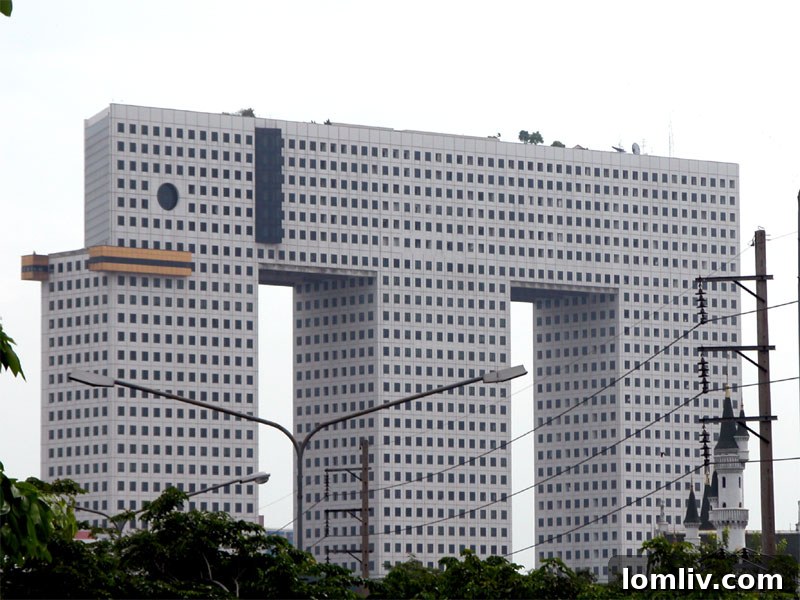
My personal philosophy on urban development aligns intrinsically with this approach: I consistently advocate for a thorough and comprehensive understanding of any project’s details before forming a definitive judgment. Unless a proposal is genuinely outlandish or completely impractical—like, for example, a metaphorical “32-story elephant” as a whimsical illustration of something entirely out of place for Preston Hollow—I firmly refrain from prejudging any development plan. This stance is rooted in the humble recognition that I do not possess all the answers, and often, truly innovative and beneficial solutions emerge from unexpected proposals. Critically, and distinguishing her from some other members of the task force, the Preston Place owner also possesses a fundamental understanding: any rebuilding effort at Preston Place will not, and realistically cannot, receive approval from the task force unless the broader redevelopment of the other affected parcels within PD-15 is integrated into a holistic, comprehensive solution. This vital interconnectedness is the absolute key to any successful resolution, yet it is precisely this essential understanding that appears to elude many participants, contributing significantly to the prolonged and frustrating impasse.
The Inevitable Collapse of the PD-15 Task Force and Its Ramifications
The current trajectory of the PD-15 task force regrettably points towards an almost inevitable and complete collapse. The primary and most significant reason for this grim prediction lies in the high-rise contingent’s persistent and unwavering unwillingness to engage in good-faith negotiations that would genuinely encompass all the affected parcels within the district. There is a palpable and prevailing belief among this faction that they can strategically isolate negotiations to solely Preston Place, thereby effectively excluding the other crucial properties from any broader, holistic solution. This strategy is not only fundamentally flawed but has also been actively undermined by their own actions, including an ill-received public letter and a widely criticized choice of spokesperson, both of which have only served to exacerbate existing divisions and mistrust. This intransigence all but guarantees a complete breakdown of the task force’s efforts. At a certain critical juncture, the frustrated low-rise property owners and eager developers will undoubtedly bypass the dysfunctional task force entirely and proceed to file their individual zoning cases directly with the City of Dallas. Such an outcome would signify a full year wasted in unproductive debate, represent a significant setback for integrated community planning, and ultimately underscore a stark failure of collaborative governance within PD-15.
The sole reason developers have, until now, refrained from immediately filing their individual zoning cases is a strategic one: their strong desire to garner local community support. Securing endorsement and backing from the neighborhood can significantly smooth the often-arduous passage of a development proposal through both the Plan Commission and, subsequently, the Dallas City Council. However, once it becomes undeniably clear that this avenue for fostering consensus and securing local support is definitively closed—a direct and unfortunate consequence of the task force’s inability to effectively mediate a resolution—developers will have no further incentive to delay. They will then proceed to file their individual cases, fully prepared to navigate the municipal approval processes and engage with the broader neighborhood on their own terms, without the benefit of a unified community voice. This crucial shift would transform the debate from a localized, potentially collaborative community discussion into a series of potentially contentious and fragmented individual battles at the city level, further polarizing and fragmenting any collective vision for the future of Preston Hollow.
The Path Beyond Task Force Failure: What Happens Next?
Should the PD-15 task force indeed fail to reach a viable consensus, a predictable and impactful sequence of events will inevitably unfold, fundamentally reshaping the development landscape of Preston Hollow. Each developer, now operating independently, will initiate a separate zoning case with the City of Dallas, meticulously outlining their desired projects and petitioning the city to specifically amend PD-15 to accommodate their individual proposals. This process, while inherently democratic in principle, is often fraught with considerable tension and legal complexities. During the formal application period, official ballots are meticulously sent to all residents living within a 500-foot radius of the proposed development. This critical step provides the immediate neighborhood with a formal mechanism to voice its concerns, objections, or support. However, a significant threshold exists: if more than 20 percent of residents within a tighter 200-foot radius formally register their opposition, the Dallas City Council is then legally mandated to require a supermajority—meaning a daunting 12 out of 15 council members—to approve the requested zoning change. This elevated approval threshold presents a substantial hurdle for developers and unequivocally underscores the enduring power of organized community resistance, even in the complete absence of a functional task force.
However, the intricate complexities of land use and development in Dallas do not necessarily conclude with this step. Legal experts specializing in urban land use have frequently informed me of an additional, particularly potent option available to property owners: they possess the right to petition the city to have their individual parcels formally removed from the PD-15 district altogether. Crucially, this removal can be sought with their underlying development rights fully intact. This is a vital point, as within the current PD-15 framework, the underlying zoning for ground rights is designated as MF-3. This particular designation is remarkably permissive, allowing for unlimited building height and a generous Floor Area Ratio (FAR) of 4:1. This means that for every single square foot of land, developers are legally permitted to construct four square feet of building space. Should such petitions for parcel removal be granted, the potential ramifications for Preston Hollow are substantial and far-reaching. The PD-15 district could effectively shrink dramatically, potentially reducing its geographical scope to encompass only the Athena and Preston Tower high-rises. Moreover, this scenario could very well lead to the existing 4:1 FAR being increased even further, especially for certain key parcels like Preston Place, to accommodate significantly larger, more ambitious structures. My consistent observations over recent years indicate that the City of Dallas has shown considerable leniency in approving such increases in FAR across various districts, suggesting a potential willingness to support significant vertical growth and increased density in key urban areas.
One might logically question the probability of such a dramatic and fundamental reshaping of PD-15. But a brief look at its history provides compelling context: PD-15 was originally established 70 years ago, in 1947, and has remained virtually unchanged since the 1970s. Despite its remarkably sparse details—the original founding document spans a mere three pages—many of its initial rules and provisions have long since fallen into disuse and become obsolete. As an illustrative example, even two maintenance structures located within the district were quietly converted to residential use without a single objection or public outcry. This profound historical context leads to a compelling and increasingly accepted argument: one could logically assert that PD-15, as a truly functional and effective regulatory framework, effectively “died” long before the devastating Preston Place fire. For developers operating in today’s dynamic real estate market, remaining within the confines of such an outdated, rigid, and unresponsive PD offers absolutely no discernible upside or strategic advantage. When the very task force convened to address these issues proves itself too inept and fractured to broker even a basic consensus among just six parcels, the fundamental utility and benefit of the PD for both the City of Dallas and the immediate neighborhood become profoundly questionable. The current regulatory framework, rather than facilitating progress and thoughtful urban development, appears to be actively impeding it, inevitably pushing frustrated stakeholders towards alternative, and often more confrontational, paths.
Indeed, this particular scenario—the effective extinguishment of PD-15 and the demise of its potential effectiveness as a community planning tool—represents the absolute worst possible outcome for the Preston Hollow community. Much like the complex and often contentious challenges faced by the Oak Lawn Committee in its own planning endeavors, the PD-15 task force was originally conceived and designed to serve as a vital gatekeeper, a crucial mechanism for ensuring community-driven control and input over local development. If this protective gate collapses, the only remaining oversight and regulatory authority will rest solely with the Dallas Plan Commission and the City Council. Based on extensive past observations, these municipal bodies tend to be significantly more generous with granting development rights and, arguably, less intensely focused on preserving highly specific neighborhood objectives or maintaining unique community character. This fundamental shift in authority profoundly alters the balance of power, creating a scenario where future development outcomes could disproportionately prioritize developer interests over the deeply held desires and specific visions of the local community, crucially without the nuanced, local input that a functioning PD or a truly collaborative task force could have provided.
Once individual parcels are successfully removed from the overarching PD-15 district, they will forever exist as independent legal agents, operating solely under the broad and permissive parameters of MF-3 zoning. This newfound independence carries significant and far-reaching long-term implications for the future of Preston Hollow. During subsequent building cycles, when any existing structures on these now-independent parcels eventually become obsolete or economically unviable, their owners will possess the unencumbered legal right to petition the City of Dallas directly. They can then seek to change and significantly increase both the density and height of their proposed developments on their respective parcels, entirely sidestepping any form of collective neighborhood approval or comprehensive community input that a functioning PD might have previously offered. This creates a fragmented, unpredictable, and potentially chaotic development future for Preston Hollow, where individual projects could dramatically alter the skyline and overall character of the area without the benefit of a unified, community-driven vision or integrated planning.
As our insightful conversation drew to a close, the ladies and I collectively expressed our deep lament over the slow, agonizing, and excessively contentious nature of the current process. We all wished fervently for a swifter, more collaborative, and less adversarial path forward, yet simultaneously acknowledged with a shared sense of resignation that we were unfortunately stuck with the polar opposite—awaiting what felt like an inevitable and less than ideal outcome. Before anyone attempts to attribute these sentiments to mere “sour grapes” following my resignation from the task force, it is imperative to clarify: I conveyed these very same frustrations, concerns, and stark warnings directly to the task force members many months ago. My message then was unequivocally clear and direct: if we steadfastly refused to engage in genuine negotiation and compromise, we might as well disband the PD entirely, recognizing its futility. The current prolonged stalemate is, therefore, not unforeseen; it is the direct and logical consequence of an unwavering unwillingness to engage constructively, a regrettable reality that promises a far less desirable and cohesive future for this vibrant and historically significant Dallas community.

About the Author: Jon – Your Expert in Dallas Real Estate and Urban Dynamics
My professional focus and passion consistently revolve around the dynamic world of high-rises, the intricacies of homeowners’ associations (HOAs), and innovative renovations that are continually shaping the Dallas urban landscape. Beyond these core areas, my interests extend to a broader and deeper appreciation for both modern and historical architecture, always viewed through the critical lens of balance against the ever-evolving and often controversial YIMBY (Yes In My Backyard) movement. This movement advocates for increasing housing supply to address affordability and growth, often clashing with traditional NIMBY sentiments.
If your organization or community group is considering hosting a Candysdirt.com Staff Meeting event, and you require an engaging, knowledgeable speaker to expertly explore these multifaceted topics, I am your ideal resource. My unwavering dedication to delivering insightful and impactful real estate commentary has been consistently recognized by the prestigious National Association of Real Estate Editors. This recognition includes earning two Bronze awards for my writing in 2016 and 2017, alongside two distinguished Silver awards in 2016 and 2017. These accolades underscore my commitment to quality journalism and deep analysis within the real estate sector.
Whether you possess a compelling story to share about Dallas’s rapidly evolving urban fabric, a unique perspective on community development challenges, or perhaps even a truly original marriage proposal idea that merges with architectural themes, please do not hesitate to reach out. You can easily connect with me by dropping an email to [email protected]. I eagerly anticipate hearing from you and continuing the vital conversation on responsible, community-centric urban development that shapes our beloved city.