The Battle for Preston Hollow: Community Rises Against High-Rise Development
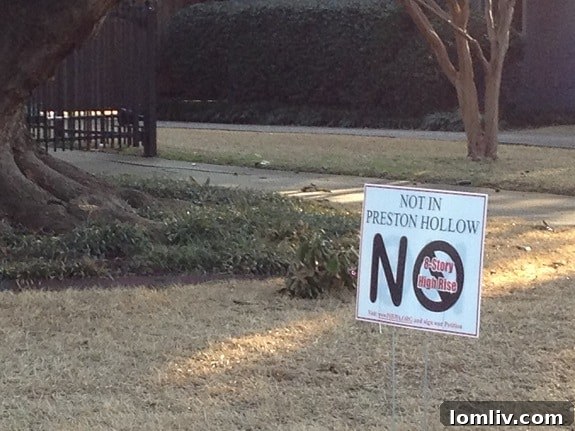
Across the esteemed neighborhoods of Dallas, particularly within the historic and affluent Preston Hollow, a palpable tension is building. Drive along the picturesque streets, and you might encounter prominent “NO” signs, steadfast symbols of a community united against a proposed multi-family development by Transwestern at the pivotal intersection of Preston Road and Northwest Highway. This isn’t merely a local dispute; it’s a significant flashpoint in Dallas’s ongoing dialogue about urban growth, preservation of neighborhood character, and the critical importance of robust community input.
The proposed Transwestern high-rise is not just another construction project; it represents a potential shift in the very fabric of Preston Hollow. Residents, alongside influential former city leaders, are voicing strong opposition, emphasizing the far-reaching implications of increased density, traffic congestion, and strain on existing infrastructure. This collective stand highlights a fundamental belief: that the future development of their cherished community should be guided by a comprehensive vision that respects its heritage and anticipates its long-term needs.
Grassroots Resistance: A Community’s Unified “NO”
The “NO” signs, initially a localized expression of discontent, are rapidly gaining traction, signifying a broader, more organized resistance. What began in the immediate vicinity of Preston Hollow is now resonating with residents as far east as Central Expressway and as far west as Webb’s Chapel. This expanding geographical footprint underscores the widespread concern that the Transwestern project could set a detrimental precedent for development across a much larger swathe of Dallas. The community’s message is clear: unbridled development without proper planning and community consensus is simply unacceptable.
The history of such resistance in Dallas is not new. Residents have often demonstrated their resolve when faced with projects they believe threaten their quality of life. The current wave of opposition draws parallels to previous successful campaigns where vocal and organized citizens played a pivotal role in shaping urban development outcomes. This time, the stakes feel particularly high as a significant, high-density project threatens an area renowned for its established residential character.
Former City Leaders Step Forward: Voices of Experience
Adding substantial weight to the community’s cause are prominent former Dallas City Council members, Laura Miller and Mitchell Rasansky. Rasansky, with six years of council service, and Miller, who served four years on the council before a mayoral term, bring invaluable experience and political acumen to the table. Their involvement elevates the discussion from a local skirmish to a city-wide conversation about responsible urban planning and the integrity of the democratic process.
Recognizing the broad impact of the Transwestern proposal, Miller and Rasansky have actively engaged current City Councilman Lee Kleinman, who represents District 11. Kleinman is currently stepping in for District 13 Councilwoman Jennifer Gates, who recused herself from discussions regarding the development due to a conflict of interest – a crucial detail ensuring the impartiality of the review process. Their primary request to Councilman Kleinman is to significantly broaden the scope of community engagement, extending the group scrutinizing the proposed development beyond immediate adjacent neighborhoods to include associations from Central Expressway to Stemmons. This expansive approach acknowledges that the ripple effects of a major high-rise development at such a critical junction will be felt across a wider urban landscape.
A Call for Comprehensive Planning: Beyond the Immediate Impact
The urgency of expanding the consultation group stems from a deep understanding of urban dynamics. A high-rise at Preston and Northwest Highway will not only impact local traffic patterns but also place additional burdens on public services, schools, and utility infrastructure over a much larger area. Miller, in particular, has advocated for a large-scale public forum, suggesting a meeting involving at least 600 people to represent the collective voice of the entire Northwest Highway corridor and its surrounding communities. Such a gathering would provide a vital platform for diverse perspectives and ensure that every concerned citizen has an opportunity to contribute to the discussion.
At the heart of their advocacy is the demand for total community input on a master plan for the “little strip of land Behind the Pink Wall.” This iconic area, steeped in local history and often referred to with affection, holds significant value for residents. A master plan would provide a holistic, long-term vision for the area, guiding future development in a way that aligns with community aspirations rather than reacting to individual, piecemeal proposals. It would be a proactive approach, ensuring that any new construction contributes positively to the area’s unique identity and functionality.
The community leaders firmly believe that Councilman Kleinman’s direct presence at these broader discussions is paramount. His listening ear and active participation would not only lend legitimacy to the process but also ensure that the council fully grasps the depth and breadth of community sentiment. This direct engagement is essential for fostering trust between the citizenry and their elected representatives, ultimately leading to more equitable and sustainable urban solutions.
The Significance of the “Pink Wall” Area
The phrase “Behind the Pink Wall” resonates deeply with longtime Dallas residents, signifying a distinct and well-established character around the Preston Center area. Historically, this location has been a hub of upscale retail, dining, and residential areas, maintaining a certain charm and scale. The idea of introducing an eight-story high-rise, as initially implied by some reports, stands in stark contrast to the existing architectural context and the prevailing suburban-urban blend that defines much of Preston Hollow. Such a significant increase in building height and density threatens to overshadow existing structures and fundamentally alter the area’s visual appeal and community feel. Preserving the aesthetic and functional harmony of this beloved locale is a primary concern for the community.
Traffic and Infrastructure: Growing Pains of a Major City
Dallas, like many burgeoning metropolitan areas, grapples with perennial challenges of traffic congestion and infrastructure strain. Northwest Highway, already a vital and frequently busy artery, would undoubtedly face exacerbated pressure from a new multi-family development. Hundreds, if not thousands, of new residents translate to hundreds of additional vehicles daily, contributing to longer commute times, increased pollution, and heightened safety concerns. Furthermore, the existing water, sewer, and electrical grids, while robust, are designed for current population densities. A sudden influx of residents necessitates a careful evaluation of these systems’ capacities, ensuring that vital services can keep pace with growth without compromising quality for existing residents.
Beyond the Project: The Call for a Master Plan
The request for a comprehensive master plan extends beyond simply rejecting the Transwestern project. It represents a proactive desire to guide development rather than react to it. A master plan would involve extensive community workshops, expert consultations, and a detailed analysis of environmental, social, and economic impacts. It would articulate a shared vision for the area, outlining preferred land uses, building heights, open space requirements, transportation strategies, and architectural guidelines. By establishing such a framework, future developments, including potential multi-family projects, could be evaluated against a clear set of community-driven criteria, ensuring they genuinely serve the public interest and enhance the area’s long-term vibrancy and sustainability.
This approach would prevent piecemeal zoning changes and ad-hoc approvals, which often lead to disjointed urban landscapes and community dissatisfaction. Instead, it would foster a predictable and transparent development environment, beneficial for both residents and responsible developers alike. The collective experience and insights of citizens, coupled with professional urban planning expertise, are crucial in crafting a master plan that truly reflects the aspirations of Preston Hollow and the wider Northwest Highway corridor.
The Road Ahead: Sustained Engagement and Democratic Process
The ongoing dialogue surrounding the Transwestern development is a testament to the vibrant democratic process at play in Dallas. It highlights the power of informed citizens and dedicated leaders working together to shape their urban environment. The involvement of respected figures like Laura Miller and Mitchell Rasansky, along with the broad support from other community stalwarts such as John Carona, Steve Wolens, Will Hartnett, and Mike Cantrell, underscores the widespread concern and the serious nature of the community’s opposition. Their collective voice serves as a powerful reminder that city planning must remain responsive to the needs and desires of its residents.
As Councilman Kleinman considers the community’s request to expand the dialogue, his actions will be closely watched. The outcome of this debate will not only determine the fate of a single development but also potentially set a precedent for how future growth is managed in one of Dallas’s most iconic and cherished areas. The community’s unwavering resolve to secure a master plan for the land “Behind the Pink Wall” demonstrates a deep commitment to preserving the unique character of Preston Hollow while fostering sustainable and thoughtful growth for generations to come. The conversation is far from over, and the community stands ready for continued engagement, ensuring that their collective vision for the future of Northwest Highway is heard and respected.
View the Community’s Letter to Councilman Lee Kleinman