The Evolving Landscape of Dallas: Trinity Tollway Faces Diminishing Support
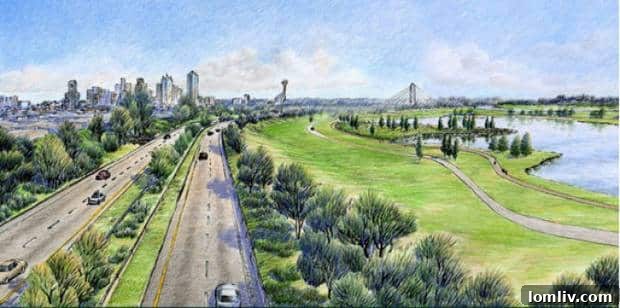
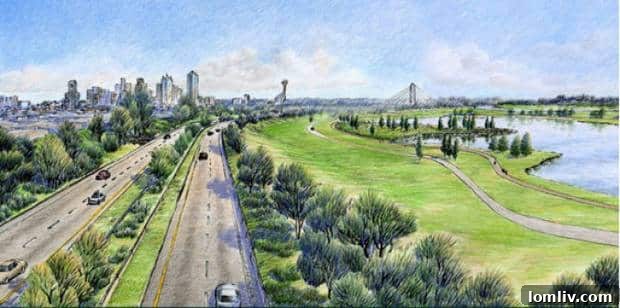
The proposed Trinity Tollway has long been a focal point of intense debate within Dallas’ urban planning discourse. A project envisioned to significantly alter the city’s landscape and transportation network, its future now seems more uncertain than ever as influential voices withdraw their support. The latest, and perhaps most significant, blow comes from the American Institute of Architects (AIA) Dallas chapter, the city’s leading architecture organization, which has officially pulled its endorsement for the controversial roadway planned within the Trinity River levees.
This decision by AIA Dallas signals a crucial shift in the conversation surrounding the Trinity River Corridor Project, reflecting a broader reconsideration of large-scale infrastructure projects and their integration into holistic urban development. For years, the tollway has been a symbol of the tension between traditional transportation solutions and a more modern, integrated vision for urban living that prioritizes green spaces, connectivity, and community well-being.
AIA Dallas’ Pivotal Stance: Prioritizing a Balanced Vision
The statement released by AIA Dallas articulates a clear and principled stance, highlighting their commitment to thoughtful design and comprehensive urban planning. Their withdrawal of support is not a rejection of progress, but rather a call for greater accountability and adherence to established development frameworks.
AIA Dallas is unable to endorse the Trinity Tollroad Alternative 3C Proposal without a better understanding of how the major elements of the Balanced Vision Plan will be incorporated into the design of the parkway.
“AIA Dallas is encouraged by the focus on connectivity that is emerging throughout Dallas and the on-going growth occurring in so many different communities as a direct result of thoughtful design,” stated AIA Dallas Executive Director Jan Blackmon. “We believe that infrastructure planning in Dallas should continue to focus not just on sound engineering, but also on how the overall design of each project fits into a larger plan for the city and the neighborhoods within it.”
AIA Dallas has been engaged in the Trinity River Corridor planning process since the late 1990’s. As architects and design professionals, AIA Dallas is focused on how a thoughtfully-designed infrastructure can enhance the environment within communities and help revitalize and connect parts of Dallas. The Balanced Vision Plan, developed by an eminent team of urban designers and transportation consultants with input from numerous governmental, civic, and professional organizations, was adopted by the Dallas City Council in 2003. The plan features a comprehensive and balanced approach to the five major elements of this project – Flood Protection, Recreation, Transportation, Environmental Restoration, and Economic Development.
“AIA Dallas considers a wide variety of components including the environmental impact and connectivity on the surrounding areas when evaluating a project. We believe that in order for Dallas to continue to embrace increased density and urban growth, as well as encourage the revitalization of areas like West Dallas, we must include all of these elements when planning a major project such as the Trinity Parkway,” said Blackmon. “At this time, we cannot endorse the Trinity Parkway Alternative 3C proposal until we understand how it will incorporate these essential elements.”
This position underscores a consistent message from AIA Dallas that dates back decades. Their involvement in the Trinity River Corridor planning process began in the late 1990s, culminating in their 2001 Trinity Policy. Even then, while acknowledging a “need for transportation improvements to allow Dallas to meet its mobility needs in the 21st Century,” they unequivocally stated that a “high-speed, limited access tollway is inherently incompatible with the other goals of the Trinity River Corridor Project.” The current withdrawal of support is thus not a sudden reversal but a reaffirmation of long-held principles rooted in comprehensive urban design.
The Balanced Vision Plan: A Blueprint for Dallas’ Future
Central to AIA Dallas’ concerns is the integration of the Trinity Tollway Alternative 3C proposal with the Balanced Vision Plan (BVP). Adopted by the Dallas City Council in 2003, the BVP is a comprehensive framework for the Trinity River Corridor, meticulously crafted by urban designers and transportation consultants with broad input from diverse stakeholders. Its five core elements are:
- Flood Protection: Ensuring the safety and resilience of the city against potential flooding.
- Recreation: Developing accessible green spaces and recreational opportunities along the river.
- Transportation: Creating an efficient and sustainable transportation network.
- Environmental Restoration: Preserving and enhancing the ecological health of the Trinity River.
- Economic Development: Fostering sustainable growth and revitalization in surrounding areas.
AIA Dallas’ argument posits that any major infrastructure project, especially one of the scale of the Trinity Tollway, must seamlessly align with these pillars. A high-speed tollway constructed between the levees could potentially undermine the recreational and environmental restoration goals by creating a physical and psychological barrier between the city and its river. It also raises questions about whether such a car-centric solution truly represents the most effective or sustainable transportation strategy for a rapidly growing, modern metropolitan area.
Beyond the Tollway: Reimagining Dallas’ Urban Core
The debate over the Trinity Tollway is not isolated; it is inextricably linked to a broader conversation about Dallas’ urban identity and future trajectory. Initiatives like “A New Dallas,” which advocates for the removal of Interstate 345, represent a radical departure from traditional urban planning paradigms that prioritized highways over human-scaled environments.
The vision behind tearing down I-345 is compelling: to reconnect downtown Dallas with its surrounding neighborhoods, unlock valuable land for new development, and foster a more walkable, vibrant urban core. This movement challenges the very premise that another high-speed, north-south thoroughfare is inherently necessary for the city’s mobility needs in the 21st century. Instead, proponents argue for multimodal transportation solutions, enhanced public transit, and pedestrian-friendly infrastructure that supports a denser, more livable urban fabric.
The growing emphasis on connectivity and urban growth, particularly in areas like West Dallas, highlights the need for projects that foster revitalization through thoughtful design, rather than through projects that might inadvertently create new divisions or exacerbate existing ones. By embracing increased density and mixed-use developments, Dallas aims to cultivate vibrant communities where residents can live, work, and recreate without exclusive reliance on automobiles.
Community Engagement and the Future of Dallas’ Open Space
These complex issues were undoubtedly at the forefront of discussions at events like CONFAB 2014, a gathering where “movers and shakers” presented their visions for Dallas’ open space. Such forums are vital for fostering dialogue, challenging assumptions, and collectively shaping the future of the city. The takeaways from CONFAB and similar public dialogues likely revolved around the transformative potential of the Trinity River Corridor as a central park system, a green artery for the city that enhances quality of life, provides ecological benefits, and drives sustainable economic development.
The continued debate surrounding the Trinity Tollway forces Dallas to confront fundamental questions about its urban design philosophy. Will the city continue to prioritize car-centric infrastructure, or will it fully embrace a more holistic, people-first approach that integrates transportation with green space, community revitalization, and environmental stewardship? The decision by AIA Dallas serves as a powerful reminder that the true measure of a city’s progress lies not just in its ability to move traffic, but in its commitment to creating healthy, connected, and sustainable environments for all its residents.
As Dallas continues its journey of growth and transformation, the calls for a truly balanced vision for the Trinity River Corridor resonate more strongly than ever. The future of the Trinity Tollway remains uncertain, but what is clear is that the conversation has evolved, demanding solutions that are not only engineered soundly but are also beautifully and thoughtfully integrated into the fabric of a dynamic and forward-thinking city.