Home Renovations and Relationships: Navigating the DIY Minefield Without Sacrificing Your Marriage
Few experiences test the limits of patience and collaboration quite like a home renovation project. Whether it’s the seemingly simple task of assembling a piece of flat-pack furniture or embarking on a full-scale remodel, these endeavors often bring couples to the brink. Who among us hasn’t experienced the frustration of cryptic instructions, missing parts, or differing visions while trying to build an IKEA dresser with a significant other? What starts as an exciting joint venture can quickly devolve into a heated argument, revealing underlying tensions in the relationship.
For many, the mention of IKEA assembly conjures images of hex keys, scattered diagrams, and strained silence. While a plate of Swedish meatballs at the food court might be an enjoyable experience, successfully unboxing and assembling a complex Bestå TV stand often proves to be an entirely different challenge. This division of labor, where one person struggles with the instructions while the other attempts to make sense of the project, often becomes a microcosm of larger issues that plague couples during more ambitious home remodeling efforts. Far from being isolated incidents, these home improvement tasks can, surprisingly, contribute to serious relationship problems, and in some cases, even lead to divorce.
The Unexpected Strain: Why Home Improvements Test Relationships
The notion that home renovation can cause marital strife is not new. Various reputable outlets, including Psychology Today, Reader’s Digest, Men’s Divorce, Family Handyman, and Realtor.com, have extensively explored this challenging phenomenon. They delve into how the stress of living in a construction zone, financial pressures, unexpected complications, and differing opinions can chip away at marital harmony. However, a recent study by MyJobQuote, a U.K.-based company connecting customers with local contractors, took this investigation a step further. Their research not only affirmed the link between home improvements and relationship problems but also pinpointed the specific tasks most likely to spark disputes.
MyJobQuote’s Revealing Study: Pinpointing the Problem Areas
MyJobQuote commissioned a comprehensive relationship study that surveyed 1,986 ex-couples. The primary objective was to determine whether home improvement tasks had directly contributed to the breakdown of their marriages. The findings were stark, illustrating a clear pattern of conflict arising from various DIY and renovation projects. This study offers invaluable insights for couples contemplating or currently undertaking home improvements, highlighting the potential pitfalls and the areas where communication and patience are most crucial.
Top 10 Home Improvement Tasks That Fuel Disputes
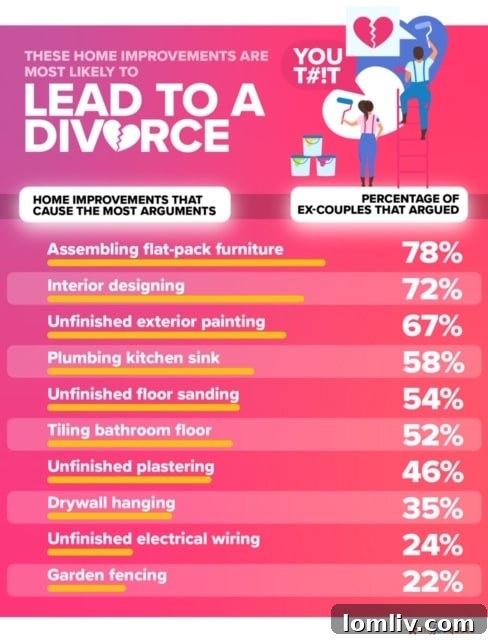
The MyJobQuote study didn’t just confirm that renovations cause arguments; it meticulously cataloged the specific tasks that were most problematic. These detailed findings offer a crucial roadmap for couples to anticipate and proactively address potential conflict zones:
- Flat-Pack Furniture Assembly (78% of ex-couples argued): Unsurprisingly, this topped the list. The notoriously cryptic instructions, tiny diagrams, and often illogical assembly steps can quickly turn a simple task into a battleground of frustration, blame, and accusations of incompetence. It’s a test of spatial reasoning, patience, and the ability to interpret non-verbal cues – all fertile ground for miscommunication.
- Interior Designing (72%): Deciding on aesthetics – color schemes, furniture styles, layout – can expose fundamental differences in taste and vision. What one partner considers modern and chic, the other might see as cold and impractical, leading to stalemates and resentment over perceived compromises.
- Unfinished Exterior Painting (67%): This task speaks to procrastination and visible incompleteness. A half-painted house becomes a constant, glaring reminder of an unfinished project, fueling nagging and arguments about responsibility and commitment.
- Kitchen Sink Plumbing (58%): Plumbing issues are often messy, complex, and carry the risk of water damage. Disagreements arise from the technical challenges, the unexpected nature of leaks, and the immediate need for a functional kitchen, creating high-pressure situations.
- Unfinished Floor Sanding (54%): Similar to painting, this task highlights issues of follow-through and disruption. A partially sanded floor means dust, inconvenience, and a prolonged period of living in disarray, testing the limits of patience.
- Tiling Bathroom Floor (52%): Precision, measurement, and physical effort are key here. Mistakes are costly and visible, leading to arguments over workmanship, perfectionism, and the time invested.
- Unfinished Plastering (46%): This delicate task requires skill and leaves a highly visible finish. Incomplete or shoddy plastering can cause frustration over the quality of work and the need for future repairs.
- Drywall Hanging (35%): A physically demanding and often intricate task, hanging drywall can lead to disputes over effort, technique, and the general mess involved.
- Unfinished Electrical Wiring (24%): Given the safety risks and technical knowledge required, arguments here often stem from perceived dangers, the need for professional intervention, or delays caused by complexity.
- Garden Fencing (22%): While seemingly less critical than indoor tasks, garden fencing involves aesthetics, boundary disputes, and significant labor, leading to disagreements over design, cost, and effort.
Beyond the Hammer: Psychological Roots of Renovation Rifts
Delving deeper into the “why” behind these conflicts, psychologist and wellbeing consultant Lee Chambers, cited in the report, explains, “It’s often a test of control. One side of a relationship is likely to drive the project forward, and this can lead to a feeling of helplessness on the other side. Sometimes, the partner who wants to be in control can look to slow the project down, doing it ‘in their own time,’ once again causing resentment in the partner that wants to proceed.” This insight underscores the power dynamics at play. Renovations expose differing work styles, communication habits, and underlying desires for control or autonomy, transforming a shared goal into a contest of wills. The person feeling marginalized may consciously or unconsciously sabotage the project through procrastination or passive resistance, further exacerbating the tension.
Financial, Timely, and Taste-Related Triggers
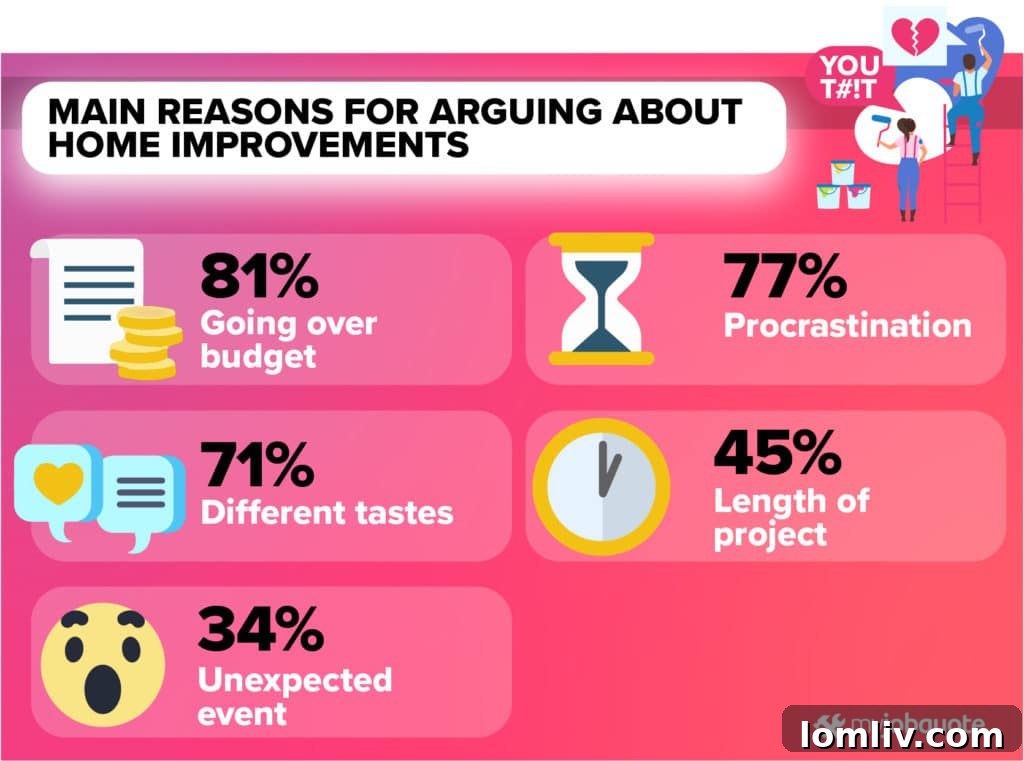
While specific tasks provide the flashpoints, the study also identified broader reasons that fuel these arguments. These overarching factors often combine with the practical challenges of a task to create a perfect storm of marital discord:
- Going over budget (81%): This was the leading cause of arguments. Unexpected costs, changes in plans, or simply poor initial budgeting can place immense financial strain on a couple, leading to anxiety, blame, and deep-seated resentment.
- Procrastination (77%): Delays in starting or completing tasks can extend the period of living in chaos, impacting daily life and eroding patience. One partner’s eagerness clashing with the other’s tendency to delay is a classic trigger.
- Different tastes (71%): Aesthetic preferences often reflect deeper personality traits and values. Compromising on design elements can feel like a compromise of identity, leading to dissatisfaction and the feeling of one partner’s vision dominating the other’s.
- Length of the project (45%): A project that drags on indefinitely can lead to burnout, frustration, and a pervasive sense of never-ending disruption. The initial enthusiasm wanes, replaced by weariness and irritability.
- Unexpected event (34%): Discovering structural damage, mold, or unforeseen plumbing issues can derail plans, inflate costs, and intensify stress, leading couples to argue over how to handle these unpredictable setbacks.
When Home Projects Herald Marital Problems: A Legal Perspective
Oklahoma City family law lawyer, Holly Hefton, with two decades of experience, confirms that most of these home renovation-related stressors are commonly presented in divorce cases. “Some of these, like unfinished painting and procrastination, are very big triggers because the other party is probably nagging about other things like chores division, etc.,” she notes. Hefton emphasizes that issues such as the division of duties, especially when both parents are working, are major points of contention. Budget overruns, she adds, often tie into broader financial disagreements, where “a husband’s nagging, starting with overspending in other areas, not just home remodel,” becomes a contributing factor to the breakdown of the marriage.
However, Hefton offers a crucial caveat: “But I have never seen a divorce over an IKEA desk. I think there are more underlying problems in the relationship that these things ‘put the icing on the cake.’” This perspective is vital. While home improvement projects can be direct sources of conflict, they frequently act as catalysts or intensifiers for pre-existing, deeper issues within a relationship. The pressure and vulnerability inherent in renovating a home can expose cracks that were already there, making them impossible to ignore. A renovation doesn’t necessarily create marital problems, but it can certainly bring hidden ones to the surface with dramatic force.
Strategies for a Harmonious Home Renovation
While the statistics may seem daunting, the good news is that home renovation doesn’t have to spell disaster for your relationship. With careful planning, open communication, and realistic expectations, couples can navigate these challenges successfully. Here are some strategies to help preserve your marriage while building your dream home:
1. Open and Honest Communication
Before lifting a single hammer, sit down and have a comprehensive discussion. Articulate your individual visions, expectations, and concerns for the project. Be honest about your comfort levels with risk, mess, and financial outlay. Regularly check in with each other throughout the project, creating a safe space to voice frustrations and celebrate progress. Effective communication isn’t just about what you say, but how you listen and respond to your partner’s needs and anxieties.
2. Define Roles and Responsibilities
Capitalize on each other’s strengths. Who is better at budgeting? Who has a knack for design? Who is more detail-oriented for assembly? Assign specific roles and tasks based on skills and preferences. If one partner excels at project management and the other at hands-on work, clearly delineate these roles. This minimizes overlap, confusion, and the potential for one person feeling overwhelmed or underappreciated. Agree on who makes final decisions for different aspects to avoid stalemates.
3. Set Realistic Expectations and Timelines
Understand that renovation projects rarely go exactly as planned. Delays are almost inevitable, budgets can be stretched, and unexpected issues will arise. Build buffers into your timeline and budget. Discuss how you will handle unforeseen problems calmly, rather than letting them ignite an argument. Accept that your home might be messy or partially disassembled for longer than anticipated, and prepare mentally for the disruption.
4. Establish a Clear Budget (with Contingencies)
Financial disagreements are a top cause of renovation stress. Create a detailed budget for every aspect of the project. Critically, include a contingency fund of at least 10-20% for unexpected expenses. Agree on financial boundaries and who needs to be consulted for additional spending. Track expenditures closely and review them together regularly to stay on track and avoid any surprises.
5. Know Your Limits: DIY vs. Professional Help
While DIY can save money, it also introduces significant potential for error, frustration, and increased project length. Be honest about your skills, time, and patience. For tasks that are complex, dangerous, or beyond your capabilities (like specialized plumbing, electrical work, or intricate tiling), don’t hesitate to hire professionals. As I learned from my own experience, sometimes the best relationship preservation strategy is knowing when to purchase fully assembled furniture and letting the expert, in my case, my creative wife (the daughter of a builder), handle the true DIY challenges. It’s an investment in both your home and your peace of mind.
6. Prioritize Relationship Well-being
Remember that the house is a home because of the people in it. Don’t let the renovation consume your entire life. Schedule regular “no renovation talk” dates or activities. Take breaks from the project to reconnect and recharge as a couple. Celebrate small milestones along the way to maintain morale. If you find yourselves constantly arguing, consider seeking advice from a counselor or mediator specializing in couples communication before the stress escalates into more serious marital problems.
Conclusion: Building Your Home and Your Relationship
Home renovation projects, while exciting, are undoubtedly challenging endeavors that can put significant pressure on a relationship. The MyJobQuote study, along with the insights of legal and psychological experts, clearly illustrates how specific tasks and broader stressors like budget overruns and procrastination can lead to serious marital discord. However, by proactively addressing potential conflict areas through honest communication, clear role definition, realistic planning, and a willingness to seek professional help when needed, couples can transform these challenges into opportunities for growth and stronger collaboration. Building your dream home doesn’t have to come at the expense of your dream relationship; with careful navigation, both can thrive.