Oak Lawn’s Dynamic Future: Unpacking Dallas’s Latest Urban Development Projects
The vibrant Oak Lawn neighborhood in Dallas continues to be a focal point for transformative urban development. Recently, the Oak Lawn Committee convened for a critical meeting, where five significant projects were presented, each holding the potential to redefine the area’s landscape. These proposals range from ambitious mixed-use complexes and high-end residential towers to thoughtfully designed community-centric spaces. This article delves into the details of these developments, exploring their architectural visions, community implications, and the delicate balance between progress and preservation that characterizes urban growth in one of Dallas’s most sought-after districts.
Central Market: A Bold Vision for McKinney Avenue
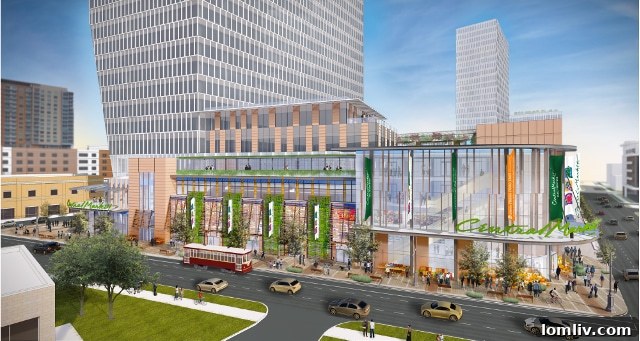
The proposed Central Market development aims to revitalize a perpetually challenging supermarket location on McKinney Avenue, nestled between the Lemmon split. This site, previously home to Albertsons and Minyards, has a history of commercial struggles. However, the new Central Market project envisions a grand-scale transformation, converting it into a dynamic mixed-use destination designed to anchor the neighborhood’s commercial and social life.
Ambitious Scope and Architectural Design
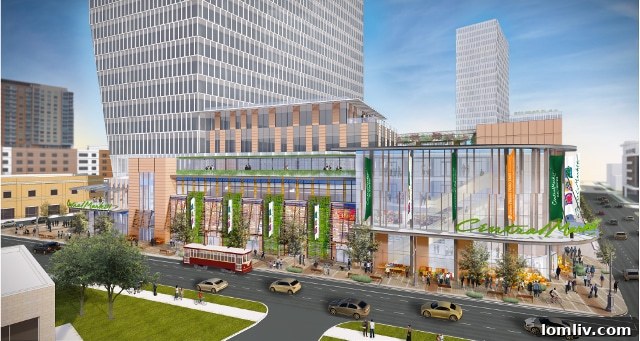
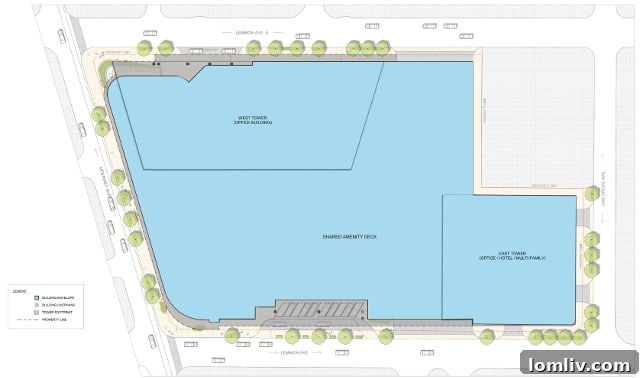
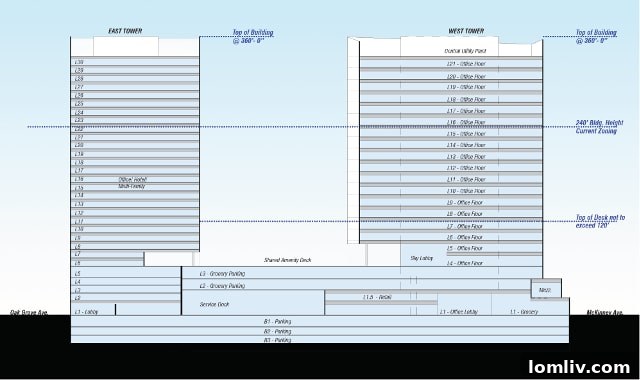
This colossal undertaking features a five-level podium, an impressive structure that will encompass 95 percent of the entire parcel. This expansive base will serve as the foundation for two distinct 360-foot towers, strategically positioned on opposing corners of the development. The larger tower is planned as a 21-story office building, offering substantial commercial space. The second tower, equally prominent, is proposed for a flexible blend of office, hotel, and/or multi-family residential units, allowing for adaptability based on market demands. The sheer scale of this project suggests a significant architectural statement and a new landmark for McKinney Avenue.
Innovative Parking and Urban Integration
A key aspect of the Central Market design is its progressive approach to parking. In contrast to developments often criticized for their visible parking structures, such as those in Victory Park, HEB is proposing three levels of underground parking, complemented by two stories of parking situated above the grocery store itself, occupying the third to fifth floors of the podium. This design choice effectively eliminates surface parking, funneling all vehicles into the integrated garage. While this might alter the dynamics for quick shopping trips, it significantly enhances the pedestrian experience at street level by freeing up valuable public space and reducing visual clutter, contributing to a more aesthetically pleasing urban environment.
Shared Amenities and Community Synergy
A distinctive feature of the Central Market project is the shared amenity deck planned atop the podium, situated between the two towers. This communal space prompts thoughtful consideration about how it will foster interaction among the development’s diverse occupants. Envisioning office workers, hotel guests, and residents sharing pools, grilling areas, and lounge spaces suggests a commitment to creating an integrated, vibrant community within the complex. Such shared amenities could cultivate a unique live-work-play ecosystem, enhancing the quality of life for all who frequent the development.
Zoning Requests and Ground-Level Impact
The Central Market proposal includes several significant zoning requests that could fundamentally impact the ground-level experience and character of McKinney Avenue. The developer is seeking approval for an extraordinary 95 percent lot coverage, a substantial increase from the current 80 percent zoning. This high coverage raises critical concerns regarding the preservation of green spaces and the overall streetscape. Plans indicate that existing trees would be confined to modest 4×4 foot concrete “punch-outs,” rather than integrated into more expansive landscaped areas.
Furthermore, while current zoning mandates setbacks between 10 and 25 feet, HEB proposes minimal or zero setbacks for most areas, with only one at 5 feet. These reduced setbacks, combined with the extensive lot coverage, could create a formidable street wall, impacting pedestrian comfort and visual appeal. While the total proposed square footage of 209,070 aligns with existing zoning, the developer also requests a 50 percent increase in building height, from 240 feet to 360 feet. While the towers themselves might occupy only 25 percent of the lot at this height, the 95 percent coverage of the podium remains the dominant feature at street level. Community members often emphasize that the “streetscape matters” most, as the majority of urban interaction occurs at ground level. The challenge for this project lies in harmonizing ambitious vertical growth with a human-scaled and inviting pedestrian environment that truly benefits the neighborhood.
Lincoln Katy Trail: Navigating Persistent Challenges
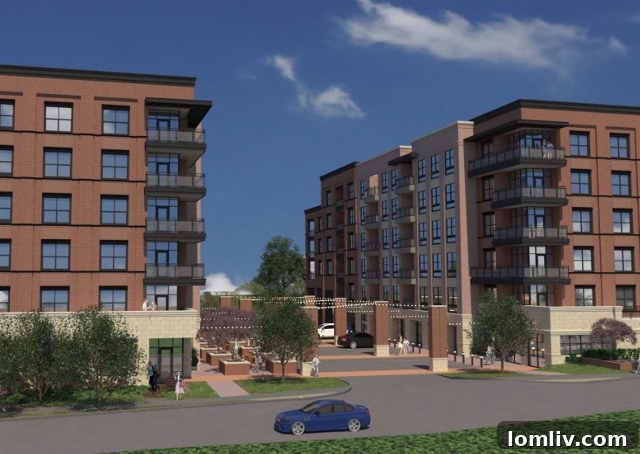
The Lincoln Katy Trail project made its anticipated re-appearance before the Oak Lawn Committee, reigniting discussions and ongoing community debate. This development has consistently faced controversy and struggled to secure broad support from local stakeholders, including Plan Commissioners, who previously indicated that their endorsement would be difficult without the crucial backing of the Oak Lawn Committee.
Despite previous critiques and suggestions for revision, the reworked plan presented to the OLC was, to many observers, visually identical to the version shown to the Plan Commission in October. This consistency in design, even in the face of earlier feedback, underscores the developer’s steadfast commitment to their original vision. The project exemplifies the intricate and often contentious negotiation process between developers, neighborhood associations, and city planning bodies in Dallas. The key question now revolves around whether the Lincoln Katy Trail will advance to a final vote with or without the essential support of the Oak Lawn Committee, especially given the developer’s proactive rescheduling of their Plan Commission meeting for November 15th, just two days after the OLC review, signaling confidence in its eventual progression.
2999 Turtle Creek: Crafting a New Icon of Luxury
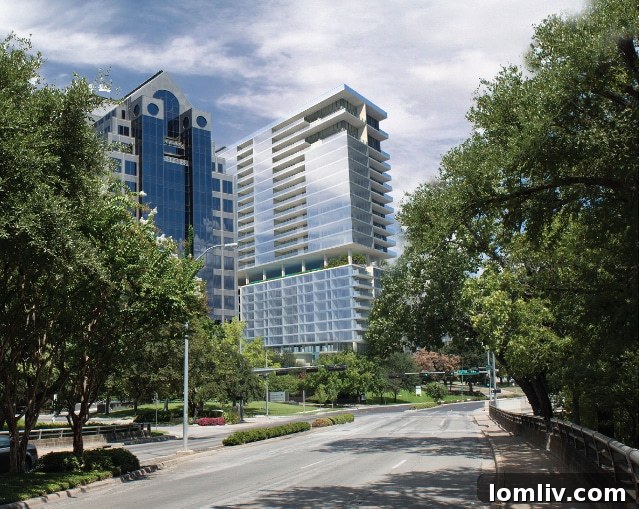
Following the comprehensive review of the 5-star hotel, condo, apartment, and office complex proposed for 2727 Turtle Creek, the focus now shifts to its ambitious counterpart across the street: 2999 Turtle Creek. Situated on the former Republic Bank parcel, this project is designed to become another prominent symbol of luxury development in one of Dallas’s most exclusive neighborhoods. The design work is notably attributed to FAB Studio, a local architectural firm gaining recognition for its innovative contributions to Dallas’s skyline.
Architectural Exploration and “Massing Study”
Early conceptual images for 2999 Turtle Creek bear a striking visual resemblance to the 2727 project, almost as if designed to serve as complementary architectural “bookends” for the street. Developers have clarified that these initial visuals represent a “massing study” rather than a finalized exterior plan. This iterative approach allows architects to explore optimal scale, volume, and site integration early in the design process, ensuring the building’s form is perfectly suited to its urban context before delving into intricate aesthetic details. While similar design software might contribute to initial stylistic overlaps, the emphasis remains on functional and contextual excellence.
Luxury Residences and Exclusive Amenities
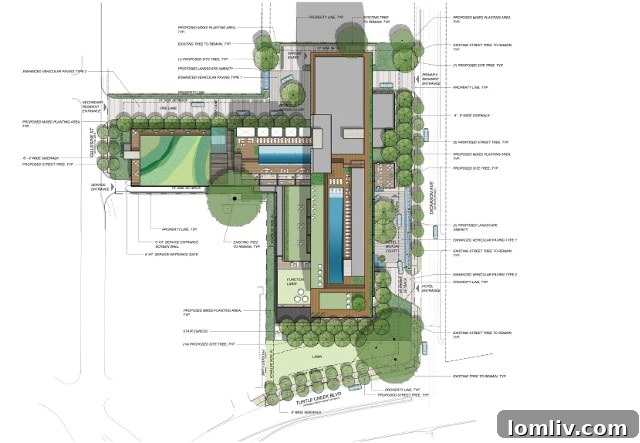
The development, strategically positioned on the parcel’s unique “dog-leg” shape bordered by Turtle Creek, Gillespie, and Dickason, proposes a highly sophisticated mixed-use program. This includes 180 luxury hotel rooms, indicative of a high-end, perhaps boutique, hospitality experience. Complementing the hotel, 85 branded condominiums are planned, mirroring the integrated luxury model seen in prestigious developments such as The Ritz and W Residences. This positions The Mansion, an existing 5-star landmark, to be flanked by equally opulent hotels and residences, firmly establishing Turtle Creek as a premier destination for luxury living. Conceptual renderings show “blue landing strips,” denoting multiple pools for both hotel guests and residents, promising an array of exclusive leisure and recreational opportunities.
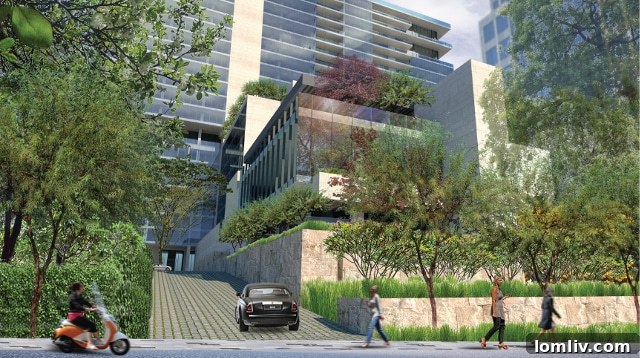
The superior quality of the proposed build is strikingly evident in the intricate terracing and verdant landscaping depicted in the renderings, particularly along the Gillespie dogleg. These design elements not only enhance the visual appeal but also suggest a seamless integration with the natural beauty of the Turtle Creek environment. Marketing visuals frequently feature high-end automobiles, such as Rolls Royces and Bentleys, subtly reinforcing the project’s target demographic of ultra-luxury clientele. The meticulous attention to detail in these presentations reflects the developer’s vision for an unparalleled living and hospitality experience.
Zoning Adjustments and the “Dry Zone” Challenge
To fully realize this ambitious vision, the developer of 2999 Turtle Creek is requesting several key zoning amendments. They propose an increase in building height from the current 240 feet to 325 feet, which would result in a Floor Area Ratio (FAR) of 5.25-to-1. Such an increase is sought to achieve greater density and create a more commanding presence on the Turtle Creek skyline, reflecting a contemporary approach to luxury urban development.
A significant regulatory hurdle, similar to the one faced by the 2727 Turtle Creek project, is the presence of a “dry overlay” zone that restricts alcohol sales. The developer is actively seeking to remove this restriction for the parcel. This change is vital for a luxury hotel and residential complex aiming to provide a full spectrum of high-end amenities, including sophisticated dining venues and bar services. This overlay currently extends along Turtle Creek, with modifications implemented closer to Oak Lawn Avenue. Navigating this zoning amendment will require careful engagement with local regulations and may involve addressing potential community concerns, as changes to liquor laws often become points of detailed public discussion during development processes.
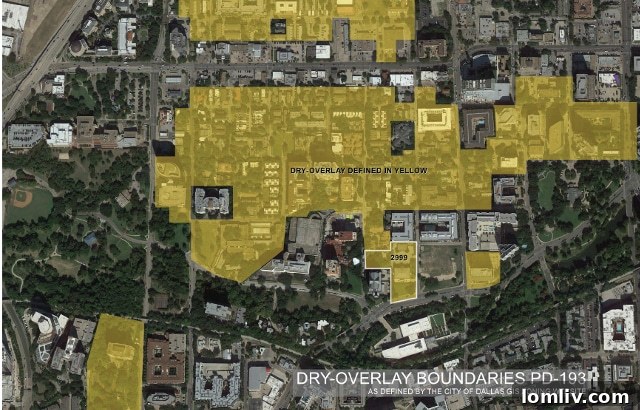
As the project evolves from initial massing studies to refined architectural plans, the distinctive “FAB skin” will gradually take shape, promising an extraordinary addition to Dallas’s luxury real estate landscape. Notably, this project, like several other significant Oak Lawn developments, emphasizes comprehensive underground parking in exchange for increased building height and density, showcasing a modern trend in high-value urban planning aimed at maximizing space while minimizing surface-level impact.
The Terminal: A Trailside Oasis on Buena Vista Street
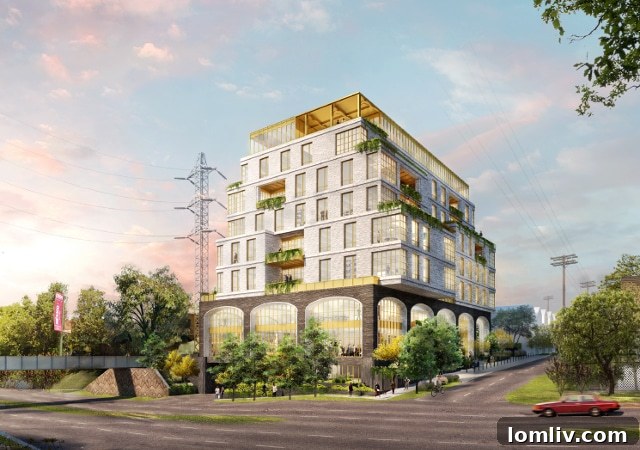
Located at 4205 Buena Vista Street, strategically positioned at the intersection of Fitzhugh and the celebrated Katy Trail, “The Terminal” project is set to replace an existing orange stucco low-rise with a significantly enhanced and architecturally distinct mixed-use building. This development promises to become a vibrant community hub, seamlessly blending luxury residential units with accessible public spaces and diverse eateries, all while paying homage to the rich historical roots of the Katy Trail.
Design Philosophy and Offerings
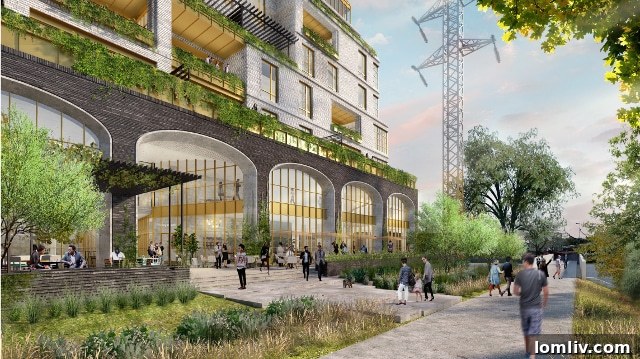
The architectural inspiration for The Terminal draws from classic train terminals, a fitting tribute to the Katy Trail’s origins as a historic railway line. Its first two stories feature impressive oversized arched windows and dark brickwork, evoking a sense of industrial heritage and timeless grandeur. These design elements, coupled with extensive glass facades, are intended to create exceptionally light-filled spaces for the various eateries and offices planned for the lower levels. These spaces will offer excellent, dynamic views of the Katy Trail, providing a lively backdrop for dining and work. Above these vibrant commercial levels, the upper five floors will house 25 exclusive for-sale condominiums, each averaging a spacious 2,500 square feet, catering to a discerning demand for upscale urban living with direct trail access.
Public Accessibility and Direct Trail Integration
A particularly innovative and community-focused aspect of The Terminal’s design is its publicly accessible cut-through, which provides a direct and seamless connection from the street to the Katy Trail. This thoughtful integration not only facilitates effortless access for trail users but also firmly embeds the building within its vibrant trailside context. The lower floors are envisioned to house various eateries and “watering holes,” with the developer’s packet even playfully listing “chia pudding” among the proposed culinary delights. This curated blend of dining options and direct trail connectivity is strategically designed to attract and engage the diverse patrons of the Katy Trail, encouraging them to pause, explore, and interact with the new development, transforming it into a true community amenity.
Architectural Nuances and Zoning Adjustments
While largely celebrated for its innovative design, The Terminal features a distinctive “bump-out” on a portion of its front facade. This architectural element, which might initially appear unconventional, is a highly pragmatic and clever solution to accommodate a large electrical tower situated on the left side of the parcel. The necessary cantilever alters the building’s profile from front to back, ensuring both optimal interior layouts and the safety of future residents. Although it presents a slight visual idiosyncrasy, accentuated by a change in brick color, it effectively demonstrates the challenges inherent in urban infill development and the ingenious solutions required to overcome specific site constraints.
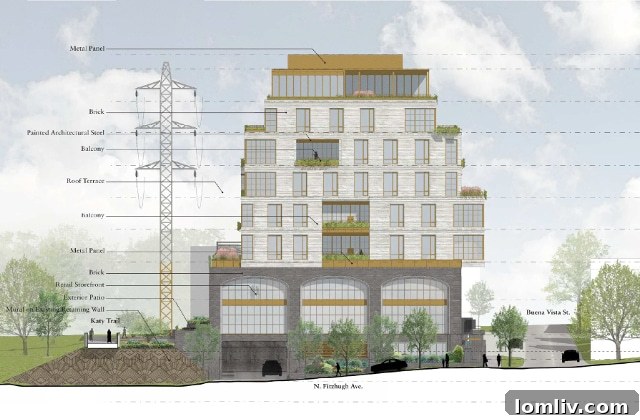
The developer’s requests for zoning adjustments primarily focus on increasing the Floor Area Ratio (FAR) from 2.5-to-1 to 3.6-to-1. This proposed FAR increase, however, corresponds to a taller building that will still remain below the maximum zoned height for the area. Crucially, this strategic increase in FAR allows the developer to significantly reduce the lot coverage from the currently zoned 80 percent to a more open 62.5 percent. This deliberate reduction in lot coverage is a pivotal move, designed to enhance the building’s connectivity and integration with the Katy Trail by providing more expansive open spaces at ground level. This thoughtful trade-off aims to create a more integrated and pedestrian-friendly environment, further solidifying the development’s connection to the popular urban trail. Consistent with other major Oak Lawn projects, The Terminal emphasizes comprehensive underground parking, including valet services, trash management, and loading facilities, showcasing a strong commitment to minimizing surface-level impact and maximizing urban efficiency.
Shelby Family Offices: A Discreet Yet Significant Addition on McCommas at McKinney
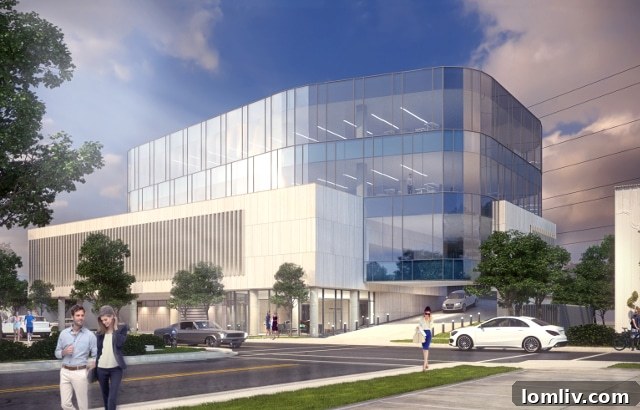
Adjacent to the popular Katy Trail, at the intersection of McCommas and McKinney, the proposed Shelby Family Offices building offers a more understated yet valuable addition to the evolving Oak Lawn landscape. This project is slated to replace the existing Atlantic National Trust building, introducing contemporary office space to a highly desirable urban location.
A “Drive-By” Review: Exemplifying Zoning Compliance
In contrast to the complex and often contentious projects reviewed by the Oak Lawn Committee, the Shelby Family Offices development was notably presented as a “drive-by” item. This classification indicates that the project largely adheres to existing zoning regulations, requiring minimal, if any, special approvals or variances. In an urban area where developers frequently seek substantial height and density increases, it is particularly noteworthy—and perhaps even surprising—to see a project that fits so comfortably within its allowed zoning envelope. The proposal outlines a five-story building in a zone that permits heights up to a generous 240 feet. This adherence to established guidelines typically streamlines the approval process, minimizing potential community objections and facilitating a smoother development timeline.
Contemporary Design and Contextual Fit
The existing Atlantic National Trust building, characterized by its “1980s or 1990s” aesthetic of rounded glass facades, is slated to be replaced by a fresh, modern structure. While the designation “family offices” and the relatively modest five-story height within a zone permitting much taller buildings might initially suggest a more traditional or even dated design to some observers, the new building promises a distinctly contemporary appearance that aligns with evolving urban aesthetics. The design is expected to be sleek, efficient, and provide premium office space without overwhelming the surrounding environment or necessitating extensive zoning variances. This project serves as a compelling reminder that not all significant urban developments require contentious battles; some can proceed harmoniously within established planning frameworks, offering valuable additions to the urban fabric without extensive debate.