The revitalization of The Shops at RedBird, powered by millions of dollars in strategic city incentives, stands as a beacon of hope for southern Dallas. The ambitious project aims to transform District 8, a region historically grappling with challenges such as crime and poverty. But can such a significant economic injection truly “save” a community, or is the narrative more complex than a simple economic uplift?
Opinions vary widely across the community. Some residents and civic leaders contend that the positive impact is already palpable, with new businesses and increased activity bringing a renewed sense of optimism. Others argue that southern Dallas and areas like Oak Cliff, vibrant and resilient in their own right, never needed “saving” in the first place, but rather investment and recognition. A crucial sentiment shared by many is the profound effect of community pride and engagement on local safety and prosperity. When residents actively participate in shaping their neighborhoods, the ripple effect can be transformative.
Earlier this year, daltxrealestate.com initiated an investigation into “shopping center crime,” primarily focusing on incidents like parking lot smash-and-grabs and catalytic converter thefts. However, the scope of our inquiry rapidly broadened as residents began voicing concerns about safety within their residential neighborhoods and the unique challenges faced by each of Dallas’s 14 council districts. This expanded perspective allowed for a more comprehensive understanding of the multifaceted issues affecting community well-being.
The site of the old RedBird Mall historically carried a reputation for being one of the city’s less safe locations, a perception often rooted in past realities. However, during an April 12 Dallas City Council meeting, numerous voices highlighted its remarkable transformation. Today, the area is celebrated as home to one of Dallas’s most dynamic and popular mixed-use developments, signifying a significant shift in its identity and prospects.
Understanding Crime Trends in Dallas’s District 8
District 8, a critical part of southern Dallas, has been under intense scrutiny regarding its safety and developmental trajectory. Councilman Tennell Atkins, the incumbent running for re-election on May 6 against challengers Subrina Lynn Brenham and Davante “Shawt” Peters, has received notable endorsements from the Dallas Police Association Political Action Committee and the Dallas Fire Fighters Association. This support underscores the importance placed on public safety initiatives within his district.

A significant portion of the Dallas City Council has openly championed Police Chief Eddie Garcia and his comprehensive Violent Crime Reduction Plan. This plan, designed to strategically address and mitigate violent criminal activity across the city, has been a cornerstone of Dallas’s public safety strategy, focusing on data-driven approaches and community partnerships.
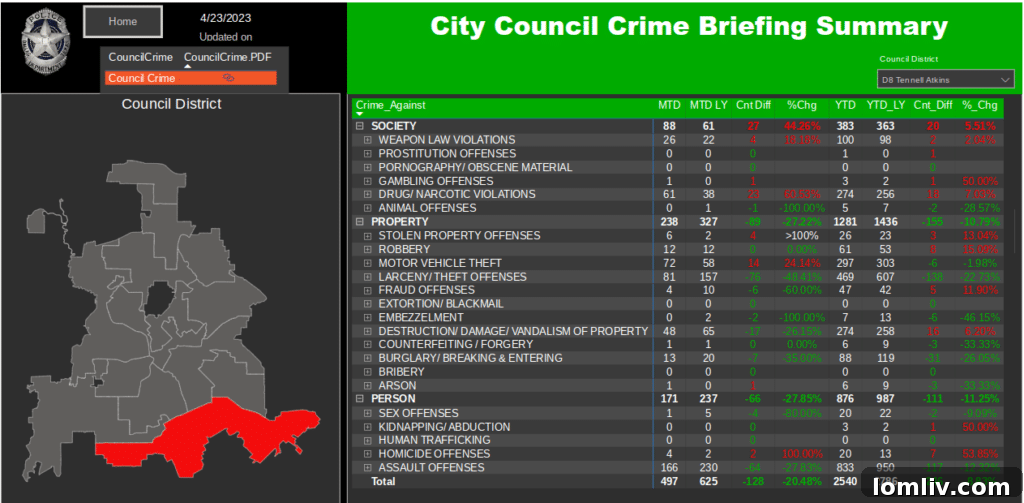
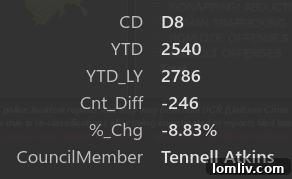
Recent statistics from the Dallas Police Department’s crime dashboard offer a mixed but generally positive outlook for District 8. Overall crime has seen a notable decrease of approximately 8.83 percent compared to the same period last year. Property crimes are down by 11 percent, crimes against persons have also decreased by 11 percent, and assaults show a reduction of 12 percent. These figures suggest that targeted efforts to reduce general crime are yielding tangible results, improving the daily safety for many residents.
However, a closer look at the data reveals concerning spikes in specific crime categories within District 8. Homicide rates have increased by a significant 53 percent, property damage and vandalism by 6 percent, and robberies by 15 percent. This disparity highlights the complex nature of crime statistics, where overall improvements can mask critical areas needing urgent intervention.
It’s crucial to interpret these statistics with careful consideration, as raw percentages can sometimes be misleading without context. For instance, a 53 percent increase in murders, while alarming, necessitates further analysis. Dallas police leadership consistently emphasizes that even one homicide is too many. Yet, a deeper dive into the numbers reveals that the count of homicides in southern Dallas climbed from 13 during this period in 2022 to 20 thus far this year. While any increase is tragic, understanding the absolute numbers helps to contextualize the percentage jump, preventing misinterpretations about the scale of the problem.
Tragically, the Redbird area experienced a stark reminder of these challenges last month when two men were shot and killed near Westmoreland Road. The gravity of these events was further underscored when, the day after these homicides were reported, a candlelight vigil held by residents at the very same location was disrupted by a drive-by shooting that wounded four additional victims, as detailed by CBS News. Such incidents underscore the persistent need for enhanced safety measures and community support in specific hot spots.
The Redbird community itself is generally recognized as an upper-to-middle-class cluster of diverse neighborhoods. These include established areas such as Wynnewood Hills, Elderwoods/Elderoaks/Twin Oaks, and Glen Oaks. This demographic profile makes the recent crime spikes particularly distressing, as residents often expect a higher level of safety and stability within such communities, further emphasizing the urgency of effective crime reduction strategies.
To gain a clearer understanding of localized crime trends, daltxrealestate.com filed an open records request on April 15, seeking crime statistics specifically pertaining to RedBird Mall over the past five years. As of late April 23, this request had not yet been fulfilled, indicating the potential complexities in obtaining granular data for specific commercial properties and highlighting a gap in publicly available information that could better inform community discussions.
Citywide, Dallas has also faced an upward trend in homicides, with 100 murders reported so far this year, an increase from 91 during the same period last year. This represents a 9.89 percent increase across the city, according to the Dallas Police Department’s comprehensive crime statistics dashboard. These citywide figures provide a broader context, showing that the challenges faced in District 8 regarding violent crime are, to some extent, mirrored across Dallas, necessitating a holistic approach to public safety.
The Resurgence of The Shops at RedBird: A Catalyst for Southern Dallas
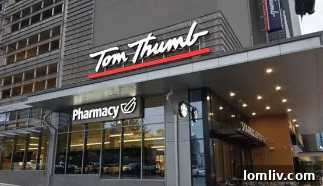
The transformation of the former RedBird Mall into the vibrant Shops at RedBird is a monumental undertaking, symbolizing a fresh chapter for southern Dallas. During a pivotal April 12 Dallas City Council meeting, elected officials unanimously approved a substantial $5.8 million incentives package. This crucial financial backing was awarded to developer Peter Brodsky and Albertsons Companies, facilitating the construction of a much-anticipated new Tom Thumb grocery store, a development long sought after by the community.
Councilman Atkins, reflecting on the area’s journey, poignantly remarked during the meeting, “For many years you looked at RedBird Mall — we used to call it Dead Bird. Now it’s RedBird. This grocery store is something we’ve been fighting for — for three years — trying to make it a reality.” His words encapsulate the profound shift in the area’s identity and the perseverance required to bring such vital projects to fruition. The moniker “Dead Bird” hauntingly referenced the mall’s decline, making its rebirth as “RedBird” a powerful symbol of renewal and economic revival.
The new 50,000-square-foot Tom Thumb grocery store, strategically located at the intersection of Camp Wisdom and Westmoreland roads, is projected to be fully operational and ready to welcome shoppers by 2026. This significant development is not merely about providing fresh produce and household essentials; it’s also a considerable economic boon, anticipated to generate up to 90 local jobs for the community. As highlighted in a press release issued by the City of Dallas earlier this month, such a development addresses critical needs, including combating the pervasive issue of “food deserts” in underserved urban areas, making healthy food options accessible to residents who previously lacked them.
The path to securing a grocery store at RedBird was fraught with challenges, requiring extensive negotiations among several council members. City officials openly acknowledged that this vital project simply could not have materialized without the backing of a comprehensive economic incentive package. This underscores the complexities of attracting major retailers to areas requiring significant initial investment and highlights the critical role of public-private partnerships in urban renewal efforts.
The RedBird development benefits from its location within a Tax Increment Financing (TIF) District. This innovative funding mechanism allows a designated portion of the tax increment—the increase in property tax revenue generated from new improvements within that specific zone—to be reinvested directly back into the area. This ensures that the economic growth spurred by projects like The Shops at RedBird directly contributes to further development and infrastructure enhancements, creating a self-sustaining cycle of revitalization.
While the project garnered unanimous approval, it did not escape scrutiny. District 12 Councilwoman Cara Mendelsohn, despite voting in favor, raised important questions regarding the substantial financial commitment made by the city. She pointed out, “I know that we offered $3 million at one point and didn’t have any takers. I just want to go back and account for how much we’ve actually invested in this project and this area.” Her remarks highlight a broader concern about accountability and the judicious use of taxpayer funds in large-scale development projects.
Mendelsohn provided a detailed breakdown of the city’s extensive financial involvement: In 2016, a $2.4 million grant was awarded to the developer. This was followed by a substantial $10 million grant and a $12 million, 15-year, interest-only loan in 2018. She further noted that various other loans and grants had been allocated to businesses operating within the RedBird campus, in addition to the TIF funds. “When I count it up I’m coming up with over $49 million in grants and TIF, $18 million in loans, plus quite a few traffic signals,” she calculated. “We also modified some agreements to be favorable to the developer. We have invested an enormous amount of resources into this project, and I think it’s doing well.” Her comprehensive overview underscores the city’s deep and strategic investment, which has undeniably been a crucial factor in the project’s success.
Beyond the Tom Thumb, other significant developments have benefited from incentives for locating at RedBird, further solidifying its status as a burgeoning economic hub. These include the Palladium Class A apartment building, offering modern residential options, and Chime Solutions, a prominent employment center. Both projects, also spearheaded by developer Peter Brodsky, contribute to the mixed-use vision for the area. The entire $200 million mixed-use development represents one of the largest commercial projects in southern Dallas, according to the city’s press release, poised to dramatically alter the economic landscape of the region.
Despite these impressive figures and the visible progress, Economic Development Director Robin Bentley candidly acknowledged the inherent risks that businesses still face in the area. She explained that the momentum, while strong, is only just beginning to build. “Credit to Tom Thumb and Albertsons for stepping up and taking this risk for the city,” Bentley stated, emphasizing the courage required by these major corporations. She added, “They have the same concerns every other grocer has in southern Dallas. It’s much easier to open your eighth store in the suburbs than take a chance on southern Dallas. We’re hopeful this store, like our other investments, will set the market and prove the model for future stores.” Her comments highlight the ongoing challenge of overcoming historical perceptions and demonstrating the viability of southern Dallas as a prime location for future commercial ventures.
Linking Urban Development to Crime Reduction: A Promising Connection
The substantial investment in The Shops at RedBird raises a critical question: can urban redevelopment projects genuinely lead to a reduction in crime rates? A compelling study conducted in 2019 by researchers examining the effects of public-private real estate investments in Pittsburgh offers an insightful perspective. This research revealed that such strategic urban improvements not only boost property values but also correlate with a measurable decrease in arrest numbers, suggesting a tangible link between revitalization and community safety.
During the 1990s, the U.S. Department of Housing and Urban Development awarded more than $6 billion in competitive grants called HOPE VI to spur neighborhood redevelopment. We add to HOPE VI research by examining the impacts of a large set of public-private real estate investments, including HOPE VI, made over a 16-year period in a distressed Pittsburgh neighborhood called the Hill District. Specifically, we estimate the effects of the $468 million additional public-private investments that Hill District received compared to a demographically similar neighborhood on sale prices, rental prices, and crime. We find large and statistically significant impacts of the public-private investments on residential sales prices, commercial sales prices, and on rental prices, but only a marginally significant yet meaningful decline in non-violent arrests.
Does Large-Scale Neighborhood Reinvestment Work? Effects of Public-Private Real Estate Investment on Local Sales Prices, Rental Prices, and Crime Rates
This academic evidence provides a strong theoretical framework for the hopes surrounding RedBird. The study’s findings suggest that large-scale investments create a ripple effect, improving economic conditions, enhancing the physical environment, and fostering a stronger sense of community. These factors collectively contribute to a less hospitable environment for criminal activity, leading to a decline in certain types of crime. Specifically, the reduction in non-violent arrests noted in the study highlights how economic opportunities and improved public spaces can deter opportunistic crime.
Echoing these findings, insights from bordering District 1—which encompasses the northern part of Oak Cliff—demonstrate that a community’s active engagement and pride in its neighborhoods, coupled with robust collaboration with local law enforcement, can significantly drive down crime rates. This community-centric approach suggests that while economic investment is vital, the human element—residents taking ownership and partnering with authorities—is equally critical for sustained crime reduction.
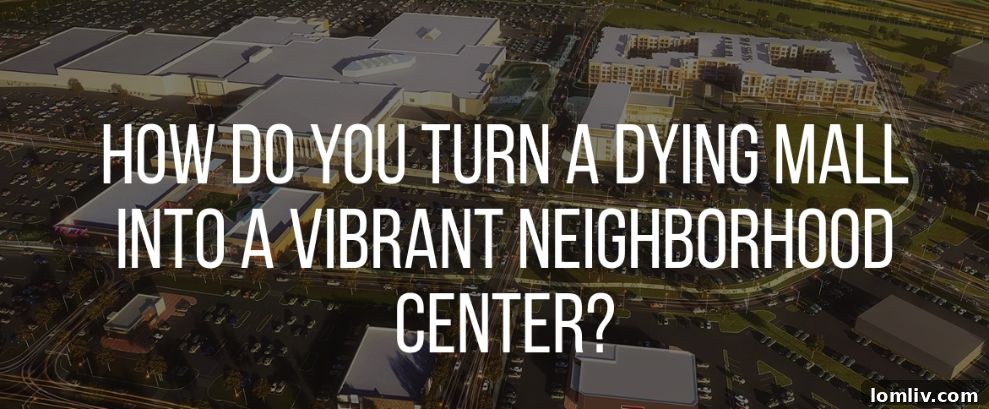
The presence of vacant buildings and neglected, blighted areas is often a magnet for criminal activity, creating unsupervised spaces that can harbor illicit acts. Conversely, a thoughtfully designed, well-lit, and actively utilized area, such as The Shops at RedBird, can exert a profoundly positive influence on its surrounding residential neighborhoods. These revitalized spaces introduce natural surveillance, increase foot traffic, and foster a sense of collective ownership, all of which are known deterrents to crime. The mere presence of people engaging in legitimate activities creates an informal security network, making areas less attractive for those with criminal intent.
Developer Peter Brodsky articulates this vision clearly on the RedBird redevelopment website: “This is an opportunity to turn the page and have a fresh start.” This sentiment encapsulates the ambitious goal of not just economic revival but also social rejuvenation. The redevelopment project aims to shed the area’s historical stigmas and build a new, positive identity for southern Dallas.
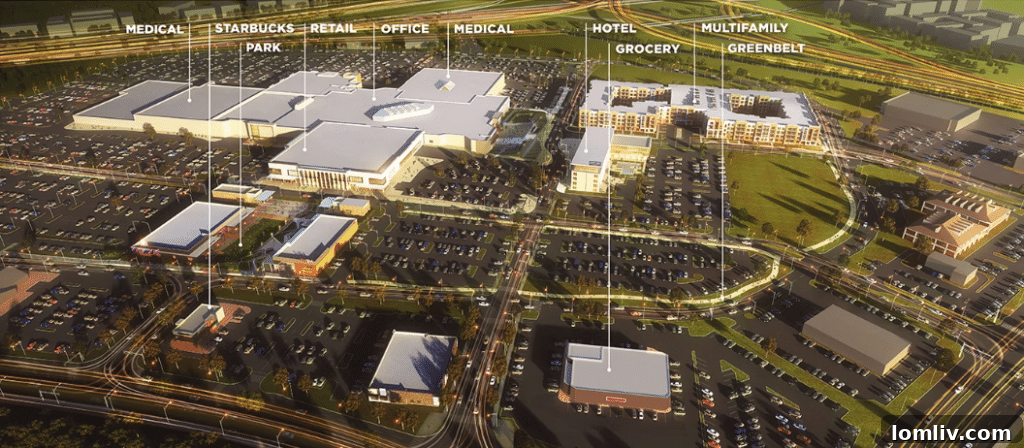
The site further elaborates on this transformative goal: “The redevelopment of The Shops at RedBird is rooted in a collective desire to create a new and authentic heart to South Dallas.” This aspirational statement speaks to the broader community impact, aiming to establish a vibrant core that fosters social cohesion and economic opportunity. By re-envisioning this once-thriving center, the new vision seeks to create a dense and dynamic mixture of retail establishments, modern office spaces, a welcoming hotel, essential community health clinics, and diverse multifamily housing options. Crucially, the plan also emphasizes encouraging walkability throughout the site, ensuring that the development is not only economically active but also accessible, user-friendly, and integrates seamlessly with the surrounding community, further contributing to a safer and more desirable urban environment.