
Dallas Development Services has made significant strides in transforming its once-troubled building permit process. Historically plagued by a reputation for slow and inefficient permit delivery, which often translated into escalated costs for builders and a backlog in the city’s housing availability, the department now finds itself in a much-improved position. This remarkable turnaround comes at a crucial juncture, as new state legislation is set to demand even greater speed and efficiency from municipal permitting agencies. The city’s proactive efforts to streamline development approvals are now aligning with, and in some cases exceeding, the ambitious targets set by Texas lawmakers.
On a recent Wednesday, members of the Dallas City Council’s Government Performance and Financial Management Committee convened a joint meeting with the Ad Hoc Committee on Legislative Affairs. The primary agenda was to meticulously examine the complex permitting issues outlined in House Bill 14, a pivotal piece of legislation that was scheduled to take effect just two days later. This bill is poised to reshape how development projects are approved across Texas, introducing new mechanisms designed to accelerate construction timelines and reduce bureaucratic hurdles that have historically hindered urban growth and housing supply.
House Bill 14, a comprehensive legislative effort, directly addresses the “third-party review of plats and property development plans, permits, and similar documents, and the inspection of an improvement related to such a document.” This broad scope indicates the state’s intent to intervene in local permitting processes to ensure that projects move forward without undue delays. The spirit of the bill is to empower applicants with more options and faster resolutions, pushing municipalities to either keep pace or allow external entities to facilitate the process.
Councilman Chad West, who chairs the influential Government Performance and Financial Management Committee, characterized House Bill 14 as a “heavy-handed attempt” by the state to force faster permit approvals. While acknowledging the bill’s intent, West highlighted that Dallas already shares this overarching goal. During the committee meeting, he confidently asserted, “That’s a goal we already have here. Correct me if I’m wrong, but we’re still going to get it out faster than if they go through this mechanism provided by the state.” This statement underscores Dallas’s current momentum and its determination to maintain its improved efficiency, potentially outpacing the alternative pathways offered by the new state law.
Dallas Development Services: A New Era of Efficiency
The intricacies of House Bill 14 are substantial, but its fundamental promise to applicants is clear: a guarantee that their permit will be processed in a timely fashion. A significant component of this guarantee is the provision allowing applicants to engage their own third-party reviewer to conduct inspections if municipal departments fail to meet specific deadlines. This introduces a new layer of accountability and provides a fallback option for developers facing delays.
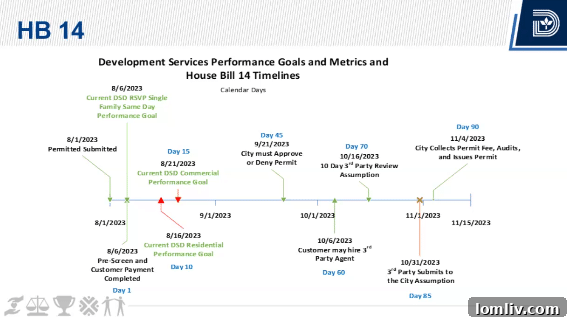
Providing an update on Dallas’s operational readiness, Andrew Espinoza, the Director of Development Services, detailed his department’s current performance metrics. He explained that Dallas Development Services commits to a five-day turnaround for pre-screening permit applications, ensuring all documentation is complete and ready for review. Following successful pre-screening and payment receipt, the department aims to approve, deny, or conditionally approve permits within 10 days for residential projects and 15 days for commercial ventures. These ambitious internal goals highlight the department’s commitment to expediting the development process well ahead of state-mandated timelines.
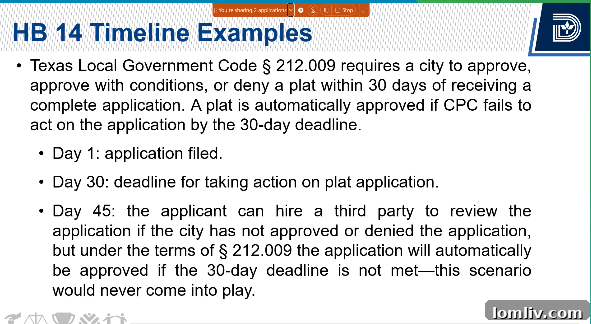
Under existing city code, municipalities already possess the authority to utilize third-party reviewers for approving plats, plans, and development permits, especially if the city is unable to adhere to a prescribed 15-day performance goal. However, House Bill 14 fundamentally shifts this dynamic. Instead of the city commissioning an external reviewer, the new state law empowers the *applicant* to directly hire their own certified third-party reviewer. This provision is designed to inject greater applicant control and potentially bypass bureaucratic bottlenecks, ensuring projects can proceed even if municipal staff are overwhelmed or delayed.
Further enhancing applicant rights, House Bill 14 also grants developers the ability to appeal directly to the City Council if their permit application is denied or conditionally approved. This creates an additional avenue for recourse and introduces a higher level of oversight into the permitting decision-making process. Espinoza elaborated on the statutory timelines, explaining, “The Texas Local Government Code requires 15 days on top of the 45 days upon receiving a completed application. Municipalities are required to comply with that 45 days. With this additional 15-day time clock, municipalities now have to approve, conditionally approve, or deny a permit within 60 days.” This reinterpretation effectively extends the maximum official review period but places greater emphasis on consistent adherence to these new, longer deadlines.
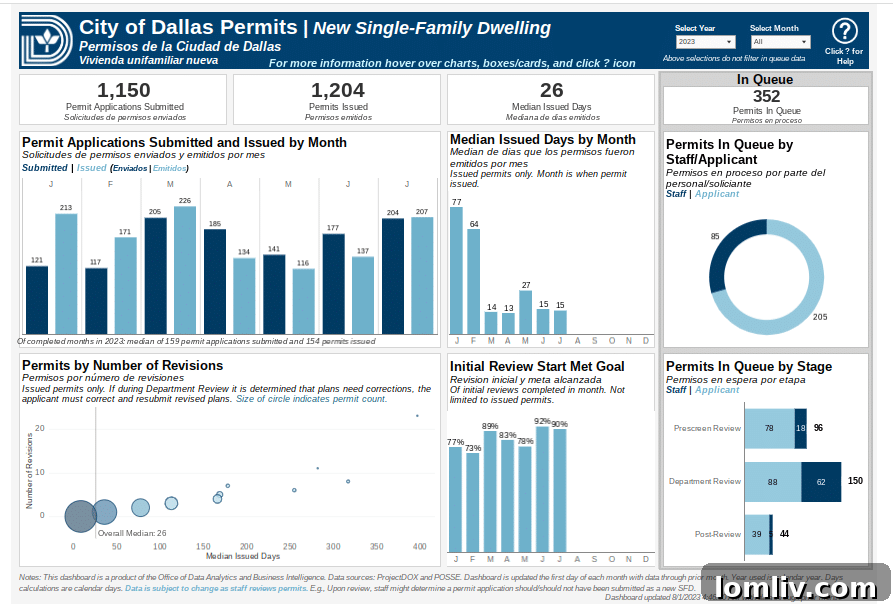
Dallas’s journey to efficiency began in earnest late last year, with the successful cleanup of a substantial permit backlog that had long frustrated developers. This achievement, coupled with the implementation of innovative programs like the Rapid Single Family VIP Program (which allows certain builders to fast-track permits), has dramatically improved turnaround times. Permits are now frequently processed with remarkable swiftness, a stark contrast to previous years. David Lehde, Director of Government Affairs for the Dallas Builders Association, acknowledged these improvements in a conversation with daltxrealestate.com, noting that while Dallas is performing well, the new state legislation may still offer particular benefits to high-volume producers who might occasionally encounter specific bottlenecks. “Something like this is always a continued effort,” Lehde emphasized, signaling that the pursuit of optimal efficiency is an ongoing process.
The transition to fully implement House Bill 14’s requirements is not instantaneous. Espinoza explained that the new mandates must first be formally codified into the city’s existing building code. This crucial legal step ensures that the state law is seamlessly integrated into local regulations and becomes enforceable at the municipal level. “Development Services will partner closely with our City Attorney’s Office to make sure we get this right,” Espinoza assured, indicating a meticulous approach to compliance and legal accuracy.
Lehde further praised Director Espinoza’s leadership, stating that he has effectively steered the department in the right direction. He highlighted Espinoza’s proactive engagement with the building community, frequently seeking feedback and collaborating to identify areas for continuous improvement. This open dialogue has been instrumental in bridging the gap between developers’ needs and the city’s operational capabilities.
Despite the overall positive trend, Councilman West voiced a recurring concern from builders: the frustrating cycle of applications being repeatedly “kicked back and forth” between review stages. This back-and-forth, he noted, significantly extends project timelines, pushing developments into a “nebulous situation” that can drag on for “weeks and weeks and weeks.” This feedback underscores that while initial permit issuance might be faster, the overall project lifecycle can still face unexpected delays.
Espinoza addressed these specific concerns, attributing them to potential issues with application completeness and consistency. He proposed that such issues could be effectively mitigated through enhanced education for applicants and the refinement of internal checklists used by city reviewers. By providing clearer guidelines and ensuring more thorough initial submissions, the department aims to reduce the instances of repeated revisions and subsequent delays.
Mayor Pro Tem Tennell Atkins expressed a “big issue” with House Bill 14, primarily due to its perceived vagueness. He articulated concerns about the potential legal implications and unknown outcomes once the bill is fully implemented. “It’s law right now and we don’t know what the outcome is going to be,” Atkins remarked, emphasizing the uncertainty surrounding its practical application. A key question he raised revolved around municipal liability: “When we have a third-party [reviewer], what is our liability?” This query highlights a significant point of apprehension for city officials, as delegating review authority to external parties could introduce new risks and legal complexities for the city.
Builder Reaction and Broader Economic Impact
From the perspective of the construction industry, David Lehde of the Dallas Builders Association conveyed to daltxrealestate.com that House Bill 14 is largely viewed as a positive development, effectively streamlining the approval process for builders. Its primary benefit, according to Lehde, is its ability to provide an alternative pathway when municipal departments fall short of mandated performance goals.

“It allows for a third-party review in cities and counties that fail to complete that platting review or code inspection by the statutory deadlines,” Lehde elaborated. He emphasized the critical economic implications of such delays: “It should help us because delays in the development process not only increase the cost of construction of a home and what Dallas families and Texas families can afford, but they can also negatively impact the local economy.” By reducing these costly delays, the bill aims to support more affordable housing options and foster a healthier economic environment, benefiting both developers and prospective homeowners.
Lehde also pointed out that the new legislation offers much-needed relief to cities still grappling with persistent permit backlogs. Given that the Dallas Builders Association encompasses a vast 10-county area, the impact of such a bill extends far beyond Dallas city limits, addressing development challenges across a significant portion of North Texas. “In our view, this helps to address housing affordability,” Lehde asserted, underscoring the long-term goal of making homeownership more accessible to a wider population by mitigating the cost-inflating effects of permitting delays.
Councilman Jesse Moreno echoed the sentiment that most local builders are eager to collaborate effectively with the city and adhere to established regulations. Their primary desire, he noted, is clarity and consistency: “They just want to know what those rules are ahead of time and not to be changed in the middle of their projects.” This highlights the importance of transparent and predictable permitting processes, allowing builders to plan and execute projects with greater confidence and fewer unforeseen hurdles.
Espinoza clarified an important aspect of accountability under the new system: even with third-party reviewers involved, the ultimate responsibility for submitting a code-compliant plan rests squarely with the applicant. If a permit is denied, regardless of the timeframe or the involvement of an external reviewer, the onus remains on the developer to revise and resubmit a plan that fully meets all applicable building codes and regulations. This ensures that safety and quality standards are not compromised in the pursuit of speed.
Assistant City Manager Majed Al-Ghafry provided assurances to the committee members regarding the city staff’s preparedness to implement the mandates set forth in House Bill 14. He confirmed the city’s readiness for the bill’s effective date, stating, “We’re going to be ready for Friday. Any new permits that will be submitted on that timeline, we will meet the expected timeline.” Al-Ghafry also acknowledged the need to address any lingering legacy issues, adding, “On the permits that have been lagging in the past, we’ll need to catch up with those and find out where they are.” This commitment reflects Dallas’s dedication to not only processing new applications efficiently but also resolving any remaining older cases, ensuring a clean slate and consistent performance moving forward.
The convergence of Dallas’s self-driven improvements and the state’s legislative push marks a pivotal moment for development in the region. While challenges like potential liabilities and the need for clear guidelines remain, the overall trajectory points towards a more streamlined, predictable, and ultimately more efficient building permit process. This collaborative effort between city officials, state lawmakers, and the building community is essential for fostering sustainable growth, boosting housing availability, and strengthening the local economy in Dallas and across Texas.