Dallas, like many major metropolitan areas, faces a persistent challenge in addressing its growing homeless population. In a recent pivotal meeting, the Dallas City Council’s Housing and Homelessness Solutions Committee convened to review a groundbreaking pilot program. This innovative initiative proposes to transition dozens of individuals experiencing homelessness from the streets and shelters into a former hotel located in District 6, a project that is poised to be partially funded by the AIDS Healthcare Foundation (AHF).
The proposal, while offering a beacon of hope for many, was met with a spectrum of reactions from committee members. Some expressed reservations, highlighting that several city-flagged buildings designated for similar purposes have remained vacant for years, raising questions about the efficiency and strategic planning of current efforts. Furthermore, a critical point was raised regarding the equitable distribution of the city’s homeless shelters and temporary housing facilities, with one committee member arguing for a more balanced allocation across all council districts to ensure broader community support and access to vital services.
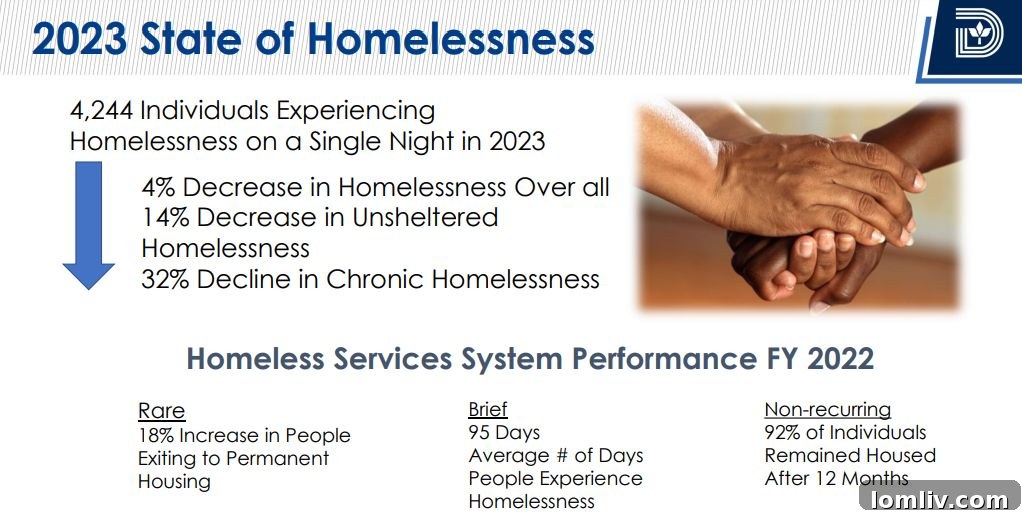
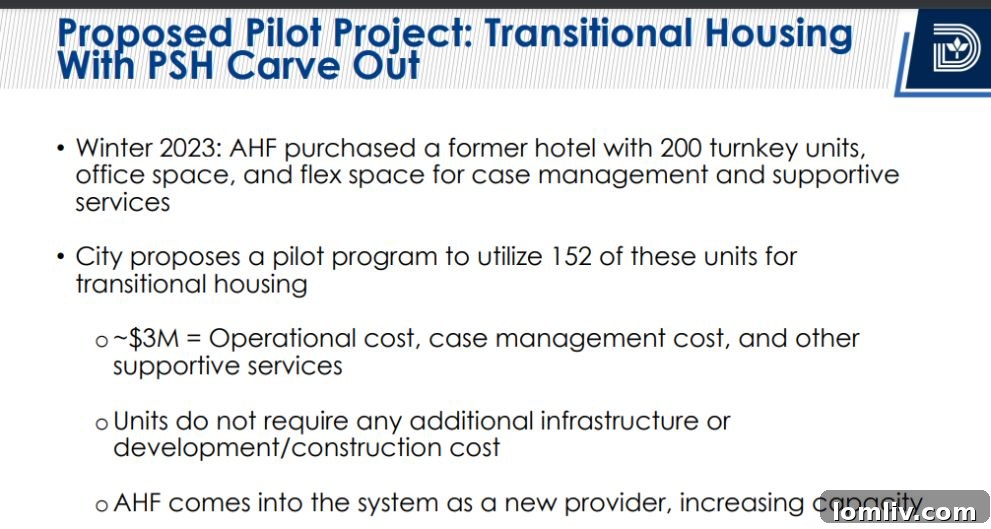
Christine Crossley, Director of the Office of Homeless Solutions, presented the financial implications of this ambitious pilot program, estimating a cost of approximately $3 million to the City of Dallas. She candidly acknowledged that this investment, while substantial, represents merely a “drop in the bucket” when viewed against the backdrop of the city’s broader homelessness crisis. The most recent Point in Time count revealed a stark reality: roughly 4,200 individuals are experiencing homelessness across Dallas. The proposed program aims to carefully select its tenants directly from the streets, offering immediate respite, or from existing shelters, providing a crucial next step towards stability and long-term housing solutions.
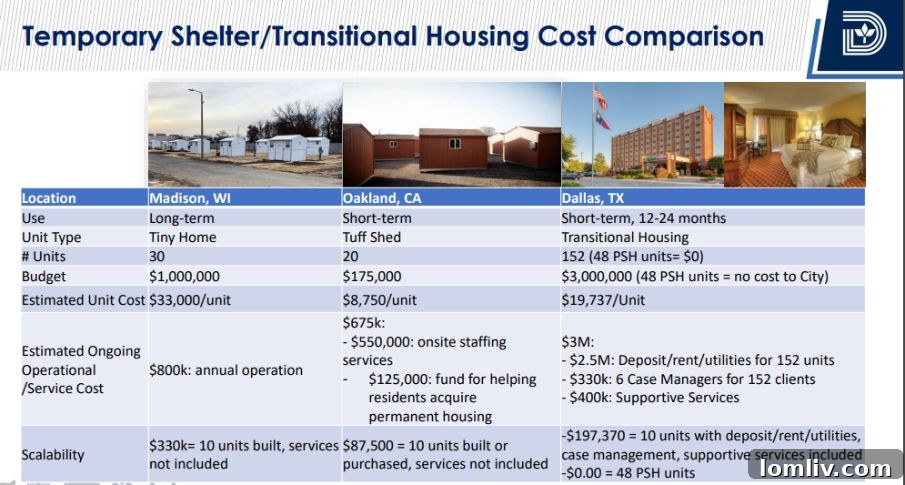
During the Sept. 19 briefing, Housing and Homelessness Solutions (HHS) Committee members delved into the specifics of the program. It envisions providing 152 temporary housing units, designed to offer immediate shelter and support for individuals as they navigate their journey out of homelessness. In addition, the program will establish 48 permanent supportive housing units, which are critical for individuals requiring long-term assistance, including case management, mental health services, and addiction support, to maintain stable housing. This dual approach signifies a comprehensive strategy to not only house individuals but also to provide them with the necessary tools for sustainable living. The full meeting recording is available here for public review.
A significant aspect of this initiative is the partnership with the AIDS Healthcare Foundation (AHF). AHF has already demonstrated its commitment by purchasing the property and undertaking the substantial financial burden of renovations, transforming the former hotel into suitable living spaces. Beyond the initial investment, AHF has pledged to provide ongoing property management and security services at no additional cost to the city, thereby significantly reducing the operational overhead for Dallas. The city’s contribution, while crucial, will primarily focus on covering the costs associated with individual temporary housing for up to two years, funding six dedicated case managers to provide personalized support, and facilitating access to permanent housing through the city’s established Continuum of Care framework. This collaboration exemplifies a powerful model for leveraging private sector resources to address pressing public needs.
Christine Crossley elaborated on the rationale behind this partnership, stating, “[AHF] has purchased the building and would like to use it in a way that benefits the unsheltered. We have been looking at how that could work in line with what the Continuum of Care needs and what the council has asked for in terms of housing to move people into while they’re waiting for permanent housing.” Her statement underscores the program’s alignment with Dallas’s broader strategies for addressing homelessness, emphasizing its role as a transitional solution that bridges the gap between immediate shelter and long-term housing stability within the existing support systems.
Navigating the Path to Housing the Homeless in Dallas
The discussion surrounding the pilot program highlighted the inherent complexities of implementing new solutions in a dynamic urban environment. Councilman Chad West voiced a common concern within legislative bodies, noting that pilot projects, while often well-intentioned, frequently struggle to integrate seamlessly into existing, council-adopted policies. He articulated the risk, stating, “It blows up in the media and it becomes a big problem. How is this not that same scenario?” West’s query reflects a cautious approach, aiming to prevent potential pitfalls and ensure that any new program is robust, well-aligned with city objectives, and resilient to public scrutiny.
The committee meeting also featured a series of visual aids and presentations designed to provide a comprehensive overview of the proposed initiative. These included images showcasing potential layouts and the current state of the property, offering a tangible vision of the transformation envisioned for the former hotel. The inclusion of such visual elements is vital for committee members and the public to fully grasp the scope and potential impact of the project, moving beyond abstract discussions to concrete plans.
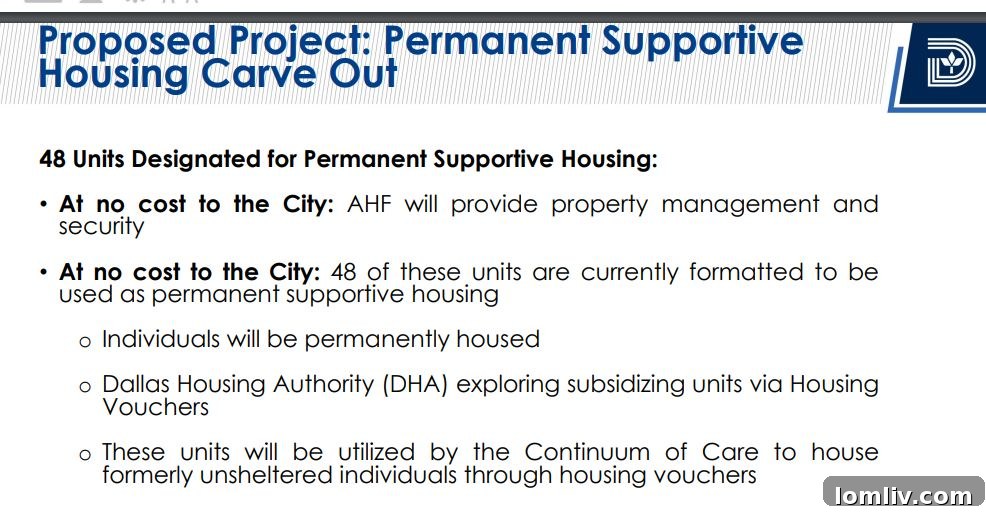
Deputy City Manager Kimberly Bizor Tolbert addressed the financial constraints and the broader strategy of the City of Dallas. She emphasized the importance of bringing private-sector partners to the table, acknowledging the city’s limited resources. “We know that we don’t have an open checkbook,” she stated, underscoring the reality of municipal budgeting. Tolbert elaborated on the city’s proactive engagement with private sector entities over the past year, seeking collaborative solutions to bolster housing initiatives. Her message highlighted that such partnerships are not merely supplementary but are often essential for expanding the city’s capacity to provide housing units and critical support services for its most vulnerable populations. The fact that AHF had already acquired and prepared the facility, making 48 units immediately available for permanent supportive housing, was presented as a unique and timely opportunity that Dallas should seize. “They’re willing to work with us,” Tolbert affirmed. “There are 48 units already outfitted and ready to go from a [permanent supportive housing] standpoint, so it’s really about us trying to capitalize on this potential opportunity.”
Councilman Jesse Moreno, who presides over the housing committee, expressed a balanced perspective, maintaining optimism about the potential of the partnership. He championed the need for innovative approaches to tackle complex urban issues, encouraging the Office of Homeless Solutions to “be creative and think outside the box.” Moreno concluded his remarks by expressing eagerness to delve deeper into the proposal, indicating a willingness to explore novel solutions that could significantly impact the lives of unhoused individuals in Dallas. His leadership is crucial in navigating the varying opinions within the committee and fostering a collaborative environment for decision-making.
Examining the ‘Upside Down’ Approach to Dallas Homeless Solutions
However, the pilot program’s unconventional origins drew sharp criticism from Councilwoman Cara Mendelsohn, who described the project’s development as “upside down” rather than following a meticulously planned, strategic process. Mendelsohn voiced concerns that the initiative deviates from the city’s established goal of equitably distributing homeless housing resources across all districts. She pointed out, “This doesn’t meet our goal of putting [homeless housing] in every district. We didn’t seek out this specific solution. We haven’t looked at other solutions besides this.” Her critique highlighted a desire for a more systematic and comprehensive approach to addressing homelessness, ensuring that all potential solutions are thoroughly vetted and aligned with long-term city-wide strategies.
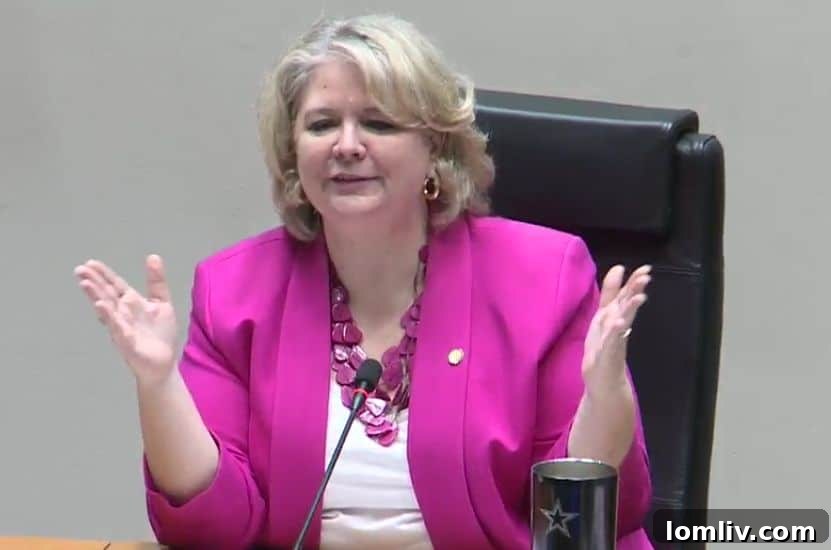
Mendelsohn further underscored her concerns by referencing other critical housing projects, such as the Miramar Hotel, which has been designated for homeless housing but has languished for years without significant progress. This delay exemplifies a broader frustration with the pace and effectiveness of current city initiatives. “Maybe we need to…start looking at the things that are viable, that we can actually move on, to immediately help people that are living on the streets every night,” she urged, emphasizing the immediate humanitarian need. Mendelsohn passionately argued that the continued existence of homelessness is “completely inhumane” and that the city has a profound “responsibility to the people.” She concluded by stating, “Having big, empty buildings is not getting us anywhere. I don’t think you need another priority. I think we need to do a better job with what we’re doing,” advocating for improved execution of existing plans rather than the introduction of new, potentially unaligned projects.
The proposed pilot program, despite the varied opinions, is moving forward in its review process. The next crucial step involves a comprehensive briefing before the Citizen Homeless Commission, where community stakeholders and experts will have the opportunity to scrutinize the plan and offer their insights. Following this, the program is slated to return before the Housing and Homelessness Solutions Committee next month for further discussion and potentially a decisive vote, marking a critical juncture in its potential implementation.
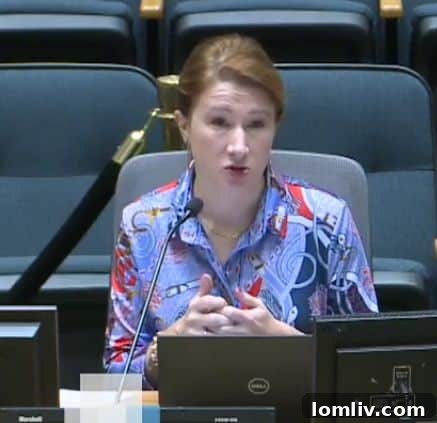
Councilwoman Gay Donnell Willis expressed a more optimistic view, stating her approval of the option despite its non-traditional approach. While acknowledging that the program “may not fit neatly in the puzzle of our strategies,” she emphasized the urgent human aspect of the crisis. “However, it’s inhumane to warehouse people in the streets,” Willis asserted, highlighting the moral imperative to act swiftly. She viewed the pilot as a valuable opportunity, concluding, “I see this as an option that I’m glad we can explore and I look forward to learning more about it.” Her perspective underscores the balance between strict policy adherence and the compassionate need for immediate, effective interventions.
Beyond the discussion of the hotel pilot program, the Housing and Homelessness Solutions Committee addressed several other significant matters on September 19, demonstrating the breadth of Dallas’s commitment to tackling homelessness and housing insecurity:
- The committee meticulously reviewed the city’s Good Neighbor Agreement with The Bridge, a prominent local homeless assistance center. This review encompassed an examination of its requirements, key partnerships, successful service highlights, and strategic initiatives both within and beyond the designated GNA boundaries, ensuring accountability and effectiveness in community engagement.
- Assistant Housing Director Thor Erickson provided a comprehensive update on the city’s eight distinct home repair programs. These vital initiatives are designed to help residents maintain safe and habitable living conditions, thereby preventing housing instability and potential homelessness, particularly among low-income homeowners.
- An update was also presented concerning a promising potential partnership with Dallas County. The City Council is anticipated to vote later this month on accepting a substantial $10 million allocation from the county. This funding is part of a joint agreement aimed at significantly expanding supportive housing and services for homeless, unsheltered, or unstably housed populations whose income falls at or below 30 percent of the Area Median Income. This collaboration underscores a regional commitment to addressing homelessness through shared resources and coordinated efforts, promising a more robust support system for those most in need.
The multifaceted discussions within the Dallas City Council’s Housing and Homelessness Solutions Committee reflect a city grappling with a complex social issue, seeking both innovative and strategic solutions. The proposed pilot program, with its blend of private partnership and public oversight, stands as a testament to Dallas’s ongoing efforts to provide dignified housing and essential support services for its unhoused residents. The journey to end homelessness in Dallas is intricate, requiring a balance of bold new initiatives, careful strategic planning, and unwavering commitment to the well-being of every individual.