Dallas Real Estate: Navigating a Shifting Market with Confidence
Exploring Dallas home values, market trends, and what the latest S&P/Case-Shiller report truly means for homeowners and prospective buyers.
In the dynamic world of real estate, the age-old adage, “what goes up must come down,” often rings true. Yet, the Dallas housing market has historically defied this conventional wisdom with remarkable resilience. Unlike the dramatic peaks and valleys seen in bustling coastal cities or international investment hubs like Miami and New York City, Dallas home values have traditionally charted a more stable, incremental course. We’ve grown accustomed to a steady appreciation of 5 to 7 percent annually, with prices holding firm for several years before resuming their upward trajectory. The memory of a significant decline in Dallas home prices is a distant one, primarily associated with the late 1980s, serving as a rare exception rather than the rule.
Understanding the Latest Market Signals from S&P/Case-Shiller
Recent news, however, has introduced a new talking point. The latest Standard & Poor’s/Case-Shiller Home Price Index report indicates that Dallas home prices experienced a 5.2 percent increase year-over-year. While this still represents healthy growth, it falls slightly below the national average gain of 6.2 percent observed in June 2017. For the first time in an extended period, Dallas appears to be trailing the national average rather than leading it. In fact, the Dallas-area home price expansion recorded its smallest percentage increase in nearly six years. This shift invites a closer look at the underlying dynamics of the North Texas real estate landscape.
The Silver Lining: Property Taxes and Market Stabilization
A natural consequence of stabilizing home values is the potential for property taxes to follow suit. This development could offer a welcome reprieve for homeowners who have witnessed their property tax bills steadily climbing in tandem with surging market values. It’s crucial, however, for residents to remain vigilant regarding local government discussions about tax rates. While city councils may propose lowering the rate, the actual tax burden is profoundly influenced by property values, which are the primary drivers of increased tax revenues for municipalities. The robust Case-Shiller reports of previous years, reflecting consistent value appreciation, have undoubtedly contributed to these increased revenues.
Why the Dallas Housing Market Remains Robust: No Need for Concern
Despite the recent deceleration in the rate of appreciation, there is no immediate cause for alarm within the Dallas real estate market. A broader historical perspective reveals that home prices have surged dramatically since the 2007 recession, a period characterized by reckless lending practices that chilled markets nationwide. Dallas, notably, weathered that storm with exceptional stability; its market largely remained flat rather than experiencing a significant crash. Today, Dallas home values stand approximately 45-50 percent higher than their pre-recession levels, a testament to the market’s fundamental strength and long-term growth trajectory.
Key Factors Influencing North Texas Housing Trends
Over the last decade, North Texas has maintained a growth rate above the national average of 4.2 percent. The recent cooling of home price increases can be attributed to a confluence of factors, primarily:
- Increased Market Supply: More homes becoming available for sale, offering buyers greater choice and reducing intense bidding wars.
- Slowdown in Buyer Frenzy: A shift from the previously hyper-competitive environment where homes sold almost instantly, allowing buyers more time for deliberation.
- Recent Changes in Tax Laws: Modifications to tax regulations, such as those affecting mortgage interest deductions or state and local tax (SALT) deductions, may have subtly influenced buyer affordability and enthusiasm.
To put it in perspective, the home appreciation rates in North Texas are currently about half of what they were just 18 months ago, in 2016, when the market was exceptionally hot.
“Home prices continue to rise across the U.S.,” noted S&P’s David M. Blitzer in the report. “However, even as home prices keep climbing, we are seeing signs that growth is easing in the housing market.”
“Sales of both new and existing homes are roughly flat over the last six months amidst news stories of an increase in the number of homes for sale in some markets.”
The Case-Shiller Index: A Focused Lens, Not the Full Picture
It’s vital to remember that the S&P/Case-Shiller Home Price Index offers a specific, though valuable, snapshot of the market. This index meticulously tracks only single-family, pre-owned homes. It intentionally excludes crucial segments of the Dallas real estate market, such as new construction (including burgeoning developer communities), condominiums, and townhomes. In a vibrant, expanding market like Dallas, where new construction is prevalent and vertical living is increasingly popular, the inclusion of these segments would undoubtedly present a more comprehensive and likely more buoyant picture of overall market performance. Furthermore, the index does not account for off-market listings, which real estate agents report comprise a significant portion—nearly 20 percent—of high-end sales. This suggests that the true vitality of the Dallas housing market, particularly at its upper echelons, might be underestimated by the standard reports.
Comparing Dallas to National Hotspots: Seattle and Las Vegas
While Dallas adjusts to a more normalized growth rate, other markets continue to experience rapid appreciation. Seattle, a perennial leader in home price gains, saw a staggering 12.8 percent year-over-year increase. However, even in this high-flying market, signs of a slowdown are emerging. Glenn Kelman, CEO of Redfin, recently stated that the Seattle market has hit “a slow and definite downfall.”
“We aren’t entirely sure how much of it is the market and how much of it is us because our guidance is based on a slowdown that only occurred in the last few weeks. It was a significant slowdown,” Kelman said. “It may be that we have a good week this week and a good week next week and we can outperform it. But we are seeing a significant change.”
Las Vegas also recorded impressive 13 percent gains, a development that prompts a cautious historical reflection. Las Vegas experienced similarly high percentage value increases right before its market famously crashed, serving as a cautionary tale of unchecked growth. David Blitzer from S&P noted, “The west still leads the rise in home prices with Las Vegas displacing Seattle as the market with the fastest price increase.”
Navigating a Segmented Market: Buyers, Sellers, and Price Points
Real estate economists describe the current market as shifting from “extremely competitive for buyers to only somewhat competitive.” Crucially, sellers largely retain control, though the degree of control varies significantly by price point. Properties priced under $500,000 continue to be a hot commodity, driven by robust demand from first-time homebuyers and those seeking more affordable options. These homes often receive multiple offers and sell quickly due to a larger pool of prospective buyers and continued pressure on entry-level inventory.
Conversely, larger, pricier homes tend to remain on the market for longer periods. This is a direct consequence of a smaller buyer pool combined with increased inventory at the higher end. Luxury buyers are typically more discerning, taking their time to find the perfect property that aligns with their specific needs and desires, rather than engaging in frantic bidding wars.
Spotlight on Dallas’s Enduring Appeal: Recent Success Stories
Despite the broader market shifts, Dallas continues to see properties go under contract swiftly, demonstrating that exceptional homes, particularly those that meet current buyer preferences, still command strong interest. Even on a street like Ricks Circle, which currently has four homes for sale, certain listings move with remarkable speed:
- Becky Frey’s 11422 East Ricks Circle: This exquisite home, listed on July 25 for $4.095 million, swiftly went under contract. Its rapid sale can be attributed to its desirable transitional, contemporary style, its relatively recent construction in 2013, and a wealth of stunning modern amenities, including a unique zip line in the backyard. This property exemplifies how well-appointed, contemporary designs attract immediate attention in the luxury segment.
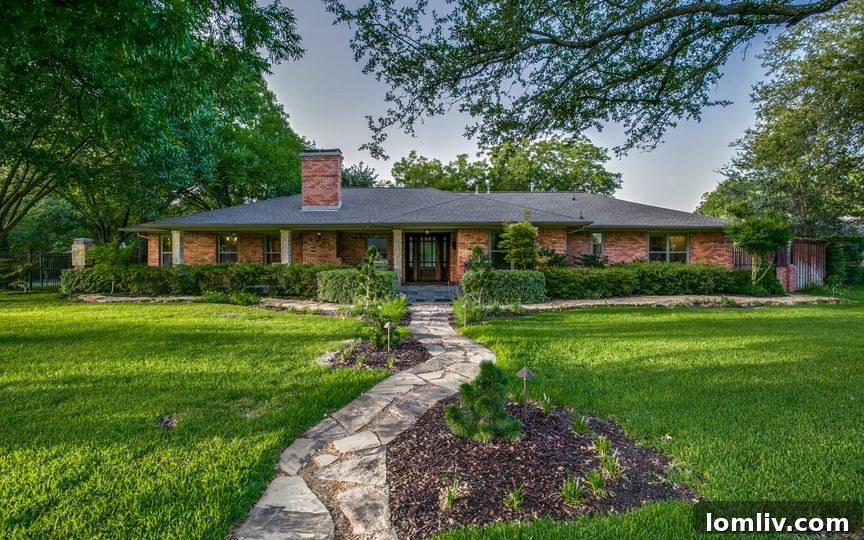
- Paula Scofield’s 6111 Northaven: Hitting the market on July 19 with an asking price of $995,000, this property quickly secured a contract. While presenting a charming, traditional 1950s ranch exterior, its interiors have been strikingly streamlined and updated to a contemporary aesthetic. This blend of classic appeal and modern comfort resonates strongly with today’s sophisticated buyers. Discover more about Dallas’s architectural gems and the charm of such revitalized homes.
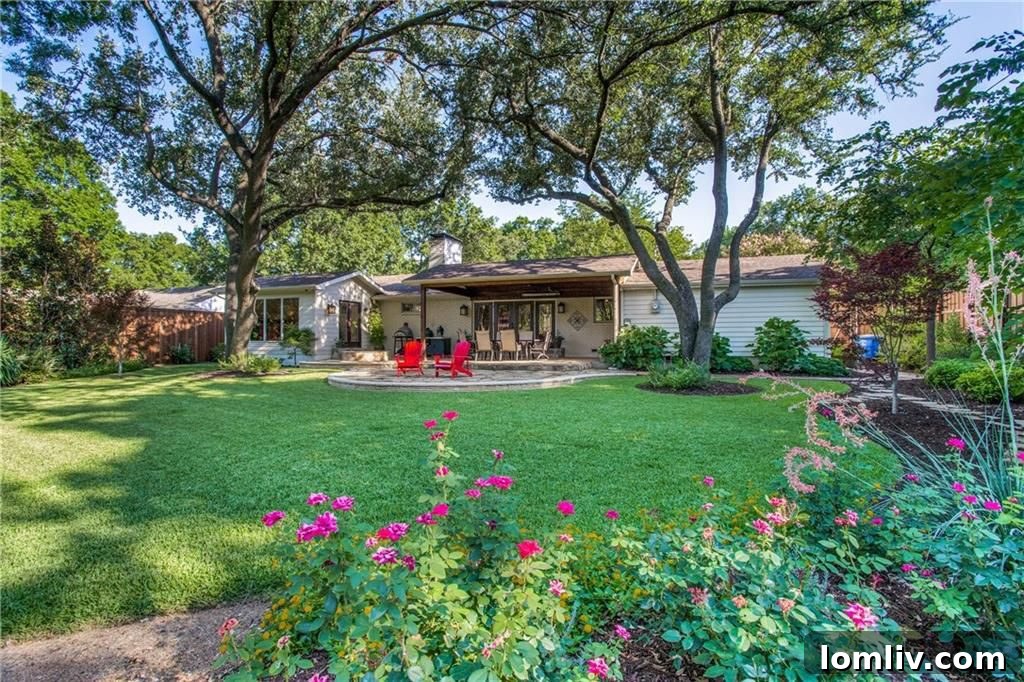
- 3738 Martha in Walnut Hill/Midway: A true gem in the Walnut Hill/Midway area, this darling ranch home, dynamically remodeled, boasts 2,222 square feet with three bedrooms and two bathrooms. Its standout features include a killer beamed great room, a meticulously designed kitchen, a spacious dining area, and a functional butlery. However, beyond the impressive interiors and prime location, the “to-die-for” yard truly captivated buyers. Listed with Blake Phillips of Classic Living Realty for $725,000 in early July, it sold in August near or at full price, underscoring the enduring value of location, smart renovation, and exceptional outdoor spaces.
Luxury Market Milestones: High-Profile Sales Signal Confidence
Even at the pinnacle of the Dallas luxury market, significant activity signals ongoing confidence. Recently, Lisa Blue’s prestigious estate successfully sold, albeit not for its initial $36 million asking price. Such a transaction, regardless of the final figure, represents a major move in the ultra-luxury segment and indicates a willingness among affluent buyers to invest in Dallas’s most coveted properties. Similarly, the iconic Crespi Estate is undergoing a transformation, with plans for its extensive grounds to be parceled. These high-value transactions, even if they involve adjustments or strategic reconfigurations, demonstrate that the top tier of the Dallas market remains active and dynamic.
Looking Ahead: Interest Rates and the Future of Dallas Real Estate
So, considering these nuanced market signals, how “bad” is the Dallas real estate scene really? The data suggests a healthy market undergoing a natural stabilization rather than facing an impending crisis. The question on many minds is whether the anticipated rise in interest rates, especially after pivotal moments like Labor Day, will “open the floodgates” and significantly alter market dynamics. While higher interest rates can impact affordability and cool buyer enthusiasm, Dallas’s underlying economic strengths—including robust job growth, corporate relocations, and a steady influx of new residents—provide a solid foundation that can absorb such shifts. The market is evolving, but its core resilience and attractiveness remain undiminished. The discussion on Dallas real estate is wide open, and the prevailing sentiment leans towards continued stability and long-term value, rather than significant downturns.